
 Worksheets
Unit 3 Review
Total questions: 26
Worksheet time: 13mins
Which of the following are the main components of the cardiovascular system?
Heart, blood vessels, and blood
Lungs, liver, and kidneys
Bones, muscles, and nerves
Skin, hair, and nails
What is the primary function of arteries, veins, and capillaries in the cardiovascular system?
To transport blood, oxygen, nutrients, and waste throughout the body
To produce hormones
To digest food
To control body temperature
The cardiovascular system is compared to which of the following in the learning material?
A computer network
The roads you encounter while driving
A library system
A water filtration plant
If the cardiovascular system is like a network of roads, what might the "side streets" represent in this analogy?
The heart
Capillaries
Lungs
Bones
Explain why it is important for the cardiovascular system to have different types of blood vessels (arteries, veins, capillaries) rather than just one type.
Different vessels have specialized functions for transporting blood, oxygen, nutrients, and waste efficiently throughout the body.
It makes the system look more complex.
It helps the body to grow faster.
It allows the body to change color.
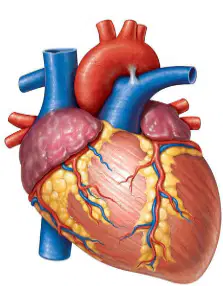
What is the size of the human heart compared to?
The size of your fist
The size of your head
The size of your foot
The size of your eye

Which blood vessel carries deoxygenated blood from the upper body to the right atrium of the heart?
Superior vena cava
Left pulmonary vein
Aorta
Left coronary artery

Which structure is labeled as the main artery that distributes oxygenated blood from the heart to the rest of the body?
Aorta
Pulmonary trunk
Inferior vena cava
Right coronary artery
Which type of blood vessel carries oxygenated blood away from the heart to the rest of the body?
Veins
Capillaries
Arteries
Venules
What is the largest artery in the human body?
Superior vena cava
Inferior vena cava
Aorta
Pulmonary vein
Which vessels carry deoxygenated blood back to the heart?
Arteries
Capillaries
Veins
Arterioles
What are the names of the two largest veins in the human body?
Aorta and pulmonary vein
Superior and inferior vena cava
Jugular and femoral veins
Carotid and subclavian veins
What is the primary function of capillaries in the circulatory system?
Carry blood away from the heart
Carry blood back to the heart
Exchange oxygen, nutrients, and waste products between blood and body tissues
Store blood for emergencies
Explain how the structure of capillaries supports their function in the circulatory system.
Their thick walls allow for high pressure
Their large diameter allows for rapid blood flow
Their thin walls and small size facilitate the exchange of substances between blood and tissues
Their muscular walls help pump blood
Which component of blood is responsible for carrying oxygen?
Platelets
Plasma
Red Blood Cells
White Blood Cells
What is the main function of platelets in the blood?
Carrying oxygen
Fighting infections
Helping with blood clotting
Transporting hormones
Plasma, the liquid component of blood, mainly consists of which substance?
Protein
Water
Hemoglobin
Platelets
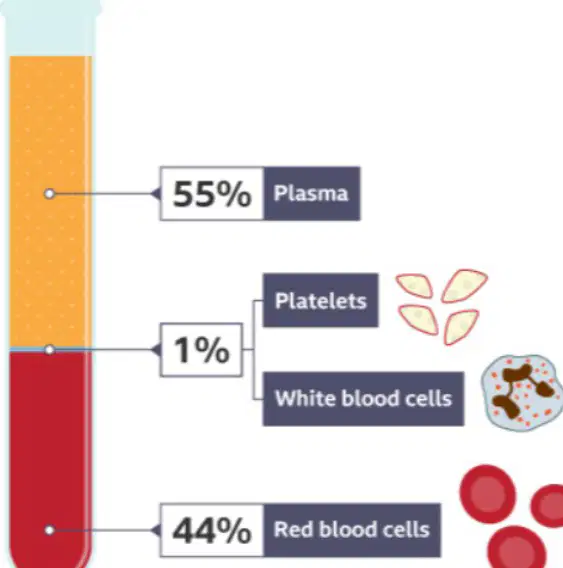
What percentage of blood is made up of plasma?
44%
1%
55%
25%
Which chambers of the heart receive deoxygenated blood from the body and pump it to the lungs?
Right Atrium and Right Ventricle
Left Atrium and Left Ventricle
Right Atrium and Left Ventricle
Left Atrium and Right Ventricle
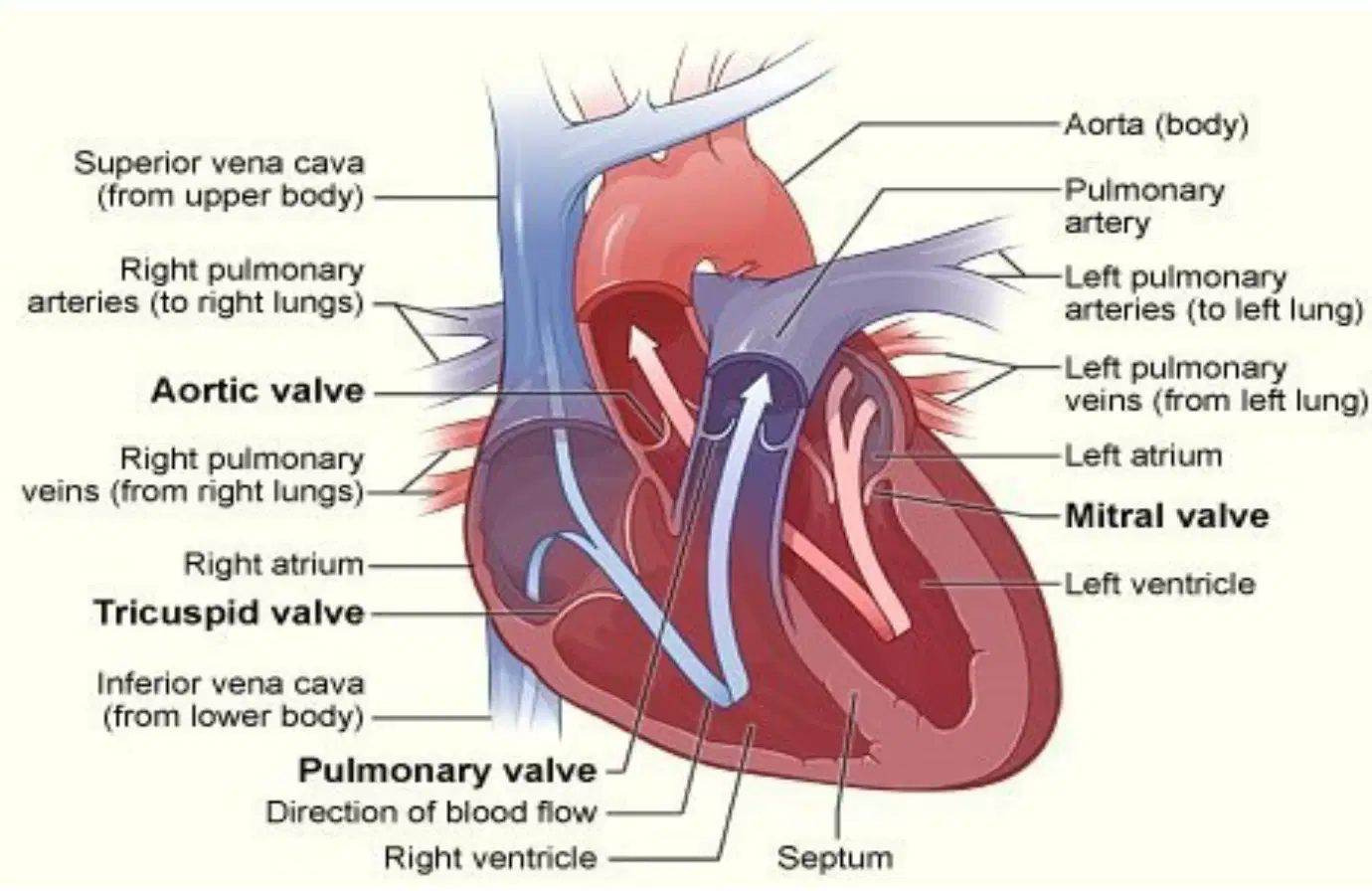
If the mitral valve fails to function properly, which part of the circulatory system would be directly affected first?
Blood flow from the right atrium to the right ventricle
Blood flow from the left atrium to the left ventricle
Blood flow from the left ventricle to the aorta
Blood flow from the right ventricle to the pulmonary artery
What is the main purpose of the circulatory process described in the material?
To remove waste from the body
To ensure every part of the body receives oxygen and nutrients
To regulate body temperature
To produce hormones
Which node briefly delays the signal sent from the SA node to allow the ventricles to fill with blood?
Atrioventricular (AV) node
Bundle of His
Purkinje fibers
Mitral valve
After the electrical impulse passes through the Bundle of His, where does it travel next to cause ventricular contraction?
Purkinje fibers
Atrioventricular (AV) node
SA node
Mitral valve

If a person’s pupils are constricted and their heartbeat is slow, which division of the nervous system is likely more active?
Sympathetic nerves
Central nervous system
Parasympathetic nerves
Spinal cord
If a person's blood pressure drops, what is the response of the baroreceptors?
They signal the brain to increase heart rate.
They signal the brain to decrease heart rate.
They signal the brain to stop the heart.
They signal the brain to increase body temperature.
What is the primary function of T3 and T4 thyroid hormones as mentioned in the material?
Regulate blood sugar
Regulate metabolism
Increase calcium levels
Stimulate muscle growth

