
NEW
Font size
 Worksheets
AN 1101 Lecture 3
Total questions: 25
Worksheet time: 8mins
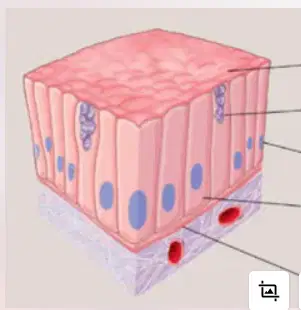
What type of epithelium is shown in the image?
Simple cuboidal
Simple columnar
Simple squamous
Stratified cuboidal
Which transport mechanism is responsible for moving water from high to low?
Diffusion
Active transport
Osmosis
Filtration
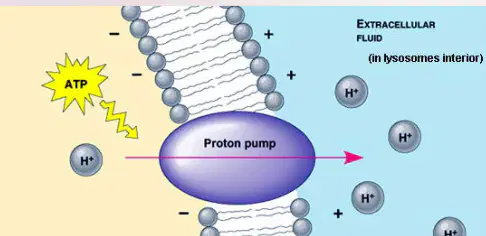
What type of cellular transport is depicted in the image?
Facilitated diffusion
Secondary active
Simple diffusion
Primary active
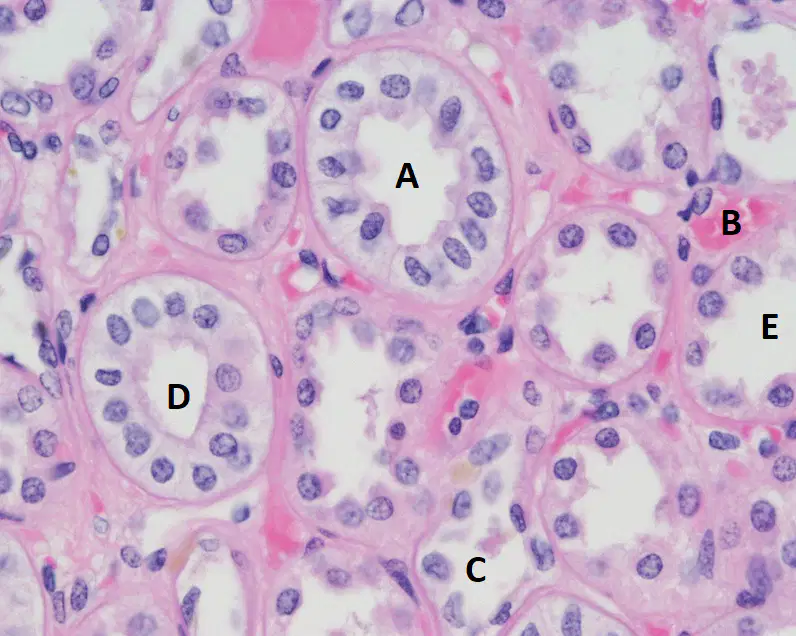
What type of epithelium is shown in the image?
Simple squamous
Simple columnar
Simple cuboidal
Stratified cuboidal
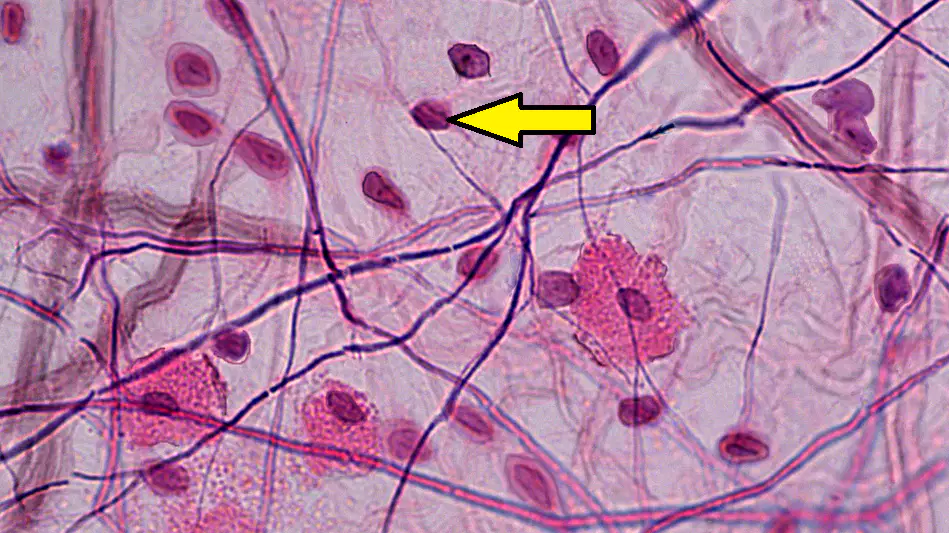
What type of connective tissue is shown in the image?
Loose areolar
Dense irregular
Adipose
Dense regular
Which of the following transport mechanisms involves a pressure gradient?
Osmosis
Diffusion
Filtration
Active transport
What type of epithelium is found in the outer layer of your skin?
Stratified columnar
Stratified squamous
Stratified cuboidal
Transitional
Which of the following types of epithelium has a primary function of simple diffusion?
Simple columnar
Transitional
Simple cuboidal
Simple squamous
Which of the following is NOT one of the normal functions of epithelial tissue?
Protection
Absorption
ATP production
Secretion
Which of the following is NOT one of the tissues of the body?
Nervous
Endocrine
Connective
Muscular
What type of fluid surrounds and baths red blood cells?
Plasma
Interstitial
Cytosol
Intracellular
Which of the following is responsible for moving a molecule via facilitated diffusion?
Phospholipid
Integral protein
Peripheral protein
Aquaporin
Which of the following molecules can enter the cell via simple diffusion?
Glucose
Water
Oxygen
Protein
Which transport mechanisms moves molecules against their concentration gradient but does NOT require ATP?
Facilitated diffusion
Osmosis
Primary active
Secondary active
How would you describe a tissue that is 2+ layers of round cells?
Simple cuboidal
Stratified cuboidal
Simple columnar
Stratified columnar
Simple columnar cells function in _________and are found in the _______system of the body.
Absorption, GI tract
Secretion, Respiratory tract
Diffusion, Urinary tract
Protection, Skin
What is a term used to describe a cell that appears "flat" ?
Columnar
Squamous
Cuboidal
Epithelial
Which of the following can be defined as substance present in smallest amount?
Squamous
Solution
Solvent
Solute
Which of the following components gives flexibility to connective tissue?
Macrophages
Fibroblasts
Matrix
Collagen
Which of the following types of connective tissue helps to preserve body heat?
Loose areolar
Adipose
Dense regular
Dense irregular
Which of the following can easily move across the phospholipid bilyar ?
Oxygen
Water
Carbon dioxide
Amino acid
What happens to a cell when it is placed into a solution that is "hypertonic"?
It shrinks
It swells
It becomes mobile
Nothing
Which of the following opens only in response to certain stimuli?
Pore
Gated channel
Bilayer
Acquaporin
What term is used to describe movement of substances in opposite direction?
Symport
Filtration
Antiport
Osmosis
What is the correct description for skeletal muscle cells?
Small and spindle shape
Long and tubular shape
Flat and squished shape
Tall and long shape

