
 Worksheets
SS6H3a.The Aftermath of World War I
Total questions: 96
Worksheet time: 8hrs 0mins
World War I had a profound effect on world history. Europe suffered terrible destruction and the death of nearly 22 million soldiers and civilians. The results of this conflict ultimately led to economic crises, radical changes in government, and a decline in the power of many European countries. The world would never be the same. What was one major effect of World War I?
Europe gained more colonies overseas
Europe suffered terrible destruction and massive loss of life, nearly 22 million people died.
European countries became more powerful than before
The war had little effect on world history
World War I had a profound effect on world history. Europe suffered terrible destruction and the death of nearly 22 million soldiers and civilians. The results of this conflict ultimately led to economic crises, radical changes in government, and a decline in the power of many European countries. The world would never be the same. Approximately how many soldiers and civilians died during World War I?
5 million
50 million
22 million
10 million
World War I had a profound effect on world history. Europe suffered terrible destruction and the death of nearly 22 million soldiers and civilians. The results of this conflict ultimately led to economic crises, radical changes in government, and a decline in the power of many European countries. The world would never be the same. Which of the following was NOT a result of World War I?
Economic crises
Radical changes in government
Decline in European power
Increase in peace and stability across Europe
The treaty that ended World War I was known as the Treaty of Versailles. Signed in Versailles, France, in 1919, it forced Germany to accept full responsibility for the war. Germans greatly resented the requirements put on it by the Treaty of Versailles. They began to rise up in protest as economic conditions worsened. Because of this anger, other countries ostracized and distrusted Germany. What was the treaty that officially ended World War I?
Treaty of Paris
Treaty of Versailles
Treaty of Berlin
Treaty of London
The treaty that ended World War I was known as the Treaty of Versailles. Signed in Versailles, France, in 1919, it forced Germany to accept full responsibility for the war. Germans greatly resented the requirements put on it by the Treaty of Versailles. They began to rise up in protest as economic conditions worsened. Because of this anger, other countries ostracized and distrusted Germany. How did other countries respond to Germany after the Treaty of Versailles?
They welcomed Germany into new alliances
They isolated and distrusted Germany
They provided financial support to Germany
They ignored Germany’s protests
The Treaty of Versailles forced Germany to give up 1 million square miles of land. Some of the land had been seized by Germany prior to the war. Much of the land that was lost was rich in natural resources. Therefore, Germany suffered a double economic loss— from both the land itself and the income it would have gained from the sale of the natural resources. In addition, Germany was forced to pay reparations to other countries for the losses and damages they suffered. This was difficult because Germany had suffered great economic loss during the war and needed to rebuild its own economy and country too. Finally, Germany had to limit the size of its armed forces and stop production of nearly all war materials. It was also prohibited from uniting with Austria. Germans greatly resented the requirements put on it by the Treaty of Versailles. They protested as economic conditions worsened by the Great Depression of 1929. What was one effect of the Treaty of Versailles for Germany?
Germans loved the Treaty of Versailles
The Treaty of Versailles forced Germany to give up 1 million square miles of land. Some of the land had been seized by Germany prior to the war. Much of the land that was lost was rich in natural resources.
The Treaty of Versailles provided financial support to Germany after World War 1.
Some Germans loved the Treaty of Versailles and others hated it.
The Treaty of Versailles forced Germany to give up 1 million square miles of land. Some of the land had been seized by Germany prior to the war. Much of the land that was lost was rich in natural resources. Therefore, Germany suffered a double economic loss— from both the land itself and the income it would have gained from the sale of the natural resources. In addition, Germany was forced to pay reparations to other countries for the losses and damages they suffered. This was difficult because Germany had suffered great economic loss during the war and needed to rebuild its own economy and country too. Finally, Germany had to limit the size of its armed forces and stop production of nearly all war materials. It was also prohibited from uniting with Austria. Germans greatly resented the requirements put on it by the Treaty of Versailles. Germans protested as economic conditions worsened by the Great Depression of 1929. How much land did Germany lose as a result of the Treaty of Versailles?
500,000 square miles
1 million square miles
2 million square miles
750,000 square miles

The Treaty of Versailles forced Germany to give up 1 million square miles of land. Some of the land had been seized by Germany prior to the war. Much of the land that was lost was rich in natural resources. Therefore, Germany suffered a double economic loss— from both the land itself and the income it would have gained from the sale of the natural resources. In addition, Germany was forced to pay reparations to other countries for the losses and damages they suffered. This was difficult because Germany had suffered great economic loss during the war and needed to rebuild its own economy and country too. Finally, Germany had to limit the size of its armed forces and stop production of nearly all war materials. It was also prohibited from uniting with Austria. Germans greatly resented the requirements put on it by the Treaty of Versailles. Germans protested as economic conditions worsened by the Great Depression of 1929. Why was the loss of land especially damaging for Germany?
It caused Germany to lose access to the ocean
Much of the land Germany lost because of the Treaty of Versailles was rich in natural resources
It left Germany without farmland
The land had important cities and ports

The Treaty of Versailles forced Germany to give up 1 million square miles of land. Some of the land had been seized by Germany prior to the war. Much of the land that was lost was rich in natural resources. Therefore, Germany suffered a double economic loss— from both the land itself and the income it would have gained from the sale of the natural resources. In addition, Germany was forced to pay reparations to other countries for the losses and damages they suffered. This was difficult because Germany had suffered great economic loss during the war and needed to rebuild its own economy and country too. Finally, Germany had to limit the size of its armed forces and stop production of nearly all war materials. It was also prohibited from uniting with Austria. Germans greatly resented the requirements put on it by the Treaty of Versailles. Germans protested as economic conditions worsened by the Great Depression of 1929. What additional burden did the Treaty of Versailles place on Germany?
Germany was forced to pay money to other countries that fought in World War 1.
Expanding its military
Taking over Austria
Building new weapons factories

The Treaty of Versailles forced Germany to give up 1 million square miles of land. Some of the land had been seized by Germany prior to the war. Much of the land that was lost was rich in natural resources. Therefore, Germany suffered a double economic loss— from both the land itself and the income it would have gained from the sale of the natural resources. In addition, Germany was forced to pay reparations to other countries for the losses and damages they suffered. This was difficult because Germany had suffered great economic loss during the war and needed to rebuild its own economy and country too. Finally, Germany had to limit the size of its armed forces and stop production of nearly all war materials. It was also prohibited from uniting with Austria. Germans greatly resented the requirements put on it by the Treaty of Versailles. Germans protested as economic conditions worsened by the Great Depression of 1929. What were some major requirement of the Treaty of Versailles?
France had to give up land
Germany had to accept full responsibility for the war, paid money to other countries, give up a lot of its land and reduce its military.
Britain paid reparations
The United States agreed to stay out of European conflicts
The Treaty of Versailles of 1919 ended which war?
Civil War
World War 1
World War 2
The Korean War
The Vietnam War
How did the restrictions from the Treaty of Versailles impact Germany?
It did not make it hard for Germans to repopulate after their losses from the war
made it hard for Germans to repopulate after their losses from the war
made it hard for Germans to travel outside of the country
made it hard for Germans to recover from the war and rebuild their economy
The Treaty of Versailles also created the League of Nations. This was a group of countries that vowed to work together to ensure that a world war would never occur again. The United States Senate did not ratify the Treaty of Versailles, so America never became a member of the League of Nations. The League was too weak to be effective because it had no enforcement powers. Russia and Germany were not allowed into the League of Nations. Russia joined later on but was kicked out because of its invasion of Finland. The League of Nations failed because it lacked the authority and power to enforce its decisions, largely due to the absence of the United States, the reluctance of its member nations to act decisively against aggressors, and its inability to prevent disarmament and rearmament in the 1930s. Why did the League of Nations fail?
The League of Nations failed because it lacked the authority and power to enforce its decisions, largely due to the absence of the United States, the reluctance of its member nations to act decisively against aggressors, and its inability to prevent disarmament and rearmament in the 1930s.
The League of Nations did not fail because it lacked the authority and power to enforce its decisions, largely due to the absence of the United States, the reluctance of its member nations to act decisively against aggressors, and its inability to prevent disarmament and rearmament in the 1930s.
The League of Nations failed because it lacked the authority prevent disarmament and rearmament in the 1950s.
The League of Nations failed because it lacked the authority prevent disarmament and rearmament in the 1980s.
The world economy slumped into a worldwide economic depression after World War I. The European economies were in desperate shape. European countries had suffered great losses of life and property damage in the war. They had borrowed money to pay for war costs and now had no money to repay the debts. Industry, shipping, and trade between countries decreased significantly.
European economies experienced inflation, a situation in which prices rise, money loses purchasing power, and people know they cannot buy as much with a dollar tomorrow as they can buy with it today. What were the reasons for the worldwide economic depression of the 1930s?
First, property damage affected productivity. Second,
loss of life affected productivity. Third,
countries could not pay their debts for money they had borrowed. Fourth,
inflation caused currencies to lose their value.
inflation caused currencies to lose their value
cinema and literature was limited
stricter rules were put in place for population control
countries could not pay their debts for money they had borrowed
inflation caused currencies to lose their value
cinema and literature was limited
stricter rules were put in place for population control
The tough times after World War I helped produce the rise of Communism—a new type of political and economic system. Communism is based on the ideas of the German philosopher Karl Marx. Marx published his beliefs in the Communist Manifesto in 1848. He said that capitalism and free markets divided people into classes (rich, middle, and poor). Marx believed that the poor would one day rise up, overthrow their wealthy rulers, and create a new society without economic classes. In this “classless society,” people would work together and share everything as a community. What difficult conditions after World War I contributed to the rise of Communism?
Political unity
Economic prosperity
Tough times and hardship
Scientific discoveries
The tough times after World War I helped produce the rise of Communism—a new type of political and economic system. Communism is based on the ideas of the German philosopher Karl Marx. Marx published his beliefs in the Communist Manifesto in 1848. He said that capitalism and free markets divided people into classes (rich, middle, and poor). Marx believed that the poor would one day rise up, overthrow their wealthy rulers, and create a new society without economic classes. In this “classless society,” people would work together and share everything as a community. Who was the German philosopher whose ideas inspired Communism?
Friedrich Engels
Karl Marx
Vladimir Lenin
Otto von Bismarck
The tough times after World War I helped produce the rise of Communism—a new type of political and economic system. Communism is based on the ideas of the German philosopher Karl Marx. Marx published his beliefs in the Communist Manifesto in 1848. He said that capitalism and free markets divided people into classes (rich, middle, and poor). Marx believed that the poor would one day rise up, overthrow their wealthy rulers, and create a new society without economic classes. In this “classless society,” people would work together and share everything as a community. In what year did Karl Marx publish the Communist Manifesto?
1848
1855
1920
1980
The tough times after World War I helped produce the rise of Communism—a new type of political and economic system. Communism is based on the ideas of the German philosopher Karl Marx. Marx published his beliefs in the Communist Manifesto in 1848. He said that capitalism and free markets divided people into classes (rich, middle, and poor). Marx believed that the poor would one day rise up, overthrow their wealthy rulers, and create a new society without economic classes. In this “classless society,” people would work together and share everything as a community. According to Marx, what did capitalism and free markets do to society?
United people in cooperation
Divided people into classes
Made everyone wealthy
Abolished private property
The tough times after World War I helped produce the rise of Communism—a new type of political and economic system. Communism is based on the ideas of the German philosopher Karl Marx. Marx published his beliefs in the Communist Manifesto in 1848. He said that capitalism and free markets divided people into classes (rich, middle, and poor). Marx believed that the poor would one day rise up, overthrow their wealthy rulers, and create a new society without economic classes. In this “classless society,” people would work together and share everything as a community. What was the goal of the “classless society” that Marx described?
To let the wealthy rule fairly
To separate communities into small groups
For people to work together and share everything
To eliminate all forms of government
In reality, Communist countries have command economies in which the government plans the economy and controls all factors of production. The government promises to distribute wealth fairly among the people and provide ALL citizens with a decent standard of living. After WWI, many Europeans were poor, starving, and angry at their leaders. Communism seemed like an answer to all their problems. The first Communist revolution occurred in Russia in 1917. In a Communist country, What type of economy is used?
Market economy
Mixed economy
Command economy
Traditional economy
In reality, Communist countries have command economies in which the government plans the economy and controls all factors of production. The government promises to distribute wealth fairly among the people and provide ALL citizens with a decent standard of living. After WWI, many Europeans were poor, starving, and angry at their leaders. Communism seemed like an answer to all their problems. The first Communist revolution occurred in Russia in 1917. Who controls the factors of production in a Communist command economy?
Private businesses
The government
The wealthy class
Local communities
In reality, Communist countries have command economies in which the government plans the economy and controls all factors of production. The government promises to distribute wealth fairly among the people and provide ALL citizens with a decent standard of living. After WWI, many Europeans were poor, starving, and angry at their leaders. Communism seemed like an answer to all their problems. The first Communist revolution occurred in Russia in 1917. What does the government of a Communist country promise its citizens?
Unlimited personal freedom
Fair distribution of wealth and a decent standard of living for all
Ownership of private property
Higher profits for business owners
In reality, Communist countries have command economies in which the government plans the economy and controls all factors of production. The government promises to distribute wealth fairly among the people and provide ALL citizens with a decent standard of living. After WWI, many Europeans were poor, starving, and angry at their leaders. Communism seemed like an answer to all their problems. The first Communist revolution occurred in Russia in 1917. Why did Communism appeal to many Europeans after World War I?
They were wealthy and wanted to protect their riches
They were poor, starving, and angry at their leaders
They wanted to expand overseas colonies
They believed in free markets
In reality, Communist countries have command economies in which the government plans the economy and controls all factors of production. The government promises to distribute wealth fairly among the people and provide ALL citizens with a decent standard of living. After WWI, many Europeans were poor, starving, and angry at their leaders. Communism seemed like an answer to all their problems. The first Communist revolution occurred in Russia in 1917. Where and when did the first Communist revolution take place?
Germany in 1914
France in 1919
Russia in 1917
Italy in 1922
Support for Communism and its promise of a "classless society" in which everything was shared spread quickly among Russia's poor working class who resented the wealth and privilege of the upper class. What did Communism promise to create?
A society ruled by the wealthy
A classless society where everything was shared
A stronger military state
A system based on free markets
Support for Communism and its promise of a "classless society" in which everything was shared spread quickly among Russia's poor working class who resented the wealth and privilege of the upper class. Among which group did support for Communism spread most quickly in Russia?
The wealthy upper class
The nobility and landowners
The poor working class
The military leaders
Support for Communism and its promise of a "classless society" in which everything was shared spread quickly among Russia's poor working class who resented the wealth and privilege of the upper class. Why did Russia’s poor working class support Communism?
They wanted to protect the privileges of the upper class
They resented the wealth and privilege of the upper class
They believed capitalism worked well for everyone
They were encouraged by foreign governments

For many decades, Russian citizens had suffered under the rule of Czar Nicholas II. The ruling class held the country’s wealth. The peasants barely had enough to eat. In World War I, Russia fought on the side of the Allies and suffered terrible losses. By 1917, Russians were tired of food shortages, shivering from coal shortages, and exhausted by war. Led by Vladimir Lenin, a radical group called the Bolshevik (Communist) Party united the people against the Russian ruler. The Bolsheviks overthrew the monarchy and killed Czar Nicholas and his family. This event is known as the Russian Revolution. Under Lenin’s leadership, Russia became the first Communist nation in history. Lenin soon expanded Communism to many smaller countries near Russia. This union of Communist countries became known as the Union of Soviet Socialist Republics (USSR), or the Soviet Union. Over time, Communism spread to other parts of the world, including Cuba, China, and Vietnam. Under the rule of Czar Nicholas II, what was life like for most Russian peasants?
They controlled most of the wealth
They had plenty of food and resources
They barely had enough to eat
They shared equally in the nation’s wealth
For many decades, Russian citizens had suffered under the rule of Czar Nicholas II. The ruling class held the country’s wealth. The peasants barely had enough to eat. In World War I, Russia fought on the side of the Allies and suffered terrible losses. By 1917, Russians were tired of food shortages, shivering from coal shortages, and exhausted by war. Led by Vladimir Lenin, a radical group called the Bolshevik (Communist) Party united the people against the Russian ruler. The Bolsheviks overthrew the monarchy and killed Czar Nicholas and his family. This event is known as the Russian Revolution. Under Lenin’s leadership, Russia became the first Communist nation in history. Lenin soon expanded Communism to many smaller countries near Russia. This union of Communist countries became known as the Union of Soviet Socialist Republics (USSR), or the Soviet Union. Over time, Communism spread to other parts of the world, including Cuba, China, and Vietnam. Which side did Russia fight on during World War I?
The Central Powers
The Allies
Neutral
Against both sides
For many decades, Russian citizens had suffered under the rule of Czar Nicholas II. The ruling class held the country’s wealth. The peasants barely had enough to eat. In World War I, Russia fought on the side of the Allies and suffered terrible losses. By 1917, Russians were tired of food shortages, shivering from coal shortages, and exhausted by war. Led by Vladimir Lenin, a radical group called the Bolshevik (Communist) Party united the people against the Russian ruler. The Bolsheviks overthrew the monarchy and killed Czar Nicholas and his family. This event is known as the Russian Revolution. Under Lenin’s leadership, Russia became the first Communist nation in history. Lenin soon expanded Communism to many smaller countries near Russia. This union of Communist countries became known as the Union of Soviet Socialist Republics (USSR), or the Soviet Union. Over time, Communism spread to other parts of the world, including Cuba, China, and Vietnam. Who led the Bolshevik (Communist) Party in overthrowing the Russian monarchy?
Joseph Stalin
Karl Marx
Vladimir Lenin
Leon Trotsky
For many decades, Russian citizens had suffered under the rule of Czar Nicholas II. The ruling class held the country’s wealth. The peasants barely had enough to eat. In World War I, Russia fought on the side of the Allies and suffered terrible losses. By 1917, Russians were tired of food shortages, shivering from coal shortages, and exhausted by war. Led by Vladimir Lenin, a radical group called the Bolshevik (Communist) Party united the people against the Russian ruler. The Bolsheviks overthrew the monarchy and killed Czar Nicholas and his family. This event is known as the Russian Revolution. Under Lenin’s leadership, Russia became the first Communist nation in history. Lenin soon expanded Communism to many smaller countries near Russia. This union of Communist countries became known as the Union of Soviet Socialist Republics (USSR), or the Soviet Union. Over time, Communism spread to other parts of the world, including Cuba, China, and Vietnam. What was the overthrow of Czar Nicholas II and the monarchy called?
The Great Depression
The Russian Revolution
The Cold War
The Industrial Revolution
For many decades, Russian citizens had suffered under the rule of Czar Nicholas II. The ruling class held the country’s wealth. The peasants barely had enough to eat. In World War I, Russia fought on the side of the Allies and suffered terrible losses. By 1917, Russians were tired of food shortages, shivering from coal shortages, and exhausted by war. Led by Vladimir Lenin, a radical group called the Bolshevik (Communist) Party united the people against the Russian ruler. The Bolsheviks overthrew the monarchy and killed Czar Nicholas and his family. This event is known as the Russian Revolution. Under Lenin’s leadership, Russia became the first Communist nation in history. Lenin soon expanded Communism to many smaller countries near Russia. This union of Communist countries became known as the Union of Soviet Socialist Republics (USSR), or the Soviet Union. Over time, Communism spread to other parts of the world, including Cuba, China, and Vietnam. What was the name of the union of Communist countries formed under Lenin?
European Union (EU)
United Nations (UN)
Union of Soviet Socialist Republics (USSR)
Warsaw Pact

After World War I, Germany established a democratic government called the Weimar Republic, but the government faced huge problems. Germany’s people and its economy suffered heavily during the worldwide depression. The reparations required under the Treaty of Versailles made matters even worse. Millions of Germans were unemployed. Many lived in poverty. There were riots in the streets. Many Germans did not believe their democratic leaders could improve the situation. What type of government did Germany establish after World War I?
Monarchy
Dictatorship
Democratic government called the Weimar Republic
Communist state
After World War I, Germany established a democratic government called the Weimar Republic, but the government faced huge problems. Germany’s people and its economy suffered heavily during the worldwide depression. The reparations required under the Treaty of Versailles made matters even worse. Millions of Germans were unemployed. Many lived in poverty. There were riots in the streets. Many Germans did not believe their democratic leaders could improve the situation. What global event worsened Germany’s economic struggles during this time?
The Industrial Revolution
The worldwide depression of the 1930s
The Cold War
The Russian Revolution
After World War I, Germany established a democratic government called the Weimar Republic, but the government faced huge problems. Germany’s people and its economy suffered heavily during the worldwide depression. The reparations required under the Treaty of Versailles made matters even worse. Millions of Germans were unemployed. Many lived in poverty. There were riots in the streets. Many Germans did not believe their democratic leaders could improve the situation. What requirement of the Treaty of Versailles made Germany’s economic problems worse?
Giving up colonies in Africa
Disarming its military
Paying reparations to other countries
Allowing free elections
After World War I, Germany established a democratic government called the Weimar Republic, but the government faced huge problems. Germany’s people and its economy suffered heavily during the worldwide depression. The reparations required under the Treaty of Versailles made matters even worse. Millions of Germans were unemployed. Many lived in poverty. There were riots in the streets. Many Germans did not believe their democratic leaders could improve the situation. What was one major social effect of Germany’s economic crisis?
Riots in the streets
Expansion of German colonies
Growth in employment opportunities
Wealth for most citizens
After World War I, Germany established a democratic government called the Weimar Republic, but the government faced huge problems. Germany’s people and its economy suffered heavily during the worldwide depression. The reparations required under the Treaty of Versailles made matters even worse. Millions of Germans were unemployed. Many lived in poverty. There were riots in the streets. Many Germans did not believe their democratic leaders could improve the situation. How did many Germans view their democratic leaders during this time?
They trusted them to fix the problems
They believed they could improve the situation
They did not believe they could improve the situation
They supported them more than ever
The Nazi Party rose to power in Germany because they promised to solve Germany’s economic problems. The Nazis appealed to German nationalism by calling for an increase in armed forces and expansion of German territory. These actions broke their agreements under the Treaty of Versailles. Nazis united Germans against Jews living in Germany by blaming Jews for Germany’s problems. Anti-Jew prejudice would later lead to the Holocaust. Nazis convinced Germans that the Nazi Party could protect them from potential enemies like Russia. Nazis organized private, armed groups to terrorize anyone who opposed them. Few people spoke out against the Nazis inside or outside Germany. Their silence was due partly to fear and partly to effective Nazi propaganda. Why did the Nazi Party rise to power in Germany?
They promised freedom of speech and democracy
They promised to solve Germany’s economic problems
They planned to withdraw from world affairs
They supported the Treaty of Versailles
The Nazi Party rose to power in Germany because they promised to solve Germany’s economic problems. The Nazis appealed to German nationalism by calling for an increase in armed forces and expansion of German territory. These actions broke their agreements under the Treaty of Versailles. Nazis united Germans against Jews living in Germany by blaming Jews for Germany’s problems. Anti-Jew prejudice would later lead to the Holocaust. Nazis convinced Germans that the Nazi Party could protect them from potential enemies like Russia. Nazis organized private, armed groups to terrorize anyone who opposed them. Few people spoke out against the Nazis inside or outside Germany. Their silence was due partly to fear and partly to effective Nazi propaganda. How did the Nazis appeal to German nationalism?
By promoting international cooperation
By calling for an increase in armed forces and expansion of territory
By encouraging peace and disarmament
By supporting Jewish communities

The Nazi Party rose to power in Germany because they promised to solve Germany’s economic problems. The Nazis appealed to German nationalism by calling for an increase in armed forces and expansion of German territory. These actions broke their agreements under the Treaty of Versailles. Nazis united Germans against Jews living in Germany by blaming Jews for Germany’s problems. Anti-Jew prejudice would later lead to the Holocaust. Nazis convinced Germans that the Nazi Party could protect them from potential enemies like Russia. Nazis organized private, armed groups to terrorize anyone who opposed them. Few people spoke out against the Nazis inside or outside Germany. Their silence was due partly to fear and partly to effective Nazi propaganda. Who did the Nazis blame for Germany’s problems?
Russia
Britain
Jews living in Germany
The German military leaders

The Nazi Party rose to power in Germany because they promised to solve Germany’s economic problems. The Nazis appealed to German nationalism by calling for an increase in armed forces and expansion of German territory. These actions broke their agreements under the Treaty of Versailles. Nazis united Germans against Jews living in Germany by blaming Jews for Germany’s problems. Anti-Jew prejudice would later lead to the Holocaust. Nazis convinced Germans that the Nazi Party could protect them from potential enemies like Russia. Nazis organized private, armed groups to terrorize anyone who opposed them. Few people spoke out against the Nazis inside or outside Germany. Their silence was due partly to fear and partly to effective Nazi propaganda. What method did the Nazis use to silence their opponents?
Peaceful negotiations
Private, armed groups that terrorized opposition
Support from foreign allies
Economic incentives
After the end of World War I, the terms of the Treaty of Versailles caused
an economic decline in Russia, which contributed to the Communist Party's rise to power. Russia had withdrawn from the war following the Communist Party's rise to power in October 1917, and therefore was not party to the Treaty of Versailles, nor did the treaty contribute to the party's rise to power.
economic decline in Great Britain, which contributed to the overthrow of the monarchy.
Great Britain's monarchy was not overthrown. Additionally, Great Britain was one of the victors of World War I and did not suffer under the terms of the Treaty of Versailles.
economic decline in Germany, which contributed to the Nazi Party's rise to power. The reparation payments required by the Treaty of Versailles contributed to economic decline and depressions in Germany. The economic hardships contributed to people's disillusionment with the democratic government of the Weimar Republic and allowed the Nazi Party to gain a following by advocating for nationalist policies.
economic decline in France, which contributed to the overthrow of the Vichy government. The Vichy government was established during World War II following the German occupation of France. Additionally, France was one of the victors of World War I and did not suffer under the terms of the Treaty of Versailles.
What factor helped the Bolshevik Communists gain power in Russia?
The United States supported the goals of the Bolsheviks and provided them with money and weapons.
The Russian Republic surrendered in World War I but the people of Russia wanted to continue the fight.
The Russian people were suffering because of World War I and wanted to end the war.
The tsar supported the Bolsheviks and the Russian people followed the will of the tsar.
Which development contributed to Russia's withdrawal from World War I?
the rise of communism in Russia
the collapse of the Russian economy
the growth of fascism in Eastern Europe
the signing of a peace treaty with Germany
Which two factors contributed to rise in popularity of communism in Russia during the late 1910s?
The suffering of the Russian people under autocracy and
the unpopularity of Russia's participation in World War.
An alliance between Russian communists and German Nazis and
the harsh conditions imposed by the Treaty of Versailles.
A worldwide depression that caused living standards to decline and the harsh conditions imposed by the Treaty of Versailles.
Which treaty ended World War I and arguably led to the events that caused World War II?
The Treaty of Paris
The Treaty of Japan
The Treaty of Versailles
The Treaty of Brest-Litovsk

The Russian Revolution was a big change in Russia that started in 1917. It was a time of political and social change. The revolution ended the monarchy and made Russia a socialist country. The revolution was important because it was one of the biggest events of the 20th century. When did the Russian Revolution begin?
1905
1910
1915
1917
The Russian Revolution was a big change in Russia that started in 1917. It was a time of political and social change. The revolution ended the monarchy and made Russia a socialist country. The revolution was important because it was one of the biggest events of the 20th century. What type of change did the Russian Revolution bring to Russia?
Religious change
Only economic change
Military change
Political and social change
The Russian Revolution was a big change in Russia that started in 1917. It was a time of political and social change. The revolution ended the monarchy and made Russia a socialist country. The revolution was important because it was one of the biggest events of the 20th century. What government system ended because of the Russian Revolution?
Monarchy
Democracy
Republic
Dictatorship
The Russian Revolution was a big change in Russia that started in 1917. It was a time of political and social change. The revolution ended the monarchy and made Russia a socialist country. The revolution was important because it was one of the biggest events of the 20th century. What kind of country did Russia become after the revolution?
Socialist
Capitalist
Democratic
The Russian Revolution was a big change in Russia that started in 1917. It was a time of political and social change. The revolution ended the monarchy and made Russia a socialist country. The revolution was important because it was one of the biggest events of the 20th century. Why was the Russian Revolution important?
It only affected a few people in Russia
It was one of the biggest events of the 20th century
It was a local event with little effect
It was the first war of the 20th century
The revolution started with the February Revolution in 1917. Russia was fighting in World War I, and things were not going well. The Russian army was losing. An estimated 1.7 million Russian troops were killed, with nearly 5 million more wounded and an estimated 2.5 million captured or missing. What was the name of the first part of the revolution?
The March Revolution
The February Revolution
The October Revolution
The November Revolution
The revolution started with the February Revolution in 1917. Russia was fighting in World War I, and things were not going well. The Russian army was losing. An estimated 1.7 million Russian troops were killed, with nearly 5 million more wounded and an estimated 2.5 million captured or missing. During the revolution, Russia was also involved in which major event?
The Cold War
The Crimean War
World War I
The Napoleonic Wars
The revolution started with the February Revolution in 1917. Russia was fighting in World War I, and things were not going well. The Russian army was losing. An estimated 1.7 million Russian troops were killed, with nearly 5 million more wounded and an estimated 2.5 million captured or missing. How many Russian troops were killed in World War I?
About 1 million
About 1.7 million
About 5 million
About 2.5 million
The revolution started with the February Revolution in 1917. Russia was fighting in World War I, and things were not going well. The Russian army was losing. An estimated 1.7 million Russian troops were killed, with nearly 5 million more wounded and an estimated 2.5 million captured or missing. What happened to nearly 2.5 million Russian soldiers during the war?
They won major battles
They were captured or went missing
They joined the revolution
They returned home safely
There was not enough food in Moscow in 1917. Petrograd only received half of the grain required to feed its citizens. These shortages contributed to social unrest. In January 1917, in commemoration of Bloody Sunday, 140 000 workers went on strike in Petrograd. In February, rioting broke out in the city. What problem did Moscow face in 1917?
A. Too many workers
Too much grain
Not enough food
Too many soldiers
There was not enough food in Moscow in 1917. Petrograd only received half of the grain required to feed its citizens. These shortages contributed to social unrest. In January 1917, in commemoration of Bloody Sunday, 140 000 workers went on strike in Petrograd. In February, rioting broke out in the city. How much grain did Petrograd receive compared to what it needed?
All the grain it required
Three-fourths of the grain
Half of the grain required
None of the grain required
There was not enough food in Moscow in 1917. Petrograd only received half of the grain required to feed its citizens. These shortages contributed to social unrest. In January 1917, in commemoration of Bloody Sunday, 140 000 workers went on strike in Petrograd. In February, rioting broke out in the city. What did the food shortages lead to?
Peaceful times
Social unrest
Economic growth
Military success
There was not enough food in Moscow in 1917. Petrograd only received half of the grain required to feed its citizens. These shortages contributed to social unrest. In January 1917, in commemoration of Bloody Sunday, 140 000 workers went on strike in Petrograd. In February, rioting broke out in the city. How many workers went on strike in Petrograd in January 1917?
14,000
40,000
100,000
140,000
There was not enough food in Moscow in 1917. Petrograd only received half of the grain required to feed its citizens. These shortages contributed to social unrest. In January 1917, in commemoration of Bloody Sunday, 140 000 workers went on strike in Petrograd. In February, rioting broke out in the city. What happened in Petrograd in February 1917?
The war ended
The tsar returned
Rioting broke out in the city
Food supplies improved
People were unhappy with Tsar Nicholas II, the leader of Russia. Many people thought that if the Tsar gave up his power, things would get better. The Tsar agreed, and a new government was formed. On March 15, 1917, Tsar Nicholas II left the Russian throne and a new government was formed. Who was the leader of Russia before the revolution?
Vladimir Lenin
Joseph Stalin
Tsar Nicholas II
Leon Trotsky
People were unhappy with Tsar Nicholas II, the leader of Russia. Many people thought that if the Tsar gave up his power, things would get better. The Tsar agreed, and a new government was formed. On March 15, 1917, Tsar Nicholas II left the Russian throne and a new government was formed. How did people in Russia feel about Tsar Nicholas II?
They were very happy with him
They didn’t know who he was
They were unhappy with his leadership
They wanted him to have more power
People were unhappy with Tsar Nicholas II, the leader of Russia. Many people thought that if the Tsar gave up his power, things would get better. The Tsar agreed, and a new government was formed. On March 15, 1917, Tsar Nicholas II left the Russian throne and a new government was formed. What did many people believe would happen if the Tsar gave up power?
Russia would lose more wars
Things would get better
The country would fall apart
The monarchy would grow stronger
People were unhappy with Tsar Nicholas II, the leader of Russia. Many people thought that if the Tsar gave up his power, things would get better. The Tsar agreed, and a new government was formed. On March 15, 1917, Tsar Nicholas II left the Russian throne and a new government was formed. What major event happened on March 15, 1917?
The start of World War I
The February Revolution began
Tsar Nicholas II left the Russian throne
The Tsar became more powerful
People were unhappy with Tsar Nicholas II, the leader of Russia. Many people thought that if the Tsar gave up his power, things would get better. The Tsar agreed, and a new government was formed. On March 15, 1917, Tsar Nicholas II left the Russian throne and a new government was formed. What was created after the Tsar gave up his power?
A new army
A monarchy
A new government
A new royal family
The new government was called the Provisional Government. It was led by the Russian Duma, which was like a parliament. But people were still unhappy, and there were protests and strikes. There were protests because the Tsar refused to give more freedoms to the Russian people and more power to the Provisional Government. What was the name of the new government formed after the Tsar gave up power?
The Soviet Union
l
The Communist Party
The Provisional Government
The Imperial Council
The new government was called the Provisional Government. It was led by the Russian Duma, which was like a parliament. But people were still unhappy, and there were protests and strikes. There were protests because the Tsar refused to give more freedoms to the Russian people and more power to the Provisional Government. Who led the Provisional Government?
The Tsar
The army generals
The Russian Duma-Parliament
The workers’ unions
The new government was called the Provisional Government. It was led by the Russian Duma, which was like a parliament. But people were still unhappy, and there were protests and strikes. There were protests because the Tsar refused to give more freedoms to the Russian people and more power to the Provisional Government. What was the Russian Duma similar to?
A royal palace
A parliament
The workers’ unions
The new government was called the Provisional Government. It was led by the Russian Duma, which was like a parliament. But people were still unhappy, and there were protests and strikes. There were protests because the Tsar refused to give more freedoms to the Russian people and more power to the Provisional Government. Why were people still unhappy after the Provisional Government was formed?
The government raised taxes
The Tsar refused to give more freedoms and power to the people and government
The Duma was dissolved
The war had ended
The new government was called the Provisional Government. It was led by the Russian Duma, which was like a parliament. But people were still unhappy, and there were protests and strikes. There were protests because the Tsar refused to give more freedoms to the Russian people and more power to the Provisional Government. What actions did people take to show their unhappiness?
They joined the army
They moved to other countries
They held protests and strikes
They supported the Tsar
There were many different groups of people who wanted to change the government. One of these groups was the Bolsheviks, led by Vladimir Lenin. What did many different groups of people want to do?
Support the Tsar
Change the government
Start a war
Leave Russia
There were many different groups of people who wanted to change the government. One of these groups was the Bolsheviks, led by Vladimir Lenin. What was the name of one group that wanted to change the government?
The Duma
The Imperial Guards
The Bolsheviks
The Soviets
There were many different groups of people who wanted to change the government. One of these groups was the Bolsheviks, led by Vladimir Lenin. Who was the leader of the Bolsheviks?
Joseph Stalin
Leon Trotsky
Nicholas II
Vladimir Lenin
There were many different groups of people who wanted to change the government. One of these groups was the Bolsheviks, led by Vladimir Lenin. What type of organization were the Bolsheviks?

A group that supported the Tsar
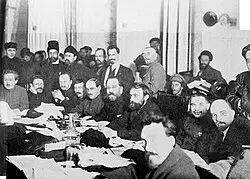
A communist group that wanted to change the government

A group of soldiers

A religious group
The Bolsheviks were a radical communist group that wanted to make Russia a communist country. They were not very powerful at first, but they became more popular over time. They wanted to end the war and give land to the peasants. They also wanted to give power to the workers. In October 1917, the Bolsheviks took over the government in a revolution called the October Revolution. They took control of Petrograd, which was the capital city. The Bolsheviks were successful because they were able to take advantage of the problems in Russia. They were also able to get support from the workers and soldiers. What type of group were the Bolsheviks?
A royalist group supporting the Tsar
A radical communist group
A democratic party
A group of soldiers
The Bolsheviks were a radical communist group that wanted to make Russia a communist country. They were not very powerful at first, but they became more popular over time. They wanted to end the war and give land to the peasants. They also wanted to give power to the workers. In October 1917, the Bolsheviks took over the government in a revolution called the October Revolution. They took control of Petrograd, which was the capital city. The Bolsheviks were successful because they were able to take advantage of the problems in Russia. They were also able to get support from the workers and soldiers. What did the Bolsheviks want for Russia?
The Bolsheviks wanted Russia to become a communist country.
The Bolsheviks wanted Russia to remain a monarchy.
The Bolsheviks wanted Russia to expand its empire.
The Bolsheviks wanted Russia to ally with Western Europe.
The Bolsheviks were a radical communist group that wanted to make Russia a communist country. They were not very powerful at first, but they became more popular over time. They wanted to end the war and give land to the peasants. They also wanted to give power to the workers. In October 1917, the Bolsheviks took over the government in a revolution called the October Revolution. They took control of Petrograd, which was the capital city. The Bolsheviks were successful because they were able to take advantage of the problems in Russia. They were also able to get support from the workers and soldiers. What did the Bolsheviks want to do for the peasants and workers?
Increase taxes on them
Give land to peasants and power to workers
Make them serve in the army
Take away their rights
The Bolsheviks were a radical communist group that wanted to make Russia a communist country. They were not very powerful at first, but they became more popular over time. They wanted to end the war and give land to the peasants. They also wanted to give power to the workers. In October 1917, the Bolsheviks took over the government in a revolution called the October Revolution. They took control of Petrograd, which was the capital city. The Bolsheviks were successful because they were able to take advantage of the problems in Russia. They were also able to get support from the workers and soldiers. What was the name of the revolution when the Bolsheviks took over the government?
February Revolution
October Revolution
Industrial Revolution
Russian Civil War
The Bolsheviks were a radical communist group that wanted to make Russia a communist country. They were not very powerful at first, but they became more popular over time. They wanted to end the war and give land to the peasants. They also wanted to give power to the workers. In October 1917, the Bolsheviks took over the government in a revolution called the October Revolution. They took control of Petrograd, which was the capital city. The Bolsheviks were successful because they were able to take advantage of the problems in Russia. They were also able to get support from the workers and soldiers. Why were the Bolsheviks successful in taking power?
They had strong support from other European countries
They used peaceful protests
They had help from the Tsar
They took advantage of Russia’s problems and gained support from workers and soldiers
In 1917, the peasant class made up roughly 80 to 85 percent of Russia's population, with some sources indicating it was as high as three-quarters of the population. This large, predominantly agricultural population played a significant role in the country's economy and the revolutionary movements of the time. Approximately what percentage of Russia’s population were peasants in 1917?
20 to 25 percent
40 to 50 percent
60 to 70 percent
80 to 85 percent
How did propaganda contribute to Adolf Hitler's rise to power in Germany in the 1930s?
Germany's Jewish population created the propaganda in order to make the Nazis look incompetent.
Propaganda was used by the Nazis in order to make them more appealing to Germany's population.
Hitler used Propaganda to make his political enemies look weak compared to him.
German propaganda gave the German people a target for all of their anger and hatred towards the Allies following World War I
Why was Germany forced to accept the blame for World War I?
The French and British wanted to take control of Germany.
The war was caused by Germany and their allies.
The French and British wanted Germany to be punished for starting the war.
Germany wanted to accept the blame for the war in order to protect the remainder of Europe.

What was the major event that caused World War I?
The assassination of Archduke Franz Ferdinand in 1914.
Russia declaring war on Japan
Hitler's declaration of war on the United Kingdom
Germany's invasion of Belgium
Which treaty ended World War I and arguably led to the events that caused World War II?
The Treaty of Paris
The Treaty of Japan
The Treaty of Versailles
The Treaty of Brest-Litovsk
What country was formed after the Russian Civil War ended in 1922?
the Russian Republic
the Russian Federation
the People's Republic of Russia
the Union of Soviet Socialist Republics (U.S.S.R)
When the Nazi Party took power in Germany, the German government adopted
a democratic system of representation.
The Nazi Party dismantled the remaining democratic institutions in Germany and transformed it into a totalitarian state.
a policy of appeasement toward the Allies.
Allied powers, including Great Britain and France, adopted a policy of appeasement toward Germany. The Nazi Party did not adopt a policy of appeasement toward the Allies.
a policy of state-sponsored anti-Semitism.
When the Nazis took power in Germany, their anti-Semitic views became official German policy. This policy was implemented through propaganda, laws targeting Jewish people and their businesses, the creation of ghettos and concentration camps, and the Holocaust.
a communist system of economics.
The Nazi Party also blamed communists for Germany's problems. The party did not adopt a communist system.
How did Nazi propaganda reduce public resistance to the policies that ultimately led to the Holocaust?
It blamed Germany’s economic and social problems on the Jewish people.
One of the main purposes of Nazi propaganda was to use the Jewish people as a scapegoat for the problems faced by Germany. The propaganda dehumanized the Jewish people and reduced resistance to racially-motivated oppression and murder of marginalized populations.
It convinced Germans that the United States was to blame for their suffering.
The purpose of Nazi propaganda was to shift blame for Germany’s social and economic problems to the Jewish people, not the United States.
It motivated German workers to rise up and take control of the means of production.
Nazi propaganda was not designed to lead to a workers’ uprising; the Nazi Party opposed communism.
It encouraged German consumers to boycott businesses run by Fascist Party members.
The purpose of Nazi propaganda was to shift blame for Germany’s social and economic problems to the Jewish people, not the Fascist Party.

Who led the Bolshevik Party during the Russian Revolution and became the first leader of the Soviet Union?
Adolf Hitler
Vladimir Lenin
Benito Mussolini
Joseph Stalin

What was the United States most interested in during the negotiation of the Treaty of Versailles at the end of World War I?
preventing future international conflict
As illustrated by President Woodrow Wilson's Fourteen Points, which he put forth as a road map for the negotiations, the United States was primarily focused on establishing international peace and preventing future conflict among the nations of Europe.
punishing those responsible for the war
The focus of the United States was primarily on establishing international peace and preventing future conflict. It was primarily France that was interested in assigning blame for the war and punishing Germany for its role in the conflict.
acquiring control of Germany's colonies
The United States did not seek to acquire territory during the negotiations, but rather supported measures aimed at promoting peace in Europe.
reducing the strength of the German navy
Great Britain, not the United States, was most interested in weakening Germany's navy. Additionally, the German navy had largely been destroyed prior to the Paris Peace Conference at which the Treaty of Versailles was negotiated and the topic was not a focus of negotiations.
Study the piece of 1943 Nazi propaganda and answer the question. How did Nazi propaganda such as this reduce public resistance to the policies that ultimately led to the Holocaust?
It blamed Germany’s economic and social problems on the Jewish people.
One of the main purposes of Nazi propaganda was to use the Jewish people as a scapegoat for the problems faced by Germany, such as World War II, as referenced in the poster. The propaganda dehumanized the Jewish people and reduced resistance to racially-motivated oppression and murder of marginalized populations.
It convinced Germans that the United States was to blame for their suffering.
The purpose of Nazi propaganda was to shift blame for Germany’s social and economic problems to the Jewish people, not the United States.
It motivated German workers to rise up and take control of the means of production.
Nazi propaganda was not designed to lead to a workers’ uprising; the Nazi Party opposed communism.
It encouraged German consumers to boycott businesses run by Fascist Party members.
The purpose of Nazi propaganda was to shift blame for Germany’s social and economic problems to the Jewish people, not the Fascist Party.
What was the basis of Nazi propaganda in the 1930s?
anti-Semitic ideas
pro-Christian ideas
anti-capitalist ideas
pro-communist ideas

What factor helped the Bolshevik Communists gain power in Russia?
The United States supported the goals of the Bolsheviks and provided them with money and weapons.
The Russian Republic surrendered in World War I but the people of Russia wanted to continue the fight.
The Russian people were suffering because of World War I and wanted to end the war.
The tsar supported the Bolsheviks and the Russian people followed the will of the tsar.
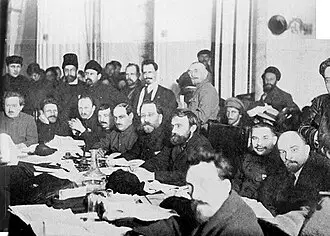
What led to the creation of the Soviet Union?
the rise in power of the communist Bolshevik Party
the harsh terms of the Treaty of Versailles
the rise in power of the National Socialist Party
the harsh terms of the Molotov-Ribbentrop Pact
What was the primary focus of Nazi propaganda in the 1930s?
supporting democratic ideals
encouraging Germans to work hard
creating a strong communist economy
blaming Germany's problems on others
Which development contributed to Russia's withdrawal from World War I?
the rise of communism in Russia
the collapse of the Russian economy
the growth of fascism in Eastern Europe
the signing of a peace treaty with Germany
What caused Russia to withdraw from World War I?
the overthrow of the Russian monarchy
the entrance of the Ottoman Empire into the war
the capture of Saint Petersburg by German forces
the decision by the United States to join the war effort

