
 Worksheets
Post-Civil War Challenges in the South
Total questions: 30
Worksheet time: 45mins
What was one of the main challenges faced by blacks in the South after the Civil War?
Access to education
Gaining equality
Finding housing
Traveling freely
What system replaced slave-filled plantations as the driving force behind the Southern economy by the end of the 1860s?
Industrialization
Sharecropping
Urbanization
Mechanization
What did the Jim Crow laws enforce in the South during the 1880s?
Economic equality
Racial segregation
Voting rights
Educational reform
What was the purpose of The Freedmen’s Bureau?
To promote industrial growth
To help newly freed African-Americans
To enforce Jim Crow laws
To support Confederate veterans
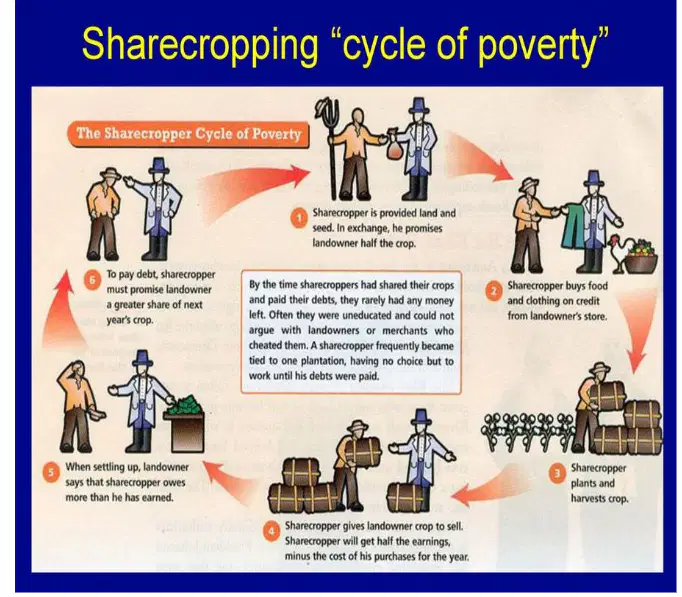
What was a consequence of the sharecropping system for laborers?
They gained financial independence
They owned the land they worked on
They remained in a cycle of poverty
They received government support
What was the significance of the Supreme Court's decision in Plessy v. Ferguson (1896)?
It declared segregation unconstitutional.
It declared all 'separate but equal' facilities to be constitutional.
It abolished the Ku Klux Klan.
It ended racial discrimination in voting.
What did the 15th Amendment aim to achieve?
It aimed to abolish slavery.
It aimed to grant women the right to vote.
It aimed to ban governments from using race as a reason to prohibit the right to vote.
It aimed to establish 'separate but equal' facilities.
How did southern state governments circumvent the 15th Amendment?
By abolishing the Ku Klux Klan.
By passing laws requiring a literacy test and poll tax to vote.
By promoting racial equality.
By supporting African-American voting rights.
What was the primary purpose of the Ku Klux Klan when it was formed in 1866?
To promote racial equality.
To support African-American voting rights.
To terrorize blacks and prevent them from voting.
To abolish segregation laws.
What tactics did the Ku Klux Klan use to intimidate African-Americans?
Peaceful protests and negotiations.
Legal challenges in court.
Harassment, beatings, and lynchings.
Educational campaigns.
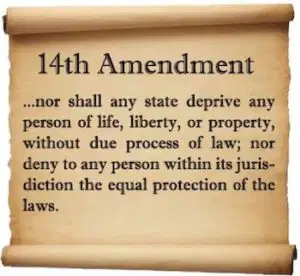
Which amendment to the U.S. Constitution granted citizenship to all persons born or naturalized in the United States?
15th Amendment
13th Amendment
16th Amendment
14th Amendment
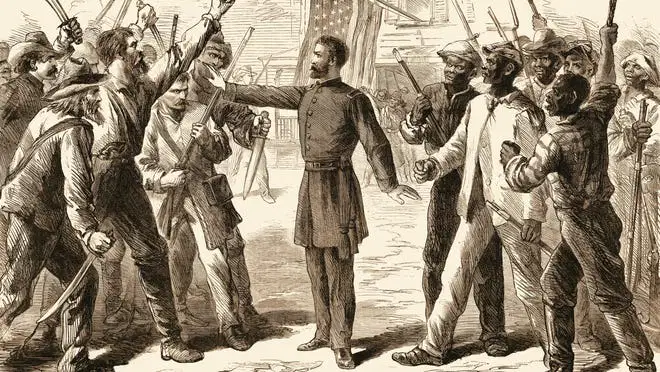
Which organization was established to help former slaves adjust to freedom after the Civil War?
The Ku Klux Klan
The National Association for the Advancement of Colored People (NAACP)
The Freedmen's Bureau
The Southern Christian Leadership Conference

Which of the following best describes the impact of Jim Crow laws on African-Americans in the South?
They promoted integration in schools.
They abolished discriminatory voting practices.
They enforced racial segregation in public facilities.
They provided equal opportunities for all races.

What was a common method used by Southern states to prevent African-Americans from voting after Reconstruction?
Granting automatic citizenship.
Implementing poll taxes and literacy tests.
Encouraging African-American political participation.
Providing free education.

Which organization was created to assist freed slaves with education, employment, and legal matters after the Civil War?
The Freedmen's Bureau
The National Urban League
The Ku Klux Klan
The Southern Christian Leadership Conference

What is the historical significance of this act below?
It was the first time Congress voted to overrule a presidential veto.
It represented a shift in federal power after the impeachment of President Johnson.
It was the first time Congress passed a law that protected racial minorities.
It represented the failure of northern abolitionists to influence Reconstruction policies.

A historian is writing an article for a history website. The article is divided into the following topics below:
Which era in U.S. history is the focus of this article?
The Jacksonian era.
The antebellum era.
The Federalist era.
The Reconstruction era.

Southern states passed the codes described in this excerpt below in order to —
limit the effects of the Reconstruction Amendments.
increase the labor supply for factory jobs in the North.
decrease the number of northern representatives in Congress.
improve relations with the Democratic Party.

Which of these occurred as a result of the Fifteenth Amendment?
African American families divided by slavery were reunited.
Newly free men and women moved west to claim land.
African American men voted in the 1872 presidential election.
Newly free men and women were allowed to apply for U.S. citizenship.

The Fifteenth Amendment was ratified in order to?
establish legal requirements for the education of former slaves.
mandate fair labor contracts between African American workers and plantation owners.
abolish the institution of slavery.
protect the voting rights of African American men.

The measures in the list above are examples of ways southern states weakened the effects of the?
Compromise of 1850.
Fifteenth Amendment.
Treaty of Guadalupe Hidalgo.
Dred Scott v. Sanford decision.

Which government organization was created to help newly freed enslaved people adjust to society?
Black Codes
the Freedmen's Bureau
Poll Taxes
Jim Crow Laws

In this diagram, what should replace the question mark?
Jim Crow laws are unconstitutional
Public facilities should be available to all races
Integration of schools is required by law
Separate but equal public facilities are constitutional

Laws that required the African-Americans be separated from white in public places are...
Jim Crow Laws
Black Codes
Grandfather Codes
Integration Laws

The period of rebuilding of The South after The Civil War was known as
The Renaissance
Reconstruction
The Guilded Age
The Industrial Revolution
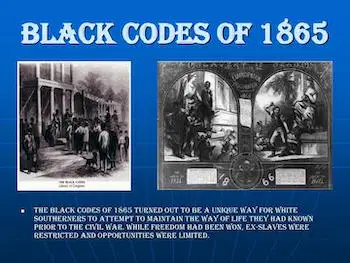
Which of the following was a direct result of the Black Codes enacted in the South after the Civil War?
Immediate integration of public schools
Restriction of African-American rights and freedoms
Expansion of voting rights to women
Increased political participation by African-Americans

What was the main objective of the Jim Crow laws passed in Southern states?
To promote racial equality
To enforce racial segregation
To abolish slavery
To provide land to freed slaves

Which amendment abolished slavery in the United States?
13th Amendment
14th Amendment
16th Amendment
15th Amendment
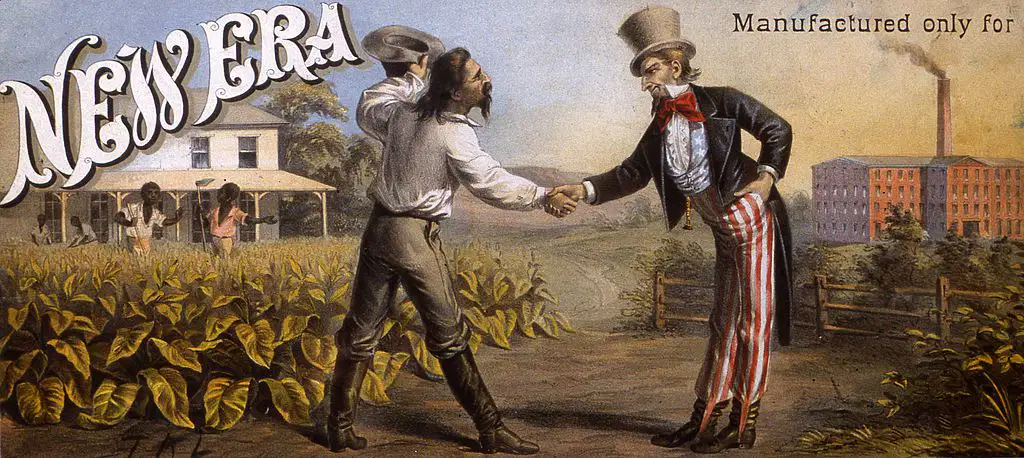
Which of the following best describes the main goal of the Reconstruction Amendments?
To expand voting rights and civil liberties for formerly enslaved people
To encourage westward expansion
To restore the Southern economy to pre-war conditions
To limit the power of the federal government
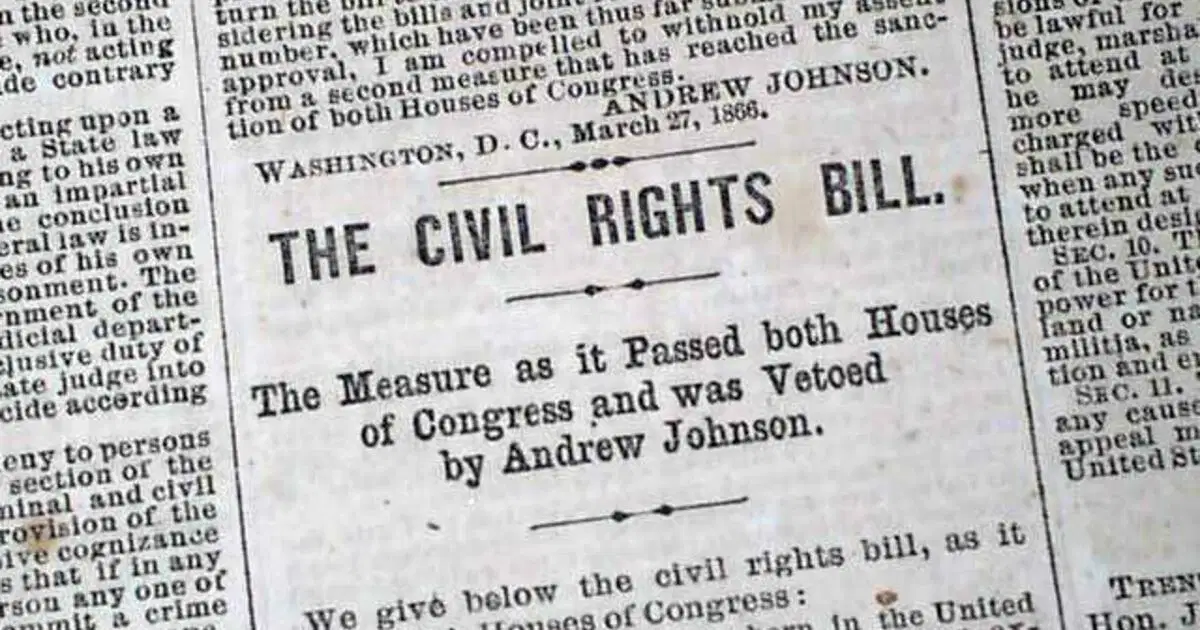
Which of the following was a key purpose of the Civil Rights Act of 1866?
To establish the Freedmen's Bureau
To grant citizenship and equal protection under the law to African-Americans
To enforce poll taxes in the South
To create new Confederate states

