
 Worksheets
Approaches to design
Total questions: 20
Worksheet time: 10mins
What is the first step in the linear design process as described in the material?
Discover: understand the problem/need
Develop: build the product or process
Deliver: get the product or process into use
Design: create a product/process to meet the need
Which of the following best describes the purpose of the iterative design process?
To continually improve and refine a design or product.
To create a design only once and never change it.
To manufacture products in large quantities.
To design products without any user feedback.
Explain how the iterative design process can be applied to improve a product over time. Use reasoning to support your answer.
By repeatedly creating, testing, and refining prototypes, designers can identify and address issues, ensuring the product better meets user needs and design criteria with each cycle.
By creating a single prototype and never changing it, the product remains the same.
By ignoring user feedback and focusing only on initial ideas, the product is finalized quickly.
By producing as many prototypes as possible without testing, the product is improved.
A company wants to ensure their new app can be used by people of different ages, languages, and abilities. Which design approach are they using?
Minimalist design
Inclusive design
Exclusive design
Retro design
Why is it important for inclusive design to consider aspects such as culture, gender, and age?
Because these factors can affect a person's ability to use a product, service, or environment.
Because it makes the product more expensive.
Because it is required by law in every country.
Because it only benefits a small group of people.
Why does designing for the widest range of people lead to better designs and benefit more people?
Because it makes products more expensive.
Because it limits the number of users.
Because it ensures that more people can use and benefit from the design.
Because it focuses only on the needs of the majority.
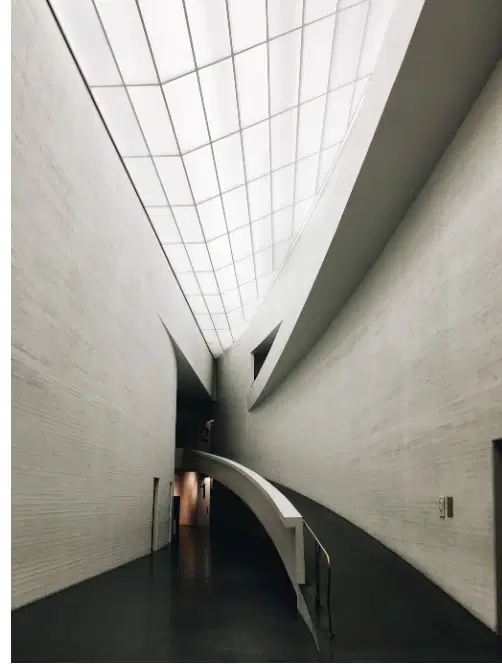
A museum in Helsinki uses shallow ramps to connect different rooms. How does this feature demonstrate inclusive design principles?
It makes the museum more expensive to build.
It restricts access to only able-bodied visitors.
It allows people of varying abilities to move between rooms easily.
It is only for decorative purposes.
Which of the following best describes why clearance is an important factor in ergonomic design?
It ensures that products are lightweight and easy to carry.
It provides adequate space for headroom, elbow-room, and leg-room to accommodate users with larger than average dimensions.
It makes products more visually appealing.
It increases the durability of the product.
A company wants to reduce manufacturing costs by optimizing their product design in advance. According to DFM principles, what is the most likely outcome of this approach?
Manufacturing costs will be reduced and waste will decrease.
The product will become more difficult to manufacture.
The design phase will become more expensive.
Potential problems will be ignored until later stages.
Why should design drawings conform to accepted manufacturing principles according to DFM principles?
To ensure all relevant specifications for the manufacturing process are included.
To make the drawings more artistic.
To reduce the number of materials used.
To avoid using notations in the design.
A part must be set up multiple times during manufacturing, both in one machine and across several machines. According to DFM principles, what should be considered to improve efficiency?
The number of times a part must be set up should be minimized.
The part should be made larger.
The part should be painted a different color.
The part should be made from the most expensive material.
A manufacturer is considering two designs for a product. Design A has 20 parts, while Design B has 10 parts. Using the principles of DFA, which design is likely to be more cost-effective and why?
Design A, because more parts mean higher quality
Design B, because fewer parts take less time to assemble, reducing costs
Design A, because it is more complex
Both designs are equally cost-effective
Explain how the concept of "end of life" in the sustainable design cycle contributes to ecological sustainability.
It ensures products are disposed of in landfills.
It encourages the reuse, recycling, or safe disposal of products to minimize environmental impact.
It focuses on increasing the lifespan of products only.
It is about maximizing profit from old products.
Which of the following best describes the concept of "Reduce" in the context of the six Rs?
Refusing to use single-use plastic products
Minimizing the amount of material, energy, or water needed to manufacture a product
Making sure a product is easy to recycle
Ensuring spare parts are available for repair
If a designer is considering whether a product can be used again in a new way to extend its life, which of the six Rs are they applying?
Reuse
Refuse
Rethink
Reduce
Which of the six Rs focuses on making products that can be easily fixed instead of thrown away?
Refuse
Rethink
Repair
Recycle
What is a key benefit of using the iterative design process in product development?
It reduces the need for testing prototypes.
It allows for continuous improvement based on user feedback.
It focuses only on the initial concept.
It eliminates the need for design changes.
How does designing for disassembly contribute to sustainable product design?
It increases the complexity of the product.
It reduces the lifespan of the product.
It makes products more difficult to repair.
It makes it easier to separate and recycle materials at the end of a product's life.
Which of the following is a primary goal of Design for Assembly (DFA)?
To simplify product assembly and reduce manufacturing costs
To use the most expensive materials available
To focus only on the appearance of the product
To increase the number of parts in a product
How can ergonomic design improve user experience?
By ensuring products fit the physical needs and abilities of users
By increasing the number of features regardless of usability
By focusing only on the product's color
By making products more difficult to use

