
 Worksheets
Quiz on GPS, Diodes, Geotextiles, and Ohm's Law
Total questions: 36
Worksheet time: 18mins
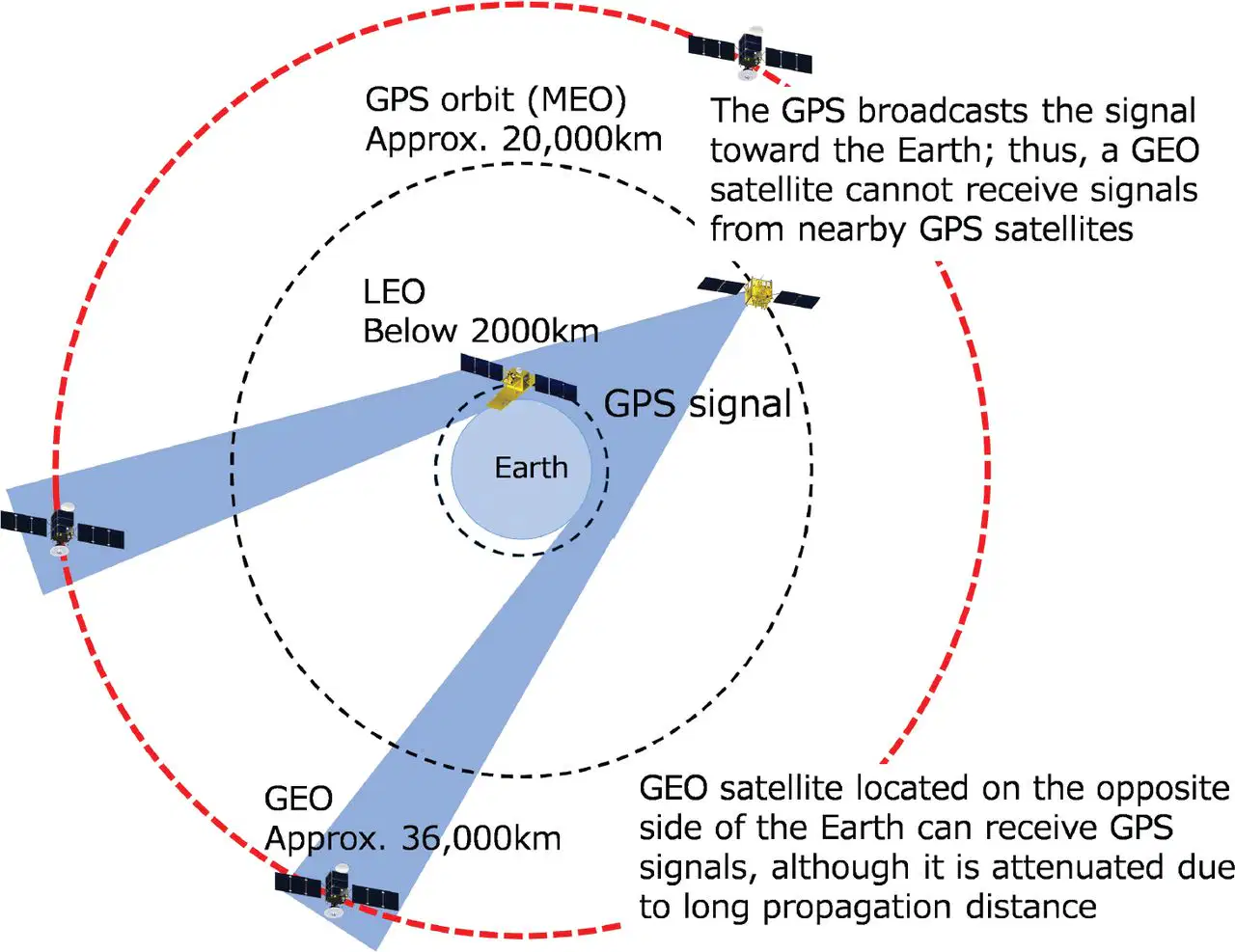
GPS satellites are located in which type of orbit?
Geostationary orbit (~36,000 km)
Medium Earth Orbit (~20,200 km)
Low Earth Orbit (~500 km)
Polar Orbit (~1,000 km)

Which statement about GPS satellites is correct?
They remain fixed above the equator.
They match the Earth’s rotation (24 hours).
They orbit with a period of about 12 hours in inclined planes.
They orbit every 90 minutes like low Earth orbit satellites.
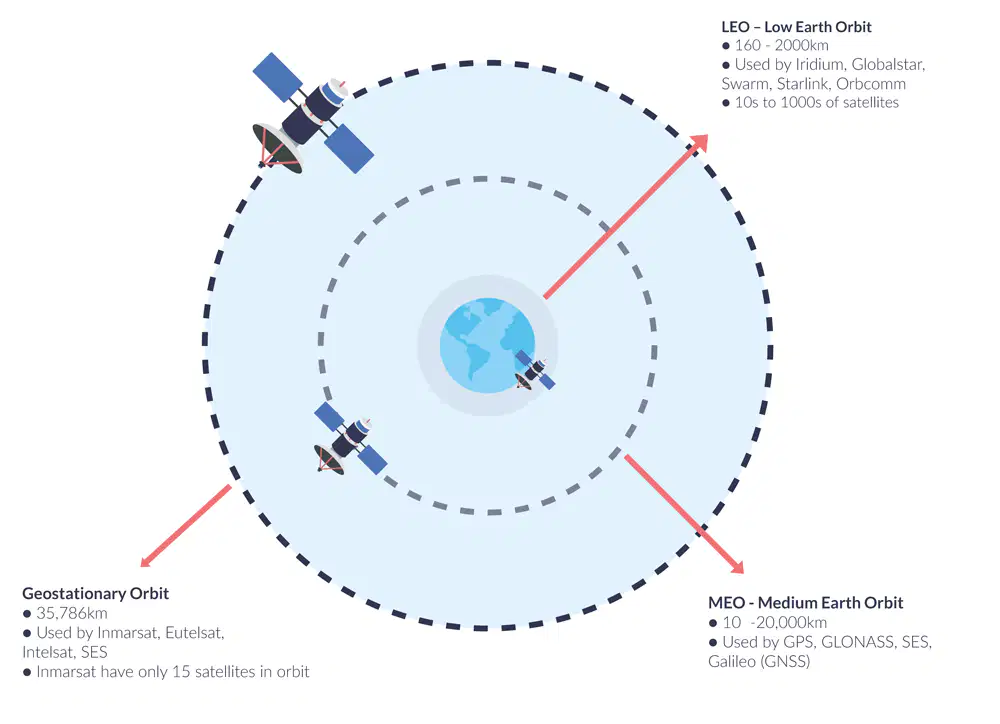
Why are GPS satellites not placed in geostationary orbit?
Because geostationary orbit is too close to Earth
Because geostationary satellites only cover regions near the equator
Because geostationary satellites cannot carry atomic clocks
Because GPS requires satellites that remain fixed above one point
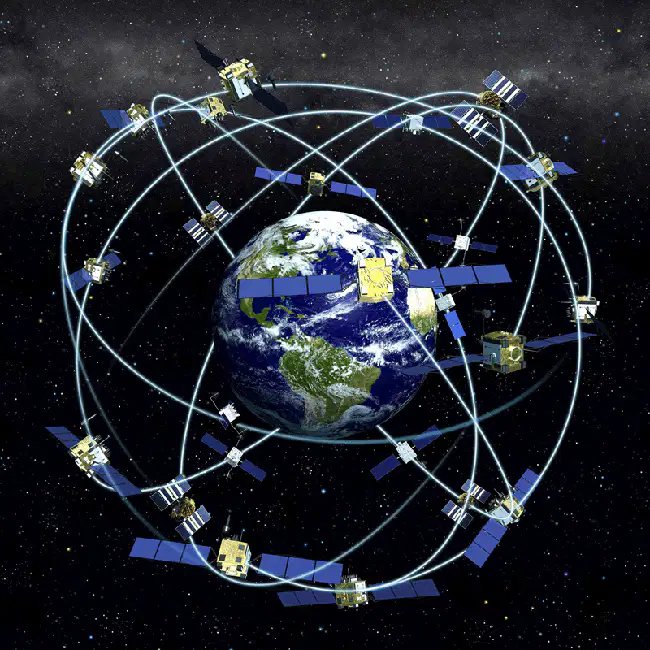
Which of the following identifies the correct orbital characteristics of GPS satellites?
Matches Earth’s rotation and is above the equator
Matches Earth’s rotation but not above the equator
Does not match Earth’s rotation and is not above the equator
Does not match Earth’s rotation but is above the equator
GPS satellites orbit in inclined planes. What is the main advantage of this?
Allows continuous global coverage
Makes them appear stationary above one point
Reduces the need for atomic clocks
Prevents signal interference

What is the primary function of a diode in a circuit?
Amplifies signals
Allows current to flow in both directions
Allows current to flow in only one direction
Stores electric charge
In the diode symbol (►|), which part represents the cathode?
The triangle
The line
The arrow tip
Both triangle and line
What is the approximate forward voltage drop across a silicon diode?
0.1 V
0.3 V
0.7 V
1.5 V
What happens when a diode is reverse biased?
Current flows freely
No current flows (except tiny leakage)
It amplifies voltage
It stores energy
If the reverse voltage across a diode is too high, what occurs?
The diode becomes a resistor
The diode breaks down
The diode emits light
Nothing changes
Which of the following is NOT a typical use of diodes?
Rectification (AC → DC)
Voltage regulation (Zener diode)
Signal demodulation
Energy storage in capacitors
Which type of diode is specifically designed to emit light?
Zener diode
Schottky diode
LED
Tunnel diode
What is the main function of a diode bridge in a power supply?
To amplify alternating current (AC)
To convert alternating current (AC) into direct current (DC)
To store electrical energy for later use
To step voltage up or down
How many diodes are required to construct a standard diode bridge for full-wave rectification?
1
2
4
6
Compared to half-wave rectification, full-wave rectification using a diode bridge produces:
A smoother DC output with both halves of the AC wave rectified
No change in the output waveform
A larger voltage drop across each diode
A higher frequency AC waveform at the output
What is the typical forward voltage drop across the conducting diodes in a bridge rectifier (using silicon diodes)?
0.7 V total
1.4 V total
2.8 V total
0 V
Why is full-wave rectification preferred over half-wave rectification in power supplies?
It eliminates the need for filtering
It reduces the size and weight of the diodes
It increases efficiency by using both halves of the AC cycle
It allows AC to pass through unchanged
In the waveform produced by a diode bridge, the frequency of the rectified output compared to the input AC frequency is:
The same as the input frequency
Half the input frequency
Double the input frequency
Zero (DC only)
Which set of material properties should be considered when selecting the geotextile?
Colour, opacity, filtration
Colour, permeability, rigidity
Tensile strength, opacity, rigidity
Tensile strength, permeability, filtration
Which of the following best describes a geotextile in civil engineering?
A metallic reinforcement grid placed behind concrete walls
A synthetic permeable fabric used for soil reinforcement and drainage
A waterproof membrane used to prevent all water movement
A ceramic material used to resist high compressive forces
In a retaining wall, what property of a geotextile prevents soil particles being washed away while still allowing water to pass?
Tensile strength
Permeability
Filtration
Rigidity
Why must a geotextile used in embankments or retaining walls have high tensile strength?
To resist compressive loads from water pressure
To act as a capacitor storing electrical charge
To hold soil in place and provide reinforcement
To reduce the density of the soil structure
Which set of properties is most critical when selecting a geotextile for civil engineering applications?
Colour, opacity, rigidity
Tensile strength, permeability, filtration
Density, opacity, electrical resistance
Hardness, opacity, corrosion resistance
In road construction, how do geotextiles improve the performance of the pavement structure?
By increasing soil permeability and preventing mixing of base layers
By reducing the coefficient of friction between asphalt layers
By storing energy during vehicle loading
By making the road surface reflective
Which environmental benefit is directly linked to the use of geotextiles in civil structures?
Improved signal transmission in telecommunications
Reduction in soil erosion and sediment runoff
Elimination of tensile stresses in reinforced concrete
Reduced corrosion in metallic fasteners
What is the main purpose of using a half-sectional view in engineering drawing?
To show only the external features of a component
To show hidden detail using dashed lines
To show internal detail on one half and external view on the other
To reduce the number of dimensions required
In a half-section drawing, where is the cutting plane normally placed?
Along the horizontal centreline
Along the vertical centreline
At an angle of 45° to the component
Across any random feature
When drawing a half section, what should be shown on the sectioned half of the view?
External shape only
Hidden detail with dashed lines
Hatching lines for solid areas cut by the plane
Nothing – it is left blank
In a half-sectional view, what is shown on the non-sectioned half?
Only external outlines and centre lines
Hatching and hidden detail
Full sectioning of the part
Hidden lines only
According to AS 1100 standards, which of the following is not correct in a half section?
Hatching at 45° is applied to the cut material
The cutting plane passes through the centreline
The external half shows only outline and centre lines
Hidden detail is included on the external half
Why are half-sectional views commonly used in technical drawing?
They make the drawing look more complex
They reduce the amount of hatching required
They hide internal features from the viewer
They eliminate the need for dimensions
Which of the following equations is the correct form of Ohm’s Law?
P = I × V
V = I × R
E = m × c
F = m × a
If a resistor has a resistance of 20Ω and a current of 2A flows through it, what is the voltage across it?
10 V
20 V
40 V
80 V
A 12 V supply is connected across a resistor. The current measured is 3A. What is the resistance?
2Ω
3Ω
4Ω
6Ω
What happens to the current through a resistor if the resistance is doubled while the supply voltage remains the same?
Current doubles
Current halves
Current remains the same
Current becomes zero
Which of the following best describes the relationship expressed by Ohm’s Law?
Current is proportional to resistance at constant voltage
Voltage is proportional to current at constant resistance
Resistance is proportional to voltage at constant power
Current is proportional to power at constant resistance

