
 Worksheets
World History II: Unit 2 Test
Total questions: 30
Worksheet time: 30mins
Name
Class
Date
1.
One main reason for European exploration was to -
a)
discover new animals
b)
conquer Africa
c)
discover new spices
d)
spread Christianity
2.
Who were the first Europeans in North America?
a)
The Vandals
b)
The Dutch
c)
The English
d)
The Vikings
3.
Who did Spain send on a voyage to claim land on the crown's behalf?
a)
Christopher Columbus
b)
Marco Polo
c)
Amerigo Vespucci
d)
Vasco da Gama
4.
John Cabot was an Italian explorer sent by England to...?
a)
Gather slaves
b)
Collect new spices
c)
Look for a route to Asia
d)
Persecute nearby Muslims
5.
North and South America were named after him
a)
Christopher Columbus
b)
John Cabot
c)
Amerigo Vespucci
d)
King Ferdinand of Spain
6.
Who named and claimed Canada for France?
a)
Samuel de Champlain
b)
Jacques Cartier
c)
Joseph Nicollet
d)
Christopher Columbus
7.
Who was a Spanish explorer and the governor of Puerto Rico?
a)
Vasco da Gama
b)
Amerigo Vespucci
c)
Hernan Cortes
d)
Juan Ponce de Leon
8.
Which explorer conquered the Aztecs in 1519?
a)
Hernan Cortes
b)
Juan Ponce de Leon
c)
Hernando de Soto
d)
Amerigo Vespucci
9.
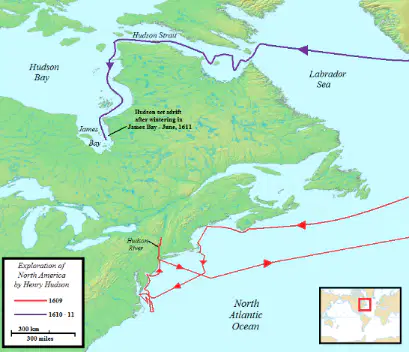
Who sailed the routes pictured here, and claimed modern New York for the Dutch in 1609?
a)
Christopher Columbus
b)
Lewis and Clark
c)
Henry Hudson
d)
Charles Laroy
10.
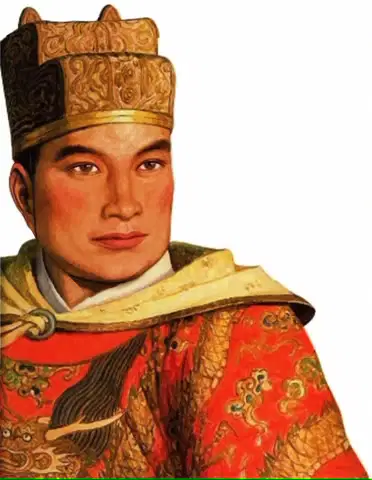
Which explorer pictured here demonstrated the power and wealth of the Ming Dynasty?
a)
Emperor Chin Ho
b)
Zheng He
c)
Xinjin Min
d)
Emperor Qui
11.
This explorer helped establish lucrative trade routes between India and Europe. Who was he/she?
a)
Christopher Columbus
b)
Vasco da Gama
c)
Henry Hudson
d)
Ferdinand Magellan
12.
This Spanish conquistador made alliances with indigenous groups, exploring and conquering large parts of Mexico. His name was…?
a)
Ferdinand Magellan
b)
Christopher Columbus
c)
Vasco da Gama
d)
Hernan Cortes
13.
What was the Columbian Exchange?
a)
An agreement between Columbia and Africa to exchange spices for slaves
b)
A widespread exchange of exotic and lucrative goods from the New World to the Old World
c)
A financial crisis in Latin America that began in Columbia
d)
A military coup attempting to dethrone the Columbian prince
14.

The image here depicts good from...?
a)
New World
b)
Old World
c)
Africa
d)
Asia
15.

The image here depicts goods from...?
a)
Central America
b)
Central Asia
c)
Africa
d)
The Old World
16.
What event eventually leads to massive trade changes across the globe?
a)
A religious war between Christians and Jews
b)
Old world explorers interacting with indigenous groups
c)
The expansion of the Roman Empire
d)
The assassination of King Leo of the Byzantine Empire
17.
French explorers of the New World set up which colonies?
a)
Brazil
b)
Mexico and South America
c)
Haiti, Guadalupe, and Martinique
d)
North America, Barbados, and Jamaica
18.
How did the Columbian Exchange impact global economics?
a)
Trade became stagnant
b)
New industries like cattle ranching and coffee growing were created
c)
The Kings of colonizers kept all the money for themselves
d)
Financial gaps in society widened
19.
The Spanish system whereby Native Americans became enslaved laborers was the…?
a)
Sistema de Labor
b)
Inquisitionist System
c)
Encomienda system
d)
Spanish never enslaved the Native Americans
20.
What is the definition of a person with “mestizo” descent?
a)
100% indigenous
b)
Complete Spaniard origin
c)
Mixed race: half Spanish, half Indian
d)
100% white origin
21.
Why did European life expectancy slowly increase?
a)
The rise of medical technology
b)
An increase in the number of doctors
c)
Nutritious crops become part of the European cuisine
d)
Less diseases spread throughout the region
22.
What caused the destruction of over 90% of the Native American population?
a)
A Spanish massacre
b)
Genocide
c)
Disease
d)
Lack of medical knowledge
23.
Why did the Indigenous religion and culture eventually suffer?
a)
The whole population died of disease
b)
The Europeans took over culturally and religiously
c)
The Spanish conquistadors ban any other cultural practices
d)
Indigenous people abandoned their native traditions to fit in with the Europeans
24.
The brutal voyage that brought enslaved Africans to the West Indies and Americas was the -
a)
A. Triangle of trade
b)
B. Columbian Strait
c)
C. Middle passage
d)
D. Strait of Gibraltar
25.
Who brough the first enslaved Africans to the New World in 1518?
a)
The Spanish
b)
The Belgians
c)
The Portuguese
d)
The English
26.

What is the economic theory whereby countries gain power by building up their wealth through resources?
a)
Capitalism
b)
Socialism
c)
Mercantilism
d)
Communism
27.
In 1639, Japan’s borders were sealed so that…?
a)
Christianity doesn’t spread throughout the region
b)
No one could leave and bring back foreign ideas
c)
The region could keep out famine and disease
d)
The plague doesn’t spread through Japan
28.
What shattered Japan’s feudal system?
a)
Famine
b)
Coup d’état
c)
Civil war
d)
Religious revolution
29.
China’s trade policies in the 1500’s reflected…?
a)
Isolation
b)
Globalism
c)
Economic superiority
d)
Economic interdependence
30.
Why did many Europeans want to trade with China and Japan?
a)
They needed more spices
b)
Asia was a hotspot for luxury goods
c)
Europeans wanted to gain more power in Asia
d)
Europeans were desperate for edible goods after a famine
100 %

