
 Worksheets
Gilroy Unit 2 Test Review
Total questions: 30
Worksheet time: 15mins

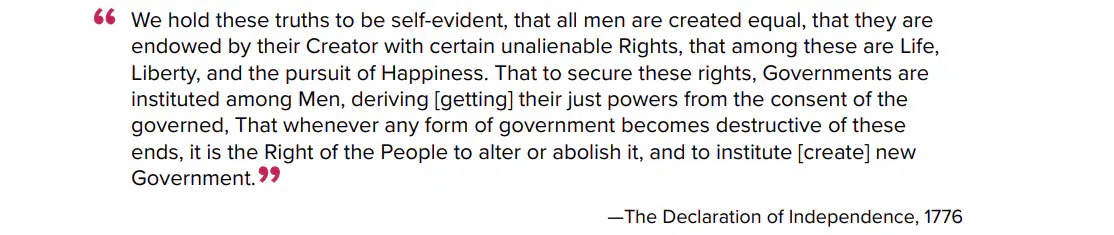
Which of the following Enlightenment ideas is found in this excerpt of the Declaration of independence?
Natural Rights//Social Contracts
Rule of Law
Separation of Powers
Abolition
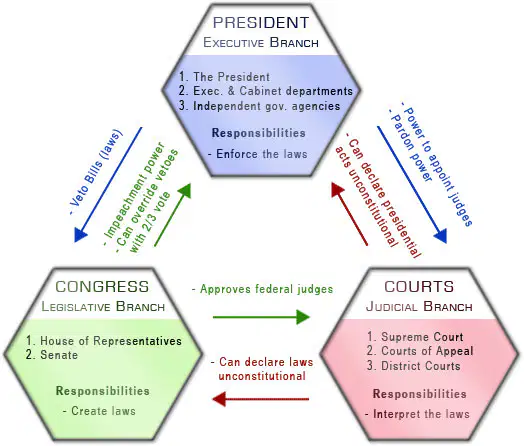
EXPLAIN: The Enlightenment Influence represented in this image.
Natural Rights
Separation of Powers
Due Process
Social Contracts
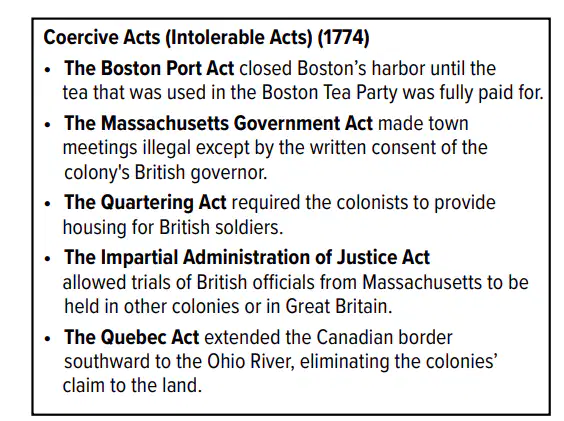
Identify the nickname given to this group of laws
Intolerable Acts
Boston Acts
Pre-Revolutionary Acts
Patriot Acts
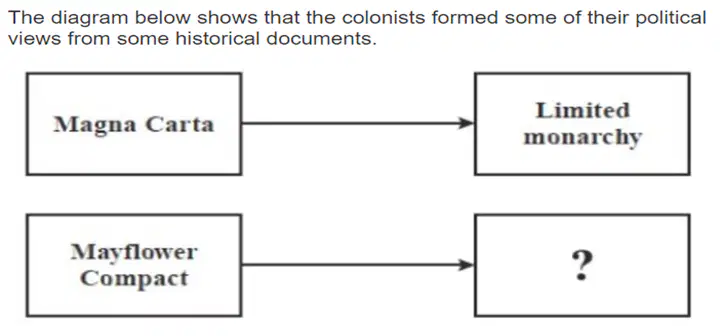
Which Enlightenment idea best completes this image?
Separation of Powers
Self Government
Individual Rights
What are the three Natural Rights John Locke say people are born with?
Life, Liberty, Property
Life, Taxes, and Speech
Liberty, Love, and to Party
Which of the following best describes the Enlightenment concept "Rule of Law?"
Only the King has to follow the laws
If you are wealthy or famous there are special laws just for you
All people must follow laws and the laws must be enforced fairly
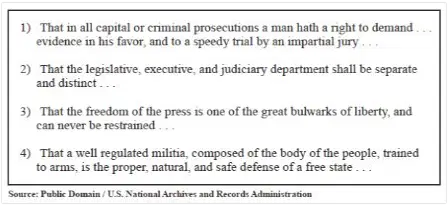
Which statement reflects the Enlightenment ideas of government as expressed by Montesquieu?
1
2
3
4
The Declaration of Independence has four parts: Preamble, Declaration of Rights, Grievances, and what other part?
Elastic Clause
Resolution of Independence
Natural Rights
If you sold a newspaper in 1765 you would have to put what on it?
Tax Stamp
Tea Tax
Price Tag
The Townshend Acts put taxes on which items?
Lead, tea, glass
stamps, produce, tea
Herbs, spices, wheat
Which of the following is NOT a way that Colonists reacted to the Intolerable Acts?
Boycott
Tar and Feather Officials
Boston Tea Party
Marching to Washington
What was the colonists main issue with Britain during the 1770s?
Taxation without Representation
Military Draft
Any new laws
In the Declaration of Independence, what does Jefferson mean by the concept “Consent of the Governed”?
That the people agree to allow the government to rule
That there will be no more government anymore
The military will run the country
Which enlightenment thinker came up with the idea for the Social Contract?
John Locke
Thomas Jefferson
Thomas Paine
Why did Parliament eventually repeal the Stamp Act, which taxed goods such as newspapers and playing cards?
The colonists established a blockade against British goods.
The colonists were able to produce their own goods.
The colonists began boycotting British goods.
Which documents influenced the colonists’ views of government?
Virginia Declaration of Rights, Common Sense, Bill of Rights
Magna Carta, Mayflower Compact, Common Sense
Magna Carta, Iroquois Constitution, Common Sense
Define: Polis
A Greek city-state
Limits on a government
A system where people have a say in government
A human right
Define: Democracy
A system of government by the whole population or all the eligible members of a state
Human rights that cannot be taken away, violated, or given up, even if someone wants to
An official statement of a complaint over something believed to be wrong or unfair
Limits on what government officials can do
Define: Act
A Law
The beginning to a document
To refuse to buy
SS.7.CG.1.4 6. Which sentence best describes John Locke’s idea of a social contract
People have the right to speak freely, and the government must protect that right.
Government powers must be divided among different branches to protect people’s rights.
People agree to be ruled because their ruler agrees to protect them and their rights.
People have the power to create laws and elect the leaders of their government
The Stamp Act
Placed taxes on any published piece of paper
Placed taxes on Tea
Closed the Port of Boston
The Quartering Act
Forced colonists to house British soldiers
Forced colonists to join the army
Prevented colonists from joining the army
Allowed free speech in Quebec
The Impartial Administration of Justice Act
Moved American trials to England
Banned self-government in Massachusetts
Closed the Port of Boston
Taxed tea
Which conflict put England into heavy debt during the 1700s?
French and Indian War
War of 1812
French Revolution
Spanish Inquisition

