
 Worksheets
Trial By Fire Review Topics 5 & 6
Total questions: 33
Worksheet time: 21mins
What is the smallest unit of matter?
Element
Atom
Compound
Molecule
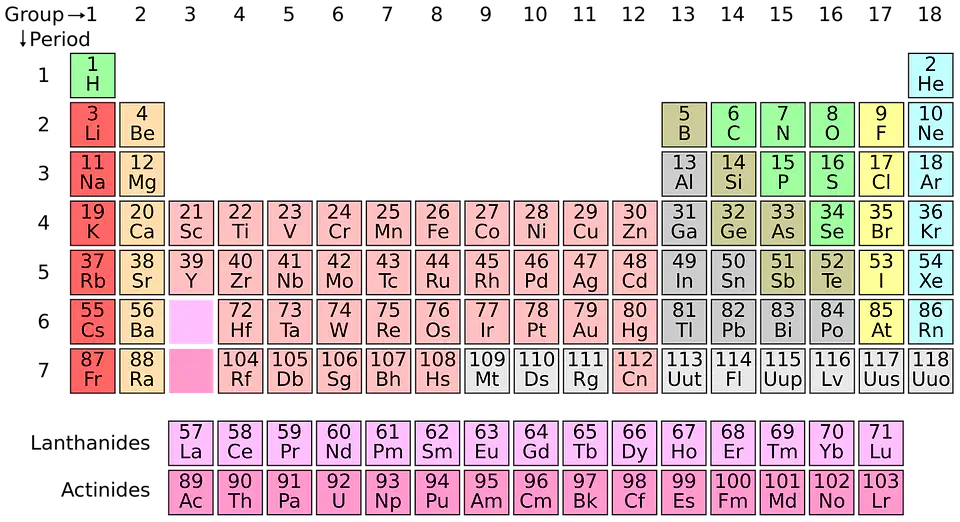
Which group of elements is found as single atoms only?
Group 1
Group 2
Group 17
Group 18
Which of the following is an example of a compound?
Neon
Water
Oxygen
Carbon
Which of the following is an example of an element?
Carbon Dioxide
Water
Oxygen
Sugar
Which type of molecule is made of many small, repeating parts linked together into long structures?
Discrete Molecule
Crystal Molecule
Diatomic Molecule
Polymer Molecule
Which type of molecule always exists as a pair of 2 identical atoms?
Discrete Molecule
Crystal Molecule
Diatomic Molecule
Polymer Molecule
Which type of molecule has a structure with a repeating geometric pattern?
Discrete Molecule
Crystal Molecule
Diatomic Molecule
Polymer Molecule
Which of the following substances has a crystal structure?
Protein
Diamond
Polyethylene
Methane
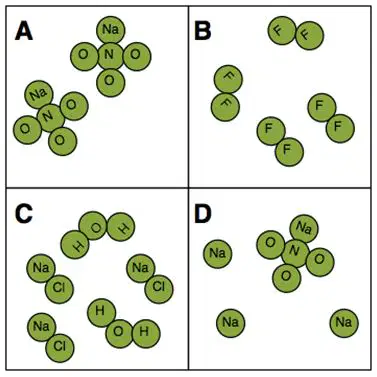
Which diagram shows only one type of atom?
A
B
C
D
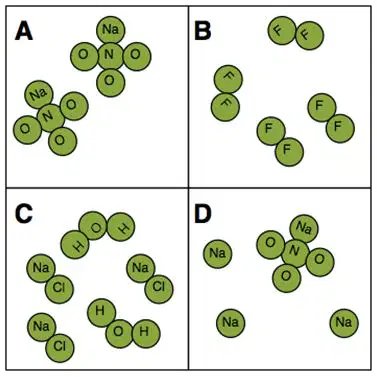
Which diagram shows a mixture of single atoms and compounds?
A
B
C
D
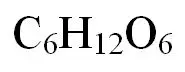
How many different elements make up this substance?
3
0
1
2
6
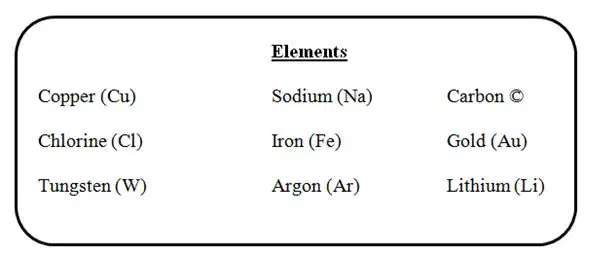
Which element does not combine with other elements?
Argon
Copper
Sodium
Carbon
Chlorine
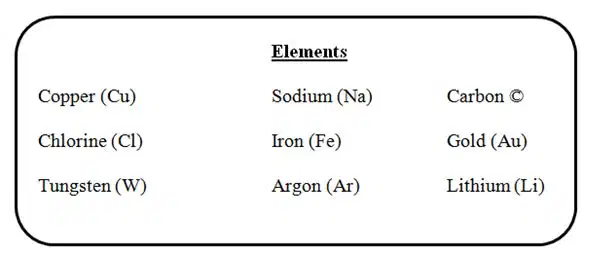
Which element forms a diatomic molecule?
Chlorine
Copper
Sodium
Carbon
Iron
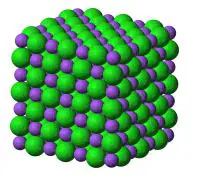
What type of molecule does the model represent?
Diatomic
Polymer
Crystal
Discrete/Single
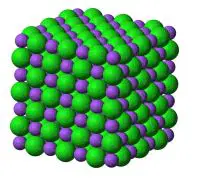
What state of matter does this model represent?
Solid
Liquid
Gas
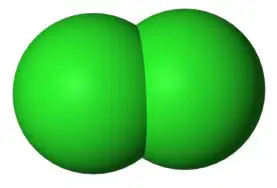
What type of molecule does the model represent?
Diatomic
Polymer
Crystal
Discrete/Single
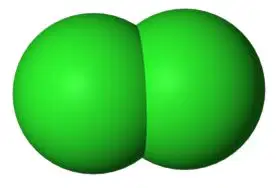
What state of matter does the model represent?
Solid
Liquid
Gas
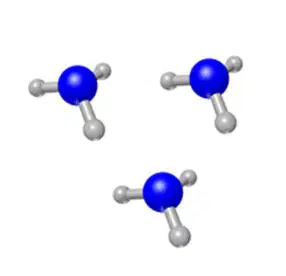
What type of molecule does the model represent?
Diatomic
Polymer
Crystal
Discrete/Single
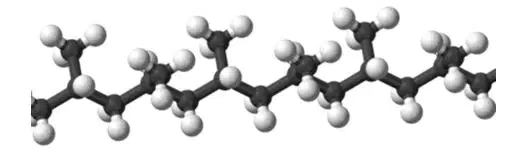
What type of molecule does the model represent?
Diatomic
Polymer
Crystal
Discrete/Single
In order for a chemical reaction to occur, what energy do we need?
Change in Energy
Activation Energy
Ignition Energy
As a child breaks a cookie in half, crumbs fall on the floor. What type of change is occuring?
Physical change
Chemical change
Physical and chemical change
Neither chemical nor physical change
What indicates a chemical change is occurring?
A log is cut in half.
Water boils in a pot.
A solution changes color.
The page of a book tears.
Which scientific law requires that we balance equations?
Law of Conservation of Energy
Law of Conservation of Force
Law of Conservation of Mass
Law of Conservation of Momentum
What happens to the rate of a reaction if the temperature is decreased?
The rate increases.
The rate decreases.
The rate stays the same.
What happens to the rate of a reaction if the particle size decreases?
The rate increases.
The rate decreases.
The rate stays the same.
What happens to the rate of a reaction if an inhibitor is added?
The rate increases.
The rate decreases.
The rate stays the same.
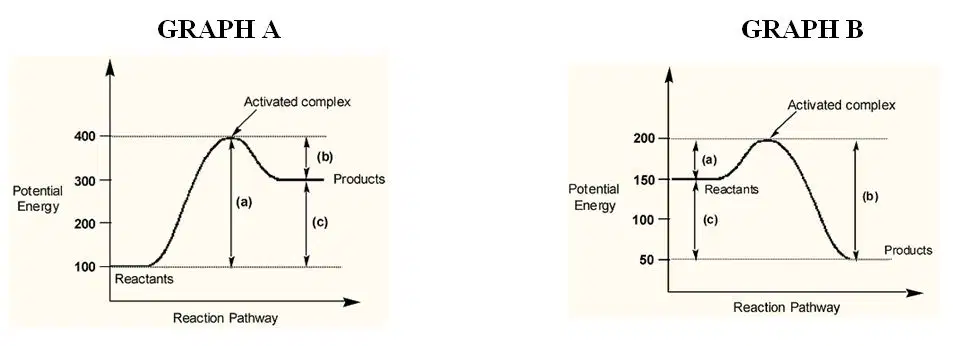
Which graph shows an endothermic reaction?
Graph A
Graph B
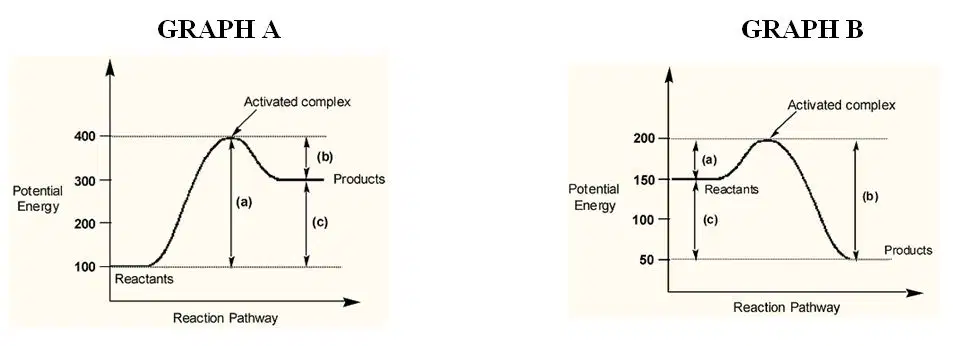
Which graph shows a reaction that would feel hot to the touch?
Graph A
Graph B
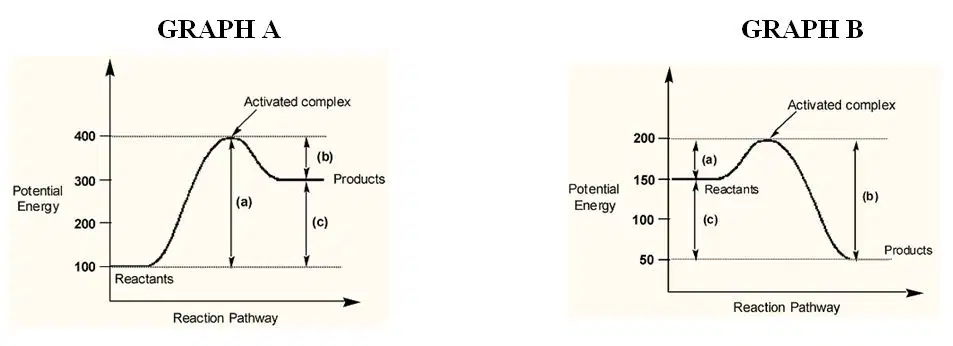
How much activation energy is used in Graph A?
0.0 kj
100.0 kj
200.0 kj
300.0 kj
400.0 kj
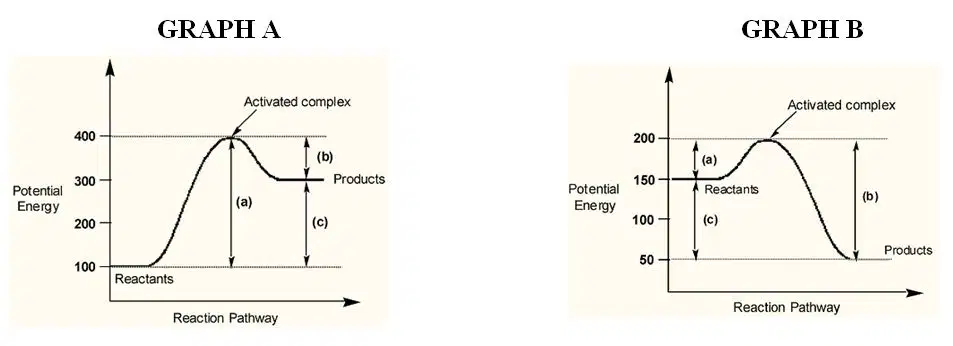
How much ΔE is indicated by Graph B?
-100.0 kj
50.0 kj
-50.0 kj
100.0 kj
150.0 kj

After balancing the equation, what number would replace the RED question mark?
2
0
1
3
4

After balancing the equation, what number would replace the GREEN question mark?
1
0
2
3
4

After balancing the equation, what number would replace the BLUE question mark?
1
0
2
3
4

