
 Worksheets
Introduction to the Legislative Branch
Total questions: 101
Worksheet time: 52mins
Which branch of government is responsible for making laws?
Judicial Branch
Executive Branch
Legislative Branch
Administrative Branch
What is the term for the citizens that a member of congress represents?
Delegates
Constituents
Senators
Governors
What is a congressional district?
The entire state
Area of the state that a member of the House represents
The capital city
The area where the president lives
How is a district’s size and boundary determined?
By the governor’s decision
By the number of senators
By its population from the census
By the president’s order
What is a census?
A law passed by Congress
A population count taken every 10 years
A type of election
A government agency
What does it mean to gerrymander a district?
To increase taxes in a district
To redraw a district boundary to benefit a particular party
To elect a new representative
To change the state capital
Explain how the census can influence the boundaries of congressional districts.
The census provides population data, which is used to redraw district boundaries to ensure equal representation.
The census determines who can vote in each district.
The census decides which party controls the district.
The census is used to select the president.
Why might gerrymandering be considered controversial?
It can lead to unfair advantages for a particular political party.
It always increases the number of districts.
It is required by the Constitution.
It makes voting easier for everyone.

What does the map in the image represent?
The state's congressional district map
The state's climate zones
The state's population density
The state's school districts
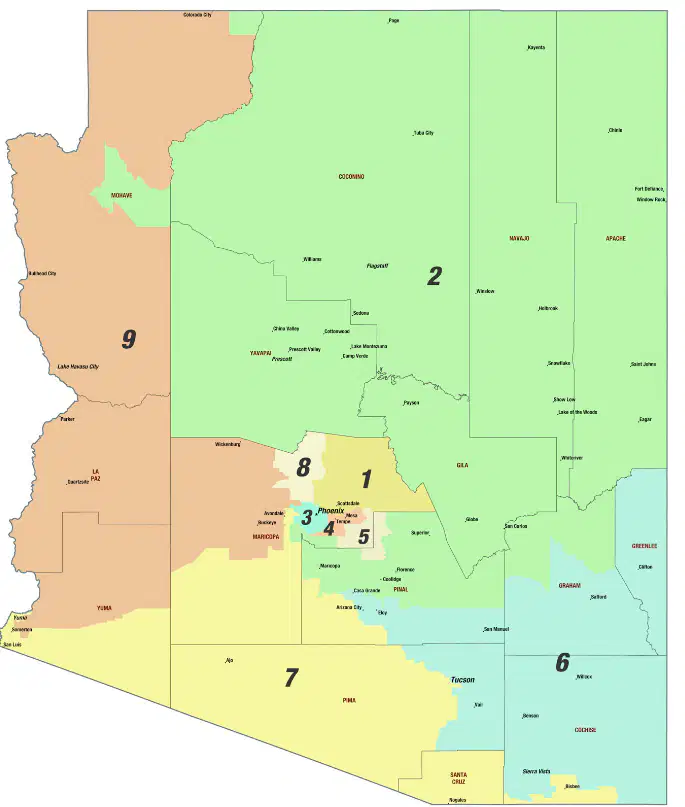
How many congressional districts are shown on the map?
5
7
9
12
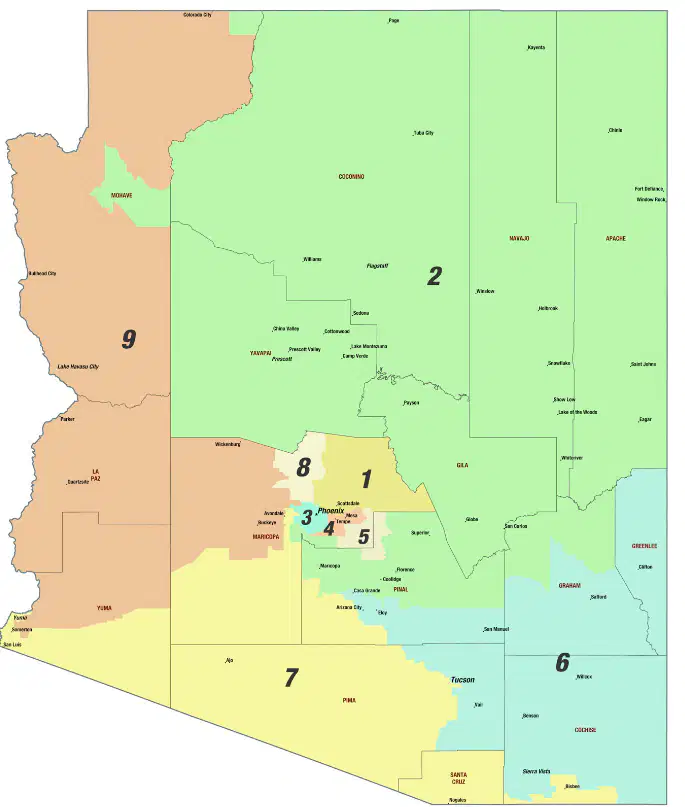
If you were planning a campaign to visit every congressional district in the state, what would be an effective strategy to ensure you cover all areas?
Visit only the largest city in the state
Visit each numbered district shown on the map
Visit only the districts with the most population
Visit only the districts in the southern part of the state
Which of the following best defines an interest group?
A group of people with similar interests trying to sway legislatures
A group of elected officials making laws
A committee that enforces laws
A group of judges interpreting laws
Which of the following is an example of an interest group?
NAACP
FBI
NASA
FDA
What is the main role of lobbyists in Congress?
Hired people that lead and represent interest groups
Elected officials who pass laws
Citizens who vote in elections
Judges who interpret the Constitution
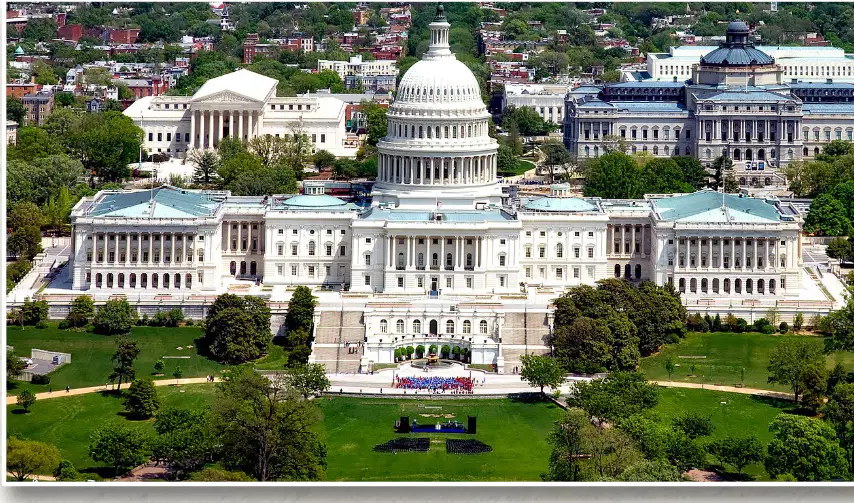
Where does Congress, or the legislature, meet?
At the U.S. Capitol Building
At the White House
At the Supreme Court
At the Pentagon
What does the term "bicameral" mean?
Having two chambers or houses
Having one leader
Having three branches
Having four committees
Why might the U.S. Congress be described as "bicameral"? Use evidence from the definition provided.
Because it has two chambers or houses
Because it meets in a large building
Because it is located in Washington, D.C.
Because it is part of the executive branch
Which of the following is considered the lower house of the United States Congress?
House of Representatives
Senate
Supreme Court
Cabinet
How long is the term for a member of the House of Representatives?
2 years
4 years
6 years
8 years
What is the minimum age required to serve in the House of Representatives?
21 years old
25 years old
30 years old
35 years old
How is the number of members each state has in the House of Representatives determined?
By the state's population
By the state's land area
By the state's wealth
By the state's age
Which statement is true about the distribution of members in the House of Representatives?
States with larger populations have more members in the House
Each state has the same number of members
Only the original 13 states have members
States with smaller populations have more members
How many total members are there in the House of Representatives?
100
435
50
200
If a state has a small population, how many representatives will it have in the House at minimum?
0
1
2
5
Suppose a state’s population increases significantly. What is likely to happen to its number of representatives in the House?
The number of representatives will increase
The number of representatives will decrease
The number of representatives will stay the same
The state will lose all representatives
Which of the following best describes the people shown in the images?
Likely representatives from different districts
Supreme Court justices
State governors
Mayors of major cities
Which of the following statements is true about the United States Senate?
Each state has 2 senators
Each state has 5 senators
The Senate has 200 total members
Senators serve 2-year terms
How long is the term for a United States Senator?
6 years
2 years
4 years
8 years
What is the minimum age required to become a United States Senator?
25 years old
21 years old
30 years old
35 years old
Why is the Senate considered the "upper house" of Congress? Use evidence from the structure and membership of the Senate to support your answer.
Because it has more members than the House of Representatives
Because it has equal representation from each state and longer terms
Because it is located on the top floor of the Capitol
Because only the Senate can propose new laws
If there are 50 states in the United States, how many total members are there in the Senate?
50
100
150
200
Which political party is defined as the one with the most members in a legislative body?
Minority Party
Majority Party
Majority Leader
Minority Leader
What is the main role of the Majority Leader in a legislative body?
To assist the Minority Leader
To plan and guide the majority party’s legislative strategies
To count votes for the minority party
To represent the party with the second most members
Who assists the Majority Leader in their duties?
Minority Whip
Majority Whip
Minority Leader
Majority Party
Both Houses of the legislature have which of the following leadership positions?
Only a Majority Leader
Only a Minority Whip
Both a Majority and Minority Leader and Whip
Only a Majority Whip
If a new political party gains the second most members in a legislative body, what position would they hold?
Majority Party
Majority Leader
Minority Party
Majority Whip
Explain how the roles of the Majority Leader and Minority Leader are similar and how they differ in terms of legislative strategy.
Both plan and guide their party’s legislative strategies, but the Majority Leader does so for the party with the most members, while the Minority Leader does so for the party with the second most members.
Both are assistants to the Whip.
Both only count votes for their parties.
Both are responsible for electing the Speaker of the House.
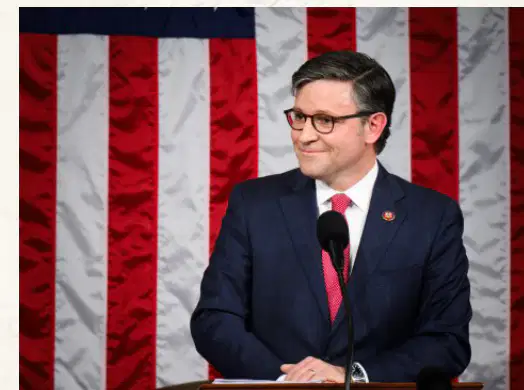
What is the highest ranking position in the Legislative Branch of the U.S. House of Representatives?
Speaker of the House
Majority Whip
Minority Leader
Sergeant at Arms
Who is always a member of the majority party and chosen by the majority party in the House of Representatives?
Speaker of the House
President Pro Tempore
Vice President
Chief Justice
Which of the following is NOT a responsibility of the Speaker of the House?
Leads floor discussions
Keeps order
Appoints committee leaders
Serves as President of the Senate
What is the position of the Speaker of the House in the line of presidential succession?
1st
2nd
3rd
4th
Explain why the Speaker of the House is considered a powerful position in the U.S. government. Use evidence from the roles and responsibilities listed.
The Speaker controls the legislative agenda and is third in line for the presidency.
The Speaker only votes in case of a tie.
The Speaker is responsible for foreign policy decisions.
The Speaker manages the Supreme Court.
Who serves as the President of the Senate in the United States?
The Speaker of the House
The Chief Justice of the Supreme Court
The Vice President of the United States
The Secretary of State
What is one of the main duties of the President of the Senate?
Debating and discussing bills
Keeping order on the floor and guiding discussion
Signing bills into law
Appointing Supreme Court justices
Which of the following is true about the President of the Senate's voting power?
Can vote on all bills
Can only vote to break a tie
Can never vote
Can vote only on budget bills
Why is the position of President of the Senate considered primarily ceremonial?
Because the President of the Senate writes all the laws
Because the President of the Senate rarely participates in debates or discussions
Because the President of the Senate is also the President of the United States
Because the President of the Senate is elected by the Senate
If there is a tie vote in the Senate, what is the role of the President of the Senate?
To call for a re-vote
To break the tie by casting a vote
To ask the Supreme Court to decide
To ignore the tie and move on
What does "Pro Tempore" mean in the context of the Senate?
For the time being and is a temporary, substitute position
Permanent leader of the Senate
The Vice President's assistant
The person who writes Senate laws
Which of the following is a duty of the President Pro Tempore of the Senate?
Assumes same ceremonial duties as the President of the Senate
Signs all bills into law
Appoints Supreme Court justices
Manages the House of Representatives
Who is typically chosen as the President Pro Tempore of the Senate?
A member of the majority party
The youngest senator
The Vice President
A member of the minority party
What is the position of the President Pro Tempore in the line of presidential succession?
4th in line
1st in line
2nd in line
10th in line
Why does the Majority Leader of the Senate often have the most impactful influence?
They control the legislative agenda and party strategy
They are always the oldest senator
They serve as President of the United States
They appoint all committee members
Which type of committee in Congress is permanent and used every term?
Standing Committee
Select Committee
Joint Committee
Advisory Committee
What is the main purpose of Select Committees in Congress?
To handle permanent issues every term
To address a specific issue for a limited time
To manage agriculture and commerce
To choose committee leaders
Which of the following is an example of a Standing Committee?
Agriculture
Investigation
Threat
Political Issue
What is the function of Joint Committees in Congress?
To investigate threats
To iron out similar bills from each house
To choose committee leaders
To manage only one house
According to the seniority rule, who usually gets the top leadership positions in committees?
Members who are new
Members who have served longer
Members from only one house
Members chosen by the president
A committee formed to investigate a political issue for a limited time would be classified as which type of committee?
Standing Committee
Select Committee
Joint Committee
Seniority Committee
Why might a Joint Committee be formed in Congress?
To address issues in only one house
To handle permanent issues
To resolve differences in bills from both houses
To investigate threats
Which section of the Constitution explains the majority of powers that Congress has?
Article I, Section 8
Article II, Section 4
Article III, Section 1
Article IV, Section 2
What are expressed powers?
Powers that are not clearly stated in the Constitution
Powers that are clearly stated in the Constitution
Powers given to the President
Powers given to the states
What is the difference between expressed powers and implied powers of Congress?
Expressed powers are given to the President, implied powers are given to Congress
Expressed powers are clearly stated in the Constitution, implied powers are not clearly stated
Expressed powers are for the states, implied powers are for the federal government
Expressed powers are only for emergencies, implied powers are for daily use
What is the purpose of the Elastic Clause in the Constitution?
To limit Congress's powers
To allow Congress to stretch its powers to make any laws that are “Necessary & Proper”
To give the President more authority
To define the powers of the states
How might Congress use the Elastic Clause to address a new issue not mentioned in the Constitution?
By ignoring the issue
By creating a new amendment
By using the Elastic Clause to pass a law that is necessary and proper for the situation
By asking the Supreme Court to decide
Which of the following is a legislative power of Congress?
Collect Taxes
Impeach the President
Confirm presidential appointments
Propose amendments to the Constitution
What does it mean to impeach an official?
To charge an official with misconduct
To elect an official
To promote an official
To pardon an official
Which of the following is NOT a legislative power?
Declare War
Regulate Trade
Admit new states to the Union
Borrow Money
Which power allows Congress to confirm or reject presidential appointments?
Non-Legislative Power
Legislative Power
Judicial Power
Executive Power
Explain the difference between legislative and non-legislative powers of Congress, providing one example of each.
Legislative powers create laws (e.g., Collect Taxes); non-legislative powers do not create laws (e.g., Impeach the President).
Legislative powers enforce laws (e.g., Impeach the President); non-legislative powers create laws (e.g., Collect Taxes).
Legislative powers are only for the President (e.g., Confirm appointments); non-legislative powers are for Congress (e.g., Declare War).
Legislative powers are for the Supreme Court (e.g., Propose amendments); non-legislative powers are for the states (e.g., Regulate Trade).
Which of the following is NOT allowed according to Article I, Section 9 of the U.S. Constitution?
Laws favoring one state over another
Laws that require equal treatment for all states
Laws that encourage trade between states
Laws that provide funding for state projects
What is a Writ of Habeas Corpus?
A law that punishes someone without a trial
A court order requiring police to bring a prisoner to court and explain why they are being held
A law that punishes actions retroactively
A law that favors one state over another
Which term describes laws that would punish a person without having a trial or hearing?
Ex post facto laws
Writ of Habeas Corpus
Bills of attainder
State favoritism laws
What is the main purpose of ex post facto laws, which are forbidden by Congress?
To punish actions that were not illegal when committed
To require police to explain why a prisoner is being held
To favor one state over another
To provide fair trials for all citizens
Why does the Constitution forbid Congress from making laws that interfere with the Bill of Rights or other amendments?
To ensure the protection of fundamental rights
To allow Congress more power over the states
To make it easier to pass new laws
To favor certain groups of people
Suppose Congress passes a law that punishes someone for an act that was legal when it was committed. Which constitutional principle would this law violate?
Writ of Habeas Corpus
Ex post facto laws
Bills of attainder
State favoritism
What is a bill in the context of Congress?
A proposal being considered by Congress for law
A type of tax collected by Congress
A speech given by a member of Congress
A committee formed to review laws
About how many bills are proposed each session of Congress, and how many actually become law?
10,000 bills are proposed, with only a few hundred becoming law
1,000 bills are proposed, with all becoming law
500 bills are proposed, with most becoming law
100,000 bills are proposed, with half becoming law
Where can the ideas for bills come from?
Citizens, the president, or special interest groups
Only from the president
Only from members of Congress
Only from the Supreme Court
Who can submit a bill to Congress?
Only a member of Congress
Any citizen
The president alone
A Supreme Court judge
How is a bill introduced in the House of Representatives?
By dropping it in the hopper
By announcing it on television
By mailing it to the president
By voting on it immediately
How is a bill introduced in the Senate?
On the floor
By dropping it in the hopper
By sending it to the House
By posting it online
What happens to a bill when it is submitted?
It gets a number, such as H.R. 1 or S.1
It is immediately signed into law
It is sent to the president for approval
It is destroyed if not approved
Why do you think only a few hundred out of 10,000 proposed bills actually become law each session? Use reasoning and evidence from the legislative process.
Because the process is complex and many bills do not gain enough support
Because all bills are rejected by the president
Because only bills from the president are considered
Because Congress does not meet often enough
What does it mean to "pigeonhole" a bill in committee?
To pass the bill as written, sending it to the floor
To make minor changes and pass it
To replace the bill with a new bill that is better
To ignore or put aside the bill so it dies in committee
Which of the following is NOT an action a committee may take on a bill?
Pass the bill as written, sending it to the floor
Make minor changes and pass it
Send the bill directly to the president
Kill the bill by voting against it
After a bill passes committee, what is the next step in the legislative process?
It is sent to the president for approval
It continues on to its house floor
It is automatically made into law
It is sent back to the committee for further review
If a committee thinks a new bill would be better than the original, what can they do?
Pass the original bill as written
Replace the bill with a new bill that is better
Ignore the bill and let it die
Make minor changes and pass it
Why might a committee choose to make minor changes to a bill before passing it?
To ensure the bill is more effective or acceptable before it goes to the floor
To automatically kill the bill
To send it directly to the president
To avoid any further debate on the bill
What happens to bills when they go to the floor in the House?
They are immediately signed into law
They are discussed and debated prior to a vote
They are sent back to committee
They are ignored
Which of the following is true about the discussion of bills on the House floor?
There are no time limits and discussion is unlimited
Time limits are in place and discussion is limited
Only the Speaker can discuss the bill
The public can participate in the discussion
What may happen to bills while they are on the House floor?
They may be completely rewritten
They may have minor changes or amendments
They are destroyed
They are sent to the President
Why are time limits placed on the discussion of bills on the House floor?
To prevent bills from being passed
To ensure that discussion is limited and efficient
To allow unlimited debate
To let only one person speak
What is a "rider" in the context of a Senate floor debate?
A completely unrelated amendment added to a bill
A senator who leads the debate
A rule that limits debate time
A type of speech given during debate
What is the purpose of a filibuster in the Senate?
To speed up the voting process
To use long speeches to prevent a vote
To add amendments to a bill
To limit debate time to 30 hours
How can the Senate limit debate time to 30 additional hours?
By unanimous consent
By a 3/5 vote for cloture
By a simple majority vote
By a presidential order
Who holds the record for the longest filibuster in the Senate, and how long did it last?
Senator Strom Thurmond, 24 hours & 18 minutes
Senator John Smith, 12 hours & 5 minutes
Senator Corey Booker, 25 hours & 5 minutes
Senator Ted Cruz, 8 hours & 45 minutes
During his record-setting filibuster, what did Senator Strom Thurmond read aloud?
The U.S. Constitution and Bill of Rights
The Declaration of Independence, Supreme Court rulings, etc.
The Federalist Papers
The Congressional Budget
Explain how the use of filibuster and cloture can impact the passage of a bill in the Senate.
Filibuster can delay or block a vote, while cloture can end debate and force a vote.
Filibuster speeds up the process, and cloture prevents amendments.
Both filibuster and cloture are used to add riders to a bill.
Filibuster and cloture have no effect on the passage of a bill.
Which house requires you be at least 25 years old, a U.S. citizen for at least 7 years and live in the state and district you represent?
Senate
House of Representatives
Congress is known as a "Bicameral", what does that mean?
Two people
Two houses
Two cameras (looks)
Two camels

