
 Worksheets
Hand and Arm Bones
Total questions: 40
Worksheet time: 29mins
Which of the following is an example of a long bone?
Humerus
Carpal
Pisiform
Sternum
What type of bone is the pisiform classified as?
Long bone
Short bone
Sesamoid bone
Irregular bone
Which bone is the only bone in the upper arm, stretching from the shoulder to the elbow?
Humerus
Femur
Radius
Ulna
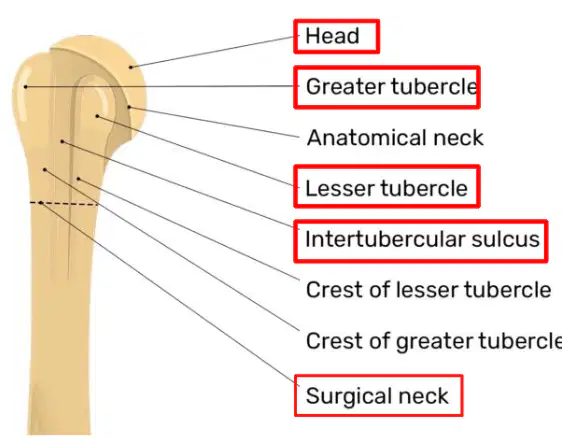
Which structure of the proximal (upper) region of the humerus fits into the glenoid fossa of the scapula to facilitate multi-directional shoulder motion?
Head
Greater tubercle
Lesser tubercle
Surgical neck
Which tubercle serves as the attachment site for the subscapularis muscle (rotator cuff)?
Greater tubercle
Lesser tubercle
Intertubercular groove
Surgical neck
What is the primary function of the greater tubercle of the humerus?
Houses the tendon of the long head of the biceps
Attaches three of the four rotator cuff muscles, providing shoulder stability and arm rotation
Common fracture site in falls
Attachment site for the subscapularis muscle
Why is the surgical neck of the humerus clinically significant?
It is the site where the rotator cuff muscles attach
It is a common fracture site with risk to the axillary nerve and posterior circumflex humeral artery
It houses the tendon of the long head of the biceps
It fits into the glenoid fossa of the scapula
Which structure houses the radial nerve and profunda brachii artery?
Deltoid tuberosity
Radial (Spiral) Groove
Anatomical neck
Greater tubercle
A supracondylar fracture in a child requires careful assessment for which of the following reasons?
It may affect the articulation with the radius.
It may involve nerve or vessel damage.
It prevents the arm from extending fully.
It affects the formation of the elbow hinge.
Which bone is located on the lateral (thumb) side of the forearm, running parallel to the ulna?
Radius
Humerus
Scaphoid
Lunate
Explain how the articulation of the radius at the wrist contributes to the range of motion in the hand.
The radius connects with the scaphoid and lunate, allowing for flexion, extension, radial and ulnar deviation, and circumduction, which increases the hand's mobility.
The radius only allows for flexion and extension, limiting hand movement.
The radius connects with the humerus, allowing for shoulder rotation.
The radius prevents any movement at the wrist.
What type of joint is the humeroulnar joint, and what movement does it allow?
Hinge joint; allows flexion and extension
Ball-and-socket joint; allows rotation
Pivot joint; allows pronation and supination
Saddle joint; allows opposition
Which group of bones consists of 5 bones located in the palm of the hand?
Metacarpals
Carpals
Distal phalanges
Intermediate phalanges
How many total phalanges are present in one human hand?
14
8
10
12
Which of the following correctly matches the number of bones with their type in the phalanges?
5 proximal, 4 intermediate, 5 distal
4 proximal, 5 intermediate, 5 distal
5 proximal, 5 intermediate, 4 distal
4 proximal, 4 intermediate, 6 distal

identify the bones in the hand that are colored purple in a diagram.
Carpals
Metacarpals
Proximal phalanges
Distal phalanges
What is the primary function of the carpal bones?
Enable wrist movement and support surrounding muscles
Protect the heart
Aid in digestion
Support the knee joint
Which of the following best describes the location of the proximal row of carpal bones?
Closest to the hand
Closest to the forearm
In the middle of the hand
At the tips of the fingers
What is the triquetrum known for in terms of injury frequency among carpal bones?
Most frequently fractured carpal bone
Second most frequently fractured carpal bone
Least frequently fractured carpal bone
Never fractured
Which carpal bone is most commonly fractured in the wrist?
Triquetrum
Lunate
Pisiform
Scaphoid
What movement is primarily allowed by the radioulnar joints?
Pronation and supination
Flexion and extension
Abduction and adduction
Opposition
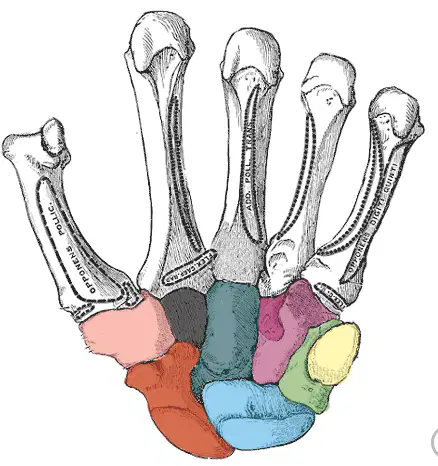
which bone is blue?
(a)
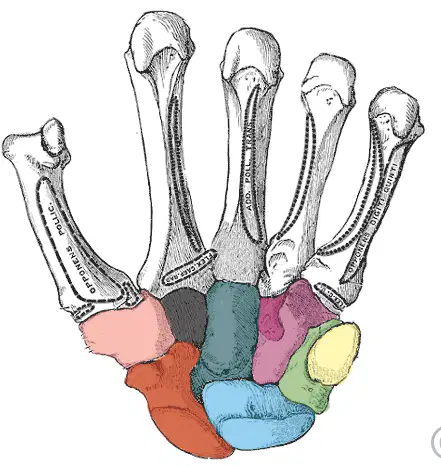
What bone is red?
(a)
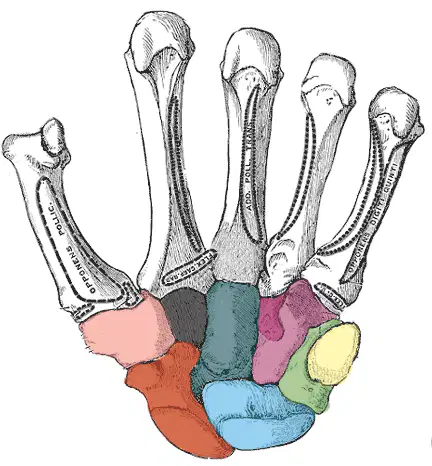
What bone is yellow?
(a)
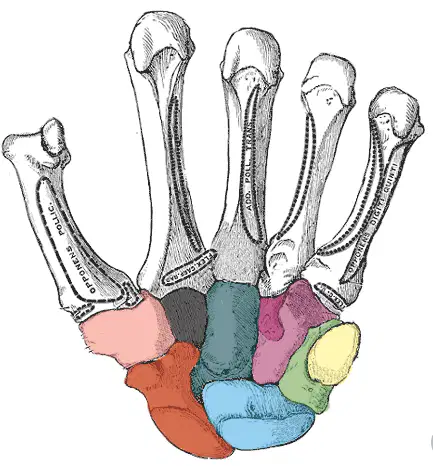
which bone is pink?
(a)
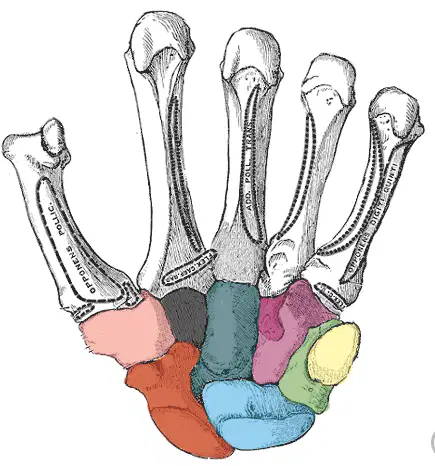
Which bone is purple?
(a)
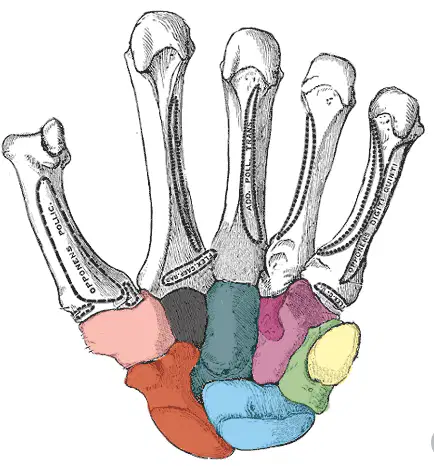
Which bone is teal?
(a)
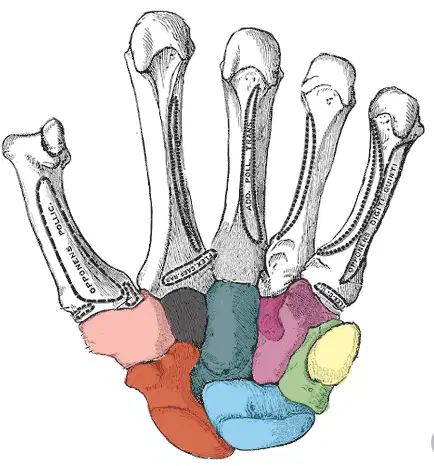
What bone is green?
(a)

Which bone is gray?
(a)
Which bone articulates with the humerus at the elbow to form a hinge joint?
Scapula
Radius
Ulna
Clavicle
Which carpal bone articulates directly with the first metacarpal to form the thumb's saddle joint?
Trapezium
Capitate
Scaphoid
Lunate
Which carpal bone is most commonly fractured in the wrist?
Lunate
Scaphoid
Pisiform
Hamate
What is the primary function of the rotator cuff muscles in the shoulder?
Extend the wrist
Support the vertebral column
Flex the elbow
Stabilize the glenohumeral joint
Which carpal bone is located most medially in the proximal row of the wrist?
Lunate
Scaphoid
Trapezium
Pisiform
Which carpal bone is located directly distal to the ulna?
Scaphoid
Trapezoid
Lunate
Triquetrum
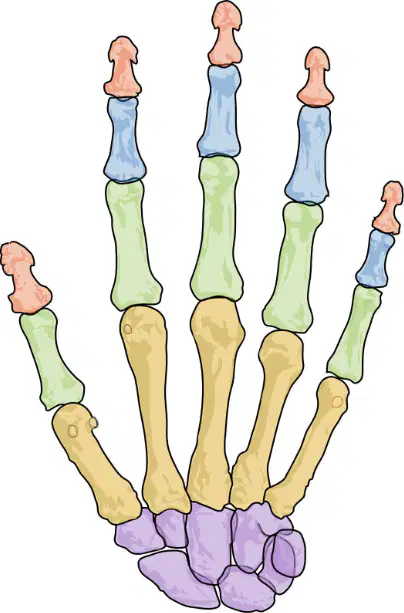
identify the bones in the hand that are colored yellow in a diagram.
(a)
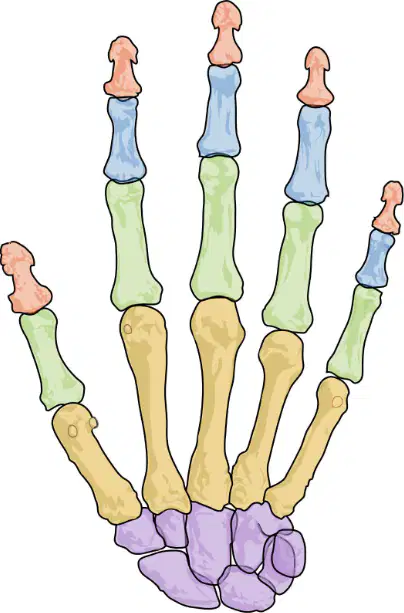
identify the bones in the hand that are colored blue in a diagram.
(a)
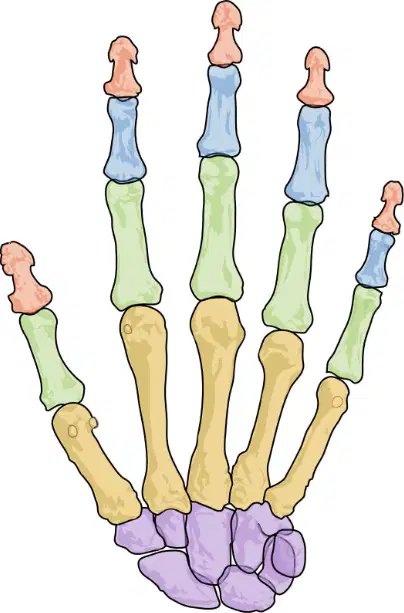
What bones are colored orange in the photo?
(a)
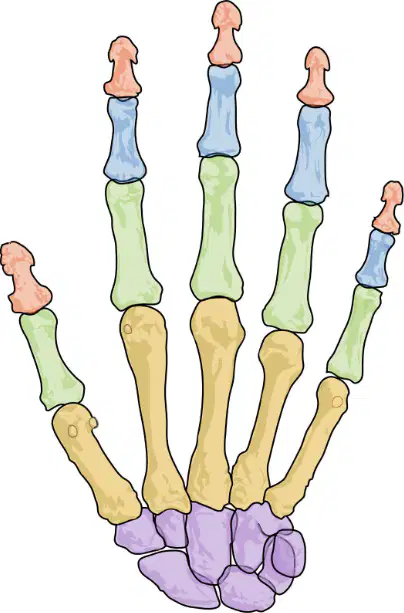
What bones are colored green in the photo?
(a)
Tell me what proximal and distal means. Then tell me which phalanges only have these two?

