
 Worksheets
final econ review 2
Total questions: 88
Worksheet time: 1hrs 1mins
What is a rational economic decision?
One in which there is no opportunity cost.
One in which benefits are unknown, but costs are low.
One in which benefits are greater than costs.
One in which costs are greater than benefits.
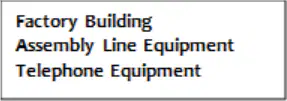
All of the following are examples of:
Labor resources
Land resources
Capital resources
Natural resources
Which of the following is a positive incentive?
Saturday school assigned for low grades
Free parking passes for the top 50 senior students
After-school detention assigned for fighting in school
A traffic ticket for going 6 mph in the school parking lot
A great variety of goods and services is characteristic of:
a market economy
a command economy
a traditional economy
all economic systems
In England, the government owns industries such as airlines, TV stations, hospitals, universities, and defense contractors. However, most other industries in England involve privately owned firms. What type of economy is this?
traditional
command
market
mixed
The alternative uses of an hour of your time in the evening, ranked from best to worst, are: (1) study economics, (2) watch two half-hour TV shows, (3) play pool, and (4) jog around town. You can only choose one activity. What is the opportunity cost of studying economics for one hour, given this information?
Jogging around town.
Watching two half-hour TV shows.
Playing pool.
The sum of watching two half-hour TV shows, playing pool, and doing your laundry.
The economic term “scarcity” relates MOST directly to a situation in which
individuals lack the ability to make decisions
businesses lack the customers needed to make a profit
employees lack the experience needed to earn a promotion
manufacturers lack the raw materials needed to satisfy demand
In a market economy, the decision of WHAT to produce is determined by:
government regulations
consumer demands
multinational corporations
none of the above
Economic growth would most likely result from...
An increase in workplace safety conditions
A decrease in a country's average education
An investment in capital goods
The cancellation of all student debt
Sally has bananas but wants ice cream. Mark has ice cream but wants bananas. They decide to trade. Sally gives Mark one banana for one ice cream. Who benefits from this trade?
Sally but not Mark
Mark but not Sally
Both Sally and Mark
Neither Sally nor Mark
According to the American Lung Association, for every ten percent increase in the price of a pack of cigarettes, youth smoking rates drop by about seven percent. If lawmakers want to create a negative incentive for smoking, this information would support which action?
increase taxes on cigarettes
decrease taxes on cigarettes
lower the legal age to purchase tobacco products
remove the surgeon general warning labels from cigarette packaging
Which of the following is a strength of a market economy?
Guaranteed equity
Guaranteed employment
Individual freedom
Extensive government regulation to ensure that no one has too little or too much
In a command economy where society values equity and equality, which role would the government most likely fill?
Protecting consumer sovereignty and personal freedoms
Redistributing income
Ensuring competition between private businesses
Protecting individual property rights
Which of the following is most likely to increase a country’s future standard of living?
Investments in military strength
Investments in training, education, and healthcare
Increased opportunity costs
Government subsidies for export industries
Standard of living is best defined as:
A person’s access to material goods and services.
How productive a person is.
The total value of all goods and services created in a country.
The highest level of education a person has completed.
In Cuba, a lottery system effectively decides who gets to have a car. Why might someone favor a lottery system over a price system for obtaining a desired item, such as cars?
Everyone has a chance to purchase the car since everyone can work for one.
Everyone eventually stops working to qualify for goods and services under the lottery system.
Everyone has an equal chance of having their name drawn instead of only those with the most money.
Everyone has an equal chance of affording a car instead of waiting on a lottery system for drawing the name.
In which market structure does a firm have the greatest control over its product’s price?
perfect competition
monopoly
oligopoly
monopolistic competition
When the U.S. government purchases a submarine from a company, the government has made a major transaction in the
factor market
public market
product market
foreign exchange market
With respect to raising funds, the primary difference between corporations and other forms of business is that corporations
Can sell shares of the company to the public
Are the only businesses that can obtain loans from banks
Always have collateral, but other businesses do not
Can more easily make decisions about whether to obtain a loan
Which of the following statements is true regarding households, businesses, and the government in the U.S. economic system?
Households pay taxes to the government, but businesses don’t.
Households act as consumers, while the government and businesses only act as producers.
The three are economically connected and dependent on one another.
The government regulates what businesses can produce, but not what consumers can buy.
Households pay firms for goods and services. Firms supply households with goods and services. The purchase and supply of goods and services take place in the
product market
factor market
corporate market
traditional market
Which of the following could be true for businesses that have unlimited liability?
Owners can lose personal property
Corporations are taxed at a higher rate
Financial responsibility is limited
Size of business is unlimited
In which type of business model is the business legally recognized as its own entity, separate from its owners?
Sole proprietorship
Corporation
Partnership
Monopoly
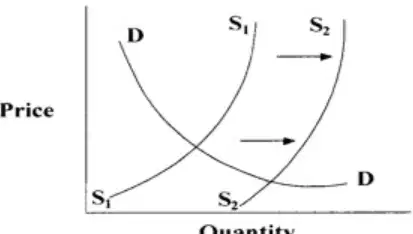
Which of the following situations would cause the supply curve to shift from S1 to S2?
The government reduces subsidies to wheat farmers.
New fertilizers increase wheat crop harvests.
Firms exit the wheat industry.
Drought reduces industry output by 25%.
A volcano erupts in Hawaii, destroying or damaging orchards that supply the US with pineapples. What will be the effect on price and quantity sold, assuming all else is equal?
Price will rise and quantity will also rise.
Price will drop and quantity will also drop.
Price will drop but quantity will rise.
Price will rise but quantity will drop.
What is the basic principle of the law of demand?
The higher the price, the more people will want the good.
The higher the price, the fewer people will want the good.
The higher the price, the more goods will be supplied.
Services are of interest in the same way as goods.
What happens when the supply of a good is greater than what consumers want to buy?
The good is discarded.
The good becomes a luxury and the price rises.
Either the good remains unsold or the price drops.
Either the good is saved for later sale or the price is raised.
What is most likely true if unemployment is low?
High inflation
Reduced prices for goods and services
An increase in the supply of goods and services
Low GDP
The BEST example of structural unemployment in an economy is someone who is
between jobs or entering the workforce
out of work due to a change in the business cycle
out of work due to a seasonal downturn in business
whose job skills do not match the economy's needs
What is the result when federal government expenses are less than the federal government's total income?
a trade surplus
a federal budget deficit
a negative balance of payments
a federal budget surplus
How is monetary policy different from fiscal policy?
Monetary policy involves the money supply, while fiscal policy involves government taxation and spending.
Fiscal policy involves the money supply, while monetary policy involves government taxation and spending.
Fiscal policy involves specific steps taken to carry out the overall monetary policy.
They are the same.
A recession is a period of:
Declining government spending
Increasing government spending
Increasing taxation
Decreasing GDP and national income
If the government's fiscal policy is designed to end a recession, which action would Congress be most likely to take?
Lower income taxes
Raise income taxes
Reduce government spending
Raise the discount rate
If Congress decides to decrease government spending and increase taxes as part of their fiscal policy, what problem might they be trying to address?
High unemployment
Low GDP growth
High interest rates
High inflation
The ups and downs that the nation's economy goes through are referred to as what?
Circular flow
Expansion
Business cycle
Madness
GDP, inflation, and the unemployment rate are all what?
Signs the economy is peaking
Signs the economy is in contraction
Economic indicators used to determine the state and direction of the economy
Elements of monetary policy
Which group in the U.S. establishes the nation’s monetary policy?
The Federal Reserve
The Senate
The House of Representatives
The President’s Cabinet
To encourage economic growth, the Fed decides to increase the money supply and lower interest rates. This is an example of ...
Monetary policy
Fiscal policy
Government spending
Investment spending
For what reason does the Fed enact monetary policy?
To become wealthier.
To help achieve maximum employment, economic growth, and stable prices.
To help stabilize trade with other countries.
To help U.S. citizens save for retirement.
When regions and nations specialize and trade, what is the result?
An increase in the variety of goods, but a decrease in the supply of goods.
An increase in the supply of goods, but a decrease in the variety of goods.
An increase in both the supply and variety of goods.
A decrease in both the supply and variety of goods.
In which situation would a country be most likely to implement a trade barrier for a specific good?
To offer consumers a larger variety of goods and services
To make goods cheaper for consumers
To increase competition in the market
To protect a new industry
The main purpose of creating a personal budget is...
To diversify a retirement portfolio
To manage personal income and make a plan for spending and investment
To prevent financial loss from unforeseen events
To stop people from spending their money
Which option reflects Jack engaging in a rational decision-making process regarding his parents' $45,000 savings?
He immediately goes out to buy a new car.
He thinks about two alternative options, decides what is most important to him, evaluates the alternatives, and makes the rational decision to pay for college with the money.
He impulsively decides to pay for half of college and spend the rest on a new car.
He goes on a senior trip to Las Vegas and risks it all gambling.
Which of the following investments is probably the riskiest?
US savings bond
CD (certificate of deposit) at a bank
Bond from Coca-Cola
Stock in a brand-new company
Banks, credit unions, payday lenders, and title pawn companies all provide...
Checking accounts.
Access to ATM machines.
Loans at various interest rates.
Services to members only.
Which of the following statements MOST ACCURATELY defines the term “interest rate”?
The level of attention that economists pay to economic activity at any one time
Money paid by banks and financial institutions to the US government
Money paid by the borrower to a lender in exchange for the use of money
Discounts on purchases made with a credit card
John borrows $100 from Ed. They agree that John will pay back the loan in two months at a rate of 10% per month. If John pays back exactly $120, then the interest was
Compounded.
Simple.
Usurious.
Impounded.
If a bank pays 3% interest on savings accounts, how much interest will it charge for loans?
3%
Less than 3%
More than 3%
The discount rate
Which of the following is the BEST example of a progressive tax in the United States?
Income tax
Excise tax
Property tax
Social Security
Dalton is part of a household and works for an architecture firm. If the government raises income taxes, Dalton will be MORE LIKELY to:
Consume more goods in the marketplace.
Consume fewer goods in the marketplace.
Invest in more capital.
Purchase more stock in corporations.
Which of the following would NOT affect your credit score?
Your history of paying your bills
Total amount of debt you have
How long you have been using credit
The types of items you are purchasing on credit
Which of the following statements BEST defines consumer credit?
to pay for goods in the present for delivery in the future
to pay for goods with cash or a debit card
to receive goods in the present on agreement that one will pay for them in the future
to buy goods without possessing collateral.
The main reason why people choose to purchase insurance is...
To protect themselves from financial loss in the event of emergencies
To invest in their retirement
To increase their income
To diversify their investment portfolio
Annabelle is tired of making less than $40,000 a year. Which of the following is the BEST way for Annabelle to raise her earning potential?
Support subsidies that will protect US jobs
Save more of her income
Invest in retirement
Acquire more education and training
One benefit of mutual funds as a form of investment is...
They place investors’ money into only one company’s stock
They have guaranteed returns after a certain number of years
They allow investors to diversify their investments into many companies
They prevent investors from losing any money
What is the difference between paying with a debit card and paying with a credit card?
Credit cards take money directly from your account, while debit cards do not
Debit cards borrow money to buy now and pay back later, while credit cards are not a loan
Debit cards are not widely accepted, while credit cards are
Credit cards borrow money to buy now and pay back later, while debit cards are not a loan
Lisa worked 40 hours and gets paid $10 an hour. Therefore, she earned $400. However, her weekly check was just over $300. Which statement best explains this.
$300 was her gross pay, and she didn’t have any mandatory deductions
She was being paid on commission
$300 was her net pay, after taxes and other deductions were taken from her gross pay
She was paid tips, so her employer didn’t have to pay her as much

George earns a $250 bonus at his job for increasing his output by an additional 50% two weeks in a row. He makes a list of what he wants to buy with his bonus: 1: the latest model of Adidas athletic shoes; 2: Air Pods; 3: a new coat. He buys Adidas. What is his opportunity cost?
the Air Pods
the shoes
the coat
the cash

Opportunity cost (OC) can be described as
the number 2 alternative in your list of choices
the next best choice and one you didn't choose
your number 1 tradeoff when making a choice
your most desirable tradeoff
all of these answers are examples of opportunity cost (OC)

Which country has the comparative advantage in producing trucks and what is their opportunity cost?


The graph shows how many new schools and new roads a city could build using all of its factor resources. What does the current production possibilities curve show?
As the number of schools increases, so
does the number of roads.
As the number of schools increases, the
number of roads decreases.
As the number of schools decreases, so
does the number of roads.
The number of schools has no effect on
the number of roads.
Julie drinks coffee every morning before class. The price of coffee has increased recently so she thought should switch to tea. The price of chocolate chip muffins she used to enjoy with her coffee has also increased. These price changes have impacted Julie’s breakfast choices. Which of the following statements are true?
Coffee and tea are substitute goods, while muffins and tea are complementary goods.
Coffee and tea are complementary goods, while muffins and tea are substitute goods.
Coffee and tea are substitute goods, while muffins and tea are complementary goods.
Coffee and muffins are substitute goods, while muffins and tea are complementary goods.


The situation graphed here would be called:
Equilibrium price
Shortage
Surplus
Oaken's Trading Post

Which statement reflects the inverse relationship between quantity demanded and price?
As the price goes up, quantity demanded goes up.
As the price goes down, quantity demanded goes up.
As the supply goes up, the price goes up.
As the supply goes up, the demand goes up.


Which of the following is described by the characteristics listed in the box?
Monopoly
Oligopoly
Pure competition
Monopolistic competition
A market in which a single seller dominates.
Monopolistic Competition
Monopoly
Oligopoly
Perfect Competition
Some economists call an industry a(n) _______ if the four largest businesses produce at least 70-80% of the output. This is a market controlled by a few.
oligopoly
monopoly
pure competition
monopolistic competition
Which of the following actions is an example of fiscal policy?
The central bank raises the reserve requirement
The government increases spending on infrastructure projects
The Federal Reserve lowers the discount rate
Banks increase interest rates on savings accounts
What is the main goal of monetary policy in the United States?
To determine government spending priorities
To set tax rates for individuals and businesses
To control the supply of money and maintain price stability
To regulate international trade agreements
Which of the following is a tool used by the Federal Reserve to influence the economy?
Changing personal income tax rates
Adjusting government spending on public services
Buying and selling government securities in open market operations
Setting tariffs on imported goods
Who is in charge of Monetary Policy
The Government
The Federal Reserve System
The states
The Department of the Treasury
Which combination of fiscal and monetary policy would speed up the economy?
increase taxes; decrease reserve requirement
decrease taxes; decrease discount rate
increase spending; increase interest on reserves
decrease spending; sell bonds via open market operations
What is the purpose of Monetary Policy?
contribute to economic growth and stability
Functions like Fiscal Policy
keep rich people from getting too rich
give Congress and the political parties more control of the economy
Total income of the country divided by its
total population is known as: ‘
Capital Income
National Income
Per capita income
GDP
Statistic that measures price over time?
GDP
GNP
Price Index
Quota

Products brought into a country
Currency
Exchange rate
Export
Import

Products sold to other countries
Currency
Import
Export
International trade

