
 Worksheets
Vascular Disease (PVD vs PAD)
Total questions: 87
Worksheet time: 44mins
What does the abbreviation PVD stand for in the context of cardiovascular diseases?
Peripheral Venous Disease
Pulmonary Vascular Disease
Primary Vascular Disorder
Peripheral Valve Dysfunction
Which of the following is a type of Peripheral Vascular Disease (PVD)?
Peripheral Arterial Disease (PAD)
Coronary Artery Disease
Cerebrovascular Accident
Myocardial Infarction
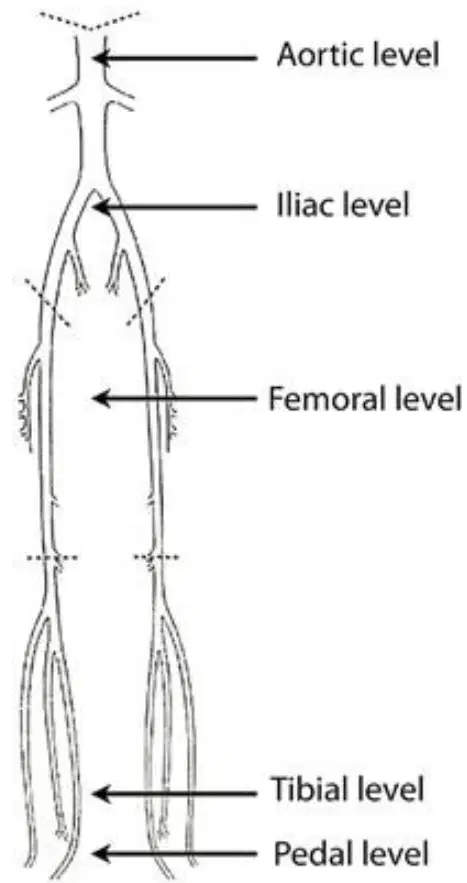
According to the diagram, which level is located between the iliac and tibial levels in the vascular system?
Femoral level
Aortic level
Pedal level
Carotid level
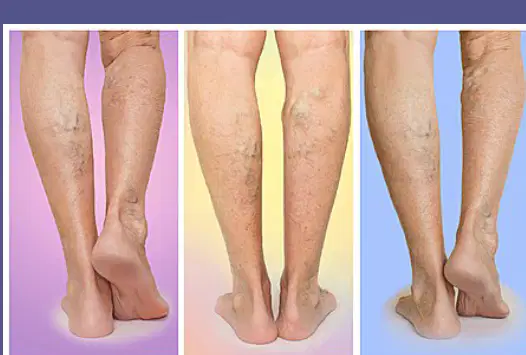
Which of the following best describes Peripheral Artery Disease (PAD)?
Buildup or blockage of arterial walls causing inability of oxygenated blood to get to extremities.
Buildup or blockage of venous walls causing inability of deoxygenated blood to get to the heart.
Arteries carry de-oxygenated blood from body to heart.
Veins carry oxygenated blood from heart to body.
What is the main function of arteries in the circulatory system?
Carry de-oxygenated blood from body to heart.
Carry oxygenated blood from heart to body.
Carry nutrients from intestines to the liver.
Carry waste products from cells to the kidneys.
Peripheral Venous Disease (PVD) is characterized by which of the following?
Buildup or blockage of arterial walls.
Inability of oxygenated blood to reach the extremities.
Buildup or blockage of venous walls causing inability of deoxygenated blood to get to the heart.
Arteries carrying de-oxygenated blood from body to heart.
Which statement correctly differentiates between PAD and PVD?
PAD affects veins, while PVD affects arteries.
PAD involves oxygenated blood, while PVD involves deoxygenated blood.
Both PAD and PVD affect only the heart.
PAD and PVD are the same condition.
A patient presents with excess buildup of blood in their extremities due to a vascular condition. Based on this information, which disease is most likely?
Peripheral artery disease (PAD)
Peripheral venous disease (PVD)
Coronary artery disease
Deep vein thrombosis
Which of the following is a recommended dietary approach to reduce the risk factors for PAD?
Increase sodium intake
Follow DASH diet
Avoid all carbohydrates
Consume high-fat foods
What is one of the key lifestyle modifications for clients to reduce cardiovascular (CV) risk factors associated with PAD?
Increase tobacco use
Manage hypertension (HTN)
Avoid physical activity
Skip meals
Which of the following is NOT a recommended strategy for managing PAD risk factors?
Tobacco cessation
Reducing sodium in the diet
Maintaining good glycemic control in diabetes
Increasing cholesterol intake
A patient with PAD is advised to maintain good glycemic control. Which condition does this recommendation specifically target?
Hypertension
Diabetes Mellitus (DM)
High cholesterol
Obesity
A client with PAD wants to know how to reduce their cardiovascular risk factors. Which combination of actions would be most effective?
Manage cholesterol, follow DASH diet, tobacco cessation
Increase sodium, avoid exercise, eat more sugar
Skip meals, increase cholesterol, smoke regularly
Avoid all fruits, increase fat intake, reduce sleep
What does PAD stand for in the context of pathophysiology?
Peripheral Artery Disease
Pulmonary Artery Disorder
Primary Aortic Dysfunction
Peripheral Aneurysm Disease
Which of the following best describes the main pathological process in PAD?
Progressive narrowing and degeneration of arteries
Sudden rupture of veins
Enlargement of heart chambers
Overproduction of red blood cells
What is ischemia as described in the context of PAD?
A temporary or permanent reduction of blood flow to tissues
A sudden increase in blood pressure
A rapid heartbeat
A chronic infection of the arteries
What are the two main causes of PAD mentioned in the material?
Atherosclerosis and embolism (blood clot)
Hypertension and diabetes
Viral infection and trauma
Genetic mutation and dehydration
At what percentage of vessel blockage do symptoms of PAD typically occur?
60% to 75%
10% to 20%
80% to 90%
30% to 40%
A patient presents with symptoms of PAD. Using your understanding of the disease process, explain why tissue damage occurs in affected areas.
Because reduced blood flow deprives tissues of oxygen and nutrients
Because the veins are enlarged and leak fluid
Because the heart pumps too much blood to the area
Because the nerves in the area are overstimulated
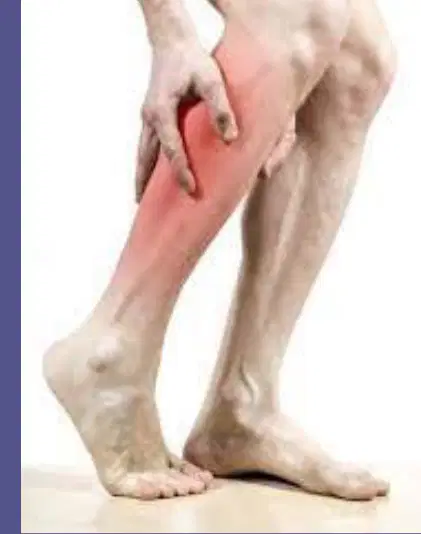
Which of the following is a common symptom of Peripheral Artery Disease (PAD)?
Intermittent claudication
Persistent cough
Blurred vision
Frequent urination
What does paresthesia (N/T) in the toes or feet indicate in patients with PAD?
Nerve involvement
Muscle hypertrophy
Bone fracture
Improved circulation
Which of the following best describes the appearance of a limb affected by PAD?
Shiny, taut, loss of hair
Swollen, red, with blisters
Bruised, with varicose veins
Pale, with increased hair growth
What is a possible complication of PAD?
Delayed healing and tissue necrosis (gangrene)
Increased bone density
Enhanced muscle growth
Improved skin elasticity
A patient presents with decreased or absent lower extremity (LE) pulses. What condition should be suspected?
Peripheral Artery Disease (PAD)
Asthma
Diabetes Mellitus
Hypertension
A patient with PAD develops a wound infection and skin ulcer. Using your knowledge of complications, what is a potential severe outcome if left untreated?
Tissue necrosis (gangrene)
Bone fracture
Muscle spasm
Joint dislocation
Which of the following is a characteristic of arterial ulcers in Peripheral Vascular Disease (PVD)?
Dull, achy pain
Lower leg edema
No pulse or weak pulse
Sores with irregular borders
Where are venous ulcers most commonly located in patients with Peripheral Vascular Disease (PVD)?
Toes and feet
Ankles
Hands
Knees
Which treatment is recommended for arterial ulcers in Peripheral Vascular Disease (PVD)?
Diuretics
Antiplatelets (clopidogrel)
Compression stockings
Antibiotics only
A patient reports that their pain improves when they dangle their foot off the bed, but worsens when they elevate it. What type of ulcer is this most likely associated with?
Venous ulcer
Arterial ulcer
Diabetic ulcer
Pressure ulcer
Compare the drainage characteristics of arterial and venous ulcers in Peripheral Vascular Disease (PVD).
Both have no drainage
Arterial ulcers have drainage, venous ulcers do not
Venous ulcers have drainage, arterial ulcers do not
Both have significant drainage
Which of the following best describes the appearance of sores in arterial ulcers?
Sores with irregular borders
Round, smooth sores with black eschar
Yellow slough or ruddy skin
Sores with granulation tissue
What does PAD stand for in the context of vascular diagnostics?
Peripheral Arterial Disease
Pulmonary Artery Disorder
Primary Aortic Dysfunction
Peripheral Aneurysm Disease
Which imaging technique is mentioned for diagnosing PAD?
Doppler Ultrasound with Duplex Imaging
X-ray Imaging
CT Scan
MRI
What does the Ankle-Brachial Index (ABI) measure?
The ratio of systolic ankle pressure to the highest systolic brachial pressure
The difference between diastolic and systolic pressure in the ankle
The average blood pressure in the arms and legs
The heart rate during exercise
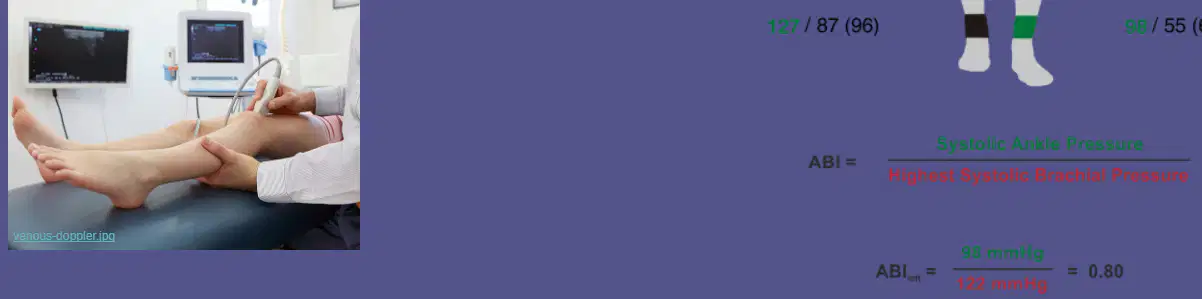
How is the ABI calculated according to the material?
By dividing ankle SBP by the higher of the left and right SBPs
By subtracting ankle SBP from brachial SBP
By multiplying ankle and brachial SBP
By averaging the left and right ankle SBPs
A patient has a systolic ankle pressure of 98 mmHg and the highest systolic brachial pressure is 122 mmHg. What is the ABI for the left leg?
0.80
1.24
0.50
1.00
What is the clinical significance of a low Ankle-Brachial Index (ABI)?
It indicates possible peripheral arterial disease (PAD)
It confirms normal blood flow in the limbs
It suggests high risk of pulmonary embolism
It is unrelated to vascular health
Which type of medication is critical for reducing cardiovascular disease (CVD) risks in patients with PAD?
Antiplatelets
Beta-blockers
Diuretics
Calcium channel blockers
What is one effect of ACE inhibitors in the management of PAD?
Increase PAD symptoms
Decrease PAD symptoms
Cause atherosclerosis
Increase blood clotting
Statins are primarily used in PAD therapy to:
Increase blood pressure
Decrease risk for atherosclerosis
Reduce inflammation only
Cure PAD completely
Which of the following is NOT a possible surgical option for PAD?
Stents
Angioplasty
Atherectomy
Appendectomy
A patient with PAD is not responding to drug therapy. Based on the provided options, which surgical interventions could be considered? (Select the most appropriate combination.)
Stents, Angioplasty, Atherectomy
Appendectomy, Angioplasty, Stents
Statins, ACE Inhibitors, Antiplatelets
Beta-blockers, Diuretics, Calcium channel blockers
What is the primary goal of nursing care for patients with PAD?
To increase heart rate
To maintain adequate blood flow to the area and avoid tissue damage
To reduce body temperature
To increase blood pressure
Which of the following is a recommended nursing intervention for monitoring circulation in a patient with PAD?
Monitor distal pulses and compare bilaterally
Measure blood glucose levels
Assess lung sounds
Monitor urine output
Why is it important to encourage management of cardiovascular risk factors in patients with PAD?
It helps prevent infection
It reduces the risk of further vascular complications
It increases appetite
It improves sleep quality
Which action should be taken to avoid pressure injuries on the heels in patients with PAD?
Use a pillow under the calves
Apply ice packs to the heels
Massage the heels regularly
Keep the feet uncovered
A nurse is teaching a client with PAD about proper foot care. Which instruction is most appropriate?
Inspect feet carefully and wear proper socks and shoes
Walk barefoot at home
Soak feet in hot water daily
Use tight-fitting shoes for support
Which of the following is part of the treatment for claudication symptoms in PAD?
Structured exercise program and medications
Bed rest and fluid restriction
High-protein diet
Frequent massage of the affected limb
A client with PAD has a wound on their foot. What is the best nursing intervention?
Cover the wound with dry, sterile dressings
Leave the wound open to air
Apply a warm compress
Use an antibiotic ointment only
Why should a client with PAD be taught to palpate pedal pulses?
To monitor for changes in circulation
To check for fever
To assess for dehydration
To measure blood pressure
What does the abbreviation DVT stand for in medical terminology?
Deep Vein Thrombosis
Direct Vascular Therapy
Distal Vein Treatment
Deep Valve Thrombosis
Where do blood clots most commonly tend to form in veins?
In the valve cusps of veins
In the artery walls
In the heart chambers
In the capillaries
Which of the following best describes thrombophlebitis?
Inflammation of a vein with blood clot formation
Hardening of the arteries
Infection of the heart valves
Narrowing of the capillaries
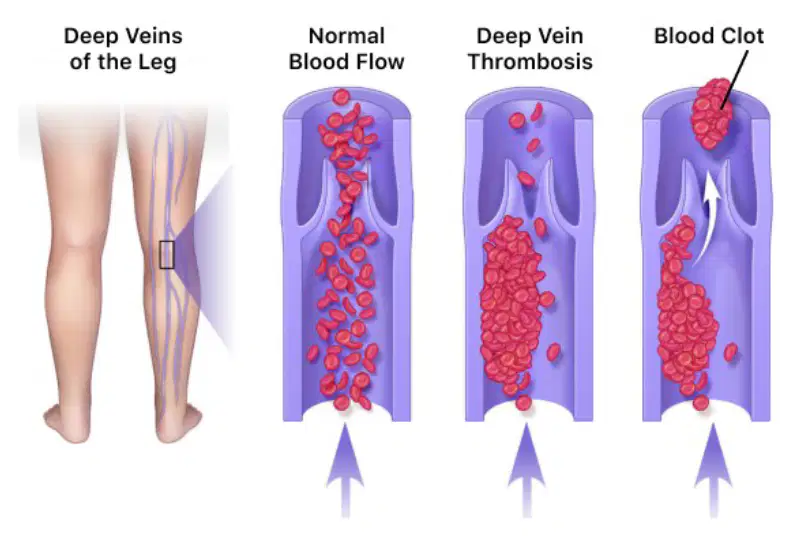
Based on the diagram, what is the main difference between normal blood flow and deep vein thrombosis?
Presence of a blood clot in the vein
Increased blood pressure
Decreased oxygen levels
Enlargement of the vein
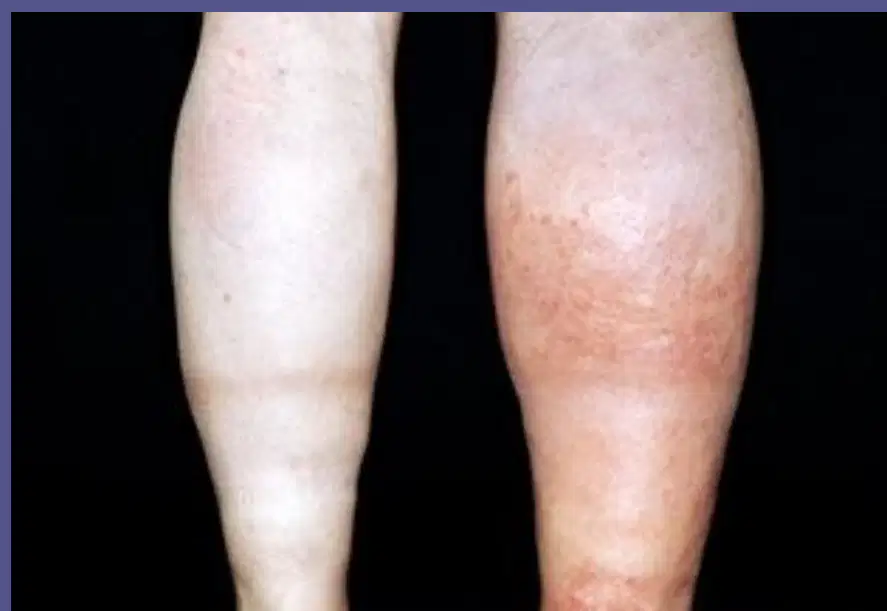
Which of the following is a common clinical manifestation of Deep Vein Thrombosis (DVT)?
Unilateral extremity pain, swelling, warmth, and redness
Bilateral hand numbness and tingling
Generalized body rash
Persistent cough and sore throat
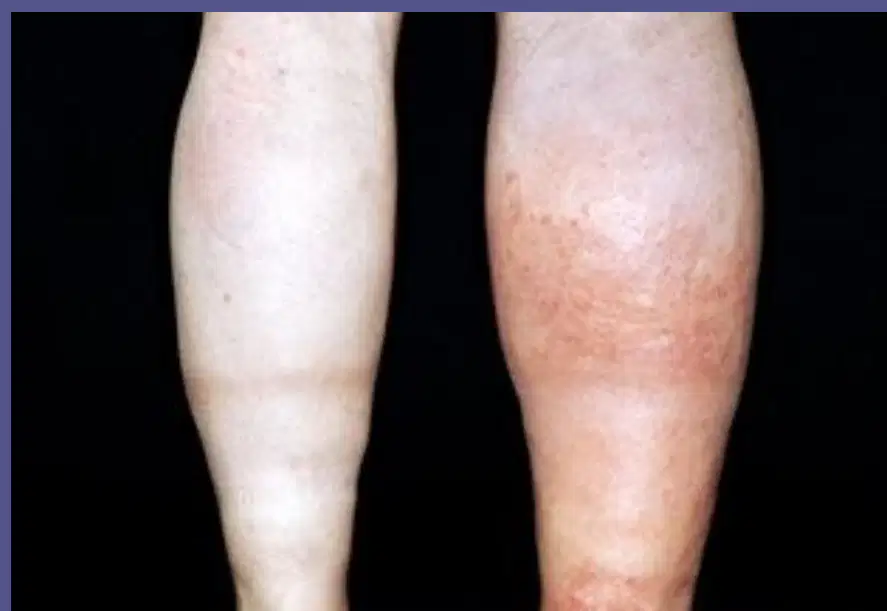
A patient presents with swelling, warmth, and redness in only one leg. What condition should you suspect based on these symptoms?
Deep Vein Thrombosis (DVT)
Asthma
Migraine
Appendicitis
Why is it important to recognize unilateral extremity pain, swelling, warmth, and redness in a clinical setting?
These symptoms may indicate a serious vascular condition such as DVT, which requires prompt intervention
They are always signs of a minor injury
They suggest a common cold
They are unrelated to any medical emergency
What does DVT stand for in the context of medical complications?
Deep Vein Thrombosis
Diabetic Vascular Thrombosis
Direct Vascular Trauma
Diffuse Vein Thrombosis
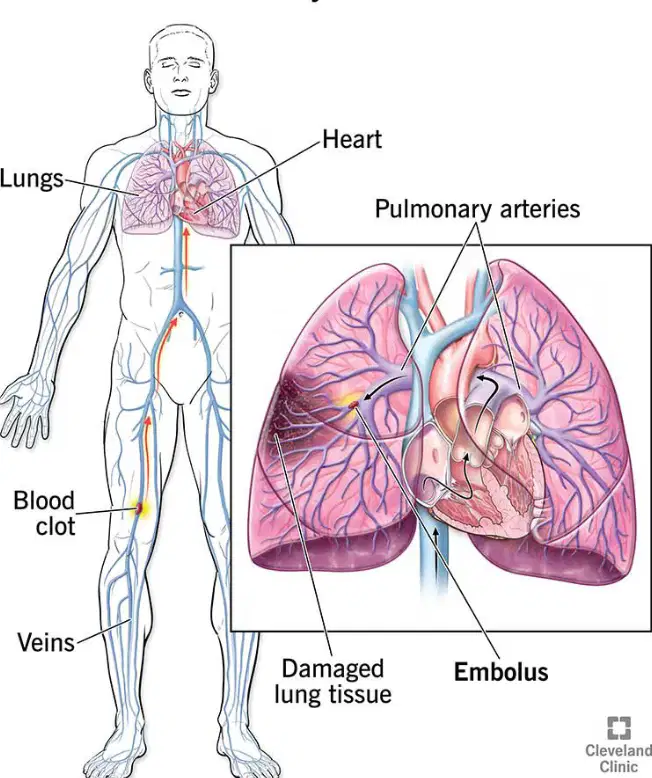
Which serious complication can arise from a DVT, as shown in the diagram?
Pulmonary Embolism
Heart Attack
Stroke
Kidney Failure
According to the diagram, where does the blood clot travel to cause a pulmonary embolism?
Lungs
Liver
Kidneys
Brain
Which of the following best describes the process leading to a pulmonary embolism as depicted in the image?
A blood clot forms in the veins, travels through the bloodstream, and blocks an artery in the lungs.
A blood clot forms in the heart and blocks a coronary artery.
A blood clot forms in the brain and causes a stroke.
A blood clot forms in the liver and blocks a hepatic vein.
Why is a pulmonary embolism considered a dangerous complication of DVT?
It can block blood flow to the lungs, causing tissue damage and potentially death.
It causes immediate heart failure.
It leads to chronic kidney disease.
It results in permanent paralysis.
Which diagnostic test is most commonly used for detecting pulmonary embolism (PE)?
Venous duplex ultrasound
D-dimer
Spiral CT
Doppler Flow Studies
What is the primary purpose of a venous duplex ultrasound in the context of DVT?
To measure blood sugar levels
To visually examine veins
To assess lung function
To detect heart murmurs
Which of the following diagnostic methods uses IV contrast to view pulmonary vessels?
Doppler Flow Studies
TEE
Spiral CT
D-dimer
A patient is suspected of having a deep vein thrombosis (DVT). Which of the following tests would NOT typically be used for diagnosis?
D-dimer
Doppler Flow Studies
Spiral CT
Venous duplex ultrasound
Explain why Spiral CT is considered the most common diagnostic test for pulmonary embolism (PE), and discuss its advantages over other diagnostic methods.
It is non-invasive and does not require any contrast agents.
It uses IV contrast to provide detailed images of pulmonary vessels, making it highly effective for detecting PE.
It is the least expensive and most widely available test.
It is the only test that can detect both DVT and PE simultaneously.
What is the primary function of anticoagulants in drug therapy for DVT?
Increase the ability of blood to clot.
Decrease the ability of blood to clot.
Increase blood pressure.
Decrease heart rate.
Which laboratory value should be monitored when a patient is receiving Heparin therapy?
INR
aPTT
Blood glucose
Platelet count
What is the therapeutic range for aPTT when monitoring Heparin therapy?
2-3
10-20
46-70
100-120
Which of the following is the correct antidote for Heparin and Lovenox overdose?
Vitamin K
Protamine
Aspirin
Naloxone
When administering Lovenox subcutaneously, what is an important technique to remember?
Expel the air bubble before injection.
Rotate injection sites and do not expel the air bubble.
Only use the same injection site.
Inject intramuscularly.
Which laboratory value should be monitored for a patient on Warfarin (coumadin)?
aPTT
INR
Blood urea nitrogen
Hemoglobin
What is the therapeutic INR range for patients on Warfarin therapy?
1-2
2-3
4-5
6-7
A patient on Warfarin develops excessive bleeding. Which antidote should be administered?
Protamine
Vitamin K
Epinephrine
Glucagon
A nurse is preparing to administer Lovenox to a patient. Which action demonstrates proper administration technique?
Expelling the air bubble before injection.
Rotating injection sites and leaving the air bubble in the syringe.
Administering the medication intramuscularly.
Mixing Lovenox with Heparin in the same syringe.

Which two anticoagulant drugs are being compared in the provided learning material?
Heparin and Warfarin
Aspirin and Ibuprofen
Penicillin and Amoxicillin
Metformin and Insulin
What is the primary goal of nursing care for patients with DVT?
To prevent the formation of clot and decrease inflammation
To increase blood pressure
To reduce cholesterol levels
To treat infections
Which intervention helps increase blood flow in patients at risk for DVT?
Using TEDs and SCDs
Applying ice packs
Restricting movement
Administering antibiotics
Why should clients on blood thinning drugs be closely monitored?
To monitor risk of complications
To increase appetite
To prevent dehydration
To improve sleep quality
What should women on contraceptives do to reduce the risk of DVT?
Stop taking contraceptives
Increase salt intake
Reduce fluid intake
Take more vitamin C
If a patient is taking anticoagulants, what is an important nursing action?
Follow up with lab work
Increase physical activity only
Avoid all green vegetables
Take antibiotics regularly
Which dietary advice is important for patients on anticoagulants?
Follow a consistent diet with foods containing vitamin K
Avoid all carbohydrates
Increase caffeine intake
Eat only protein-rich foods
A patient is planning a long-distance trip. What should they do to reduce the risk of DVT?
Exercise their legs and calves
Sleep throughout the journey
Avoid drinking water
Wear heavy boots
Which of the following is NOT a recommended nursing care intervention for DVT?
Restricting all movement
Early mobilization
Using compression socks
Maintaining a healthy diet and exercise program
Explain why early mobilization is important in the prevention of DVT.
It helps increase blood flow and reduces the risk of clot formation.
It increases the risk of infection.
It causes muscle fatigue.
It decreases appetite.
A patient on anticoagulants asks about dietary changes. What should you advise?
Maintain a consistent intake of foods containing vitamin K.
Eliminate all fruits and vegetables.
Double the intake of vitamin K suddenly.
Eat only processed foods.

