
 Worksheets
3rd Unit 8: Protest Signs and Key Concepts
Total questions: 72
Worksheet time: 36mins

What slogan is written on the sign held by the person on the right in the image?
Fight like a Girl
Stand for Peace
Unity in Diversity
Power to the People

Which of the following is NOT listed on the protest sign in the image?
Diversity
Equality
Human Rights
Wealth Accumulation
Environmental Protection

Fill in the blank: The protest sign encourages people to 'EMBRACE ______, EQUALITY, HUMAN RIGHTS & ENVIRONMENTAL PROTECTION.'
DIVERSITY
WEALTH
POWER
CONFORMITY

The protest sign in the image mentions 'Stronger Together.'
True
False
What is a ballot?
A ballot is a process of voting, in writing and typically in secret.
A ballot is a type of government official.
A ballot is a type of currency used in elections.
A ballot is a law passed by the parliament.
What is a candidate?
A candidate is a person who applies for a job or is nominated for election.
A candidate is a type of fruit found in tropical regions.
A candidate is a machine used for construction work.
A candidate is a type of weather phenomenon.
What are civil rights?
Civil rights are the rights of citizens to political and social freedom and equality.
Civil rights are the rights to own private property only.
Civil rights are the rights to serve in the military only.
Civil rights are the rights to pay taxes only.
What is a demonstration?
A demonstration is a public meeting or march protesting against something or expressing views on a political issue.
A demonstration is a type of food preparation technique.
A demonstration is a mathematical calculation.
A demonstration is a form of musical performance.
What does peaceful mean?
Peaceful means free from disturbance; tranquil.
Peaceful means very noisy and chaotic.
Peaceful means full of anger and violence.
Peaceful means extremely busy and crowded.
What does it mean to register (in the context of voting)?
To register means to officially sign up to be able to vote in elections.
To register means to cast your vote in an election.
To register means to count the votes after an election.
To register means to run for a political office.
What is a republic?
A republic is a state in which supreme power is held by the people and their elected representatives.
A republic is a state ruled by a single monarch with absolute power.
A republic is a system where only the military holds all authority.
A republic is a country governed solely by religious leaders.
One way people can make their voices heard in their community is:
Attending community meetings
Ignoring local issues
Avoiding voting
Staying silent
What is a republic?
A) A type of government in which the citizens elect their leaders to represent them
B) A government where leaders are chosen by birth
C) A government where only one person makes all decisions
D) A government without any leaders
In a republic, who chooses the leaders?
The citizens
The previous leaders
Foreign countries
The military
Fill in the blank: The United States government is a ________.
republic
monarchy
dictatorship
theocracy
According to the passage, what is the main responsibility of elected leaders?
To do what is best for the people they represent.
To follow their own personal interests.
To ignore the needs of the community.
To make decisions without consulting anyone.
According to the passage, who has the right to vote in the United States?
U.S. citizens who are at least 18 years old have the right to vote.
Only people who have lived in the U.S. for more than 10 years can vote.
Anyone living in the U.S., regardless of citizenship, can vote.
Only people over the age of 21 can vote.
Why is it important for voters to stay informed on the issues?
So that they can choose a good person to represent them.
So that they can avoid voting altogether.
So that they can follow what their friends are doing.
So that they can ignore the election results.
What is one of the best ways to stay informed, according to the passage?
Watching movies
Reading the news
Playing sports
Listening to music
The passage suggests that it is best to read only one newspaper to make the best decision for yourself.
True
False
How does voting give people a chance to make changes, according to the passage?
By allowing people to choose new leaders who agree with them if they do not like the current laws or leaders.
By making everyone follow the same rules without exception.
By letting people avoid participating in government decisions.
By ensuring that only the current leaders can make changes.
Read the passage below and answer the question: 2. Going to Public Meetings One way to have a voice in your community is to go to public meetings. Towns and cities have meetings to talk about important decisions. These decisions affect everyone who lives in the community. Before making decisions, leaders want to know what people think. They ask people to come to public meetings to share their thoughts and ideas. For instance, leaders might call a meeting to talk about traffic safety near schools. The leaders might ask whether the city should put speed bumps on certain streets to slow cars down. Anyone can go to a public meeting. You can go just to listen or to share your thoughts on a topic. Why have public meetings?
To make decisions without input
To share their thoughts and ideas
To avoid making changes
To close the meetings to the public
Fill in the blank: Public meetings are held to talk about ________ decisions.
important
random
private
unrelated
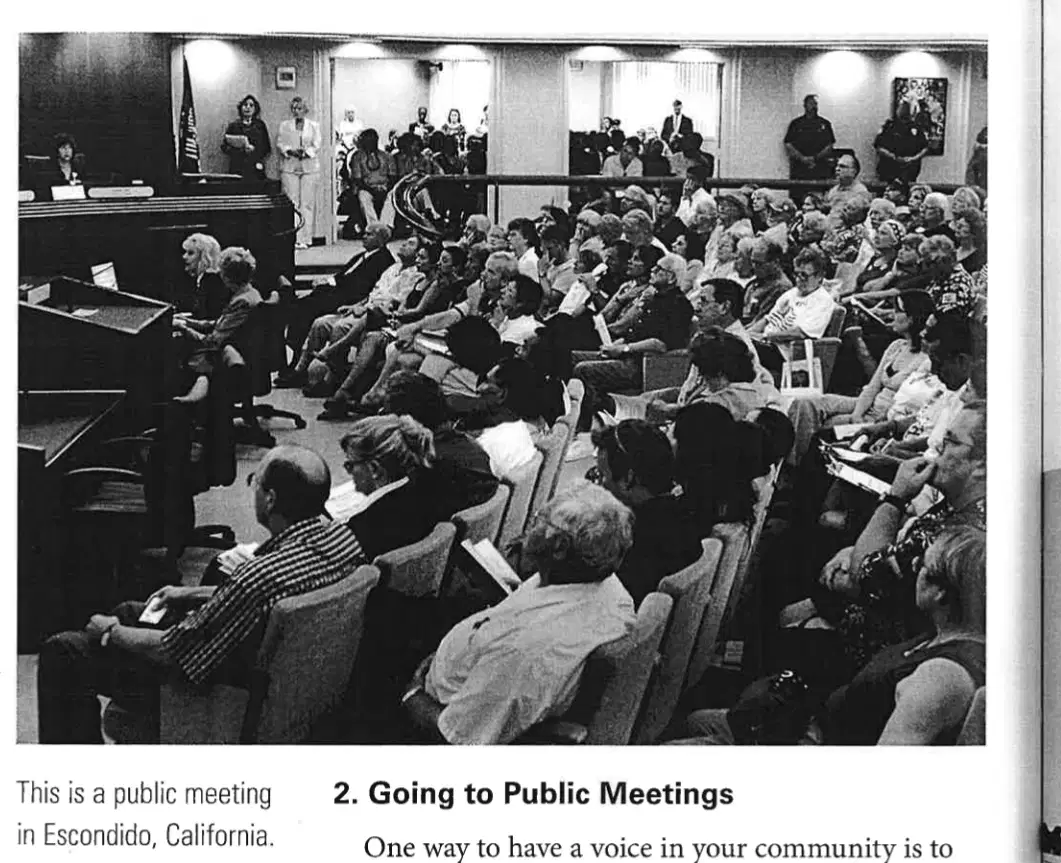
Where is the public meeting in the photograph taking place?
Escondido, California
Santa Fe, New Mexico
Boulder, Colorado
Salem, Oregon
Leaders might call a meeting to talk about traffic safety near schools because:
They want to improve safety for students.
They want to discuss school lunch menus.
They are planning a school sports event.
They want to hire new teachers.
According to the passage, what might happen if you choose to speak at a public meeting?
The leaders may ask you questions
You will be ignored
You will have to leave
You will get a prize
Fill in the blank: Speaking at a public meeting can give you a ______ in your community.
voice
ticket
problem
holiday
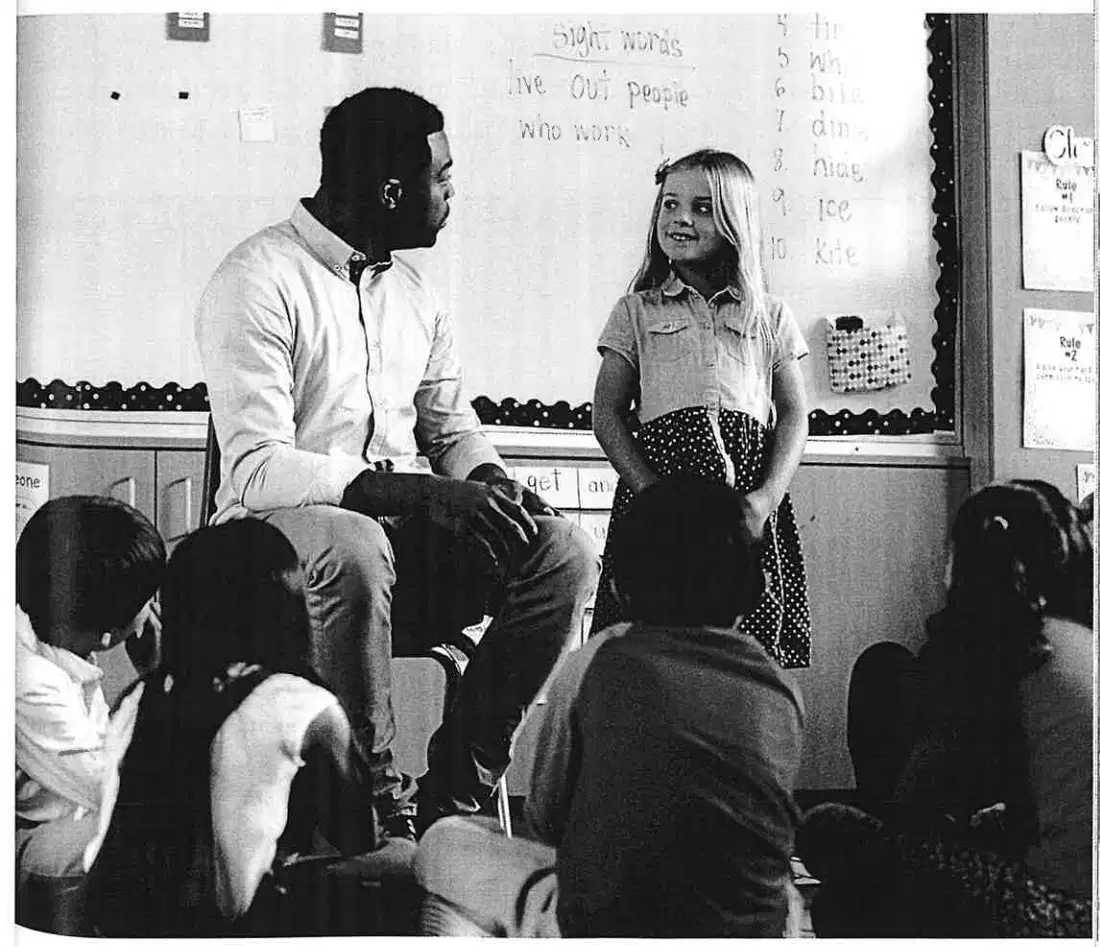
Speaking in front of your class is a good way to participate in your classroom community.
True
False
What is the definition of 'demonstration'?
A gathering of people to show shared feelings or opinions
A type of government
A peaceful country
A musical performance
What does 'peaceful' mean?
Done without hurting others or their property
Done quickly
Done in a group
Done with music
One way people can show how they feel about an issue at a demonstration is:
Carrying signs or banners
Ignoring the event
Staying silent at home
Watching television
Peaceful demonstrations mean hurting others or their property.
True
False
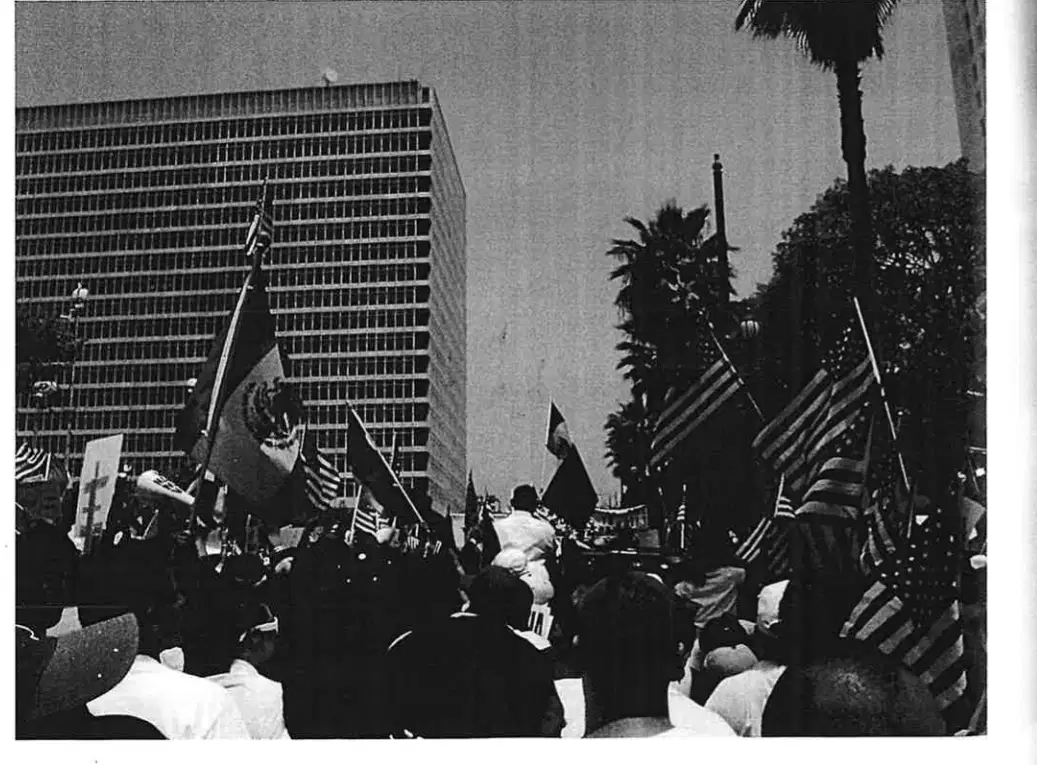
The people in the image are:
playing a board game
cooking in the kitchen
reading books
exercising outdoors
Fill in the blank: Civil rights are rights a person has as a ________.
citizen
visitor
employee
foreigner
Why were civil rights a problem in the 1950s and 1960s?
All citizens had equal rights
Many African Americans were not being given all their rights
There were no demonstrations
All states allowed everyone to vote
What did many people do to try to change civil rights laws in the 1950s and 1960s?
They ignored the problem
They took part in civil rights marches
They left the country
They stopped voting
The result of the peaceful civil rights demonstrations in the United States during the 1950s and 1960s was:
the passage of major civil rights legislation
the start of the American Revolution
the end of World War II
the creation of the United Nations
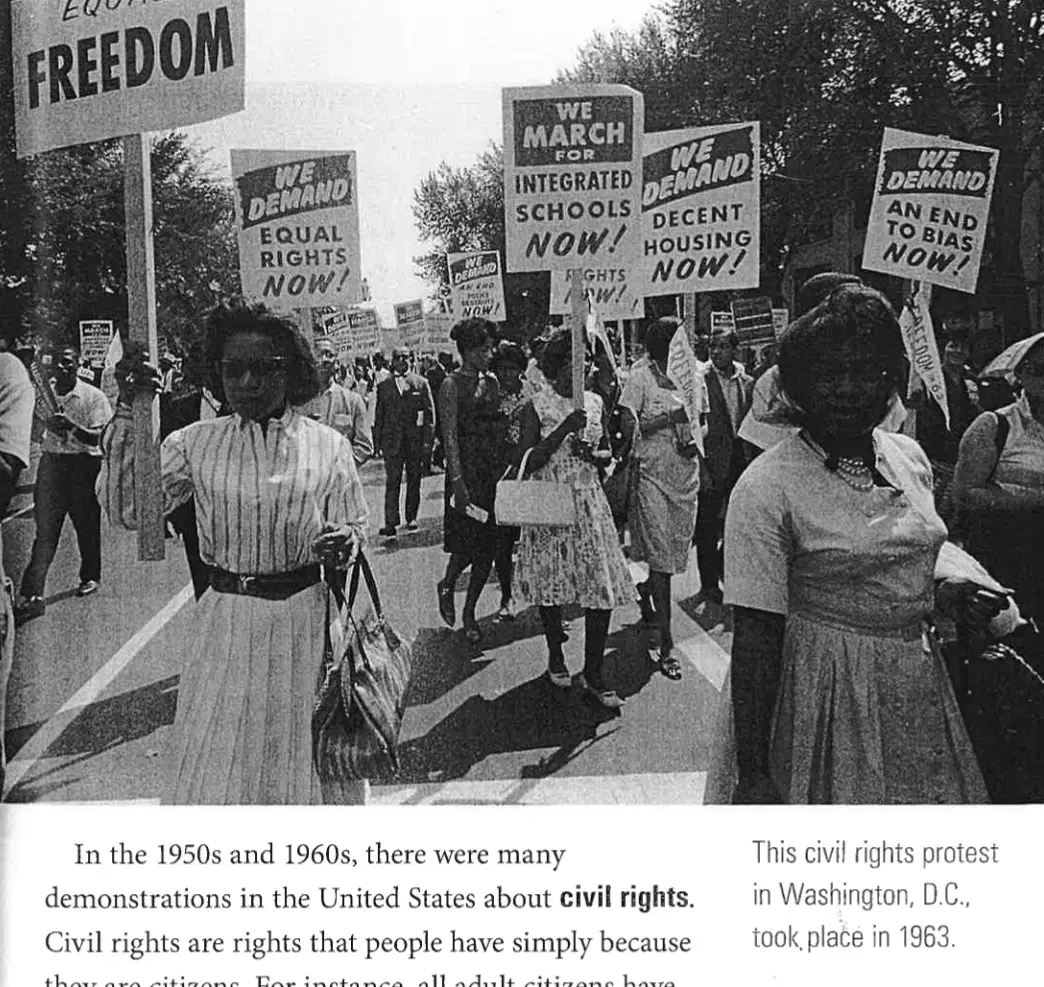
This civil rights protest in Washington, D.C., took place in which year?
1950
1963
1970
1945
According to the passage, why do candidates need help from people?
They can't talk to every voter themselves
They need people to tell friends and neighbors about their ideas
They need money to send mail and pay for ads
All of the above
Select two ways you can support a candidate.
Volunteering and donating to their campaign
Ignoring their campaign and not voting
Spreading false information about them
Discouraging others from voting
Fill in the blank: On Election Day, you can ______ people to vote.
encourage
ignore
prevent
distract

Supporting a candidate is one way to make your voice heard.
True
False
What does it mean to register in the context of voting?
To sign up to vote.
To cast your vote.
To count the votes.
To run for office.
What is a ballot?
A form on which people mark their votes in an election.
A type of government official.
A campaign slogan.
A political party.
According to the passage, who was originally allowed to vote when the United States was created?
Any citizen
Only white men who owned land
Only women
Only people over 18
What must people do before they can vote?
People must register before they can vote.
People must pay a fee before they can vote.
People must take a test before they can vote.
People must be over 30 years old before they can vote.
What does the ballot list for voters?
The ballot lists all the candidates and ideas to vote on.
The ballot lists only the names of the election officials.
The ballot lists the rules for voting.
The ballot lists the locations of polling stations.
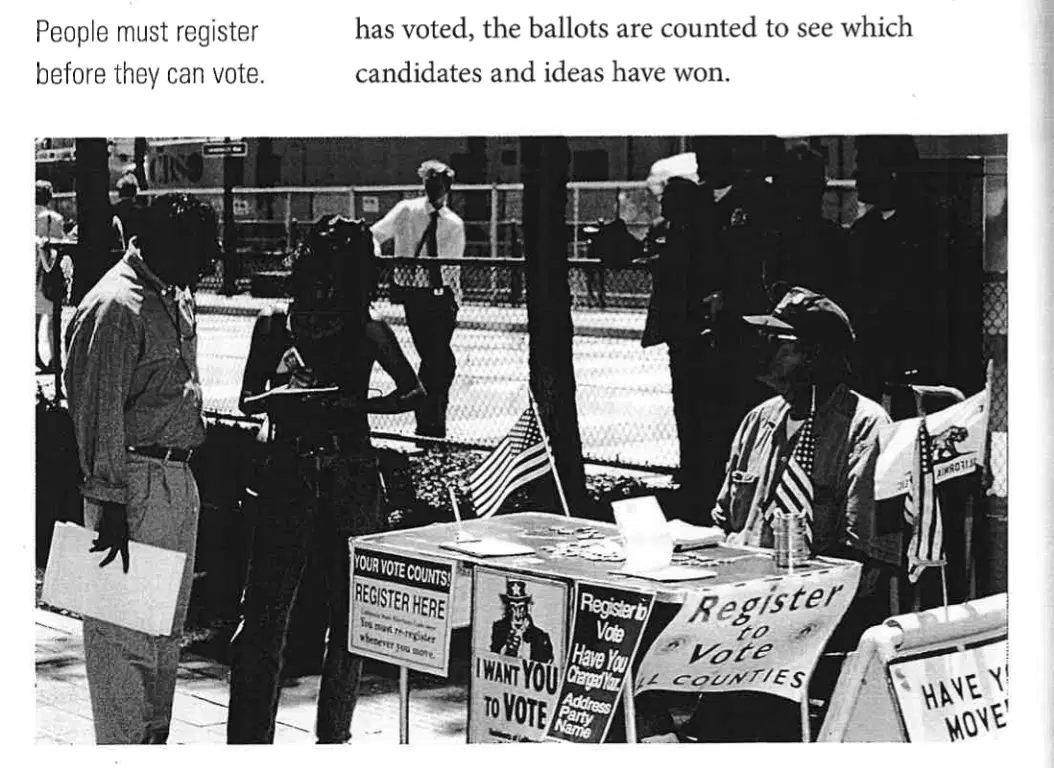
Look at the image of people at a registration table. What are they doing?
They are registering people to vote.
They are selling tickets for a concert.
They are handing out food samples.
They are checking in for a sports event.
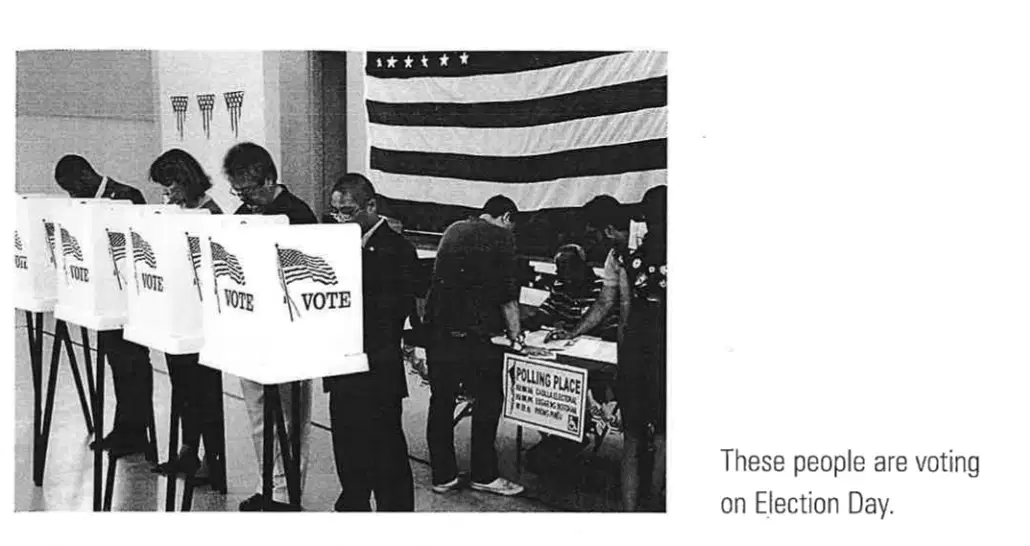
Look at the photograph. What are these people doing on Election Day?
Attending a meeting
Voting
Protesting
Watching a parade
According to the passage, how do most people vote on Election Day?
Most people vote in person on Election Day.
Most people vote online on Election Day.
Most people vote by mail on Election Day.
Most people do not vote on Election Day.
What is one reason voting booths are used during elections?
Voting booths keep other people from seeing how voters are voting.
Voting booths help count votes faster.
Voting booths provide snacks for voters.
Voting booths are used to announce election results.
In an election, every voter helps to choose ideas and candidates.
True
False
According to the lesson summary, what is a republic?
A republic is a government in which people can choose their leaders.
A republic is a government ruled by a king or queen.
A republic is a government where only one person makes all the laws.
A republic is a government where leaders are chosen by birthright.
Who can vote in U.S. elections according to the lesson summary?
Anyone living in the U.S.
Only government officials
U.S. citizens who are at least 18 years old
Only people over 21 years old
List two ways you can have a voice in your community, according to the lesson summary.
You can attend public meetings and take part in peaceful demonstrations.
You can ignore community events and stay silent.
You can only participate by voting in national elections.
You can avoid all forms of communication with local leaders.
What famous American helped to start some needed public services?
Benjamin Franklin
Thomas Edison
George Washington
Henry Ford
Suppose a young newspaper writer is sitting at a table in the city of Philadelphia in 1788. The writer is a little nervous because he is about to interview one of the most famous Americans in the world.
Benjamin Franklin
Thomas Jefferson
George Washington
John Adams
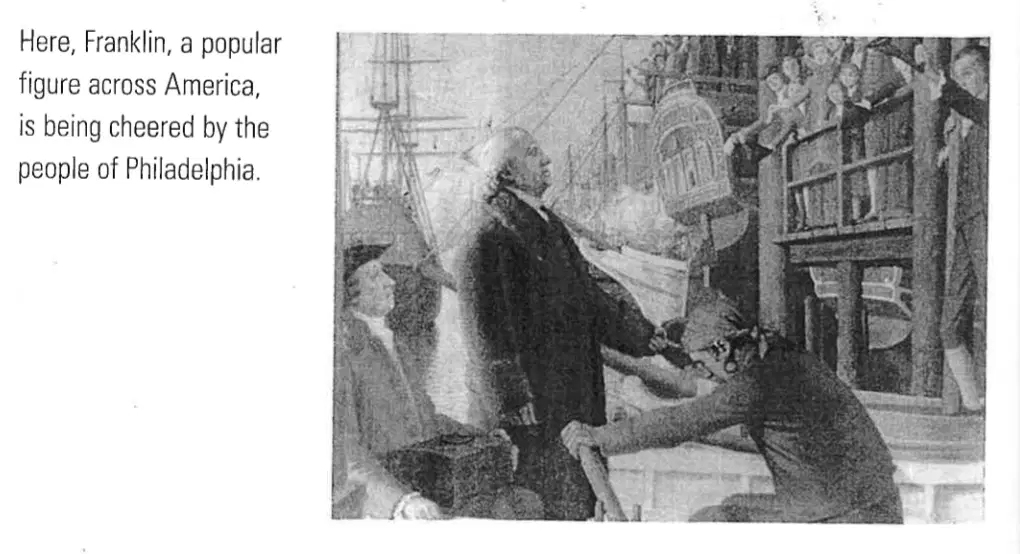
Who is being cheered by the people of Philadelphia in the illustration?
Benjamin Franklin
George Washington
Thomas Jefferson
John Adams
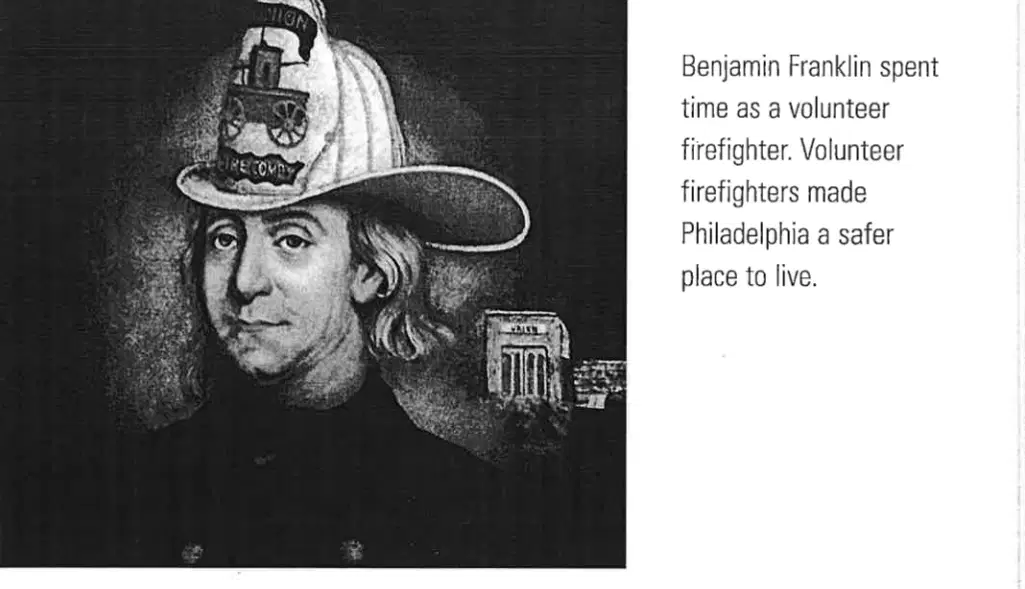
According to the passage, what did Benjamin Franklin do to help make Philadelphia a safer place to live?
He built new houses
He started a group of volunteer firefighters
He became a mayor
He opened a school
When did Benjamin Franklin first come to Philadelphia?
1723
1715
1730
1741
Benjamin Franklin printed his own newspapers and also worked in a printer's shop.
True
False
What form of money was used in the colonies when Benjamin Franklin worked in a printer's shop?
Shillings
Dollars
Francs
Pesos
Benjamin Franklin helped solve the problem of fires in Philadelphia by:
organizing the first volunteer fire department
inventing the fire hydrant
building fireproof houses
banning open flames in the city
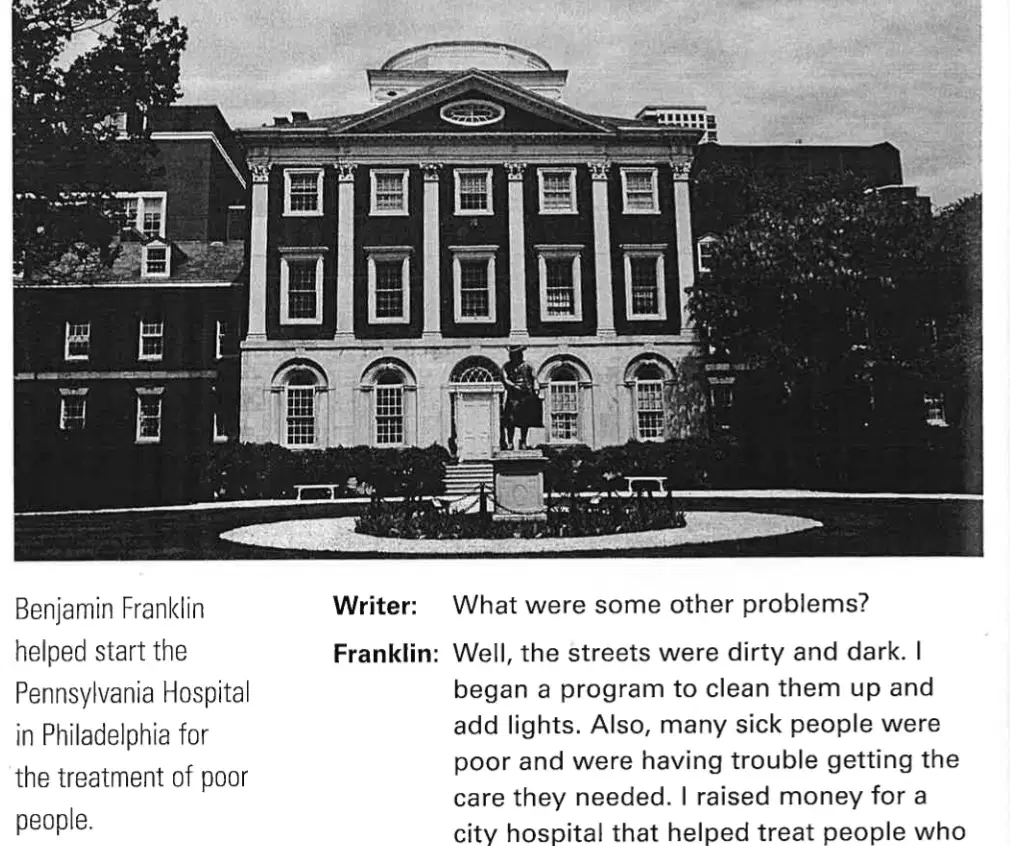
According to the passage, what did Benjamin Franklin do to help sick people in Philadelphia?
He raised money for a city hospital that helped treat people who could not normally afford care.
He became a doctor and treated patients himself.
He invented a new medicine for the sick.
He opened a pharmacy in Philadelphia.
Why did Benjamin Franklin get involved in the war for independence from Great Britain in 1775?
To protect the rights of Americans, make their own laws, and vote on their own taxes.
To become the king of America.
To gain personal wealth from the British government.
To establish a new religion in the colonies.
What did Benjamin Franklin help write in 1776?
The Declaration of Independence.
The Bill of Rights.
The Emancipation Proclamation.
The Federalist Papers.
Benjamin Franklin believed that Americans had to help one another during the war for independence.
True
False
In 1776, Benjamin Franklin was sent to France on behalf of the American people. Why was he sent there?
He was sent to ask the king for soldiers and money to buy supplies to help win the war.
He was sent to negotiate a peace treaty with Britain.
He was sent to explore new trade routes for the colonies.
He was sent to become the ambassador to Spain.
Was it dangerous for Franklin to sail to France in the middle of a war?
True
False
What did Franklin say was better than being rich?
It is better to be useful than to be rich.
It is better to be famous than to be rich.
It is better to be powerful than to be rich.
It is better to be lucky than to be rich.
According to Franklin, what should people think about?
Only themselves
What they can do for others
How to get rich
How to travel to France
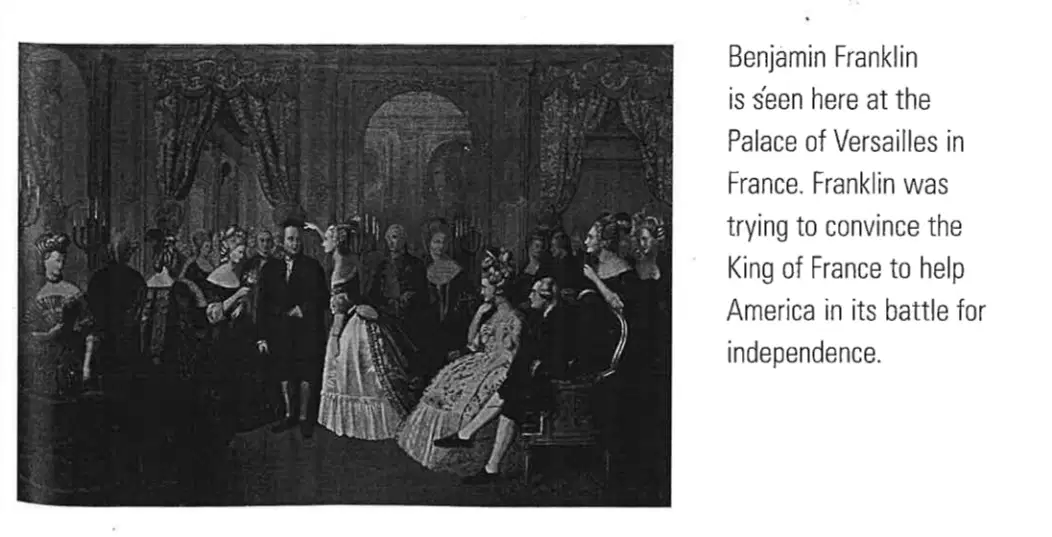
Look at the image of Benjamin Franklin at the Palace of Versailles. What was he trying to do there?
He was trying to convince the King of France to help America in its battle for independence.
He was trying to sell inventions to the French court.
He was attending a royal wedding as a guest.
He was negotiating a trade agreement for tea.

