
 Worksheets
Unit 1 Areas of Development Test
Total questions: 28
Worksheet time: 15mins
At what age do most children begin to walk independently?
6 months
9 months
12 months
18 months
Which area of development includes problem-solving skills, memory, and learning?
Physical
Intellectual
Emotional
Social
A child who can hop on one foot is showing development in which area?
Physical
Intellectual
Emotional
Social
By the age of 4, a child's vocabulary usually consists of:
50 words
200 words
1,000 words
5,000 words

What area of development is shown when a child shares toys and takes turns?
Physical
Intellectual
Emotional
Social
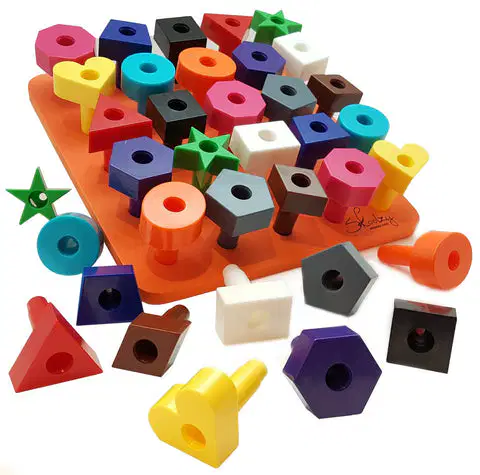
Which of the following are fine motor skills? (Select all that apply)
Cutting with scissors
Jumping off a step
Drawing shapes
Holding a crayon
What are common emotional milestones in toddlers (ages 1 to 3)? (Select all that apply)
Stranger anxiety
Tantrums
Complex mathematical concepts
Showing independence

Babies are born with the ability to recognize familiar voices.
True or false
True
False
Preschool children (ages 3 to 5) often engage in pretend play and use their imagination.
true
false
Mia is 18 months old. She can walk without help, uses about 10 words, and shows separation anxiety when her mother leaves. What stage of childhood is she in?
Infant
Toddler
Preschooler
School age
Liam is 4 years old. He enjoys pretend play, speaks in complete sentences, and can dress himself with little help. Which area of development is shown when he enjoys pretend play?
Physical
Intellectual
Emotional
Social
Which skill best demonstrates intellectual development?
Learning to walk
Recognizing letters
Throwing a ball
Climbing stairs
Which area of development involves learning to manage feelings and express them appropriately?
Physical
Intellectual
Emotional
Social
At age 7, most children can:
Run a mile
Read simple chapter books
Speak 2,000 words
Drive a small go-kart
You must always ______________ and know where the children are at all times.
watch
play
be on your phone
Learning to relate to others is considered which skill or development?
Physical
Intellectual
Social
The increase in the size and capacity of the body is considered which skill or development?
Physical
Intellectual
Social
Milestone of the infant
Grasps a rattle
Speaks up to 13,000 words.
Begins to ride a tricycle
Milestone of the young child
Sits alone for the first time
Rolls over
Learns the meaning of "NO"
Children will behave better if they know that you______.
will send them to a corner
care
will call their parents
Children aged 5 to 11 years are known as...
young children
preschoolers
school-age children
adolescents
Children from birth to approximately one year old are known as...
toddlers
preschoolers
infants
adolescents
Children who are three or four years old...
young children
preschoolers
school-age children
adolescents
Children who are 3, 4, and 5 years old
Newborn
Infant
Toddler
Preschooler
School-age
Which is NOT a milestone for TODDLERS?
writing their name
drinking from a cup
turning the pages of a book
speaking in 1-2 word phrases
Cries to express needs
School age
Preschool
Infant
None of the above
The developmental tasks that usually occur during specific times in a child's life
newborn
developmental milestones
parallel play
tantrums
The study of how children grow and mature
Infants
Milestones
Tantrum
Child development

