
 Worksheets
What's on the Nutrition Facts Label
Total questions: 34
Worksheet time: 25mins
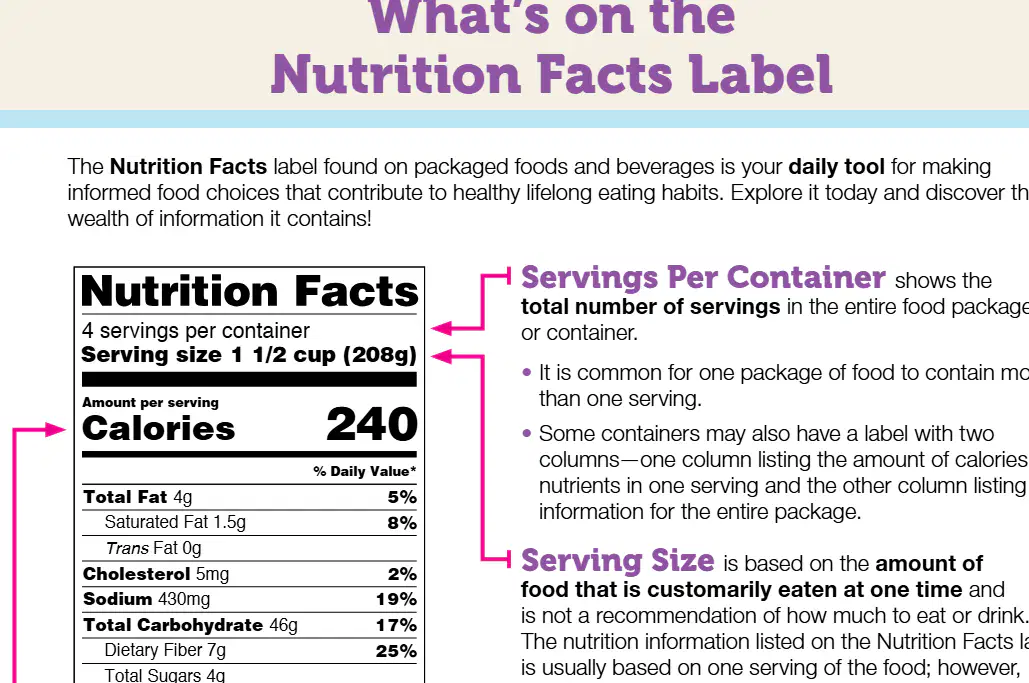
What does 'Servings Per Container' show on a Nutrition Facts label?
The total number of calories in the package
The total number of servings in the entire food package or container
The amount of protein per serving
The amount of fat per serving
What is the serving size shown on the Nutrition Facts label in the image?
1 cup (150g)
1 1/2 cup (208g)
2 cups (300g)
1/2 cup (100g)
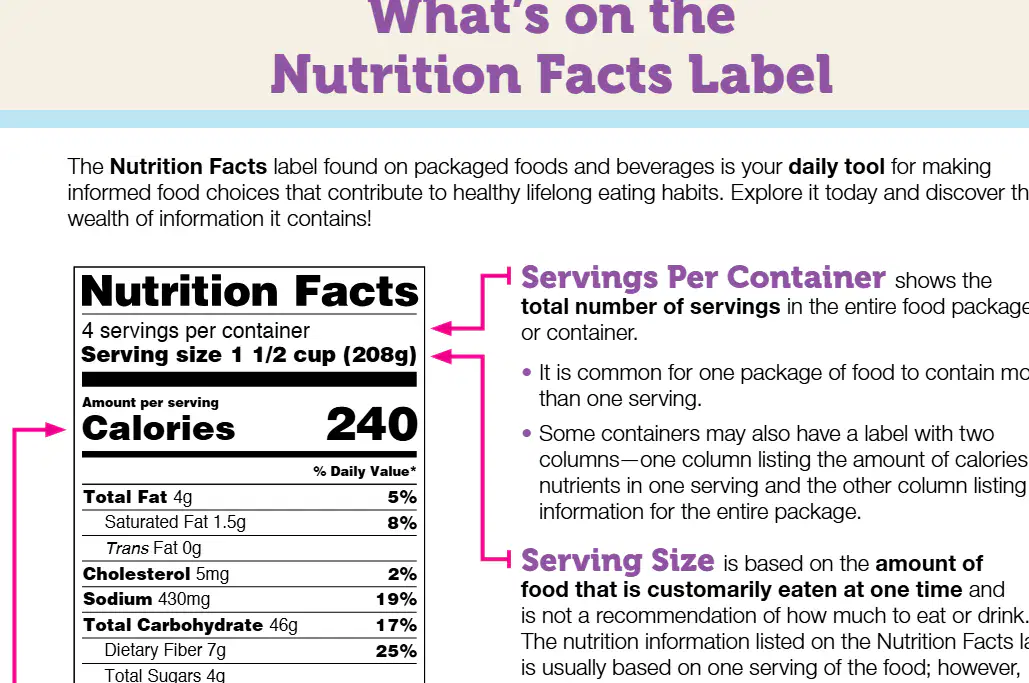
Fill in the blank: The Nutrition Facts label shows that there are ____ servings per container.
4
2
6
8
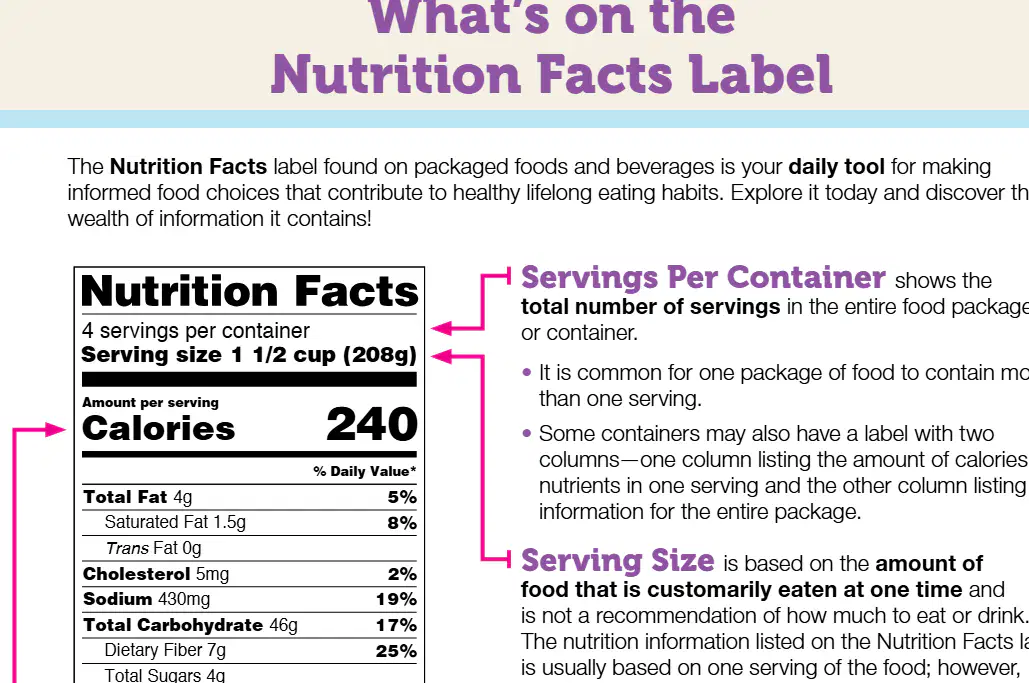
Calories refers to the total number of ______ supplied from all sources (carbohydrate, fat, protein, and alcohol) in a serving of the food.
calories, or “energy”
vitamins
minerals
fibers
According to the general guide, how many calories per serving of an individual packaged food is considered high?
100 calories
200 calories
400 calories
50 calories
True or False: The serving size on the Nutrition Facts label is a recommendation of how much to eat or drink.
True
False
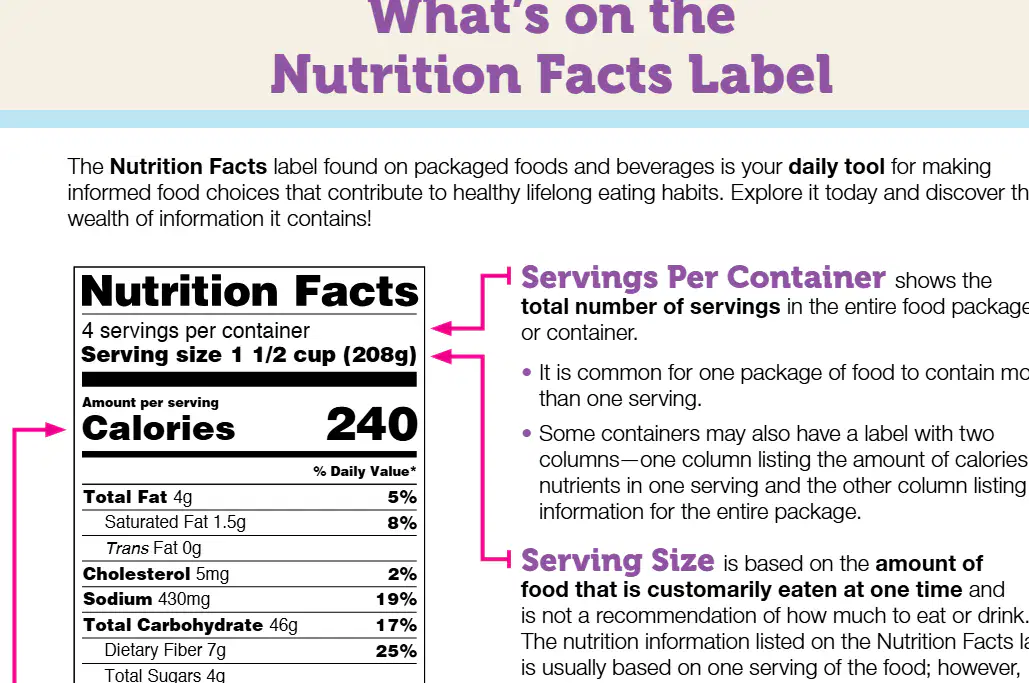
Which of the following is NOT included in the Nutrition Facts label shown in the image?
Total Fat
Protein
Vitamin C
Sodium
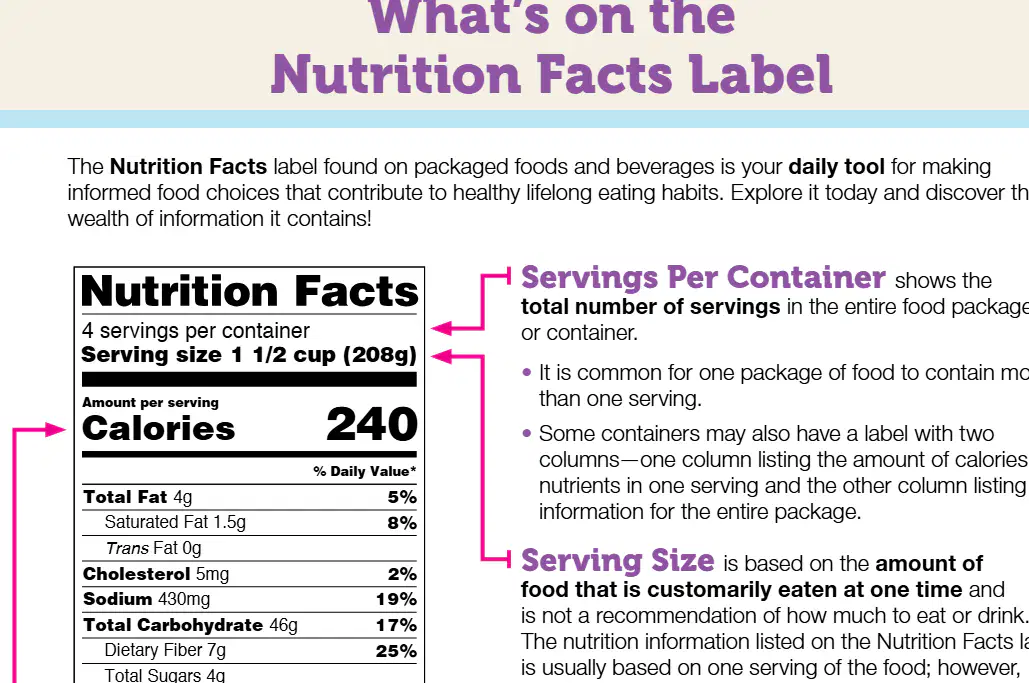
What is the % Daily Value of Iron in the Nutrition Facts label shown?
10%
20%
35%
6%
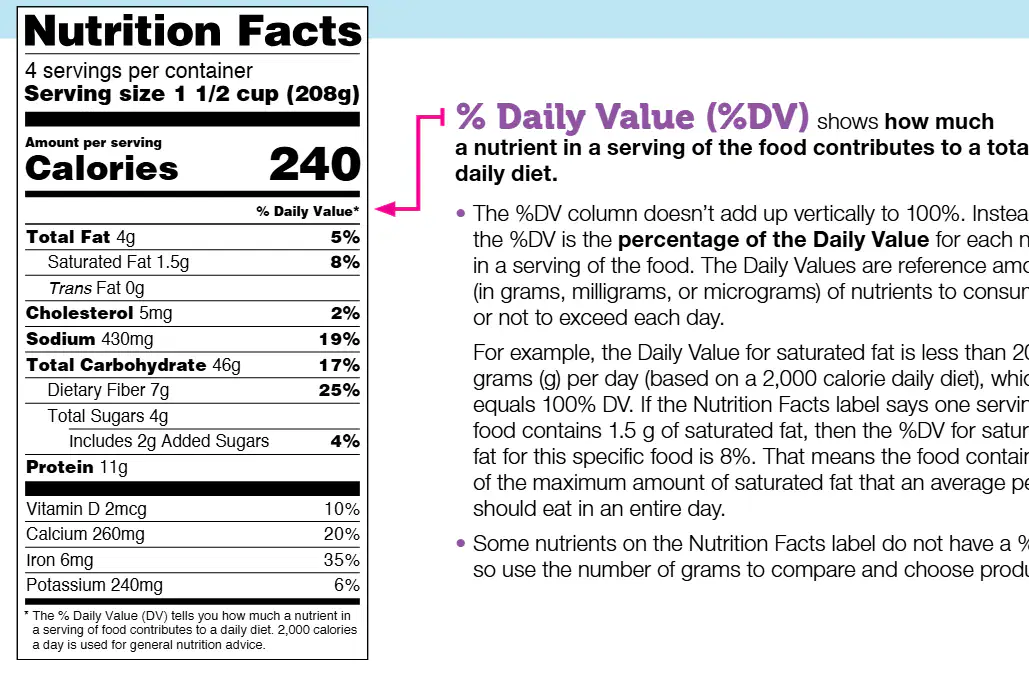
What is the serving size listed on the Nutrition Facts label?
1 cup (150g)
1 1/2 cup (208g)
2 cups (300g)
1/2 cup (100g)
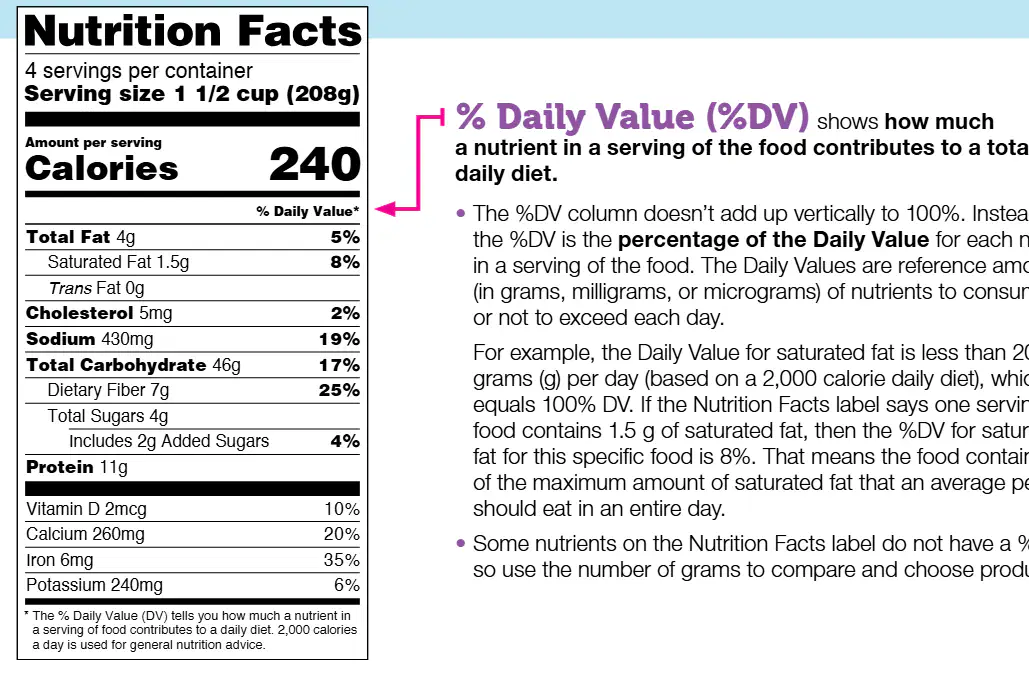
How many calories are in one serving according to the Nutrition Facts label?
240
120
350
500
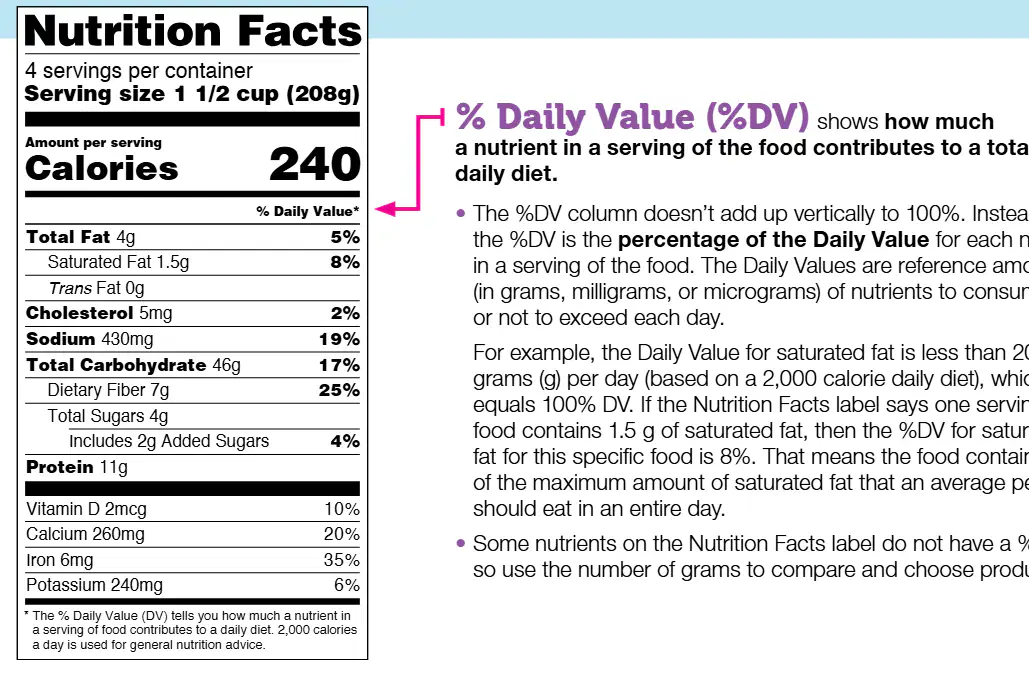
What is the % Daily Value for Total Fat per serving?
8%
5%
19%
17%
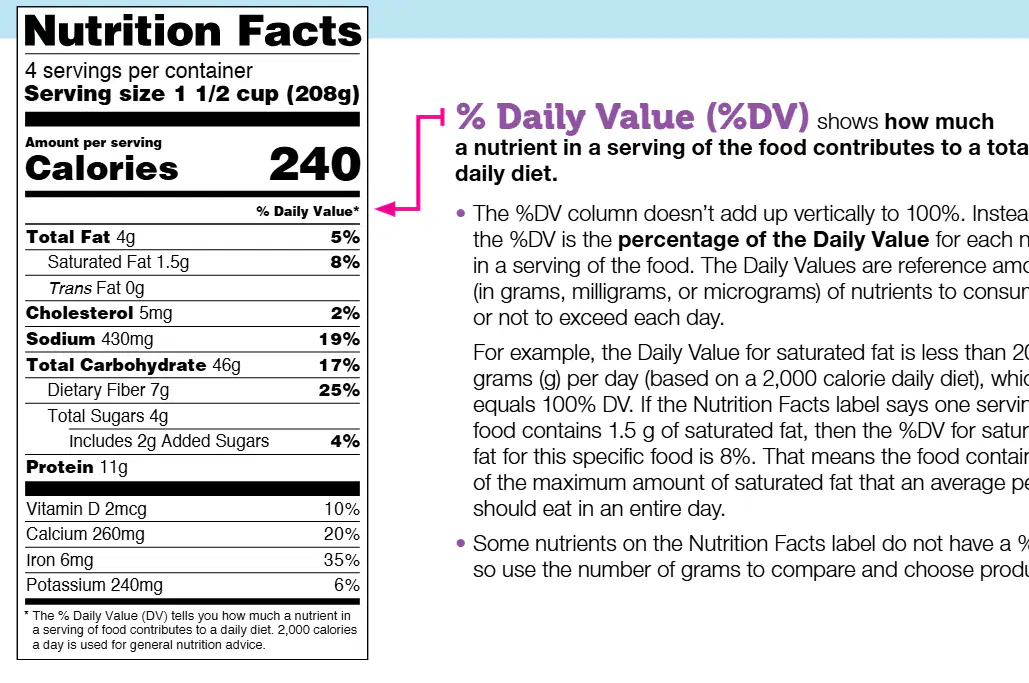
What is the % Daily Value for Dietary Fiber per serving?
25%
10%
5%
40%
True or False: The %DV column on the Nutrition Facts label adds up vertically to 100%.
True
False
According to the general guide, what %DV or less per nutrient per serving is considered low?
10%
20%
5%
25%
According to the general guide, what %DV or more per nutrient per serving is considered high?
20%
5%
10%
15%
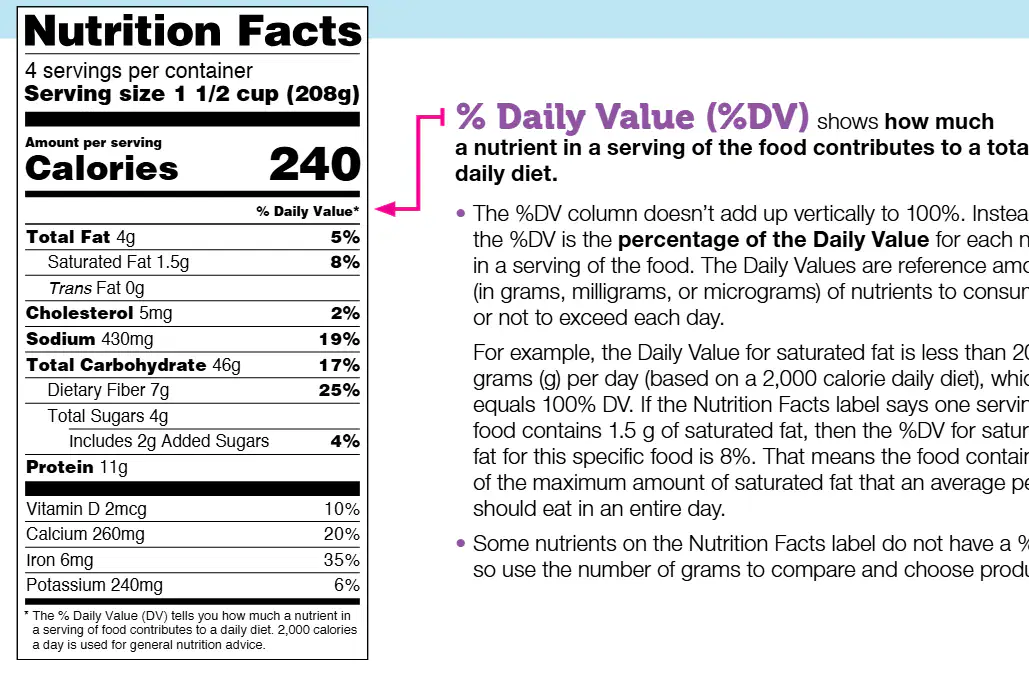
What is the % Daily Value for Sodium per serving?
19%
5%
30%
12%
% Daily Value (%DV) means:
The percentage of a nutrient in a serving of food based on a daily diet.
The total calories in a food item.
The amount of food you should eat in a day.
The price of the food item compared to others.
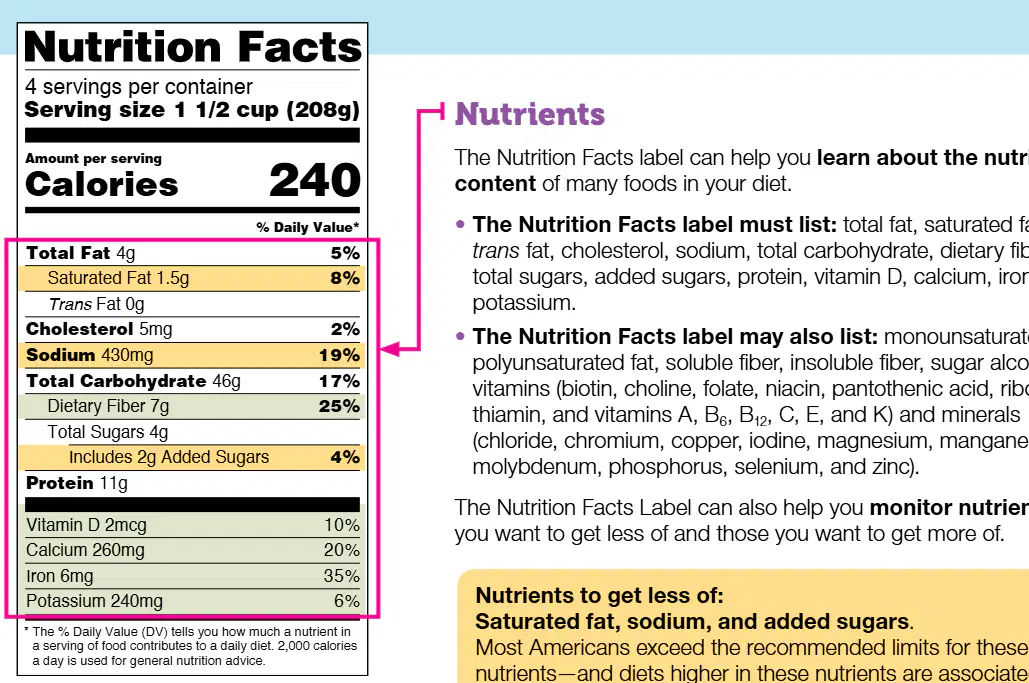
According to the Nutrition Facts label, how many calories are in one serving?
240
120
350
500
Which of the following nutrients does the Nutrition Facts label require to be listed?
Monounsaturated fat
Total fat
Sugar alcohols
Vitamin B12
True or False: The ingredient list on a food package is ordered by the amount of each ingredient, from most to least.
True
False
Name two nutrients that most Americans should get less of, according to the Nutrition Facts label information.
Sodium and added sugars
Protein and fiber
Calcium and iron
Vitamin C and potassium
Which of the following is NOT included in the Nutrition Facts label's required list?
Total sugars
Potassium
Vitamin B6
Protein
Fill in the blank: Ingredients are listed in ________ order by weight on the ingredient list.
descending
alphabetical
random
ascending
The Nutrition Facts label can help you monitor nutrients you want to get less of and those you want to get more of.
True
False
Many Americans do not get enough of which two nutrients?
Calcium and Vitamin D
Vitamin C and Iron
Potassium and Sodium
Protein and Fiber
Match the following
Grains
Pasta, Rice
Proteins
Chicken, Fish
Vegetables
Green Beans, Asparagus
Fruits
Apples, Oranges
Dairy
Cheese, Yogurt
Match the following
Fats
Oils, meat & dairy
Carbohydrates
Starches & sugars
Proteins
Meat, beans, eggs
Vitamins
A, K, B, C, D, E
Minerals
Whole grains, fruits, veggies

The (a) essential nutrient is used to help build and repair tissues in the body, build muscles, and more.
Its major functions include building, repairing and maintaining healthy body tissues. Good sources are beans, dairy, and meat.
Match the following
Grains
Pasta, Rice
Proteins
Chicken, Fish
Vegetables
Green Beans, Asparagus
Fruits
Apples, Oranges
Dairy
Cheese, Yogurt
(a) carbs give us energy over a long period of time and do not make us crash.

