
 Worksheets
Theatre Arts: Self-Confidence and Participation Quiz
Total questions: 100
Worksheet time: 50mins
Which of the following is a vocabulary term mentioned in the lesson?
Self-confidence
Creativity
Leadership
Organization
What is the main focus of the lesson described in the material?
Learning about world history
Developing as a positive person and understanding responsibilities in the theatre classroom
Practicing advanced mathematics
Studying famous actors
According to the lesson, what helps minimize fears of rejection and failure in theatre arts?
Practicing alone at home
Learning theatre skills in a positive and safe environment
Watching movies
Reading scripts silently
Which of the following is NOT listed as a lesson objective?
Demonstrate an understanding of self-confidence and the importance of positive self-talk
Participate in activities that will improve your self-confidence
Memorize all the lines in a play
Acknowledge similarities and differences in others
What is self-confidence, according to the lesson?
The ability to memorize scripts quickly
Belief in your worth and abilities as a person
The skill of acting in front of an audience
The habit of talking to yourself
How does the lesson suggest you can build your self-confidence?
By ignoring others' opinions
By participating in activities in a positive and safe environment
By practicing alone
By memorizing vocabulary terms
What is self-image?
The way you see yourself
The way others see you
The way you act on stage
The way you memorize lines
Which of the following can negatively affect your self-image?
Supportive feedback from friends and family
Negative feedback from friends, family, and teachers
Participating in group activities
Practicing positive self-talk
Why is participation important in theatre arts experiences, according to the lesson?
It helps you memorize lines faster
It is crucial to the success of your theatre arts experiences and helps you overcome fear of rejection and failure
It allows you to become famous
It helps you win competitions
If you receive supportive feedback from people you see every day, what is the likely result for your self-image?
You will develop a negative self-image
Your self-image will not change
You will develop a positive self-image
You will become less confident
Which of the following best describes self-image?
Liking who you are
Being popular among friends
Owning expensive things
Winning every competition
What is self-image directly linked to, according to the text?
Respect
Intelligence
Wealth
Athletic ability
Which of the following is a sign of having respect, as described in the passage?
Being considerate and accepting of yourself and others
Always agreeing with everyone
Ignoring other people’s opinions
Only caring about your own needs
Why is it important to recognize and respect the differences in your friends?
To maintain healthy friendships
To make everyone the same
To avoid making new friends
To win arguments
According to the passage, what could happen if everyone practiced the principles of respect?
The world would be a safer, happier place
There would be more arguments
People would become less confident
Friendships would end
What is the main idea of the section titled "The Power of Positive Self-Talk"?
Each person must be responsible for their own self-talk
Teachers should always give pep talks
Friends can solve all our problems
Self-talk is not important
How can theatre help society, according to the passage?
By helping to improve people’s self-image
By teaching people to act
By making people famous
By providing entertainment only
What is self-talk?
The mental comments and opinions we repeat to ourselves constantly.
Talking to friends about your problems.
Speaking in front of a large audience.
Writing a diary about your day.
What can happen if you constantly put yourself down with negative self-talk?
Everything probably seems to go wrong, from schoolwork to friendships to life at home.
You will become more popular.
You will get better grades automatically.
You will have more free time.
According to the text, what is necessary to have a good self-image?
Believing in your abilities.
Ignoring your talents.
Focusing only on your weaknesses.
Comparing yourself to others.
How does participating in theatre help improve self-image?
By providing concepts and activities that help you feel good about yourself.
By making you memorize difficult scripts.
By forcing you to compete with classmates.
By making you work alone.
Why are positive thoughts and words important for success, according to the passage?
They help you develop determination and an “I can do it” attitude.
They make you forget your goals.
They encourage you to avoid challenges.
They guarantee instant success without effort.
Explain how positive self-talk can affect your performance in school or extracurricular activities.
Positive self-talk can help you believe in your abilities, leading to better performance and more enjoyment in activities.
Positive self-talk makes you ignore your responsibilities.
Positive self-talk causes you to avoid teamwork.
Positive self-talk has no effect on your performance.
According to the passage, what is one way theatre class can help students?
By teaching them how to play an instrument
By helping them develop their special skills and talents
By making them memorize scripts only
By focusing only on acting
Why is cooperation important in theatre, as mentioned in the passage?
Because it helps students compete with each other
Because it allows students to work alone
Because it helps everyone’s ideas be heard and valued
Because it makes theatre more difficult
Which of the following best describes the environment in theatre activities, according to the passage?
Competitive and judgmental
Safe and supportive
Strict and silent
Unorganized and chaotic
Based on the passage, what is the first step to making friends?
Learning to act
Accepting yourself
Being the best listener
Organizing others
Imagine you are assigned to take care of all the props for a production. How might this responsibility help you develop as a team member in theatre?
It will make you the star of the show
It will help you learn to cooperate and support your classmates
It will allow you to avoid working with others
It will make you focus only on your own talents
Which of the following is NOT one of the lesson objectives listed in the material?
Define group process
Take risks in a safe environment
Develop trust among your classmates
Learn a new language
What does the term "group process" refer to in the context of this lesson?
A single person working alone
Two or more students taking a step-by-step course of action and making decisions together to achieve goals
A competition between classmates
A test taken at the end of class
According to the material, why is trust important in a group process?
It allows you to win more games
It helps you express yourself without fear of being ridiculed
It makes you the leader of the group
It guarantees you will get better grades
Which of the following is a benefit of participating in the group process in a theatre arts class?
You will always work alone
You will feel challenged and motivated
You will never have to share responsibility
You will avoid making new friends
How does participating in the group process help students, according to the text?
It makes them more competitive
It helps them grow emotionally, socially, physically, and academically
It teaches them to avoid risks
It encourages them to ignore others' ideas
Why is it important for a classroom to be a safe environment, as described in the material?
So students can experiment and learn without fear
So students can avoid group activities
So students can compete against each other
So students can work alone
Which of the following statements best describes the role of team spirit in a group?
It helps connect individuals to a group and build lasting friendships
It encourages students to work alone
It makes students less responsible
It prevents students from taking risks
What is one benefit of learning in a group, as mentioned in the text?
You will learn problem-solving, organizational, and decision-making skills.
You will always work alone.
You will never have to share your ideas.
You will avoid teamwork.
What does the term "ensemble" mean in theatre arts?
A group of people working together with mutual respect for one another.
A single person performing alone.
A group that never cooperates.
A team that ignores each other.
Which of the following is emphasized as a key benefit of the group process in theatre class?
The satisfaction of working well together.
The ability to avoid group activities.
The chance to compete against classmates.
The opportunity to work alone.
Why is a positive attitude important when building an ensemble in theatre?
It helps in making decisions, choices, and suggestions in group activities.
It allows you to ignore other group members.
It encourages you to work alone.
It makes you less responsible.
According to the text, what is a necessary part of the ensemble-building process?
Giving opinions about the strengths and weaknesses of individual and group work in a tactful way.
Ignoring feedback from others.
Only focusing on your own performance.
Avoiding evaluation of the group.
How can ensemble-building skills be strengthened according to the passage?
By working together throughout the course.
By always working alone.
By avoiding cooperation.
By not sharing responsibility.
What is the first suggested guideline for building an ensemble?
Always have respect for the feelings, backgrounds, and property of others.
Always try to work alone.
Never listen to your classmates.
Avoid setting any guidelines.
Why is it important for ensemble members to know and care about all other members?
It helps everyone feel comfortable expressing themselves in various roles.
It makes it easier to ignore group goals.
It encourages competition within the group.
It allows members to avoid teamwork.
Which of the following is an example of attentive listening in a group activity?
Interrupting others while they speak
Practicing attentive listening
Ignoring teammates' ideas
Talking over everyone
What does the acronym COPER stand for in the context of group roles?
Checker, Observer, Praiser, Encourager, Reader
Coach, Organizer, Performer, Evaluator, Recorder
Creator, Operator, Planner, Editor, Reporter
Checker, Operator, Praiser, Evaluator, Reader
According to the text, what should you do if you do not want to participate actively in a group activity?
Leave the group
Be a silent observer
Argue with your teammates
Ignore the activity
Which of the following is NOT part of the four F Formula for success in group activities?
Fair
Friendly
Firm
Forgetful
Why are warm-ups important before theatre activities and performances?
They help you memorize your lines
They help you relax and reduce fears
They make you run faster
They help you decorate the stage
How do theatre games and cooperative activities help students prepare for performances?
By providing opportunities to connect, communicate, and explore with others
By teaching students how to memorize scripts quickly
By making students compete against each other
By focusing only on individual performance
If you are assigned the role of Praiser in your group, what is your main responsibility?
To record what the group is doing
To praise good ideas and keep up team spirit
To encourage everyone to participate
To read aloud the activity or assignment
Which statement best describes the purpose of cooperative activities in theatre?
To compete for the best performance
To explore and experience theatre situations with others
To memorize lines faster
To work alone on stage
Who is the theatre expert mentioned in the text who wrote "Theatre Games for Rehearsal"?
Viola Spolin
William Shakespeare
Stanislavski
Anne Bogart
According to the passage, what is the main purpose of theatre games in rehearsal?
To memorize lines quickly
To build team spirit and resolve production problems
To design costumes
To create stage props
Which of the following is NOT mentioned as a method used in theatre class to resolve production problems?
Warm-ups
Games
Cooperative activities
Solo performances
Why is teamwork important in theatre arts, according to the passage?
It helps actors remember their lines
It builds the ensemble and helps people work together
It allows for more costume changes
It makes the play shorter
Imagine you are leading a theatre class. Based on the passage, what activity would you choose to help your group resolve production problems and why?
Organize a competitive quiz
Lead a cooperative game or warm-up
Assign everyone to work alone
Focus only on script reading
Which of the following is NOT listed as a lesson objective in the provided material?
Define group process
Build ensemble and team spirit
Memorize all theatre scripts
Take risks in a safe environment
What does the term "group process" refer to in the context of the lesson?
A single person making decisions for everyone
Students taking a step-by-step course of action and making decisions together to achieve goals
Ignoring group members' ideas
Only playing games in class
According to the lesson, why is trust important in a group process?
It allows you to win more games
It helps you express yourself without fear of being ridiculed
It makes you the leader of the group
It guarantees you will always be right
Which of the following is a benefit of participating in the group process in a theatre arts class?
You will always get the lead role
You will develop respect for yourself and others
You will never have to work with others
You will not have to take any risks
How does participating in the group process help students in a theatre class, according to the text?
It makes them memorize lines faster
It helps them relate to classmates and improve social skills
It allows them to avoid group activities
It guarantees perfect grades
Why is it important to take risks in a group process, as described in the lesson?
To become the most popular student
To learn and grow through new experiences
To avoid responsibility
To finish assignments quickly
What is one benefit of learning in a group, as mentioned in the text?
You will learn to work alone
You will develop problem-solving and decision-making skills
You will avoid sharing your opinions
You will not need to cooperate with others
What does the term "ensemble" mean in theatre arts?
A group of people working together with mutual respect for one another
A single person performing on stage
A group of people competing against each other
A group of people who never interact
Which of the following is an important skill for building an ensemble?
Ignoring other people's opinions
Practicing cooperation and sharing responsibility
Working alone on all tasks
Avoiding group activities
According to the text, what is a key aspect of developing interpersonal relationships in a group?
Avoiding contact with group members
The satisfaction of working well together
Competing with others for attention
Only focusing on your own tasks
Why is a positive attitude important when building an ensemble in theatre arts?
It helps you avoid making decisions
It allows you to embarrass yourself more easily
It is critical to building an ensemble and completing activities successfully
It makes you less likely to participate in group activities
What is one guideline for building an ensemble, as suggested in the text?
Always try to outshine your classmates
Always have respect for the feelings, backgrounds, and property of others
Only focus on your own performance
Avoid giving feedback to others
How can giving opinions about the strengths and weaknesses of group work help an ensemble?
It creates conflict within the group
It helps the group evaluate and improve in a tactful way
It discourages participation
It makes members feel uncomfortable
Why is it important for all members of an ensemble to know and care about each other?
So they can compete against each other
So they feel comfortable expressing themselves in various roles
So they can avoid group activities
So they can ignore each other's ideas
Who is the theatre expert mentioned in the text who wrote "Theatre Games for Rehearsal"?
Viola Spolin
William Shakespeare
Stanislavski
Anne Bogart
According to the passage, what is the main purpose of theatre games in rehearsal?
To memorize lines quickly
To build team spirit and resolve production problems
To design costumes
To create stage props
Which of the following is NOT mentioned as a method used in theatre class to resolve production problems?
Warm-ups
Games
Cooperative activities
Solo performances
Why is teamwork important in theatre arts, according to the passage?
It helps actors remember their lines
It builds the ensemble and helps people work together
It allows for more costume changes
It makes the play shorter
Imagine you are leading a theatre class. How might you use games to help your group solve a production problem? Explain your reasoning.
By encouraging cooperation and creative thinking among group members
By assigning everyone the same role
By skipping warm-ups and starting the play immediately
By focusing only on individual performances
Which of the following is an element essential in creative drama?
Imagination
Cooking
Mathematics
Painting
What is the main focus of creative drama as described in the chapter?
Informal acting and using personal resources
Memorizing scripts only
Watching movies
Writing essays
Which of the following is NOT listed as a term related to creative or formal drama?
Side-coaching
Paraphrase
Experimentation
Protagonist
According to the lesson objectives, what should students be able to do after this lesson?
Define creative drama
Solve math problems
Draw a landscape
Write a novel
How can students demonstrate an understanding of creative drama in the classroom?
By participating in classroom activities
By reading silently
By taking a written test only
By watching television
Which of the following best describes the difference between creative drama and formal drama?
Creative drama is informal and involves improvisation, while formal drama is more structured.
Creative drama is always performed on stage, while formal drama is not.
Formal drama uses no dialogue, while creative drama does.
Creative drama is only for adults, while formal drama is for children.
In the poem provided, what emotion did the narrator feel when the anaconda appeared?
Apprehension
Excitement
Joy
Anger
Which of the following is a specialized area of creative drama mentioned in the text?
Narrative pantomime
Musical composition
Ballet dancing
Stand-up comedy
Who is the author of the poem "Something Big Has Been Here"?
Jack Prelutsky
Robert Frost
Shel Silverstein
Emily Dickinson
What is the main reason given in the poem for why the homework isn't with the speaker today?
The speaker was surrounded by trolls who wanted to toast them over coals.
The speaker forgot to do the homework.
The speaker lost the homework in a storm.
The speaker gave the homework to a friend.
According to the text, what is the purpose of the evaluation after acting out a story in creative drama?
To discuss what worked well and what could be improved.
To memorize the script.
To assign roles for the next activity.
To grade the participants.
What does "replaying" mean in the context of creative drama?
Acting out the story or activity again using discussed changes.
Watching a movie of the activity.
Writing a summary of the activity.
Drawing a picture of the story.
How does side-coaching help participants in creative drama activities?
By providing suggestions or guidance during the activity.
By assigning homework.
By grading the performance.
By choosing the story to act out.
Why might replaying an activity be useful in creative drama?
It allows participants to expand on their ideas and make the story more believable.
It helps participants memorize their lines.
It shortens the activity time.
It makes the activity less fun.
What is the main purpose of side-coaching in creative drama?
To provide costumes for the actors
To give participants ideas and help them incorporate important actions or concepts
To memorize lines for a play
To build stage sets
What does it mean when a leader or teacher is "playing in a role" in creative drama?
The leader is directing the play from backstage
The leader is acting as one of the characters in the drama
The leader is writing the script
The leader is designing the costumes
Which of the following is NOT a feature of creative drama experiences?
No lines to memorize
No stage to stand on
No audience
Strict memorization of scripts
How does creative drama help students appreciate theatre?
By requiring them to memorize long scripts
By allowing them to experience drama through action and dialogue
By focusing only on costume design
By making them perform in front of a large audience
Why might creative drama be considered a non-threatening way to explore theatre?
Because it always involves a large audience
Because there are no lines to memorize, no costumes, and no stage
Because it requires strict rehearsal schedules
Because it focuses only on technical aspects
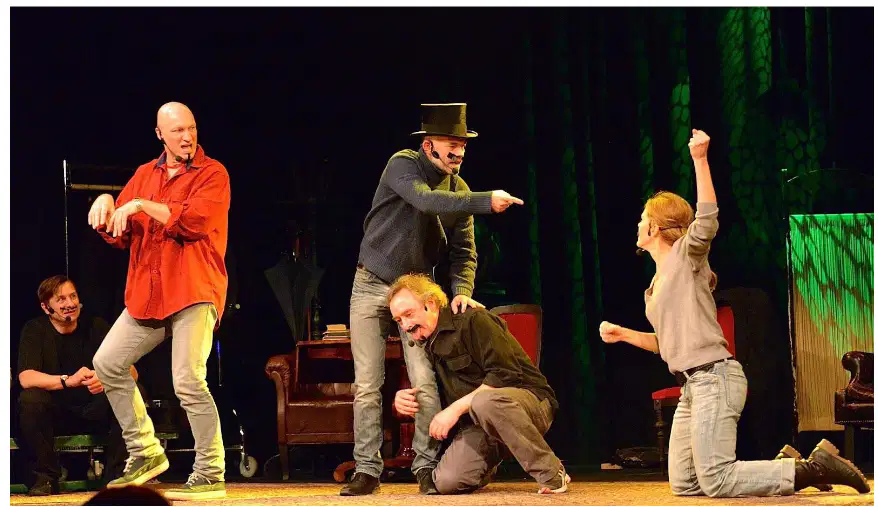
Imagine you are participating in a creative drama session. How might side-coaching help you if you are unsure what to do next?
It would give you a script to read from
It would provide you with ideas and prompt you to take meaningful actions or say important lines
It would assign you a costume
It would tell you to leave the stage
What is the main purpose of narrative pantomime?
To act out literary selections using actions without words.
To write poems and stories silently.
To read stories aloud with dramatic voices.
To draw pictures of story scenes.
Which of the following best describes "pantomime" as used in narrative pantomime?
Actions performed without words.
Reading stories aloud.
Drawing scenes from a story.
Singing songs from a story.
What is the difference between playing an action "together" and playing it "in unison" in narrative pantomime?
"In unison" means performing the same action at the same time, while "together" means improvising with each other.
"In unison" means acting alone, while "together" means acting in a group.
"In unison" means reading aloud, while "together" means acting silently.
"In unison" means drawing, while "together" means singing.
Why is it important to find your own space when playing in unison during narrative pantomime?
To avoid bumping into or invading another student's acting area.
To make the story more interesting.
To impress the teacher.
To finish the activity faster.
How can narrative pantomime help students use their imagination?
By allowing them to become different characters and be in many places.
By making them memorize stories.
By having them read silently.
By asking them to write essays.

