
 Worksheets
Geography Quiz 02
Total questions: 60
Worksheet time: 30mins
1. Define the concept of Human Geography as per the latest approach.
It is the study of oceans and their biodiversity
It is the study of Earth's climate patterns
It is the study of the relationship between humans and their environment
It is the study of flora and fauna distribution
2. Which among the following is NOT a factor influencing population distribution across the globe?
Climate and topography
Availability of water
Technological advancement
Personal hobbies of individuals
3 . Human Development Index (HDI) comprises three main components. Which of the following is NOT included in HDI?
Life expectancy at birth
Education index
Per capita income
Internet connectivity speed
4 . Which of the following is NOT a primary activity?
Fishing
Mining
Banking
Gathering of forest produce
5 .In which of the following countries are large-scale industrial activities highly diversified, representing advanced secondary sector development?
Chad
Japan
Nepal
Somalia
6 . Which statement best compares tertiary and quaternary activities?
Tertiary activities are resource extraction-based, quaternary are retail-based
Tertiary involves service provision, quaternary involves knowledge-based services
Tertiary deals in manufacturing, quaternary deals in extraction
Both focus mainly on agriculture
7 . Which mode of transport is generally considered the fastest for intercontinental passenger travel?
Railways
Highways
Air transport
Inland waterways
8 . Which organization aims to regulate and promote international trade by reducing trade barriers?
UNESCO
WTO
UNICEF
WHO
9 . What is the term used to describe the total number of people living per unit area in a region?
Population composition
Population explosion
Population density
Population transition
10 . Which linguistic group constitutes the largest population in India?
Sino-Tibetan speakers
Dravidian speakers
Indo-Aryan speakers
Austro-Asiatic speakers
11 . What is the most common rural settlement type in the fertile plains of northern India?
Clustered
Dispersed
Hamleted
Mixed
12 . Which of the following best describes common property resources?
Resources shared by a single family
Privately owned resources of an individual
Resources accessible to the entire community
Resources owned by government corporations
13 . Which of the following is NOT a conventional source of energy in India?
Coal
Petroleum
Hydel power
Solar power
14 . Which state in India leads in the production of Bauxite (aluminium ore)?
Odisha
Punjab
Kerala
Gujarat
15 . Which statement best differentiates target area planning from general development planning in India?
Both focus on large-scale industrial strategies
Target area planning is about imposing taxes; general planning sets agricultural policies
Target area planning focuses on specific regions with unique problems; general planning sets broad national priorities
They are essentially the same
16 . Arrange the following events in chronological order of India's Five-Year Plans:
1. Second Five-Year Plan
2. First Five-Year Plan
3. Fourth Five-Year Plan
4. Third Five-Year Plan
2-1-4-3
1-2-3-4
1-2-4-3
2-1-3-4
17 . Arrange the following technologies by their historical introduction in transportation:
1. Steam engine railways
2. Jet engine airplanes
3. Sail-powered ships
4. Diesel locomotives
3-1-4-2
1-3-2-4
2-4-1-3
4-3-1-2
18 . What is the main reason for India's shift from a primarily agricultural economy toward a service sector- dominated economy?
Abundant fossil fuel reserves
Growth of information technology and financial services
Extensive desert landscapes
Lack of agricultural land
19 . Match the following Indian seaports with their locations: Indian Seaports Locations
1. Kandla a. Eastern Coast
2. Paradip b. Western Coast
3. Kochi c. Gulf of Kutch
4. Visakhapatnam d. Odisha Coast
1-c, 2-d, 3-b, 4-a
1-b, 2-a, 3-c, 4-d
1-c, 2-a, 3-b, 4-d
1-b, 2-d, 3-a, 4-c
20 . Match the following crops with their major producing regions in India:
Crops Region
1. Wheat a. Punjab-Haryana belt
2. Rice b. Eastern coastal plains
3. Tea c. Assam hills
4. Cotton d. Deccan plateau region
1-a, 2-b, 3-c, 4-d
1-d, 2-c, 3-b, 4-a
1-c, 2-d, 3-a, 4-b
1-b, 2-a, 3-d, 4-c
21 . Match the following industries with their primary product output:
Industries Product Output
1. Petrochemical a. Kerosene, LPG
2. Iron and Steel b. Machinery, automotive parts
3. Textile c. Yarn, fabrics
4. Agro- processing d. Sugar, edible oils
1-a, 2-b, 3-c, 4-d
1-c, 2-d, 3-b, 4-a
1-b, 2-a, 3-d, 4-c
1-d, 2-c, 3-a, 4-b
22 .Match the following demographic indicators with their definitions:
Column I Column II
1. Infant Mortality Rate (IMR) a. Number of deaths of infants under 1 year per 1000 live births
2. Literacy Rate b. Percentage of population aged 7+ who can read and write
3. Sex Ratio c. Number of females per thousand males
4. Life Expectancy d. Average number of years a person is expected to live
1-b, 2-a, 3-c, 4-d
1-a, 2-b, 3-c, 4-d
1-a, 2-c, 3-d, 4-b
1-d, 2-a, 3-b, 4-c
23 . Match the following environmental problems with their major causes:
Column I Column II
1. Air pollution a. Vehicle emissions, industrial smoke
2. Water pollution b. Sewage, industrial effluents
3. Land degradation c. Overgrazing, deforestation
4. Noise pollution d. Traffic congestion, loudspeakers
1-b, 2-a, 3-d, 4-c
1-a, 2-b, 3-c, 4-d
1-c, 2-d, 3-b, 4-a
1-d, 2-c, 3-a, 4-b
24 . Which of the following statements about trans- continental railways is/are correct?
1. They connect major economic centers across continents
2. They have minimal impact on trade volumes
3. They often cross diverse climatic and geographical zones
4. They are primarily used for tourist leisure trips
1 and 2 only
1 and 3 only
2 and 4 only
1, 2, and 3 only
25 . Regarding pastoral nomadism, consider the following:
1. It relies on extensive livestock raising
2. It is practiced in high-tech urban zones
3. Migratory herds move seasonally
4. It has become obsolete worldwide
1 and 3 only
2 and 4 only
1, 3, and 4 only
1, 2, and 3 only
26 . Identify the true statements about shifting agriculture:
1. It is also known as slash-and-burn
2. It involves short cultivation periods and long fallow periods
3. Soil fertility remains constant over time
4. It is common in tropical rainforests
5. It does not require clearing of vegetation
1, 2, and 4 only
2, 3, and 5 only
1, 4, and 5 only
1, 2, and 3 only
27 . Which of the following statements about the Indian road network are correct?
1. National Highways link major cities
2. State Highways connect district headquarters
3. Rural roads are fully cemented nationwide
4. Golden Quadrilateral links four major metros 5. Border roads exist in mountainous regions
1, 2, 3, and 5 only
1, 2, 4, and 5 only
2, 3, and 4 only
1, 3, 4, and 5 only
28 . Which of the following statements about sustainable development is/are correct?
1. It meets present needs without compromising future generations
2. It encourages unlimited resource exploitation
3. It focuses on balancing economic growth with environmental care
4. It relies solely on government initiatives
1 and 3 only
2 and 4 only
1, 3, and 4
3 and 4 only
29 . Assertion (A) : Primary activities form the base of all other economic activities.
Reason (R) : They provide raw materials essential for secondary and tertiary sectors.
Both A and R are true, and R is the correct explanation of A
Both A and R are true, but R is not the correct explanation of A
(C) A is true, R is false
(D) A is false, R is true
30 . Assertion (A) : The sex ratio in India is skewed in favour of males.
Reason (R) : Female literacy rates and socio-economic status have historically been lower.
Both A and R are true, and R is the correct explanation of A
Both A and R are true, but R is not the correct explanation of A
A is true, R is false
A is false, R is true
31 . In terms of development, how does a free-trade policy differ from a protectionist policy?
Free-trade policy taxes all imports, protectionism removes them
Free-trade policy removes trade barriers, protectionism imposes tariffs and quotas
Both policies are identical in approach
Protectionist policy focuses primarily on cultural exchange
32 . Which Indian city is referred to as the 'Silicon Valley of India'?
Bengaluru
Jaipur
Varanasi
Patna
33 . Which region in India experiences the highest rainfall, profoundly affecting agriculture and settlement patterns?
Thar Desert
Meghalaya Plateau
Kutch region
Bundelkhand region
34 . Which statement is NOT true about satellite communication?
It offers global coverage
It helps in long-distance signal transmission
It does not require ground stations
It is vital for television broadcasting
35 . Which of the following best explains the concept of urban slums?
Areas designated for elite residences
Well-planned government colonies
Underserved, densely populated areas with inadequate infrastructure
Strictly commercial zones
36 . In India, which sector consumes the largest share of total water usage?
Industrial
Domestic
Agricultural
Recreational
37 . Which approach is recommended to tackle water scarcity in India's drought-prone regions?
Rapid depletion of groundwater
Promotion of water-intensive crops
Rainwater harvesting and watershed management
Complete reliance on tube wells
38 . Which of the following has been a major impact of rural-urban migration in India?
Decrease in urban population
Formation of slums in urban areas
Surplus labor in villages
Decline in service sector
39 . How does India's foreign trade composition now compare to the early post-independence era?
It has shifted from primarily raw materials to more manufactured goods and services
It remains centered only on raw agricultural exports
It solely depends on oil imports
No substantial change has occurred
40 . Which of the following is NOT a recognized problem associated with urbanization in India?
Overcrowded residential areas
Excess labor availability in villages
Insufficient public transportation
Rising pollution levels
41-45. Carefully read the case study provided and then thoroughly answer the subsequent five questions-
Over the past decade, the mountainous region of Uttarkashi in Uttarakhand has witnessed significant transformation in land use. Traditional terrace farming, once the backbone of local subsistence, is increasingly replaced by commercial apple orchards that promise lucrative returns. While farmers earn higher incomes, concerns arise over pesticide runoff polluting streams and adversely affecting downstream settlements. Re labor-intensive nature of orchard maintenance coincides with outmigration of youth seeking better education and employment in urban centers, leaving an aging population to shoulder extensive farm tasks. In response, the government’s watershed management program seeks a balanced approach, encouraging water-efficient irrigation practices and controlled pesticide use to safeguard the fragile mountain environment while sustaining economic growth.
41 . Which farming practice has been largely replaced by commercial apple orchards in Uttarkashi?
Dairy farming
Terrace farming
Floriculture
Aquaculture
Carefully read the case study provided and then thoroughly answer the subsequent five questions.
Over the past decade, the mountainous region of Uttarkashi in Uttarakhand has witnessed significant transformation in land use. Traditional terrace farming, once the backbone of local subsistence, is increasingly replaced by commercial apple orchards that promise lucrative returns. While farmers earn higher incomes, concerns arise over pesticide runoff polluting streams and adversely affecting downstream settlements. Re labor-intensive nature of orchard maintenance coincides with outmigration of youth seeking better education and employment in urban centers, leaving an aging population to shoulder extensive farm tasks. In response, the government’s watershed management program seeks a balanced approach, encouraging water-efficient irrigation practices and controlled pesticide use to safeguard the fragile mountain environment while sustaining economic growth.
42 . What is the primary environmental concern arising from the switch to commercial apple orchards?
Decline in tourist arrivals
Shortage of labor
Pesticide runoff into streams
Permanent drop in temperatures
Carefully read the case study provided and then thoroughly answer the subsequent five questions.
Over the past decade, the mountainous region of Uttarkashi in Uttarakhand has witnessed significant transformation in land use. Traditional terrace farming, once the backbone of local subsistence, is increasingly replaced by commercial apple orchards that promise lucrative returns. While farmers earn higher incomes, concerns arise over pesticide runoff polluting streams and adversely affecting downstream settlements. Re labor-intensive nature of orchard maintenance coincides with outmigration of youth seeking better education and employment in urban centers, leaving an aging population to shoulder extensive farm tasks. In response, the government’s watershed management program seeks a balanced approach, encouraging water-efficient irrigation practices and controlled pesticide use to safeguard the fragile mountain environment while sustaining economic growth.
43 . Which factor best explains the labour shortage in orchard management?
Youth outmigration for education and jobs
Severe crop failure each year
Expansion of local agri tourism
Over mechanization of farms
44 . Assertion (A) : The government's watershed management program aims for sustainable economic growth in Uttarkashi.
Reason (R) : Regulated pesticide usage and water-efficient irrigation protect mountain ecosystems while supporting orchard-based incomes.
Both A and R are true, and R is the correct explanation of A
Both A and R are true, but R is not the correct explanation of A
A is true, R is false
A is false, R is true
Carefully read the case study provided and then thoroughly answer the subsequent five questions.
Over the past decade, the mountainous region of Uttarkashi in Uttarakhand has witnessed significant transformation in land use. Traditional terrace farming, once the backbone of local subsistence, is increasingly replaced by commercial apple orchards that promise lucrative returns. While farmers earn higher incomes, concerns arise over pesticide runoff polluting streams and adversely affecting downstream settlements. Re labor-intensive nature of orchard maintenance coincides with outmigration of youth seeking better education and employment in urban centers, leaving an aging population to shoulder extensive farm tasks. In response, the government’s watershed management program seeks a balanced approach, encouraging water-efficient irrigation practices and controlled pesticide use to safeguard the fragile mountain environment while sustaining economic growth.
45 . How does commercial apple orchard farming differ from traditional terrace farming in community impact?
It employs fewer people overall
It yields higher monetary returns but can exacerbate ecological risks
It avoids use of any pesticides
It uses only ancestral methods
46-50 Carefully read the case study provided and then thoroughly answer the subsequent five questions.
In the arid district of Jaisalmer, Rajasthan, rapid expansion of the tourism sector has led to an increased demand for water in luxury resorts. Traditional water conservation structures like khadins and johads once efficiently managed scarce rainfall, but modern infrastructure has overshadowed these indigenous systems. Consequently, groundwater extraction has surged, raising alarms about resource depletion and ecological imbalance. Local communities earn more through tourism-driven jobs, yet fear the long-term consequences of depleting aquifers and losing their cultural heritage. Re government now collaborates with local stakeholders to revive traditional water harvesting techniques, blending them with modern solutions, to ensure that both tourism and community well-being can thrive in this fragile desert environment.
46 . What traditional water conservation structures are used in Jaisalmer?
Canals
Khadins and johads
Tube wells
Rain barrels
Carefully read the case study provided and then thoroughly answer the subsequent five questions.
In the arid district of Jaisalmer, Rajasthan, rapid expansion of the tourism sector has led to an increased demand for water in luxury resorts. Traditional water conservation structures like khadins and johads once efficiently managed scarce rainfall, but modern infrastructure has overshadowed these indigenous systems. Consequently, groundwater extraction has surged, raising alarms about resource depletion and ecological imbalance. Local communities earn more through tourism-driven jobs, yet fear the long-term consequences of depleting aquifers and losing their cultural heritage. Re government now collaborates with local stakeholders to revive traditional water harvesting techniques, blending them with modern solutions, to ensure that both tourism and community well-being can thrive in this fragile desert environment.
47 . What does 'groundwater extraction' refer to in the context of Jaisalmer's tourism expansion?
Pumping water from underground aquifers
Harvesting rainwater in open fields
Diverting rivers across state borders
Melting glaciers for fresh water
Carefully read the case study provided and then thoroughly answer the subsequent five questions.
In the arid district of Jaisalmer, Rajasthan, rapid expansion of the tourism sector has led to an increased demand for water in luxury resorts. Traditional water conservation structures like khadins and johads once efficiently managed scarce rainfall, but modern infrastructure has overshadowed these indigenous systems. Consequently, groundwater extraction has surged, raising alarms about resource depletion and ecological imbalance. Local communities earn more through tourism-driven jobs, yet fear the long-term consequences of depleting aquifers and losing their cultural heritage. Re government now collaborates with local stakeholders to revive traditional water harvesting techniques, blending them with modern solutions, to ensure that both tourism and community well-being can thrive in this fragile desert environment.
48 . Which statement best explains the dilemma faced by local communities regarding tourism in Jaisalmer?
They want tourists taxed heavily to deter arrivals
Tourism brings economic benefits but strains water resources
They oppose all visitors to the region
Tourism has no impact on the local economy
Carefully read the case study provided and then thoroughly answer the subsequent five questions.
In the arid district of Jaisalmer, Rajasthan, rapid expansion of the tourism sector has led to an increased demand for water in luxury resorts. Traditional water conservation structures like khadins and johads once efficiently managed scarce rainfall, but modern infrastructure has overshadowed these indigenous systems. Consequently, groundwater extraction has surged, raising alarms about resource depletion and ecological imbalance. Local communities earn more through tourism-driven jobs, yet fear the long-term consequences of depleting aquifers and losing their cultural heritage. Re government now collaborates with local stakeholders to revive traditional water harvesting techniques, blending them with modern solutions, to ensure that both tourism and community well-being can thrive in this fragile desert environment.
49 . How do modern water infrastructure systems differ from traditional khadins and johads in Jaisalmer?
Modern systems rely heavily on groundwater extraction, while khadins/johads harvest rainwater
Traditional systems exclusively use desalination
Modern systems cannot supply tourism facilities
Khadins/johads require large-scale industrial funding
Carefully read the case study provided and then thoroughly answer the subsequent five questions.
In the arid district of Jaisalmer, Rajasthan, rapid expansion of the tourism sector has led to an increased demand for water in luxury resorts. Traditional water conservation structures like khadins and johads once efficiently managed scarce rainfall, but modern infrastructure has overshadowed these indigenous systems. Consequently, groundwater extraction has surged, raising alarms about resource depletion and ecological imbalance. Local communities earn more through tourism-driven jobs, yet fear the long-term consequences of depleting aquifers and losing their cultural heritage. Re government now collaborates with local stakeholders to revive traditional water harvesting techniques, blending them with modern solutions, to ensure that both tourism and community well-being can thrive in this fragile desert environment.
50 . Which combined approach could best maintain long-term water security for Jaisalmer's growing tourism sector?
Exclusive reliance on borewell water
Prohibiting all tourism activities
Integrating traditional water harvesting with modern techniques
Importing water from other states
51 . Which of these statements is not correct about intensive
subsistence agriculture, dominated by wet paddy cultivation?
(a) Land holdings are very small.
(b) Farm yard manure is used to maintain the fertility of the soil.
(c) The yield per unit area is low but per labour productivity is high.
(d) Use of machinery is limited and most operations are done by
manual labour.
52 . Which one of the following roadways is the longest?
(a) National Highway
(b) State Highway
(c) Major District Road
(d) Rural Road
53 . Which one of the following is a correctly pair of Railway Zone and its headquarter?
(a) Central- Mumbai CST
(b) Eastern-Bhubaneswar
(c) East Central - Kolkata
(d) East Coast- Hajipur
54 . The Union and Pacific Railway connects New York on the Atlantic Coast to ___________on the Pacific Coast.
(a) San Francisco
(b) Los Angeles
(c) Vancouver
(d) California
55 . The Rhine Waterways connects the industrial areas of Switzerland, Germany, France, Belgium and the Netherlands with the___________.
(a) North Pacific Sea Route
(b) South Pacific Sea Route
(c) North Atlantic Sea Route
(d) The Mediterranean–Indian Ocean Sea Route
56 . Sequence the following carriers of load from the earliest to the modern-
i. Carts and wagons
ii. Palanquin
iii. Steam engine
iv. Humans
Choose the correct option-
(a) (i), (iv), (iii), (ii)
(b) (iv), (ii), (i), (iii)
(c) (ii), (iii), (iv), (i)
(d) (iii), (i), (iv), (ii)
57 . Which of these options is not a feature of rail network in South America?
(a) The rail network is most dense in two regions, namely, the Pampas of Argentina and the coffee growing region of Brazil.
(b) The two regions (Argentina and Brazil) account for 40 per cent
of South America’s total route length.
(c) Among the remaining countries, Chile has a considerable route length linking coastal centres with the mining sites in the interior.
(d) Peru, Bolivia, Ecuador, Colombia and Venezuela have long single-track rail-lines from ports to the interior with several interconnecting links.
58 . Which year among the following GATT was formed?
(a) 1924
(b) 1914
(c) 1954
(d) 1948
59 . Which one of the following is residential areas of the least choice, dilapidated houses, poor hygienic conditions, poor ventilation, lack of basic amenities, like drinking water, light and toilet facilities, etc.?
(a) Urban
(b) Rural
(c) Semi-Urban
(d) Slums
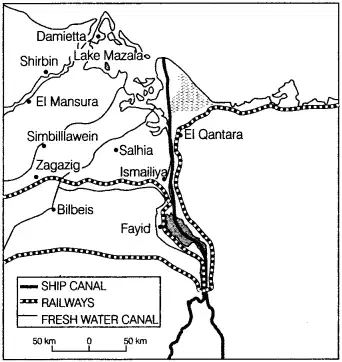
60 . Write the name of the Canal system-
a) Suez
b) Panama
c) Rhine
d) Coastal shipping of India

