
 Worksheets
Gross and Fine Motor Skills Quiz
Total questions: 98
Worksheet time: 49mins
Which of the following activities is an example of a gross motor skill?
Painting
Writing
Hopping
Turning the pages of a book
Why do fine motor skills develop later than gross motor skills in children?
Because children need to learn to walk first
Because the nervous system needs to develop first
Because fine motor skills are less important
Because children are not interested in small movements
A teacher observes a child skipping and another child turning the pages of a book. Which type of motor skill is each child demonstrating, and what does this indicate about their development?
Skipping: fine motor skill; Turning pages: gross motor skill; Both indicate early development
Skipping: gross motor skill; Turning pages: fine motor skill; Indicates development of both large and small muscle control
Skipping: fine motor skill; Turning pages: gross motor skill; Indicates delayed development
Skipping: gross motor skill; Turning pages: gross motor skill; Indicates only large muscle control
Compare and contrast gross and fine motor skills in terms of the muscles they control and the types of movements they enable in children.
Gross motor skills control small muscles for small movements; fine motor skills control large muscles for large movements
Gross motor skills control large muscles for large movements; fine motor skills control small muscles for small movements
Both control large muscles for large movements
Both control small muscles for small movements

At what average age do infants typically achieve the ability to sit alone, and what does this milestone indicate about their motor development?
7 months; it indicates improved balance and muscle control.
2 months; it indicates the start of crawling.
11 months; it indicates the ability to walk alone.
3 months, 3 weeks; it indicates the ability to grasp objects.

Which of the following motor skills is typically achieved last according to the chart, and what does this suggest about the progression of motor development in infants?
Jumps in place; it suggests that more complex coordination develops later.
Sits alone; it suggests that balance is the most advanced skill.
Crawls; it suggests that crawling is the most difficult skill.
Grasp cube; it suggests that fine motor skills develop last.

Compare the age ranges for achieving the ability to "pull to stand" and "walks alone." What does this comparison reveal about the sequence of gross motor development in infancy?
"Pulls to stand" is achieved earlier than "walks alone," showing that standing precedes walking in motor development.
"Walks alone" is achieved earlier than "pulls to stand," showing that walking precedes standing.
Both are achieved at the same time, indicating no sequence.
"Pulls to stand" is a fine motor skill, while "walks alone" is a gross motor skill.
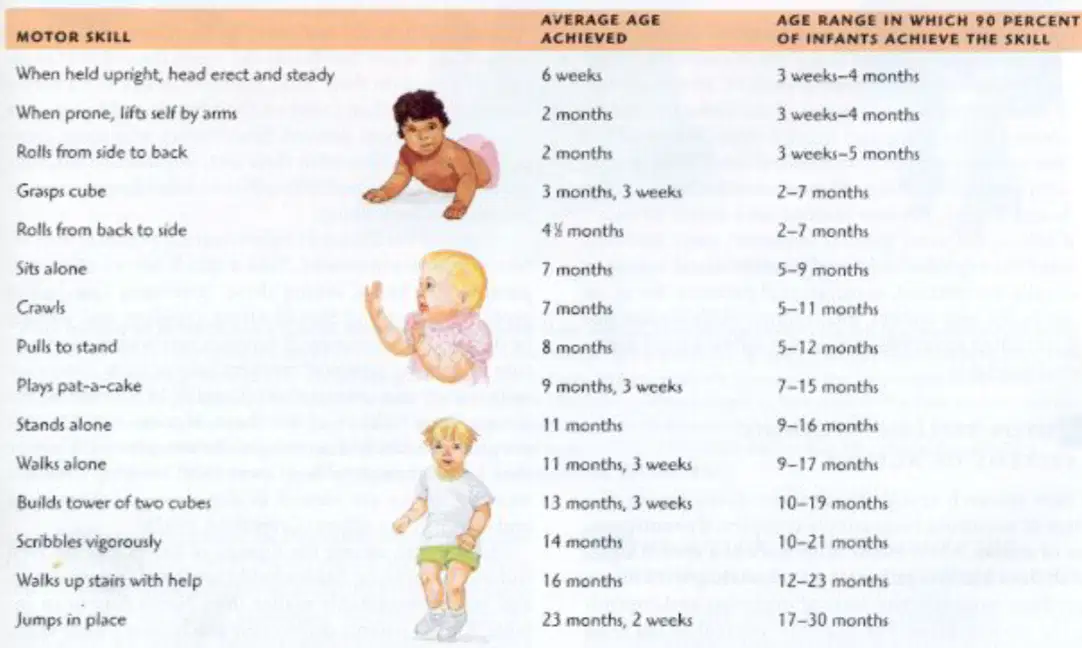
How does the development of fine motor skills, such as "scribbles vigorously" and "builds tower of two cubes," relate to the overall growth and development in infancy and childhood?
Fine motor skills reflect increasing control over small muscles, supporting cognitive and physical growth.
Fine motor skills are unrelated to cognitive development.
Fine motor skills develop before gross motor skills.
Fine motor skills only affect language development.

Which of the following best describes fine motor skills in children aged 0-2 years?
Large muscle movements like running and jumping
Smaller precision movements requiring dexterity and coordination
Verbal communication and language development
Emotional regulation and social interaction

What is an example of a fine motor skill in early childhood development?
Kicking a ball
Picking up and holding a pencil
Climbing stairs
Singing a song
Why is dexterity important for fine motor skills in young children?
It helps children run faster
It allows children to perform precise tasks with their hands
It improves their ability to speak
It helps them remember information better
A teacher observes a child using a pincer grip to pick up small objects. What does this indicate about the child's development?
The child is developing gross motor skills
The child is developing fine motor skills and dexterity
The child is learning to speak
The child is developing social skills
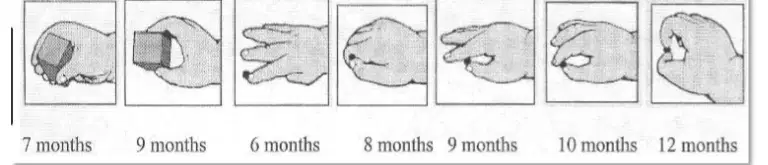
Based on the progression of hand movements shown in the diagram, what can be inferred about the development of fine motor skills from 7 to 12 months?
Children start with precise movements and lose them over time
Children develop increasingly precise and coordinated hand movements as they age
Children’s hand movements do not change significantly in the first year
Children develop gross motor skills before fine motor skills
Which of the following best describes gross motor skills?
Small movements involving fingers and toes
Large movements involving bigger muscles, requiring mobility and coordination
Only movements related to speech and facial expressions
Skills related to reading and writing
Why is it important to give a child plenty of awake time on their stomach (tummy time)?
It helps the child sleep better at night
It encourages the child to lift and turn their head, aiding physical development
It improves the child’s ability to speak
It teaches the child to use their fingers for writing
How can baby walkers and door bouncers help in a child's physical development?
They help develop core stability
They improve the child’s reading skills
They teach the child to speak
They help the child memorize numbers
A parent wants to encourage their child to crawl. According to the learning material, what should they do?
Put things the child wants just out of his/her reach
Give the child more time to sleep
Teach the child to count
Read stories to the child
A child is learning to stand by pulling up on furniture. What is the main developmental benefit of this activity?
It encourages the use of large muscles and improves balance
It helps the child learn new words
It improves the child’s drawing skills
It teaches the child to recognize colors
A teacher wants to plan activities that promote gross motor skills in infants. Which of the following activities would be most effective?
Encouraging tummy time and providing baby gyms with dangling objects
Reading picture books aloud
Teaching the alphabet
Practicing finger painting

At what age does a baby typically begin to sit alone without support, according to the stages of mobility development?
4 months
7 months
10 months
12 months

Which of the following is the correct sequence of mobility milestones for infants from birth to 12 months?
Holds chin up, sits alone, stands holding furniture, walks if led
Fetal posture, holds chest up, sits when supported, crawls
Sits when supported, stands alone, walks alone, holds chest up
Crawls, stands holding furniture, sits alone, walks if led
A baby who can stand alone but cannot yet walk without assistance is most likely at which stage of mobility development?
Holds chest up
Stands holding furniture
Stands alone
Walks alone
If a baby is able to crawl but cannot yet walk if led, approximately how old is the baby likely to be?
4 months
7 months
10 months
12 months
Which of the following best describes primitive reflexes?
Voluntary motor responses that develop in adulthood
Involuntary motor responses originating in the brainstem present after birth in early child development
Complex motor responses that control balance and coordination
Reflexes that only occur in response to pain
What is a possible consequence of a traumatic birth experience or birth by c-section on reflexes?
Reflexes disappear earlier than normal
Reflexes are not affected at all
Reflexes may be retained longer than normal
Reflexes become voluntary
How do postural reflexes differ from primitive reflexes?
Postural reflexes are present only in infants, while primitive reflexes are present in adults
Postural reflexes are complex motor responses that provide automatic control of posture, balance, and coordination, replacing primitive reflexes
Primitive reflexes control balance and coordination, while postural reflexes are involuntary
Postural reflexes are triggered by pain, while primitive reflexes are not
Given the definition of "stimuli" as a thing or event that evokes a specific functional reaction, which scenario best illustrates a stimulus triggering a primitive reflex in an infant?
An infant smiling at a familiar face
An infant grasping a finger placed in its palm
An adult standing up from a chair
A child learning to ride a bicycle
Why is the birth process considered a key factor in the integration of primitive reflexes?
It determines the color of the infant's eyes
It influences whether primitive reflexes are properly integrated or retained longer than normal
It affects the infant's ability to speak
It has no impact on reflexes
Which reflex causes a neonate to turn their head towards any touch on the cheek?
Rooting reflex
Grasp reflex
Startle reflex
Walking reflex
If you place your finger in the palm of a neonate and they grasp it tightly, which reflex are they demonstrating?
Grasp reflex
Rooting reflex
Startle reflex
Walking reflex
A neonate is startled by a loud noise and throws their hands and arms outwards, arching their back. Which reflex is this?
Startle reflex
Rooting reflex
Grasp reflex
Walking reflex
If a neonate is held upright and makes movements as if trying to walk, which reflex are they showing?
Walking reflex
Rooting reflex
Grasp reflex
Startle reflex
Compare the rooting and grasp reflexes in neonates. How do their responses differ based on the stimulus provided?
Rooting reflex involves turning the head towards touch on the cheek, while grasp reflex involves tightly holding a finger placed in the palm.
Both reflexes involve turning the head towards a sound.
Rooting reflex involves grasping objects, while grasp reflex involves moving the legs.
Both reflexes are only triggered by loud noises.
A researcher wants to test the startle reflex in neonates. Which method would be most appropriate to observe this reflex?
Introduce a sudden loud noise and observe if the neonate throws their hands and arms outwards, arching their back.
Touch the neonate’s cheek and see if they turn their head.
Place a finger in the neonate’s palm and see if they grasp it.
Hold the neonate upright and see if they make walking movements.
At what age do infants typically begin to control the muscles in their neck and back, allowing them to sit, roll, and crawl?
Around 3 months
Around 6 months
Around 11-13 months
At 2 years
Which of the following best describes the sequence of gross motor skill development in infants from birth to 2 years?
Infants first walk, then crawl, then sit
Infants develop leg muscles before neck muscles
Infants develop gross motor skills from head down, then control neck and back, then legs
Infants can kick a ball before they can sit
By what age can most infants climb onto low furniture and propel a sit-on toy?
6 months
11-13 months
2 years
3 years
Explain why the development of leg muscles around 11-13 months is important for infants’ gross motor skills. Use evidence from typical milestones to support your answer.
It allows infants to control their neck and back
It enables infants to stand, cruise, and walk
It helps infants to crawl and roll
It allows infants to kick a ball
At what age do infants typically gain the ability to kick a ball?
6 months
11-13 months
2 years
2 ½ years
At what age do children typically begin to pedal and control a tricycle and throw a ball?
From birth
From 3 years
From 5 years
From 8 years
Which of the following gross motor skills is most likely to be observed in children aged 3-4 years?
Writing their name
Balancing and walking along a line
Reading a book
Tying shoelaces
A child who can run backwards, forwards, and hop on one foot is most likely in which age range?
1-2 years
3-4 years
5-6 years
7-8 years
Which activity best demonstrates the development of gross motor skills in children aged 5-8 years?
Drawing shapes
Skipping with a rope and riding a bicycle
Counting numbers
Singing songs
Explain why the ability to accurately throw and catch a ball is considered a gross motor skill and how it might relate to a child's overall development.
It involves fine finger movements and helps with reading.
It requires large muscle groups and supports coordination and confidence.
It is only important for sports and not for development.
It is unrelated to physical growth.
Bobby is 5 months old and has just started to roll over to his front from his back. Which two gross motor skills is he most likely to acquire in the next three months?
Sit and crawl
Walk and run
Jump and hop
Write and draw
Explain how the development of gross motor skills such as sitting and crawling relates to overall growth and development in infancy.
These skills help infants explore their environment and develop muscle strength.
These skills are only important for language development.
Gross motor skills are unrelated to physical growth.
Sitting and crawling delay other developmental milestones.
At what age can a baby typically pick up small objects using a pincer grasp?
3 months
6 months
12 months
18 months
Which of the following fine motor skills is most likely to be observed in an 18-month-old child?
Holding a rattle for a short time
Grasping a toy and passing it to the other hand
Picking up small objects using a pincer grasp
Building with small blocks and making marks with crayons using a palmar grasp
Explain how the development of fine motor skills, such as the pincer and palmar grasp, supports a child's ability to interact with their environment during infancy.
It allows them to walk independently.
It helps them communicate verbally.
It enables them to manipulate objects, feed themselves, and explore their surroundings.
It improves their ability to recognize faces.
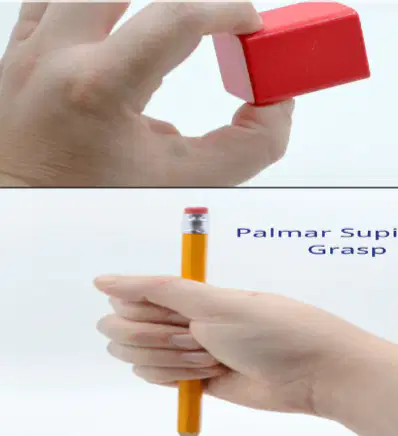
Which grasp is typically used by infants at 18 months to make marks with crayons?
Pincer grasp
Palmar supinate grasp
Tripod grasp
Lateral pinch grasp
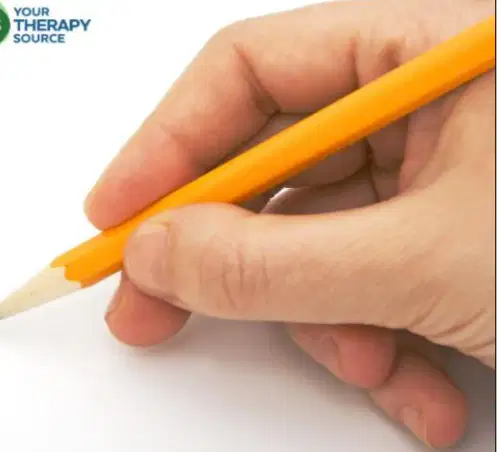
At what age do children typically develop the tripod grasp and are able to use a fork and spoon?
2 years old
3 years old
4 years old
5 years old
Which fine motor skill is most likely to be observed in a 4-year-old child?
Writing their own name
Threading small beads and coloring in pictures
Turning pages of a book
Using a fork and spoon
A 5-year-old child is able to control the muscles in their fingers to manipulate blocks and use hand-eye coordination. What additional skill are they likely to have developed at this age?
Threading small beads
Turning pages of a book
Writing their own name
Using a fork and spoon
Explain how the development of fine motor skills between ages 3 and 5 supports a child's ability to perform tasks such as writing and manipulating small objects. Use evidence from the developmental milestones described.
Fine motor skills do not impact writing or manipulating objects.
Fine motor skills only help with gross movements like running.
As children develop fine motor skills, they gain better control over their fingers, allowing them to perform tasks like writing and manipulating small objects.
Fine motor skills are only important for eating.
Which of the following best describes the concept of holistic development?
Focusing only on physical growth
Understanding development as a whole, including emotional, physical, and social aspects
Concentrating solely on academic achievement
Ignoring social interactions in development
Why is it important to pay attention to all aspects of a child's development?
To ensure they excel only in academics
To help them reach their full potential by supporting every aspect of their development
To make them focus only on physical activities
To limit their social interactions
How do the different aspects of development interact in holistic development?
They function independently of each other
They compete with each other for attention
They interact and influence each other
They are only important at certain ages
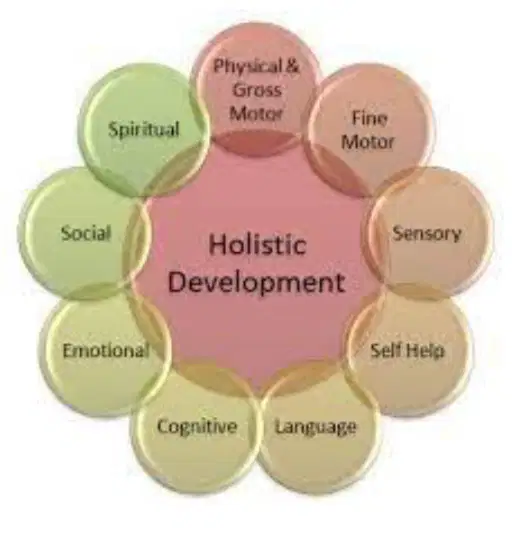
Which of the following is NOT typically considered an aspect of holistic development?
Emotional
Financial
Social
Cognitive
Using your understanding of holistic development, explain why focusing only on one aspect (such as physical development) might limit a child's overall growth.
It allows the child to become an expert in one area
It ignores the interconnectedness of emotional, social, and cognitive growth, which are all necessary for reaching full potential
It makes the child more competitive
It helps the child avoid distractions
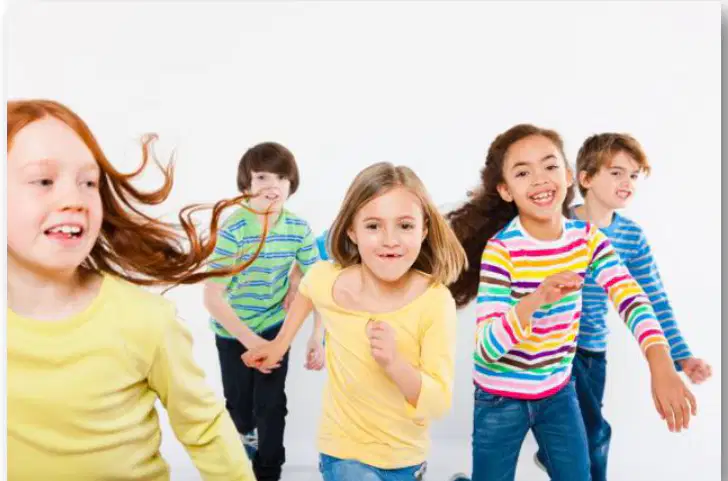
During which age range do children typically learn various new gross motor skills according to the general outline provided?
3-8 years
1-2 years
9-12 years
13-18 years
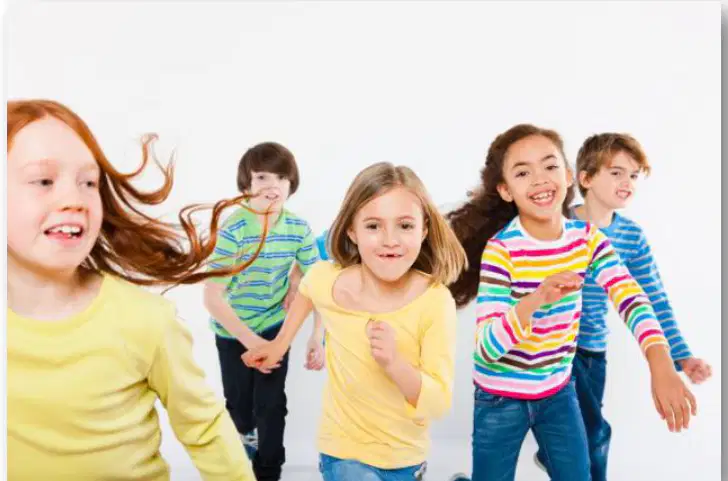
How does the rate at which children learn new gross motor skills during the preschool years typically vary?
Each child learns at a different rate.
All children learn at the same rate.
Only boys learn faster than girls.
Only children in primary school learn these skills.
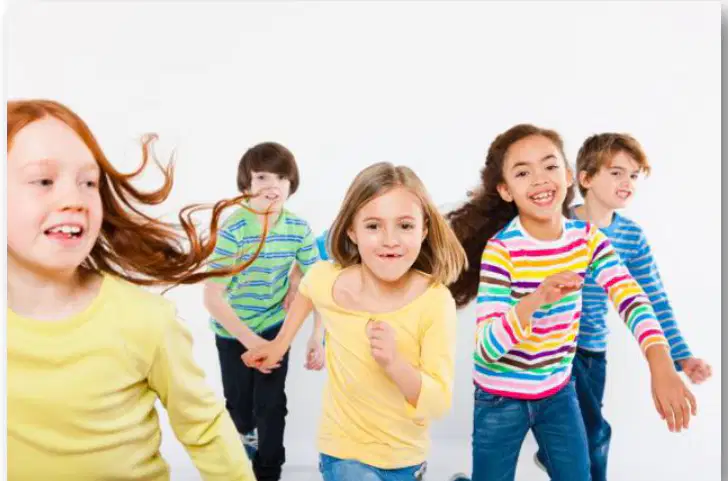
Explain why it is important to consider individual differences in the development of gross motor skills during the preschool years.
Because each child learns at a different rate, understanding individual differences helps provide appropriate support and expectations.
Because all children develop at the same pace, individual differences are not important.
Because only physical growth matters, not skill development.
Because gross motor skills are not important for social interaction.
Which of the following fine motor skills is typically developed by children aged 2-3 years?
Stringing 3-4 large beads.
Building a tower of approximately nine small blocks.
Opening zip lock bags, containers and lunch boxes.
Threading a sequence of small beads onto string.
A child is able to build a tower of approximately nine small blocks and copy block designs of up to 6 blocks. Based on these skills, what is the most likely age range of the child?
3-4 years
2-3 years
4-5 years
1-2 years
Compare the development of using one hand consistently for most activities in children aged 2-3 years and 3-4 years. What does this suggest about the progression of fine motor skills?
It suggests that consistency in using one hand is established by 2-3 years and continues to be refined at 3-4 years.
It suggests that children stop using one hand consistently as they get older.
It suggests that children use both hands equally at all ages.
It suggests that fine motor skills do not change between these age groups.
Which skill is more likely to be observed in a 3-4 year old child rather than a 2-3 year old child?
Tracing on thick lines.
Turning single pages in a book.
Making snips with scissors.
Holding a crayon with thumb and fingers.
A teacher observes a child holding a pencil with thumb and fingers on opposite sides of the pencil and using the non-dominant hand to assist and stabilize objects. What does this indicate about the child's fine motor development?
The child is likely in the 3-4 year age range and is developing more advanced fine motor coordination.
The child is likely in the 2-3 year age range and is just beginning to develop fine motor skills.
The child is not developing fine motor skills appropriately for their age.
The child is using only gross motor skills.
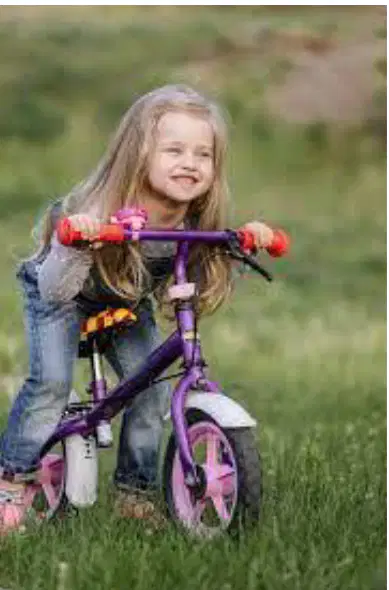
At what age do children typically begin to pedal and control a tricycle and throw a ball?
From 1 year
From 2 years
From 3 years
From 5 years
Which of the following gross motor skills is most likely to be developed between the ages of 5 and 8 years?
Balancing and walking along a line
Running backwards and hopping on one foot
Skipping with a rope and riding a bicycle
Pedaling and controlling a tricycle
Explain how the development of gross motor skills from ages 3 to 8 can impact a child's confidence and participation in physical activities. Use evidence from the stages described.
Early development of gross motor skills allows children to participate confidently in group activities and sports, enhancing their social and physical well-being.
Gross motor skills have no impact on a child's confidence or participation in activities.
Children who develop gross motor skills later are always less confident in all areas of life.
Only fine motor skills affect a child's confidence in physical activities.

A 4-year-old child is able to run backwards, hop on one foot, and walk along a line. According to the stages of gross motor skill development, what other skill is this child most likely developing at this age?
Skipping with a rope
Pedaling and controlling a tricycle
Accurately throwing and catching a ball
Jumping with confidence
Which of the following fine motor skills is typically developed by children aged 4-5 years but not necessarily by those aged 5-6 years?
Cutting along a line continuously.
Cutting out simple shapes.
Dressing and undressing independently.
Writing numbers 1-10 independently.
How does the ability to hold a pencil typically change from ages 4-5 to 5-6 years?
Children move from a tripod grasp to a 3 fingered grasp with movement from fingers.
Children start holding the pencil with a full hand grasp.
Children stop using a pencil altogether.
Children use a two-fingered grasp for better control.
A child is able to design their own Lego models, dress and undress independently (excluding shoe laces), and write numbers 1-10 independently. Based on these skills, which age group does the child most likely belong to?
3-4 years
4-5 years
5-6 years
6-7 years
Compare the development of copying shapes in children aged 4-5 years and those aged 5-6 years. What is the main difference?
4-5 year olds copy a triangle, while 5-6 year olds copy a circle.
4-5 year olds copy a circle, cross, and square, while 5-6 year olds copy a triangle.
4-5 year olds copy letters, while 5-6 year olds copy numbers.
4-5 year olds copy numbers, while 5-6 year olds copy letters.
Why is the ability to color within the lines considered an important milestone in fine motor skill development for children aged 4-6 years?
It demonstrates improved hand-eye coordination and control.
It shows the child can read and write fluently.
It indicates the child can run and jump.
It proves the child can tie their own shoelaces.
Which of the following fine motor skills is typically developed by children aged 6-7 years?
Using a knife and fork for most foods.
Completing a 20-piece puzzle.
Drawing detailed pictures with recognizable objects.
Writing neatly for the entirety of a story.
How does the development of fine motor skills progress from ages 6-7 to 7-8 in terms of writing ability?
Children begin to write on the lines at age 7-8.
Children start to form letters and numbers correctly at age 7-8.
Children progress from forming letters and numbers correctly to writing neatly and maintaining legibility for an entire story.
Children only develop pencil control at age 7-8.
A child is able to dress and toilet independently, cut neatly around shapes, and build with Lego blocks. According to the chart, at what age range are these fine motor skills typically observed?
4-5 years
5-6 years
6-8 years
8-9 years
Which of the following tasks demonstrates a higher level of fine motor skill complexity typically seen in 7-8 year olds compared to 6-7 year olds?
Opening zip lock bags and containers
Completing a 20-piece puzzle
Drawing detailed pictures with recognizable objects
Writing on the lines
Why is maintaining the legibility of handwriting for the entirety of a story considered a more advanced fine motor skill than simply writing on the lines?
It requires less endurance and control.
It involves consistent control and coordination over a longer period.
It is only necessary for artistic purposes.
It does not require the use of a pencil.
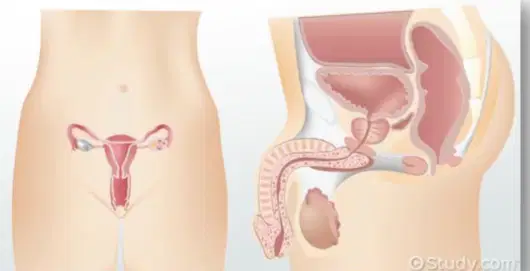
Which of the following best describes primary sexual characteristics?
Outward signs of growing from child to adulthood
Organs and cells present at birth that develop during puberty
Changes in hair color during adolescence
Emotional changes experienced during puberty
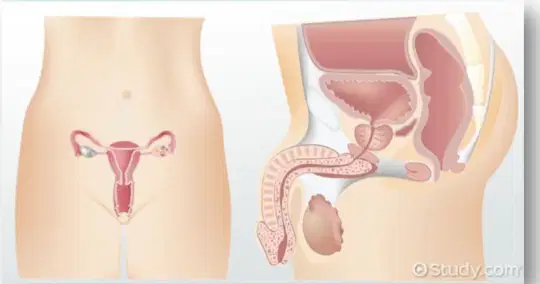
What is the main difference between primary and secondary sexual characteristics?
Primary characteristics are emotional, secondary are physical
Primary characteristics are present at birth, secondary develop during puberty
Secondary characteristics are present at birth, primary develop during puberty
Both develop before birth
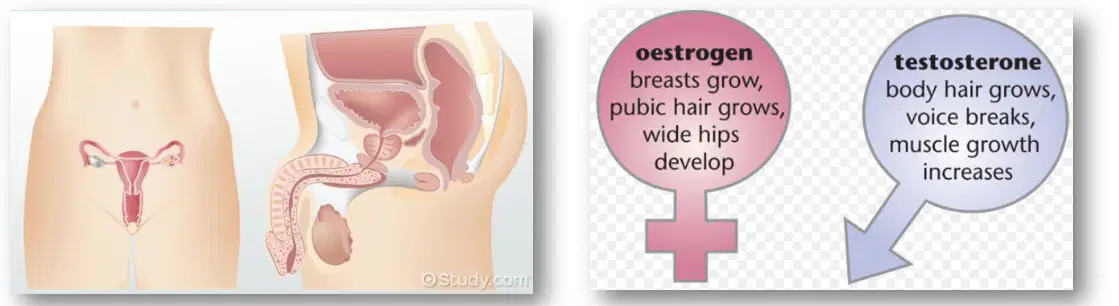
Which hormone is primarily responsible for the development of breasts, pubic hair, and wide hips during puberty?
Testosterone
Insulin
Oestrogen
Adrenaline
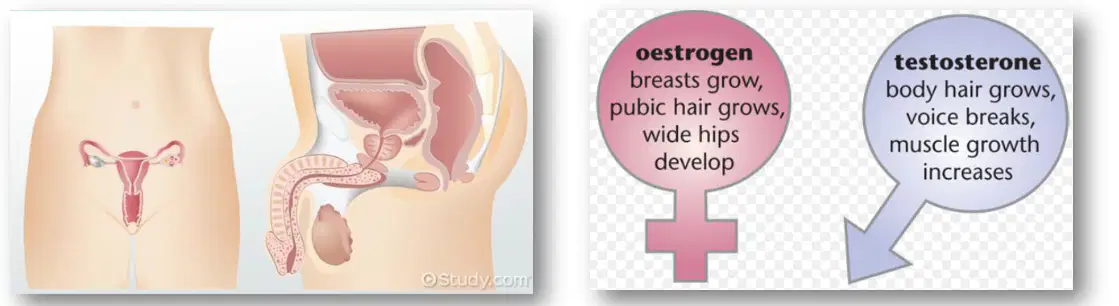
A student claims that muscle growth and a breaking voice during puberty are caused by oestrogen. Using your knowledge, explain whether this statement is correct and justify your answer.
Correct, because oestrogen causes all changes in puberty
Incorrect, because testosterone is responsible for muscle growth and voice changes
Correct, because both hormones have the same effects
Incorrect, because neither hormone affects these changes
Which of the following best describes the changes that occur to the areola during female breast development?
It enlarges, swells, and darkens before the breasts grow.
It remains the same size and color throughout development.
It shrinks and becomes lighter before the breasts grow.
It disappears as the breasts develop.
Arrange the following stages of female breast development in the correct order: Breast bud, Adult, Prepubertal, Areola and papilla project above breast, Juvenile smooth contour.
Prepubertal, Breast bud, Juvenile smooth contour, Areola and papilla project above breast, Adult
Breast bud, Prepubertal, Juvenile smooth contour, Adult, Areola and papilla project above breast
Prepubertal, Juvenile smooth contour, Breast bud, Adult, Areola and papilla project above breast
Juvenile smooth contour, Prepubertal, Breast bud, Areola and papilla project above breast, Adult
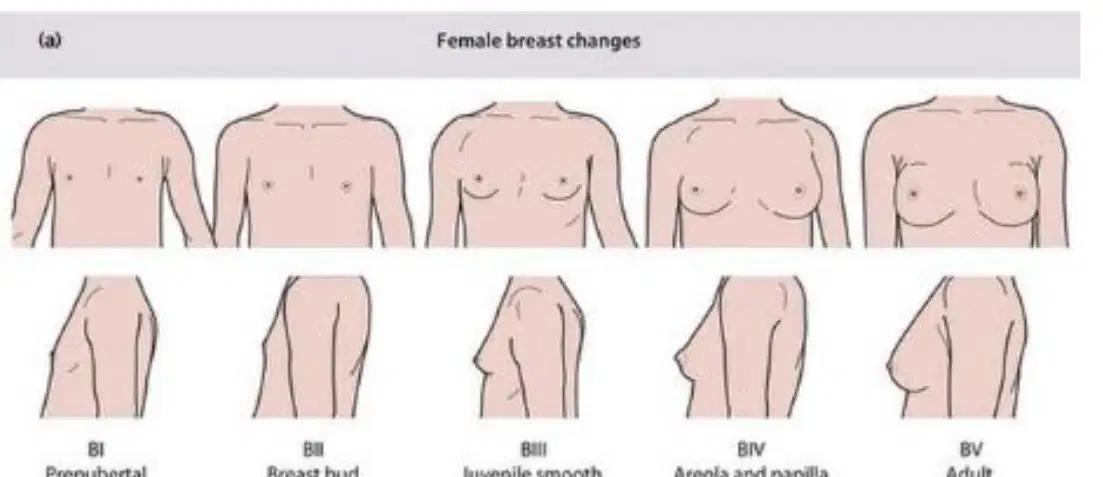
Based on the diagram, what is the main physical change that distinguishes the "Areola and papilla project above breast" stage from the "Juvenile smooth contour" stage in female breast development?
The areola and papilla project above the breast.
The breasts become completely flat.
The areola disappears.
The nipples become inverted.
Why is it important to analyze the physical impacts and stages of breast development through the life stages?
To understand normal growth patterns and identify any abnormalities early.
To determine a person's intelligence.
To predict future career choices.
To decide on clothing styles.
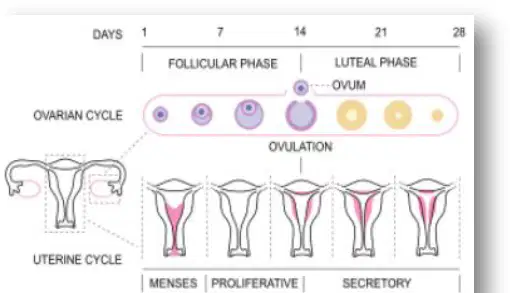
Which of the following is a primary sexual characteristic change that occurs in females during puberty?
The uterus enlarges and the vagina lengthens
Hair grows on the arms
Voice deepens significantly
Muscle mass increases rapidly
What is the significance of the ovaries beginning to release eggs in the female reproductive system?
It marks the start of the menstrual cycle and fertility
It causes the growth of facial hair
It leads to the development of secondary sexual characteristics
It results in the thickening of bones
Explain how the menstrual cycle is related to the primary sexual characteristics in females.
The menstrual cycle is a direct result of the maturation of the reproductive organs
The menstrual cycle is unrelated to sexual characteristics
The menstrual cycle only affects secondary sexual characteristics
The menstrual cycle is caused by changes in hair growth
A student claims that the primary sexual characteristics in females include the development of breasts. Is this correct? Justify your answer.
No, because breast development is a secondary sexual characteristic
Yes, because breasts are part of the reproductive system
No, because breasts do not change during puberty
Yes, because all body changes are primary characteristics
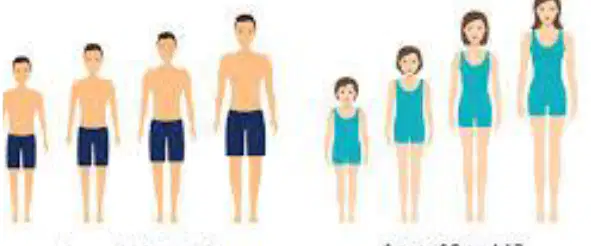
At what age does puberty typically begin in girls and boys?
Girls: 11 to 13 years, Boys: 13 to 15 years
Girls: 8 to 10 years, Boys: 10 to 12 years
Girls: 14 to 16 years, Boys: 16 to 18 years
Girls: 9 to 11 years, Boys: 11 to 13 years
What triggers the onset of puberty in adolescents?
A signal from the brain to the pituitary gland, releasing hormones
Increased physical activity
Changes in diet
Exposure to sunlight
Which of the following best describes a "growth spurt" during puberty?
A rapid increase in height during adolescence
A sudden loss of weight in teenagers
A decrease in appetite during puberty
A period of increased sleepiness in children
Explain why the timing of puberty differs between boys and girls, using evidence from the information provided.
Girls typically start puberty earlier than boys due to hormonal signals that stimulate the ovaries, while boys start later due to signals that stimulate the testes.
Boys start puberty earlier because they are generally taller.
Both boys and girls start puberty at the same age due to identical hormonal changes.
The timing is random and not related to hormones.
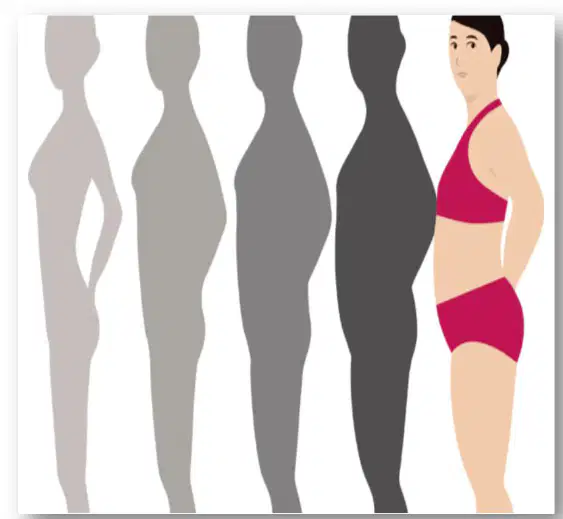
What is the main reason fat tends to accumulate around the tummy area as people age?
Increased physical activity
Hormone changes
Improved metabolism
Decreased calorie intake

