
 Worksheets
Physical development adolescence to later adulthood
Total questions: 61
Worksheet time: 31mins
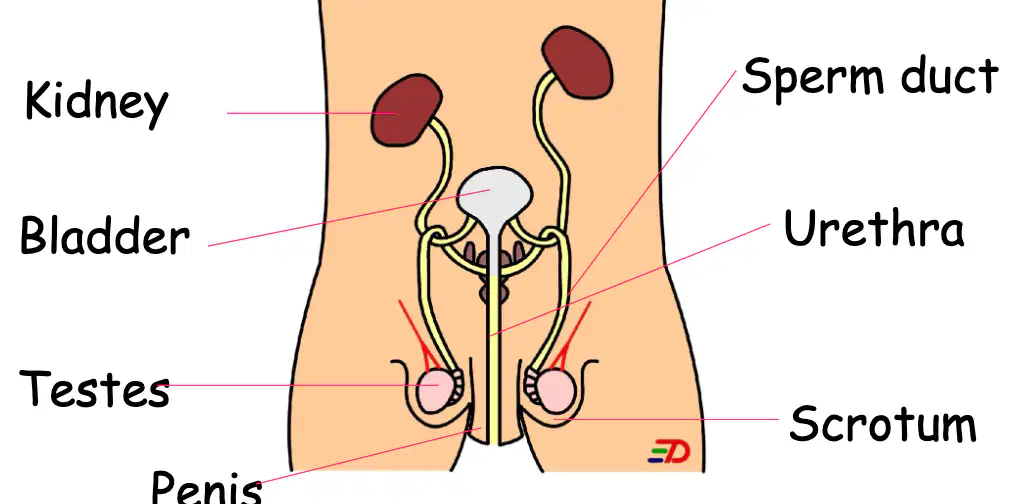
How do the structure and location of the testes and scrotum help in sperm production?
The testes are inside the body to keep them at body temperature, which is ideal for sperm production.
The testes are outside the body in the scrotum to keep them cooler than body temperature, which is needed for sperm production.
The scrotum is inside the body to protect the testes from temperature changes.
The testes and scrotum do not help regulate temperature for sperm production.
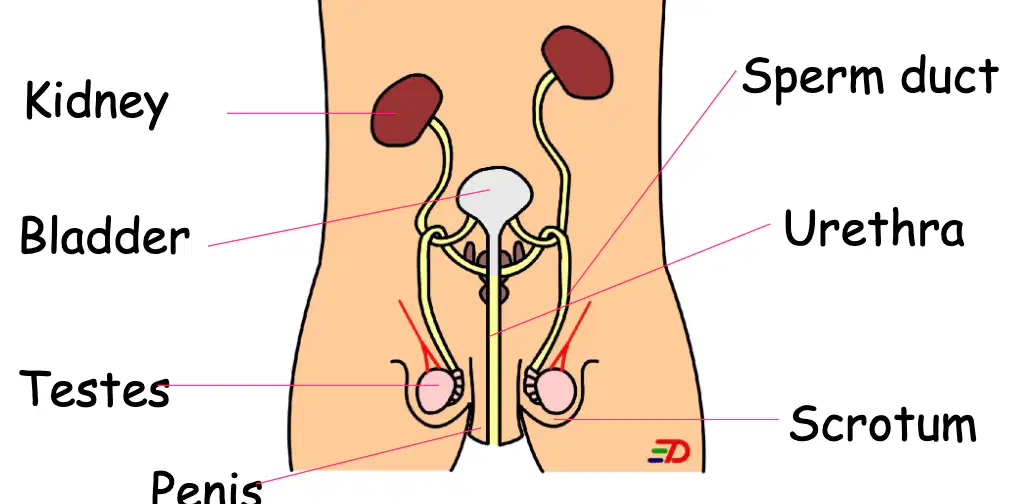
Which is the correct path of sperm from where it is made to where it leaves the body?
Testes → Sperm duct → Urethra → Penis
Bladder → Testes → Sperm duct → Penis
Kidney → Bladder → Urethra → Penis
Scrotum → Bladder → Sperm duct → Urethra
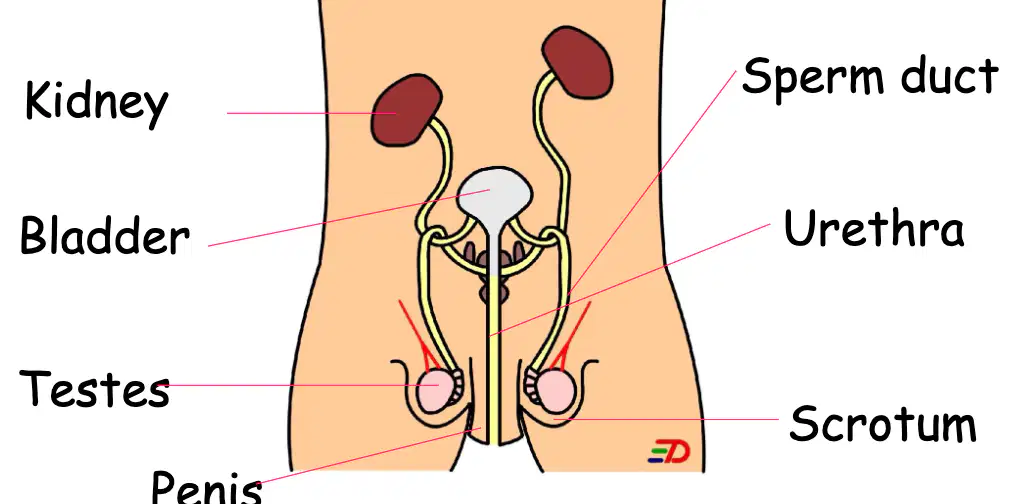
Why is the urethra important in the male reproductive system, and what happens if it is blocked?
The urethra only carries urine, so a blockage would not affect reproduction.
The urethra carries both urine and sperm; a blockage would prevent both urination and ejaculation, affecting excretion and reproduction.
The urethra is not connected to the reproductive system, so a blockage would have no effect.
The urethra only carries sperm, so a blockage would only affect reproduction.
If the sperm duct is blocked in a male, what would happen to reproduction, and why?
Sperm would not be produced because the testes would stop working.
Sperm could not travel from the testis to the penis, so fertilization would not happen.
The scrotum could not keep the right temperature for sperm.
The penis could not carry sperm out, but fertilization could still happen.
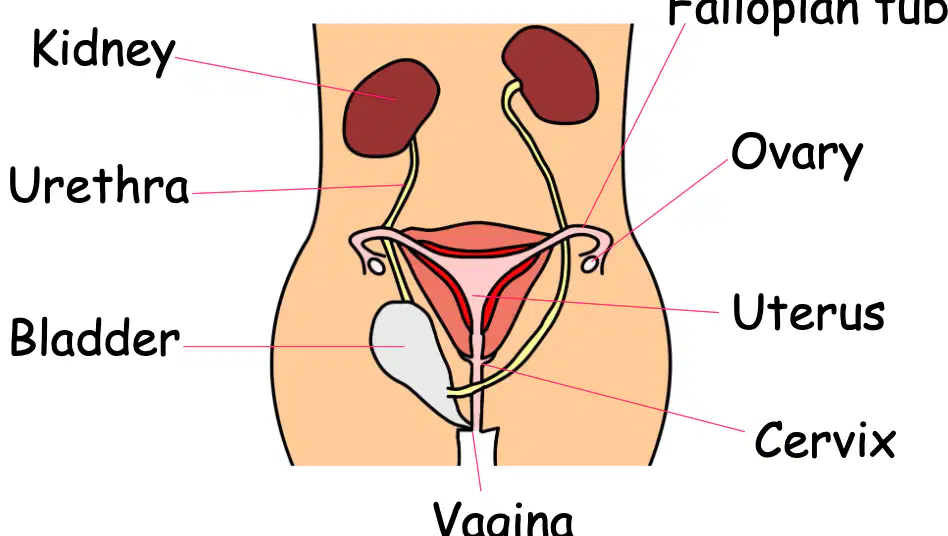
How does the structure and position of the fallopian tubes help in reproduction?
The fallopian tubes carry eggs from the ovaries to the uterus, allowing fertilization to happen in the tube.
The fallopian tubes connect the kidneys to the bladder and filter waste.
The fallopian tubes store urine before it leaves the body.
The fallopian tubes make hormones for the menstrual cycle.
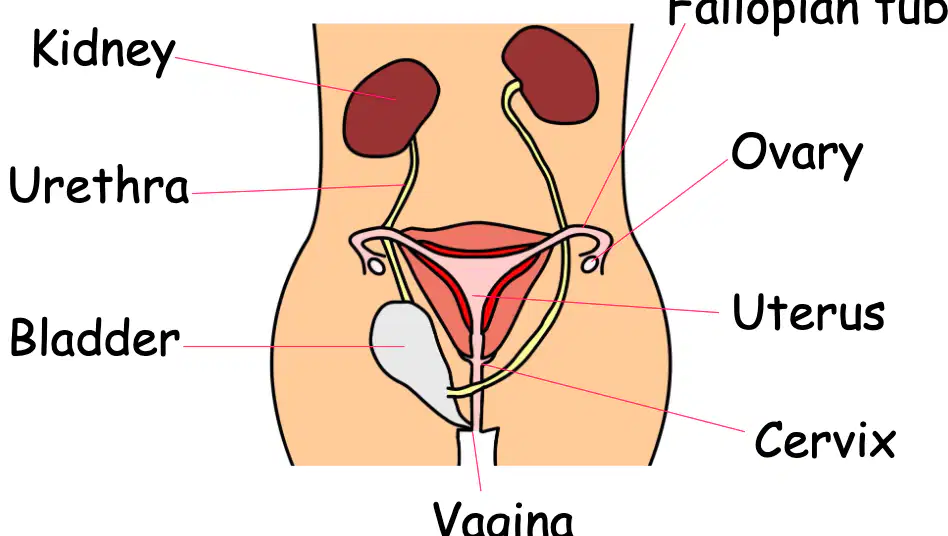
How do the uterus, cervix, and vagina work together during childbirth?
The uterus contracts to push the baby through the cervix and into the vagina.
The cervix produces eggs that travel to the uterus.
The vagina filters blood before it enters the uterus.
The uterus stores urine before it is expelled through the cervix.
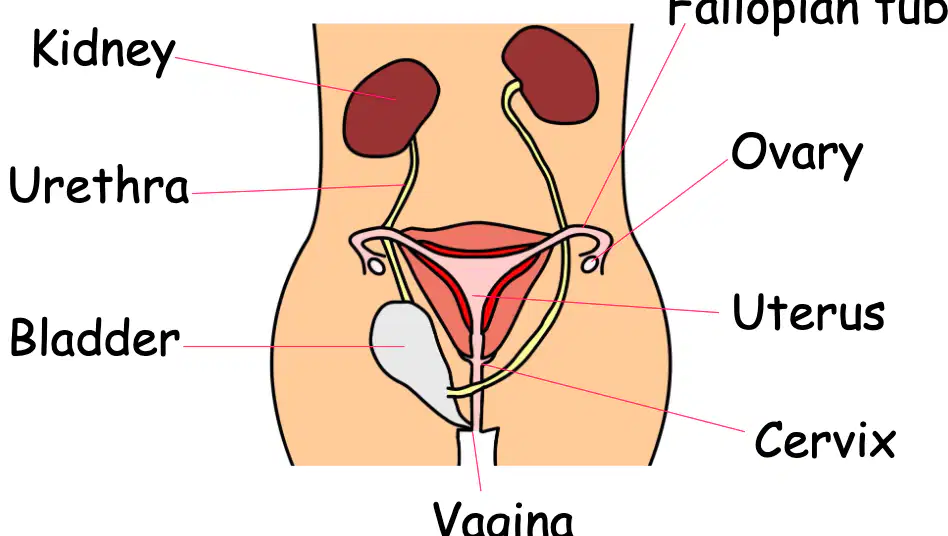
Why are the urethra and vagina separate in females?
The urethra removes urine, while the vagina is for reproduction and birth.
The urethra carries eggs, while the vagina stores urine.
Both are for menstrual blood.
The urethra is for fertilization, the vagina is for digestion.
A woman cannot conceive because fertilization is not happening. Which female reproductive organ is most likely not working?
Ovary, because it produces eggs.
Fallopian tube, because fertilization happens here and it carries the egg to the uterus.
Uterus, because it is where the baby grows.
Cervix, because it is the entry to the uterus.
Why is adolescence considered a critical period, and what challenges might occur during this time?
Adolescence is critical because it is when individuals learn to walk and talk, and challenges include learning basic motor skills.
Adolescence is critical due to major physical, emotional, and social changes, and challenges may include identity formation, peer pressure, and emotional instability.
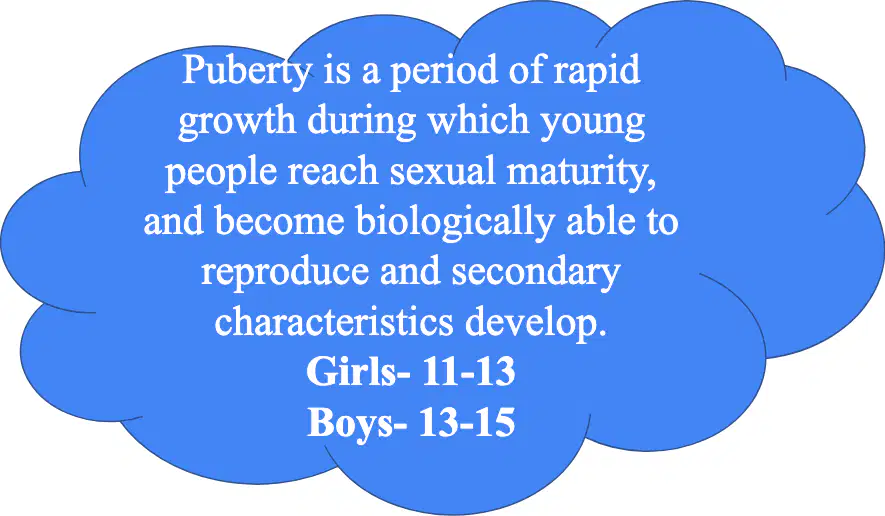
Match the following descriptions with the correct statements about puberty and human growth.
It is when young people reach sexual maturity and develop secondary characteristics, enabling reproduction.
Stage when young people become able to reproduce and show physical changes.
It is when children stop growing and their bodies remain unchanged.
Stage when growth stops and no changes occur in the body.
It is a period when only mental abilities develop, with no physical changes.
Stage with only mental development and no physical changes.
It is a time when adults lose their ability to reproduce.
Stage when adults can no longer have children.
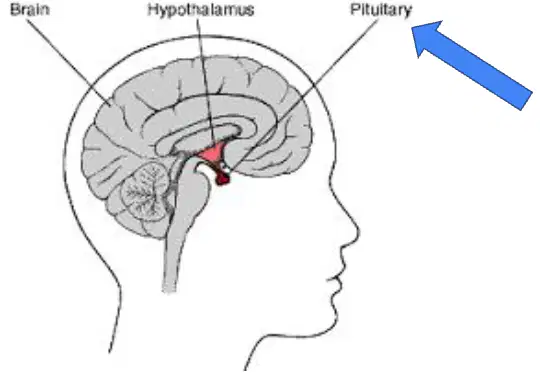
Why is the pituitary gland important for starting puberty?
It releases hormones that tell the ovaries and testes to make sex hormones.
It directly makes sex hormones.
It controls voluntary movements.
It is responsible for memory and learning.
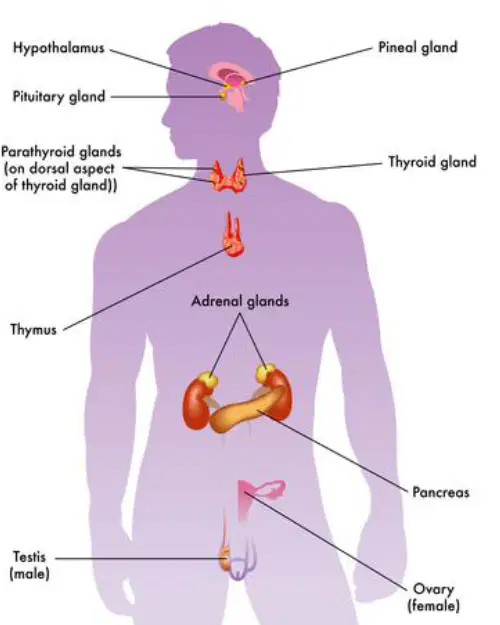
Why is progesterone important?
Progesterone thickens the womb lining to enable an embryo to implant.
Progesterone increases blood sugar levels.
Progesterone stimulates red blood cell production.
Progesterone regulates the circadian rhythm.
How do sex hormones affect males and females during puberty?
In females, oestrogen and progesterone control ovulation and menstruation, while in males, testosterone causes sperm production and secondary sexual characteristics.
In females, testosterone causes ovulation, while in males, oestrogen causes sperm production.
Primary and secondary characteristics differ in that (a) .
Characteristic A
Characteristic B
Characteristic C
A student says all puberty changes are about reproduction. Is this true? Choose the best reason.
Yes, because all changes, like facial hair, are needed for reproduction.
No, because some changes, like breast growth and growth spurts, are not directly for reproduction.
Yes, because the menstrual cycle and sperm production are needed for reproduction.
No, because only penis growth is related to reproduction.
How do primary and secondary sexual characteristics differ during puberty?
Primary characteristics are sex organs present at birth and needed for reproduction; secondary characteristics are not needed for reproduction and develop with hormones.
Primary characteristics are not sex organs and develop after puberty; secondary characteristics are needed for reproduction and present at birth.
Both primary and secondary characteristics are present at birth and needed for reproduction.
Primary characteristics are only in males, secondary characteristics are only in females.
(a) control ovulation and menstruation in females, while (b) causes sperm production and male traits.
Oestrogen and progesterone control
Testosterone
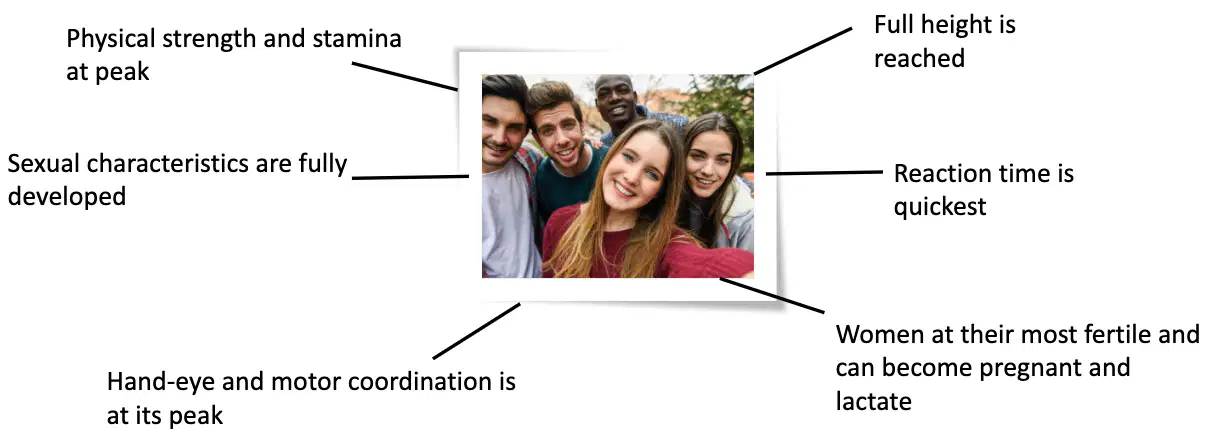
How does physical maturity in early adulthood affect daily life?
People are at their physical best, make quick decisions, and have good reproductive health.
It causes a decline in physical abilities and slower reaction times.
It leads to loss of coordination and incomplete sexual development.
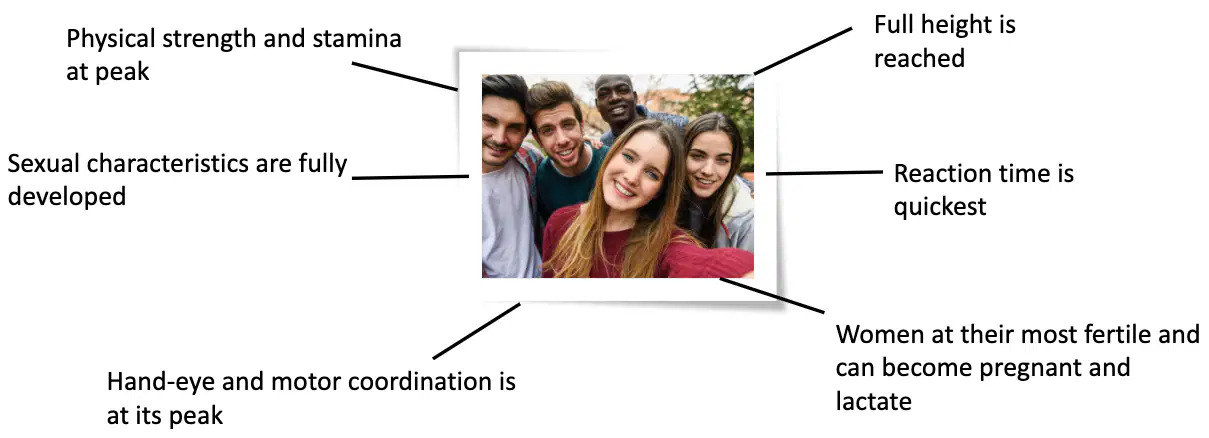
How can peak hand-eye and motor coordination in early adulthood influence career or activity choices?
People may choose careers or activities that require precise movements, such as surgery, sports, or music.
People may avoid activities requiring coordination due to poor motor skills.
People may only choose sedentary jobs because of low stamina.
People may not join recreational activities due to poor health.
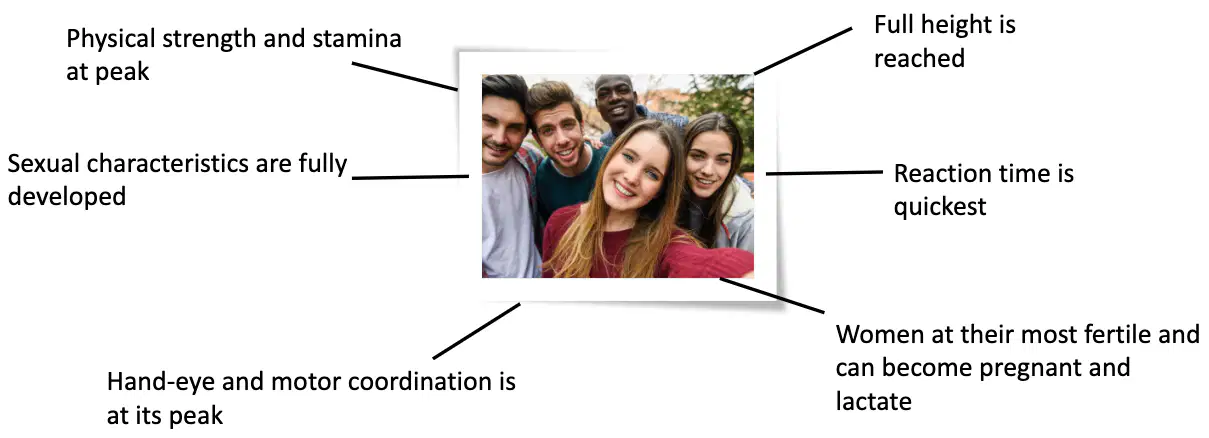
How does peak physical strength, stamina, and reaction time in early adulthood help in emergencies?
Individuals can respond quickly and effectively to emergencies due to their best physical and mental abilities.
Individuals are more likely to panic and not respond to emergencies.
Individuals have slower reaction times and less stamina, making them less effective in emergencies.
Individuals avoid all stressful situations due to lack of confidence.
A woman has frequent urination, tiredness, and sudden aversion to some smells and tastes. What should be considered?
Pregnancy
Diabetes
Flu
Food poisoning
How can a healthcare professional tell the difference between pregnancy and the flu when a patient feels sick and tired?
By checking for signs like a missed period, breast changes, or changes in taste or smell
By only considering sickness and tiredness
By assuming all sickness is due to pregnancy
By ignoring the symptoms
Which symptom most strongly suggests pregnancy?
A missed period
A sore throat
A headache
A rash
A pregnant woman has problems with the growth of her uterus and foetus. Which hormone imbalance is most likely responsible, and why?
Progesterone, because it helps supply blood vessels to the womb and maintain the womb lining.
Oestrogen, because it helps the uterus and foetus to grow and maintain the womb lining.
Prolactin, because it produces breast milk.
Testosterone, because it is responsible for male secondary sexual characteristics.
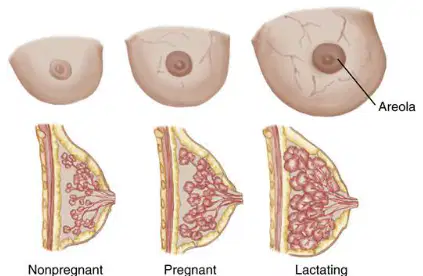
Match each hormone with its correct function in the context of pregnancy and lactation.
Oestrogen, which helps the uterus and foetus to grow.
This hormone helps the uterus and foetus to grow.
Progesterone, which helps supply blood vessels to the womb.
This hormone helps supply blood vessels to the womb.
Prolactin, which is responsible for producing breast milk.
This hormone is responsible for producing breast milk.
Insulin, which regulates blood sugar levels.
This hormone regulates blood sugar levels.
If the womb lining is not maintained during pregnancy, which hormone is most likely lacking and what does it do?
Progesterone, which helps maintain the womb lining.
Oestrogen, which produces breast milk.
Prolactin, which helps the uterus and foetus grow.
Adrenaline, which prepares the body for 'fight or flight'.
A mother is not producing enough milk. Which hormone is most likely deficient?
Oxytocin, because it stimulates the production of milk.
Prolactin, because it stimulates the production of milk.
Estrogen, because it stimulates the flow of milk.
Progesterone, because it stimulates the secretion of milk.
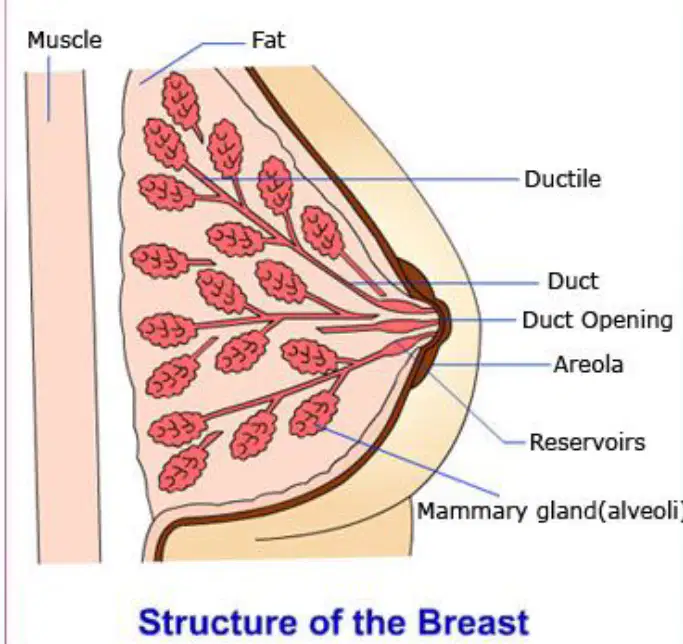
A newborn can latch onto the breast, but milk does not flow easily even though milk is being produced. Which hormone is most likely not working properly?
Prolactin, because it stimulates the flow of milk.
Oxytocin, because it stimulates the flow of milk.
Estrogen, because it stimulates milk production.
Progesterone, because it stimulates the secretion of milk.
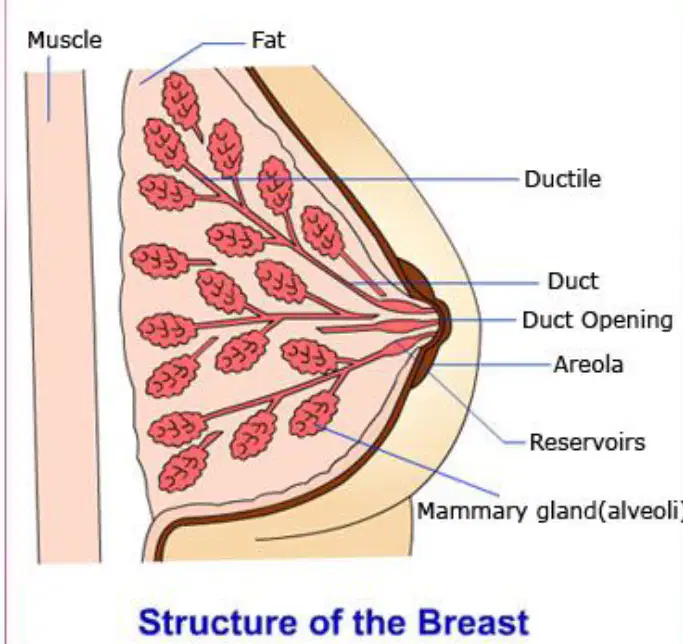
How would a problem in the breast ducts affect milk secretion?
Milk would be made but not reach the nipple, so secretion would decrease.
Milk production would increase and more would be secreted.
Prolactin would stop being produced.
The areola would get bigger to compensate.
A 48-year-old woman has hot flushes, night sweats, irregular periods, and mood swings. How are these symptoms related to perimenopause, and why should she see a doctor?
These symptoms are typical of perimenopause and may indicate hormonal changes; seeking medical advice can help manage symptoms and rule out other conditions.
These symptoms are unrelated to perimenopause and do not require medical attention.
These symptoms are only caused by infections and not by hormonal changes.
These symptoms are normal for all women and do not need to be discussed with a doctor.
How can a healthcare provider tell perimenopause apart from similar conditions?
By checking age, menstrual history, symptoms, and ruling out other causes.
By assuming all symptoms are from perimenopause without further investigation.
By only asking about sleep habits.
By giving medication without a diagnosis.
A patient has fatigue, trouble sleeping, and urinary urgency. How can you tell if these are from perimenopause or another cause?
Check all symptoms, age, menstrual history, and suggest tests for other causes.
Ignore the symptoms.
Only treat sleep problems.
Blame stress without checking further.
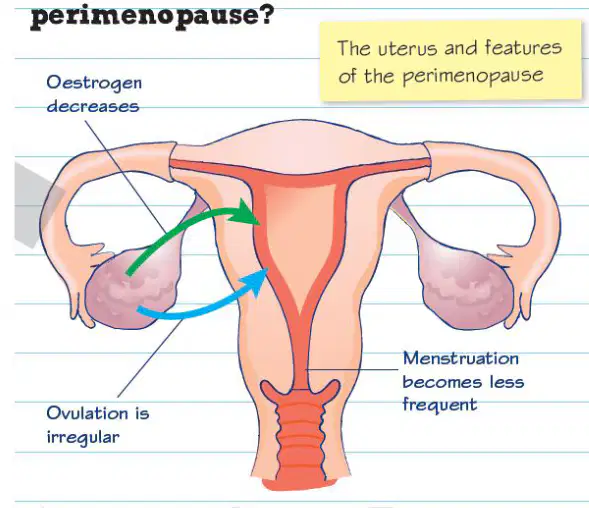
How does decreased oestrogen during perimenopause affect the female reproductive system?
Decreased oestrogen causes irregular ovulation and less frequent menstruation.
Decreased oestrogen causes increased ovulation and more frequent menstruation.
Increased oestrogen causes irregular ovulation and less frequent menstruation.
Decreased oestrogen does not affect ovulation or menstruation.
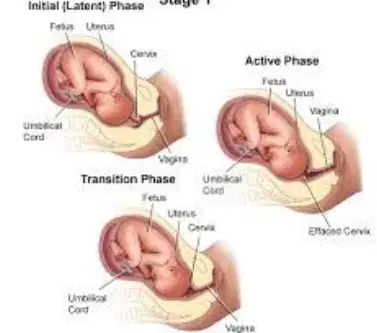
How do uterine contractions change during labor, and why is this important?
Contractions become less frequent and weaker, which helps the baby move slowly through the birth canal.
Contractions remain the same throughout labor, maintaining a steady pace for the baby’s movement.
Contractions become more frequent and stronger, which helps dilate the cervix and push the baby through the birth canal.
Contractions stop completely toward the end of labor, allowing the baby to exit passively.
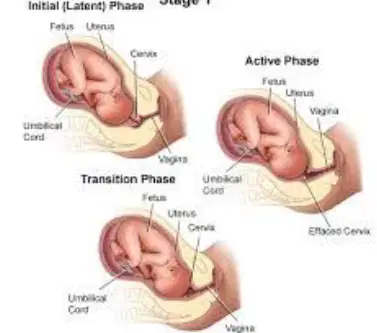
How could a change in contractions affect labor?
It could stop the cervix from opening and block the baby’s passage.
It would not affect birth.
It would make birth faster by relaxing the uterus.
It would only affect the umbilical cord.
How does perimenopause affect a woman's reproductive system, and why does it mark the end of the reproductive years?
Perimenopause increases oestrogen and egg production, extending the reproductive years.
Perimenopause decreases oestrogen and slows egg production, ending the reproductive years.
Perimenopause does not affect hormones or egg production.
Perimenopause immediately stops all reproductive functions.
How can women prepare for perimenopause?
Ignore the changes.
Exercise more and seek medical advice.
Take more oestrogen without a doctor.
Do not talk to healthcare professionals.
How does the decrease in sex hormones during menopause affect women?
It only affects the menstrual cycle.
It causes shrinkage of sexual organs, less sexual interest, osteoporosis, hot flashes, and night sweats.
It increases fertility and sexual interest.
It increases egg production.
How can symptoms from low oestrogen and progesterone during menopause be managed? What should be considered?
Only try to increase egg production.
Consider hormone therapy, lifestyle changes for hot flushes and night sweats, and bone health.
Ignore the symptoms as they will go away on their own.
Only increase physical activity, without addressing hormones.
Why do gonadotropin levels increase during menopause?
They increase to stimulate egg production as the number of eggs decreases.
They decrease to stop egg production.
They have no role during menopause.
They increase to cause osteoporosis.
How do signs of aging in middle adulthood (46-65 years) affect daily life and activities? Which scenario shows these effects?
An individual finds it harder to lift heavy objects, notices gray hair, and has a decrease in height, making it hard to reach high shelves.
An individual develops a sudden interest in new hobbies and starts learning a new language.
An individual keeps the same strength and stamina as in their twenties, with no changes in appearance.
An individual experiences improved fertility and increased muscle tone.
What is the best way to maintain physical health in middle adulthood?
Exercise regularly, eat a balanced diet, and get health checkups.
Ignore physical changes and keep old routines.
Only use cosmetic treatments for hair color changes.
Avoid all physical activity to prevent injury.
How does compression of spinal discs affect height and health in aging people?
Compression increases bone density and height.
Compression moves the vertebrae apart, increasing height.
Compression reduces disc space, lowering height and possibly affecting posture and movement.
Compression does not affect height or health.
To lower your risk of heart disease, you should (a) .
Be more sedentary to save energy.
Exercise regularly to keep strength.
Do not exercise to avoid muscle loss.
Only work on vision and hearing.
How do reduced mobility and dexterity affect older adults' daily activities, and what can help?
No effect; no help needed.
Tasks are harder; physical therapy and tools can help.
Only affects sports, not daily life.
Can be ignored; gets better with age.
Slower reactions and vision/hearing problems can (a) risks for elderly people.
Slower reactions and sensory problems
Slower reactions and vision/hearing
Slower reactions improve decision-making
Vision and hearing problems only affect
How does Shona’s tripod grasp help her at school and with friends?
It lets her hold a paintbrush or pencil, so she can join activities with friends.
It stops her from joining group activities.
It means she can only watch others during crafts.
It makes her need help from teachers for everything.
How do Shona’s fine motor skills affect her self-care at school?
She can dress, feed herself, and join activities without help.
She needs help with all self-care tasks and cannot eat or dress alone.
She can only join activities that do not need fine motor skills.
She will avoid all activities that use her hands.
Which three activities best help Crystal improve her gross motor skills?
Using pedals to ride a tricycle, skipping, and running and balancing on one foot
Using a pencil to copy letters, tying shoelaces, and building a tower with cubes
Reading a storybook, singing a song, and drawing a picture
Counting numbers, reciting the alphabet, and listening to music
Which two tasks best assess fine motor skills in children?
Tying shoelaces and using a pencil to copy letters
Skipping and riding a bicycle
Throwing a ball and running on one foot
Singing and reciting the alphabet
Which activity best supports both fine and gross motor skills at the same time, and why?
Building a tower with cubes, because it uses finger control and planning.
Riding a tricycle, because it uses pedaling (gross motor) and steering (fine motor).
Listening to a story, because it develops language and comprehension.
Singing a song, because it improves memory and rhythm.
Karina is in later adulthood. Select the pair of physical changes she is most likely to experience at this stage.
Decline in strength and reduction in hearing
Increased muscle mass and improved vision
Enhanced mobility and higher stamina
Decreased susceptibility to infection and increased elasticity in skin
Imagine you are planning a health program for individuals in later adulthood. Which two physical changes should you prioritize addressing, based on common trends in this life stage?
Loss of muscle and higher susceptibility to infection
Improved gross motor skills and increased stamina
Enhanced vision and reduced risk of disease
Increased elasticity in skin and improved hearing
Given the physical changes listed for later adulthood, which combination best explains why older adults may require more medical support and assistance with daily activities?
Less mobility in muscles and higher susceptibility to disease
Increased stamina and improved fine motor skills
Enhanced hearing and greater muscle strength
Improved vision and reduced risk of infection
A friend is confused about the difference between growth and development in humans. Using reasoning and evidence, explain how you would distinguish between the two concepts.
Growth refers to an increase in measurable quantity like height or weight, while development involves complex changes in skills and capabilities that follow an orderly sequence.
Growth and development both refer to the same process of getting older.
Growth is about learning new skills, while development is about getting taller.
Growth is a decrease in measurable quantity, while development is a random process.
Analyse the differences between fine and gross motor skills and explain why fine motor skills develop later than gross motor skills in children.
Fine motor skills develop later because they require more practice, while gross motor skills are innate.
Fine motor skills develop later because the nervous system must develop first, whereas gross motor skills use larger muscle groups that mature earlier.
Fine motor skills develop earlier because they are simpler, while gross motor skills require more coordination.
Fine motor skills and gross motor skills develop at the same time because they use the same muscles.
During puberty, which change is considered a secondary sexual characteristic in males?
Enlargement of the uterus
Growth of facial hair
Production of sperm
Development of ovaries
Which of the following is a common physical change experienced during middle adulthood?
Gradual loss of skin elasticity and appearance of wrinkles
Improved night vision and hearing
Rapid increase in height and weight
Development of primary sexual characteristics
What is the main function of the fallopian tubes in the female reproductive system?
To transport eggs from the ovary to the uterus and serve as the site of fertilization
To produce eggs for fertilization
To regulate hormone production
To nourish and protect the developing fetus
During puberty, which hormone is primarily responsible for the development of secondary sexual characteristics in males?
Oestrogen
Progesterone
Testosterone
Prolactin
How could a blockage in the fallopian tubes affect a woman's fertility?
It could prevent eggs from reaching the uterus, making fertilization difficult or impossible.
It would have no effect on fertility.
It would increase the number of eggs released each month.
It would cause the uterus to stop contracting during menstruation.

