
 Worksheets
Pulse & Respirations Quiz
Total questions: 40
Worksheet time: 20mins
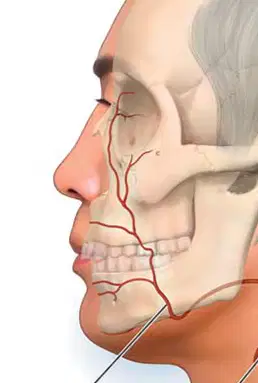
The pulse found on the jawline, near the corner of the mouth is called:
Facial pulse
Carotid pulse
Temporal pulse
Brachial pulse
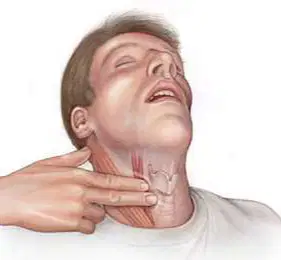
The pulse in this image is located on the side of the neck, between the trachea and sternocleidomastoid muscle. Which pulse site is this?
Brachial pulse
Carotid pulse
Radial pulse
Popliteal pulse
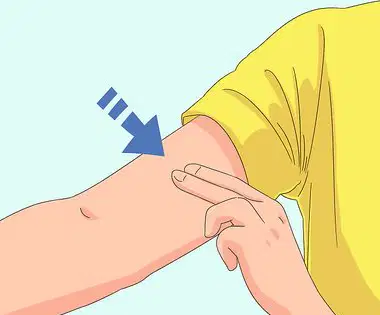
The pulse shown here is palpated on the inside of the upper arm, just above the elbow crease. Which pulse site is this?
Radial pulse
Brachial pulse
Carotid pulse
Posterior tibial pulse
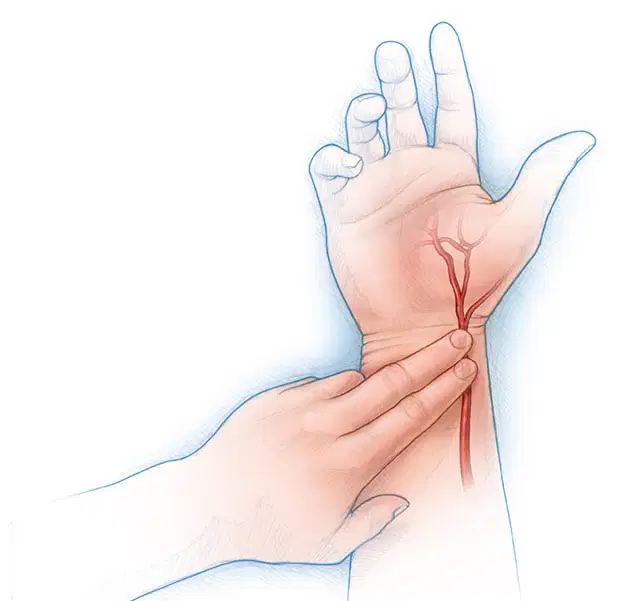
The pulse in this image is located on the thumb side of the wrist. Which pulse site is this?
Carotid pulse
Radial pulse
Popliteal pulse
Temporal pulse
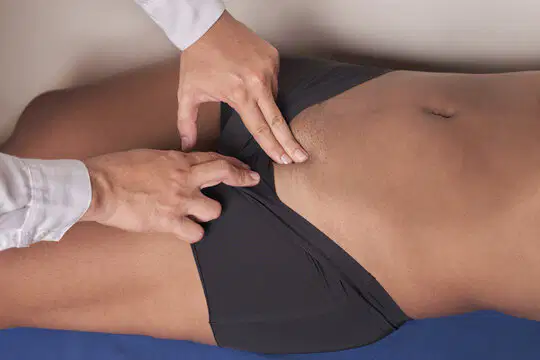
The pulse shown in this image is palpated in the groin, where the femoral artery passes near the hip crease. Which pulse site is this?
Femoral pulse
Carotid pulse
Radial pulse
Temporal pulse
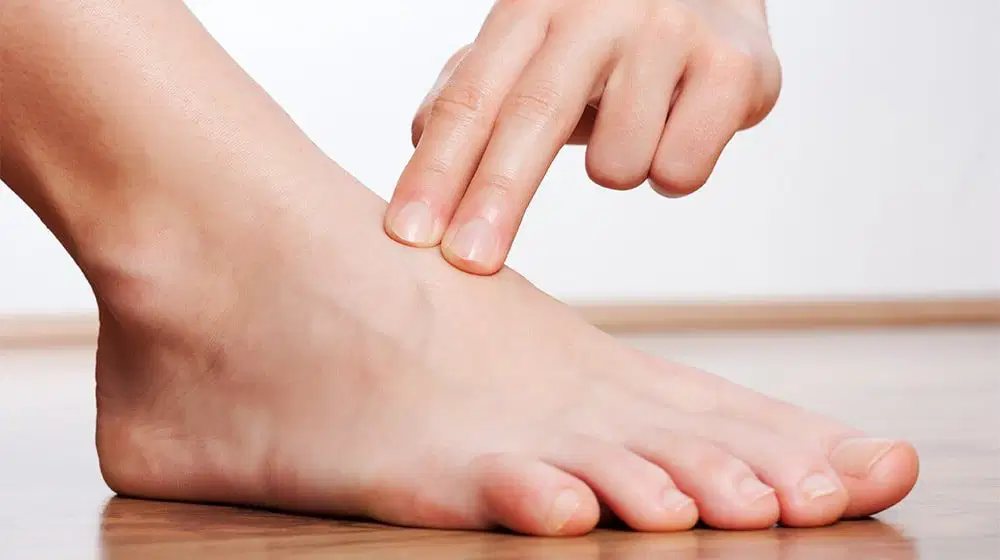
The pulse in this image is palpated on the top of the foot, between the first and second toes. Which pulse site is this?
Popliteal pulse
Posterior tibial pulse
Dorsalis pedis (pedal) pulse
Femoral pulse
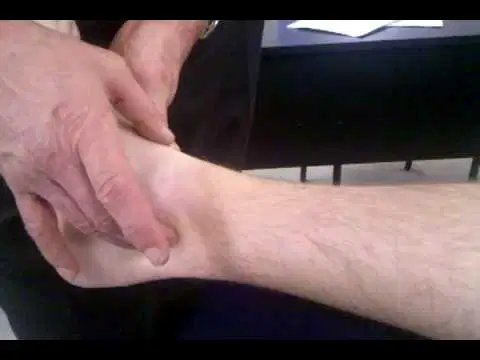
The pulse in this image is located just behind the medial ankle bone (medial malleolus). Which pulse site is this?
Posterior tibial pulse
Dorsalis pedis pulse
Popliteal pulse
Radial pulse
An adult patient’s respiratory rate is measured at 28 breaths per minute. How would this be described?
Eupnea
Bradypnea
Tachypnea
Apnea
Which term describes a slow rate of breathing?
Dyspnea
Eupnea
Tachypnea
Bradypnea
When assessing a patient’s respirations, which of the following should be evaluated?
Rate, rhythm, and depth
Rate only
Depth only
Rhythm only
A patient is found unconscious, unresponsive, and not breathing. Which term describes their breathing?
Eupnea
Dyspnea
Tachypnea
Apnea
Measuring the pulse by feeling it with your fingers, rather than by using a machine, is called:
Auscultation
Palpation
Percussion
Inspection
To correctly locate the radial pulse, you should place your fingers:
On the thumb side of the wrist with the palm facing up
On the thumb side of the wrist with the palm facing down
On the pinky side of the wrist with the palm facing up
On the inside of the upper arm above the elbow crease
Which description best explains the correct technique for palpating the radial artery?
Place your thumb over the inside of the wrist
Place two fingers on the pinky side of the wrist with palm up
Place the index and middle finger pads on the thumb side of the wrist, palm facing up
Place the heel of your hand across the back of the wrist
The best site to check the pulse on an unconscious (not awake, not responsive) patient is the:
Radial pulse
Brachial pulse
Carotid pulse
Facial pulse
When assessing the pulse rate of a conscious, awake, and responding adult patient, the best site to use is the:
Femoral pulse
Radial pulse
Carotid pulse
Brachial pulse
When assessing the pulse on an infant (baby patient), the best site to use is the:
Radial pulse
Carotid pulse
Brachial pulse
Femoral pulse
What is the normal pulse rate range for an adult?
40 to 80 beats per minute
40 to 120 beats per minute
60 to 80 beats per minute
60 to 100 beats per minute
The term for a faster-than-normal heart rate is:
Tachypnea
Bradypnea
Tachycardia
Bradycardia
The term for a slower-than-normal heart rate is:
Bradycardic
Tachypnic
Bradypnic
Tachycardic
The term for the absence of breathing is:
Apnea
Eupnea
Dyspnea
Bradypnea
A patient who is breathing more slowly than normal would be described as:
Apneic
Eupneic
Bradypneic
Dyspneic
The term for a faster-than-normal breathing rate is:
Apnea
Tachypnea
Bradypnea
Dyspnea
The term “auscultate” means:
To listen with a stethoscope
To compare on both sides
To feel with the hands
To breathe deeply
The term “palpate” means:
To feel with the hands
To listen with a stethoscope
To measure with a device
To percuss with the fingers
The term “bilateral” means:
One side only
Both sides
Upper side
Lower side
Children and infants have __________ normal respiratory rates than adults.
Slower
More irregular
The same
Faster
The “axilla” refers to the:
Armpit area
Back of the neck
Base of the skull
Side of the ribs
Which pulse is located at the temple region of the head?
Facial pulse
Temporal pulse
Carotid pulse
Radial pulse
Which pulse is located on the upper arm, often used in infants?
Radial pulse
Brachial pulse
Femoral pulse
Posterior tibial pulse
Which pulse is found behind the knee?
Radial pulse
Carotid pulse
Popliteal pulse
Dorsalis pedis pulse
What is the term for abnormally rapid breathing?
Eupnea
Dyspnea
Tachypnea
Bradypnea
What is the term for feeling the pulse with your fingers?
Auscultation
Palpation
Inspection
Percussion
Which pulse is most commonly checked during CPR?
Radial pulse
Carotid pulse
Femoral pulse
Dorsalis pedis pulse
Which pulse is most commonly used to measure heart rate in adults during routine assessment?
Carotid pulse
Radial pulse
Brachial pulse
Femoral pulse
What is the medical term for rapid breathing?
Bradypnea
Tachypnea
Apnea
Dyspnea
Which term refers to a person who is not breathing?
Eupneic
Tachypneic
Apneic
Bradypneic
What does the term "palpate" mean in a medical context?
To feel with the hands
To listen with a stethoscope
To observe visually
To measure temperature
What is the normal adult respiratory rate?
6–10 breaths per minute
12–20 breaths per minute
20–30 breaths per minute
30–40 breaths per minute
Where are the apices of the lungs located?
At the base of the lungs
At the very top of the lungs
In the middle of the lungs
Near the diaphragm

