
 Worksheets
Exam 1 Study Guide
Total questions: 84
Worksheet time: 42mins
What are the ways of knowing listed in the study guide? Fill in the blank: Tenacity, Authority, Reason/logic/intuition, Experience/casual observation, and _________?
Scientific method
Superstition
Tradition
Guesswork
Which acronym can be used to remember the scientific method according to the study guide?
TEARS
SMART
LEARN
STEPS
Which of the following is NOT listed as a feature of the scientific method in the study guide?
A) Specifiable questions
B) Systematic observation
C) Public verification
D) Personal opinion
The scientific method can also be flawed because we make mistakes, but it ideally limits the flaws and has advantages over other ways of knowing in specific scenarios.
True
False
Fill in the blank: The falsification principle involves not trying to find evidence, but eliminate _________.
alternatives
facts
proofs
theories
If tested, it is possible you will find evidence that fails to support the ________.
theory
experiment
observation
hypothesis
If A (antecedent), then B (consequence). What is the term for the following reasoning: 'A is true, therefore B is true'?
Affirming the antecedent
Denying the antecedent
Affirming the consequent
Denying the consequent
If A (antecedent), then B (consequence). What is the term for the following reasoning: 'A is false, therefore B is false'?
Denying the antecedent
Affirming the consequent
Modus ponens
Modus tollens
If A (antecedent), then B (consequence). What is the term for the following reasoning: 'B is true, therefore A is true'?
Affirming the consequent
Denying the antecedent
Affirming the antecedent
Denying the consequent
If A (antecedent), then B (consequence). What is the term for the following reasoning: 'B is false, therefore A is false'?
Denying the consequent
Affirming the consequent
Denying the antecedent
Affirming the antecedent
Which of the following is NOT a reason for research?
To explore ideas
To describe natural phenomena
To ignore relationships among constructs
To predict behavior
Fill in the blank: Research questions should build on what is ________.
known
forgotten
imagined
irrelevant
What is the difference between a statistical hypothesis and a research hypothesis?
A statistical hypothesis is about how a variable is measured, while a research hypothesis is theory-driven and more general.
A statistical hypothesis is always qualitative, while a research hypothesis is always quantitative.
A statistical hypothesis is only used in biology, while a research hypothesis is used in all sciences.
A statistical hypothesis is a guess, while a research hypothesis is a proven fact.
Fill in the blank: Independent variables are what we think cause differences in another ________.
variable
experiment
hypothesis
method
Fill in the blank: Dependent variables are the variables we think are caused by something else; the ________ variable.
measured
independent
constant
manipulated
Which type of variable is able to assume less than 2 values?
Independent variable
Dependent variable
Extraneous variable
None of the above
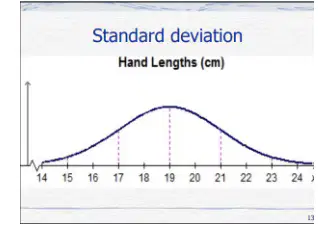
What is variance?
A measure of how far a set of data are spread out from their mean value
A measure of the relationship between two variables
The average value of a data set
The sum of all values in a data set
Fill in the blank: Square root of variance is ________.
standard deviation
mean
median
mode
Covariance indicates the ________ of the relationship between two variables, but not the strength.
direction
magnitude
origin
frequency
Which of the following is a standardized version of covariance and measures the strength and direction of the linear relationship between two variables?
Mean
Correlation
Variance
Standard deviation
According to the summary notes, what is the index of relationship between two variables called?
Correlation
Regression
Deviation
Variance
According to the summary notes, the correlation coefficient is bounded by which two values?
-1 and +1
0 and 1
-2 and 2
-0.5 and 0.5
According to the summary notes, what two features are represented in correlation?
Strength (0-1) and Direction (+ or -)
Mean and Median
Variance and Standard Deviation
Range and Mode
Which of the following is NOT a way to view correlation according to the notes?
Raw scores & means
Standardized covariance
Mean cross-product of z-scores
Median of raw scores
In correlation, lower variability leads to higher correlation.
True
False
Fill in the blank: Correlation is lower if we do not have ______ distributed data.
normally
randomly
evenly
uniformly
Which factor can strengthen or weaken the correlation by having a large sway on the distribution?
Linearity
Influential data points
Subgroup differences
Variability
Instead of trying to fit a single curve, you can split the data up into low and high axis and run the correlations separately for the two. What is this factor called?
Subgroup differences
Regression to the mean
Outlier analysis
Homogeneity of variance
What is the quantification of the strength/magnitude of a phenomenon/relationship called?
Effect size
Statistical power
Sample size
P-value
Does effect size imply causality?
No, effect size does not imply causality.
Yes, effect size always implies causality.
Effect size only implies causality in experiments.
Effect size implies causality if the sample size is large.
What does the correlation or simple regression statistic 'r' represent?
Beta weight / B weight in a nonstandardized function or a standardized function; correlation is an effect size.
The mean value of the dependent variable.
The standard deviation of the independent variable.
The probability of Type I error in regression analysis.
T-tests are used for:
Comparing means across two groups
Measuring correlation
Calculating odds ratio
Assigning values to objects
Cohen's d focuses on the effect size and looks at the magnitude of said t-test effect.
True
False
What is the ANOVA f-test used for?
To find an effect size to give you an idea of the strength of the relationship or that independent variable predicting an outcome, referred to as eta squared (n2).
To determine if there are statistically significant differences between the means of three or more groups.
To calculate the correlation coefficient between two variables.
To test the normality of a data distribution.
Multiple regression (R2) is used when:
There is only one predictor
There are multiple predictors
Only categorical data is present
Only one group is studied
Logistic regression or odds ratio is used for what type of data?
Categorical data (epidemiology data)
Continuous time series data
Numerical data only
Ordinal data only
What is the process of assigning values to objects so that specific properties of those objects are faithfully represented by the properties of the assigned values called?
Measurement
Estimation
Classification
Evaluation
What is the purpose of reverse scaling in psychological measurement?
To increase the number of questions
To mitigate response style bias by reverse-coding certain items
To make the test longer
To make the test easier
What is the main function of repeating items in a psychological test?
To make the test more difficult
To help ensure people are paying attention and mitigate random responding
To reduce the number of questions
To make the test shorter
Instructional items, such as 'pick C here', are used in psychological tests to:
Increase test difficulty
Exclude inattentive or non-compliant respondents
Make the test longer
Provide more options
Low base rate items in psychological tests are used to catch faking or malingering.
True
False
Which level of measurement is described as 'most basic - measuring different categories (e.g. men vs. women)'?
Nominal
Ordinal
Interval
Ratio
Which level of measurement allows for meaningful zero and relative comparisons, such as heart rate?
Ratio
Nominal
Ordinal
Interval
What type of transformation involves recentering around 0 or some number?
Linear transformation (Recentered)
Exponential transformation
Logarithmic transformation
Scaling transformation
What does a z (mean=0, s=1) transformation create in linear transformations?
z-scores
percentiles
raw scores
standard deviations
Percentiles are an example of which type of transformation?
Linear transformation
Area transformation
Ratio transformation
Ordinal transformation
What does the term 'Stanine' refer to in psychological measurement?
Stanine refers to a method that takes 100% of individuals and breaks them up into 9 groups.
Stanine refers to a scale that divides scores into 5 equal parts.
Stanine is a statistical term for the mean score in a distribution.
Stanine refers to a method of ranking individuals based on percentile scores.
Reliability refers to the ________ with which we measure something.
consistency
accuracy
speed
complexity
Which of the following is NOT a method of estimating reliability?
A) Test-retest
B) Alternate forms
C) Internal consistency
D) Classical Test Theory
Classical Test Theory presumes anytime you measure something you are getting an answer comprised of ________ and ________.
true score information and error
validity and reliability
mean and standard deviation
observed score and variance
Which of the following is a source of variability in measurement?
Individuals being measured
Instrument & testing situation
Chance
All of the above
Combining multiple observations results in:
Increased Reliability
Decreased Reliability
Increased Error
No change in Reliability
What is the main purpose of aggregating across items in psychological measurement?
To increase reliability and decrease error and specificity.
To make the test more difficult for participants.
To reduce the number of items in the test.
To ensure all items measure different constructs.
What does the magnitude of alpha measure?
External validity
Internal consistency
Test-retest reliability
Construct validity
Fill in the blank: The more items there are, the higher your Cronbach alpha.
The more items there are, the higher your Cronbach alpha.
The more items there are, the lower your Cronbach alpha.
The more items there are, the less reliable your test.
The more items there are, the more difficult your test.
Looking at how similar the items are, the higher the intercorrelation, the ______ the alpha.
higher
lower
same
unaffected
As you increase the number of dimensions, alpha ________.
decreases
increases
remains constant
becomes undefined
What is the limitation of Alpha as mentioned in the notes?
Overestimates true reliability
Underestimates true reliability
Measures external consistency
Is not affected by dimensionality
Interpretations of scores from a multidimensional scale are _________
ambiguous
definite
irrelevant
simple
According to the Cortina article, what happens to alpha with an increased number of items and intercorrelations?
Alpha decreases
Alpha increases
Alpha stays the same
Alpha becomes zero
A multidimensional scale leads to a ________ in alpha; alpha underestimates reliability.
reduction
increase
stability
improvement
What is the index of reliability? Fill in the blank: The index of reliability is basically just the ________ of reliability and identifies the highest correlation you could expect to see between your test and anything else (AKA upper bound for what your test scores can correlate with anything else).
square root
mean
variance
sum
What is the formula for correcting for attenuation? Fill in the blank: The formula for correcting for attenuation is r'y = _________.
rxy / sqrt(rxx * ryy)
rxy * sqrt(rxx * ryy)
rxx / sqrt(rxy * ryy)
rxy / (rxx + ryy)
What does validity mean in the context of psychometrics? Fill in the blank: Validity is the quality of being ________, reasonable, and based on truth or fact.
sound
uncertain
biased
irrelevant
Correction for attenuation is basically accounting for the unreliability (error) of our measurement.
True
False
The MTMM matrix is used for what purpose in psychometrics?
To assess the validity of psychological measures
To calculate the mean of test scores
To design intelligence tests
To score personality inventories
Method variance in the context of construct validity refers to:
Variation in results due to the measurement method used rather than the construct being measured.
Differences in the theoretical definition of the construct.
Changes in the construct over time.
Errors caused by participant misunderstanding.
What is the nomological network in construct validity? Fill in the blank: The nomological network is the entirety of all of the ________ representation and the entirety of all of the theoretical representation.
construct
empirical
statistical
operational
What is the extent to which a measure captures all parts of a concept called?
Content validity
Face validity
Criterion validity
Construct validity
What is the extent to which an instrument appears to measure what it claims to measure, but is NOT psychometric validity?
Face validity
Construct validity
Criterion validity
Content validity
What is the extent to which your measure is related to a relevant behavioral outcome called?
Criterion validity
Face validity
Construct validity
Content validity
Which of the following is an example of content validity?
Assessing whether a test of happiness genuinely measures levels of happiness
A comprehensive final exam in a course
Using a control group in a study
Bootstraps effect
Which validity type is more subjective and involves evaluating whether an instrument appears to measure what it claims to measure?
Face validity
Construct validity
Criterion validity
Content validity
What is the process of revising a test by adding or subtracting items to improve it, using items within the test (internal assessment) called?
Bootstraps effect
Regression analysis
External validation
Norm referencing
What is the term for the error of assuming that two measures are different when they actually measure the same construct?
Jangle fallacy
Halo effect
Simpson's paradox
Barnum effect
What is the rule that states you should use all evidence when evaluating a measure?
Total evidence rule
Exclusion principle
Selective evidence rule
Partial data rule
What is the name of the theory that deals with the extent to which findings can be generalized across different situations, people, or times?
Generalizability theory
Constructivist theory
Cognitive dissonance theory
Attachment theory
Relationship satisfaction should be related to which types of behaviors?
Supportive and positive behaviors
Aggressive and hostile behaviors
Indifferent and neglectful behaviors
Manipulative and controlling behaviors
What is restriction of range (variance)?
Restriction of range (variance) refers to the situation where the full range of variability for a variable is not present, which can lower the correlation or validity.
Restriction of range (variance) refers to increasing the variability of a variable to maximize correlation.
Restriction of range (variance) is the process of expanding the data set to include all possible values.
Restriction of range (variance) means that the correlation between variables is always maximized.
What is criterion contamination?
Criterion contamination occurs when the criterion used to measure an outcome is influenced by factors that are not related to the construct being measured.
Criterion contamination is when the criterion is perfectly aligned with the construct being measured.
Criterion contamination refers to the process of eliminating all external variables from a study.
Criterion contamination is the use of multiple criteria to measure the same construct.
What is positive vs. negative skew? (Be able to read the tails)
Positive skew means the tail is on the right side; negative skew means the tail is on the left side.
Positive skew means the tail is on the left side; negative skew means the tail is on the right side.
Positive skew means both tails are equal; negative skew means both tails are unequal.
Positive skew means the distribution is symmetrical; negative skew means the distribution is asymmetrical.
What does the Spearman-Brown formula estimate?
It gives you an estimate of what reliability would be if you change the length of the test (higher or lower reliability).
It measures the average score of a test population.
It calculates the standard deviation of test scores.
It determines the validity of a test.
What would happen to your correlation or validity if you don’t have the full range of variability for either X, Y, or both?
Your correlation/validity would be lowered.
Your correlation/validity would be increased.
There would be no effect on correlation/validity.
Your correlation/validity would become negative.
What would happen if you applied the correction formula to a restricted range?
Correlation goes back up.
Correlation disappears completely.
Correlation becomes negative.
Correlation remains unchanged.

