
 Worksheets
Atmosphere and Its Layers Quiz
Total questions: 30
Worksheet time: 15mins
Which gas makes up the largest percentage of the Earth's atmosphere?
Oxygen
Nitrogen
Argon
Carbon dioxide
Why might the atmosphere be compared to an ocean?
Because it is made of water
Because it is always in motion with swirls and eddies
Because it is blue in color
Because it contains fish
If the Sun’s radiation did not interact with oxygen molecules in the ozonosphere, what would be a likely consequence for life on Earth?
Increased rainfall
Decreased oxygen levels
Greater exposure to harmful ultraviolet radiation
More cloud formation
Which term describes the strong wind that develops at 30,000-35,000 feet and moves as a winding road across the US, generally from the west to the east?
Jet stream
Trade winds
Polar easterlies
Doldrums
A student claims that the trade winds blow from the poles toward the equator. Use evidence from the definitions to evaluate this claim. (DoK Level 3)
The claim is incorrect; trade winds are warm steady winds that blow toward the equator, not from the poles
The claim is correct; trade winds do blow from the poles toward the equator
The claim is incorrect; trade winds are calm winds found at the equator
The claim is correct; trade winds are the same as polar easterlies
Why does the sand feel hotter than water on a sunny day at the beach?
Sand absorbs and loses heat faster than water
Water absorbs and loses heat faster than sand
Sand reflects all the sunlight
Water is always cooler than sand
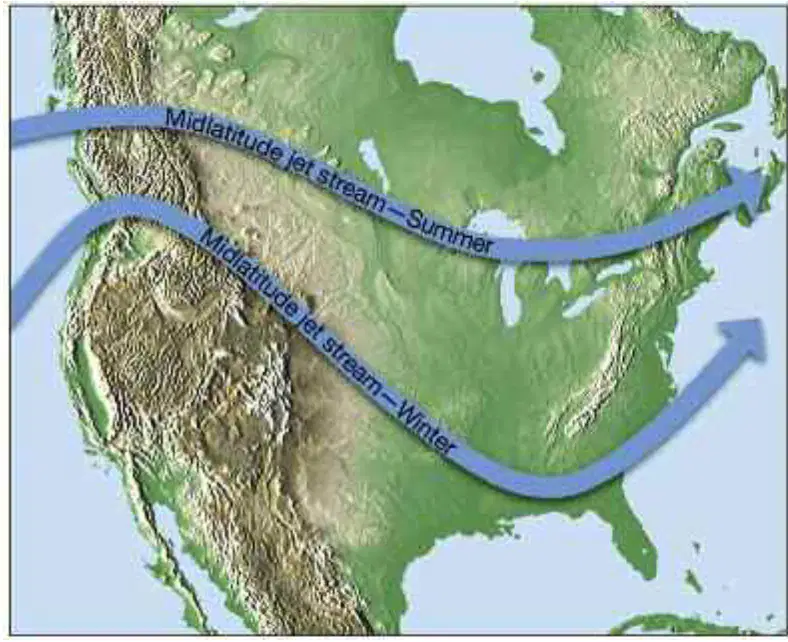
Based on the diagrams, how does the position of the midlatitude jet stream change between summer and winter?
The jet stream stays in the same place all year.
The jet stream moves farther north in winter and south in summer.
The jet stream moves farther south in winter and north in summer.
The jet stream disappears in summer.
What is the main purpose of the "Absorbing Heat" activity described in the learning material?
To measure the amount of sunlight in a day
To compare and contrast the absorption of heat by soil and water
To find out which thermometer is more accurate
To see which can holds more material
In the "Warm Air Rising" activity, what is the purpose of marking a spiral pattern on the paper?
To make the paper look interesting
To create a shape that will spin when warm air rises
To measure the length of the paper
To test the sharpness of the scissors
Why is it important for pilots to understand the Coriolis Effect?
To avoid being deflected off their planned flight course
To increase the speed of their airplane
To reduce fuel consumption
To improve passenger comfort
What happens to the tissue paper on the side of the books nearest the fan in Activity Four?
It rises up
It falls down
It stays still
It melts
How can mountain ranges affect wind currents, according to the summary of Activity Four?
By altering temperature, pressure, and direction of prevailing winds
By increasing rainfall only
By making the air colder everywhere
By stopping all wind movement
Which term describes the weight of all of the atmosphere's gases and molecules on the Earth's surface?
Convection
Atmospheric pressure
Wind chill
Microburst
What is the main purpose of the Beaufort Scale?
To estimate wind speed based on observed effects
To measure temperature changes
To predict rainfall
To calculate humidity
According to the Wind Chill Index, what is the wind chill when the wind speed is 20 mph and the temperature is 10°F?
-24°F
-10°F
-31°F
-17°F
What is the boiling point of water in Kelvin?
100 K
212 K
273 K
373 K
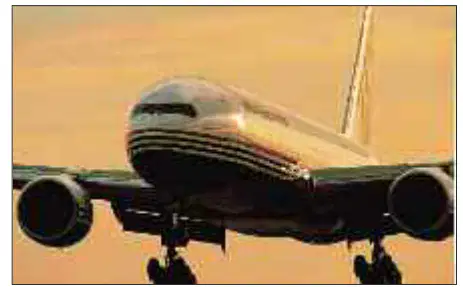
What impact do high temperatures have on aircraft takeoff?
They reduce the need for acceleration
They require longer acceleration times and more runway distance
They make takeoff easier and faster
They have no effect on takeoff
Which barometer is mainly used by scientists and meteorologists due to its stability and reliability?
Aneroid barometer
Aneroid barograph
Mercury barometer
Digital barometer
Which of the following materials is NOT required to make the wind gauge described in the activity?
Clear plastic drinking straw
Styrofoam cup
Metal spoon
Transparent tape
What is the purpose of cutting a notch in the straw about a half inch from one end?
To allow the straw to bend easily
To let air enter and designate the front of the straw
To make the straw shorter
To attach the straw to the cardboard
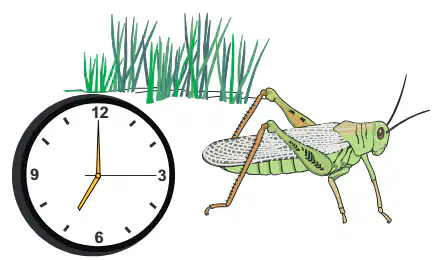
What does the diagram of a cricket next to a clock represent in the context of the activity?
Using a cricket's chirps and a clock to estimate temperature.
Timing how long a cricket can jump.
Measuring the speed of a cricket.
Observing the cricket's sleep schedule.
At what condition does fog generally form?
When the temperature and dew point are within five degrees of each other and winds are light
When the temperature is below freezing and winds are strong
When the sun is shining brightly
When there is no moisture in the air
What do engine manufacturers recommend to solve the problem of ice forming in the carburetor?
Apply carburetor heat.
Add more fuel.
Fly at a higher altitude.
Turn off the engine.
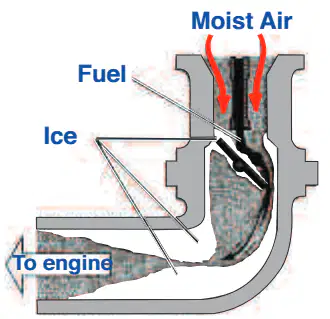
What does the diagram labeled "Carburetor Icing" illustrate?
How ice can form in an airplane's carburetor and block fuel flow.
How water evaporates from the ocean.
How clouds are formed in the sky.
How a plane takes off from a runway.
Which statement best explains why learning about clouds helps us understand the weather?
Clouds are always the same, so they are easy to study.
Clouds are visible indicators of atmospheric conditions, helping predict weather changes.
Clouds only form during storms.
Clouds are not related to weather patterns.
Which of the following weather events can be produced by cumulonimbus clouds? (Select all that apply)
Thunder and lightning
Heavy rain showers
Snow flurries
Tornadoes
What process forms cumulus clouds?
Condensation of water vapor
Convection, defined as warm air rising
Cooling of the ground at night
Evaporation of rain
Which of the following is NOT a root or translation used in cloud classification?
Cirro-
Alto-
Strato-
Nimbo-
Vapo-
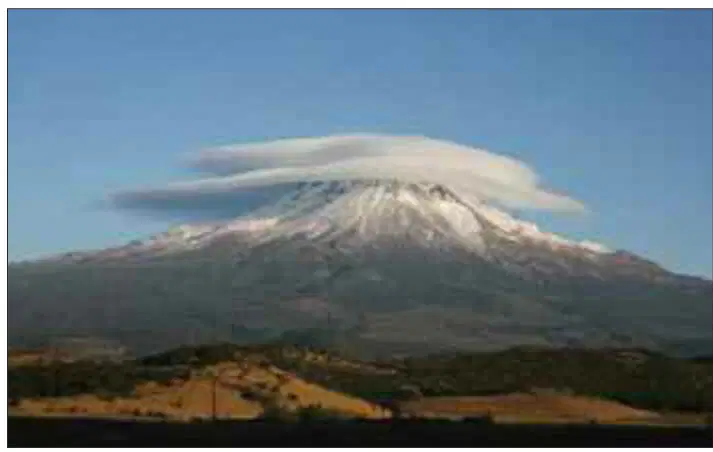
What is unique about the way an altocumulus standing lenticular cloud forms and dissipates?
It forms on one side and dissipates on the other.
It forms only at night.
It forms only over oceans.
It never dissipates.
Explain why fog forms when a layer of cooler, dry air moves over warm, moist air, as described in Activity Eleven.
The cooler air causes the warm air to condense into small droplets, forming fog
The warm air evaporates the cool air
The ice cubes melt and create steam
The air pressure increases rapidly

