
 Worksheets
Part 2a: Explaining Marble Changes in the Taj Mahal
Total questions: 15
Worksheet time: 15mins
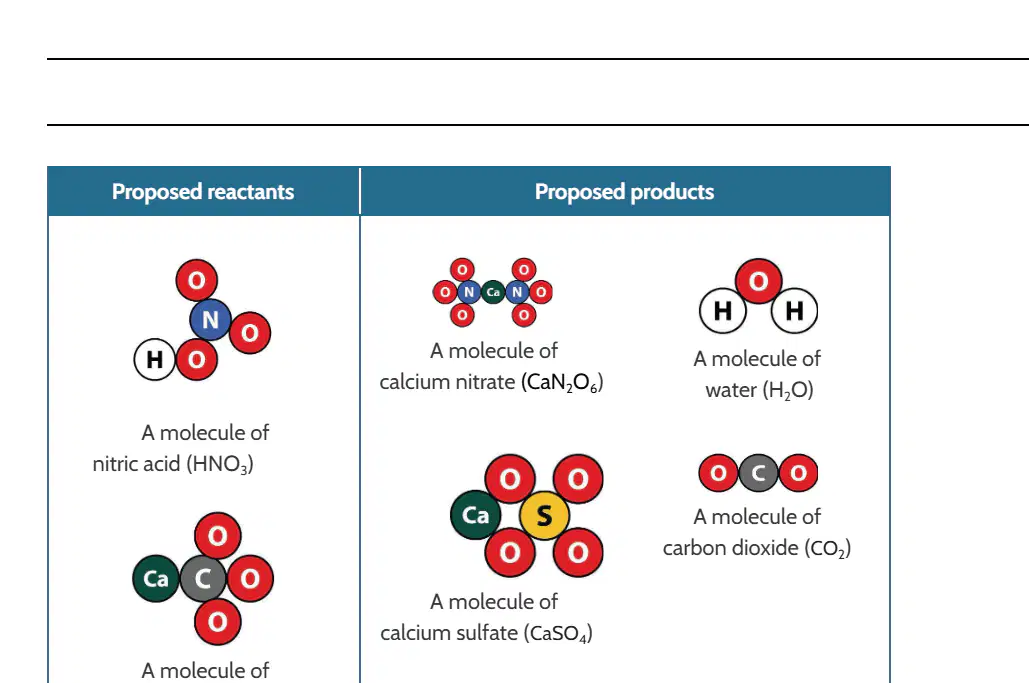
Can the two substances listed as proposed reactants produce any of the four substances listed as proposed products? Select the correct explanation based on what happens in a chemical reaction.
Yes, if the reactants can rearrange to form the products through a chemical reaction.
No, because reactants and products cannot be interchanged.
Yes, but only if the substances are the same state of matter.
No, because chemical reactions do not create new substances.
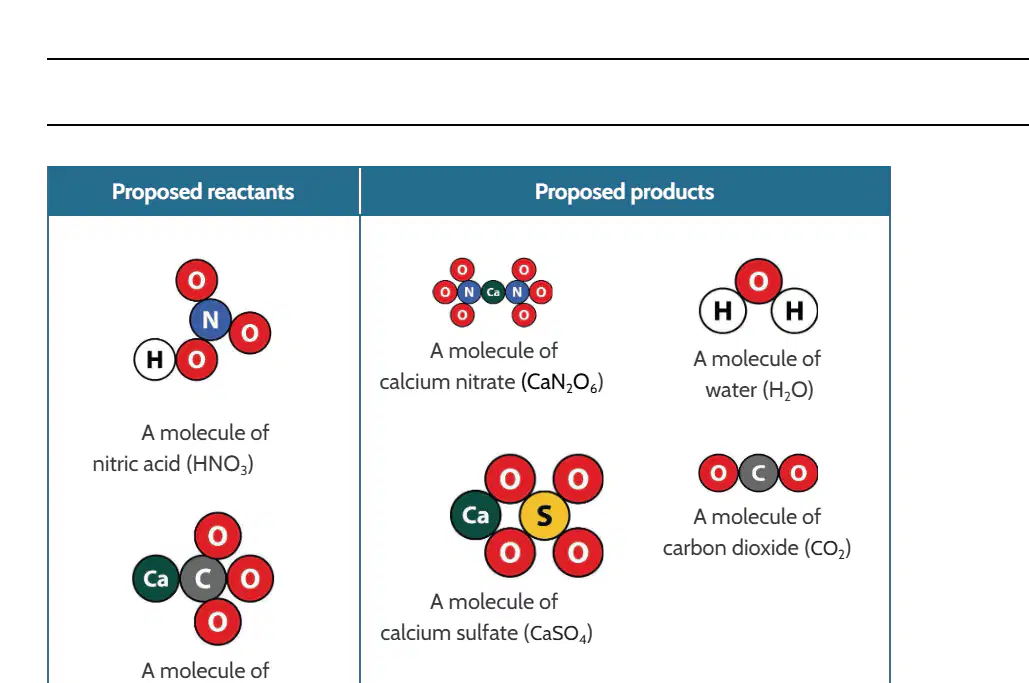
Which of the following substances could be produced by a chemical reaction between molecules of nitric acid (HNO₃) and molecules of calcium carbonate (CaCO₃)?
Calcium nitrate (Ca(NO₃)₂)
Sulfur dioxide (SO₂)
Ammonia (NH₃)
Methane (CH₄)
The Taj Mahal is falling apart due to which of the following reasons, and what could be done to preserve it?
Air pollution and environmental factors; preservation can be achieved through pollution control and restoration efforts.
Earthquakes; preservation can be achieved by relocating the monument.
Lack of tourism; preservation can be achieved by increasing visitor numbers.
Overuse of cleaning chemicals; preservation can be achieved by stopping all cleaning.
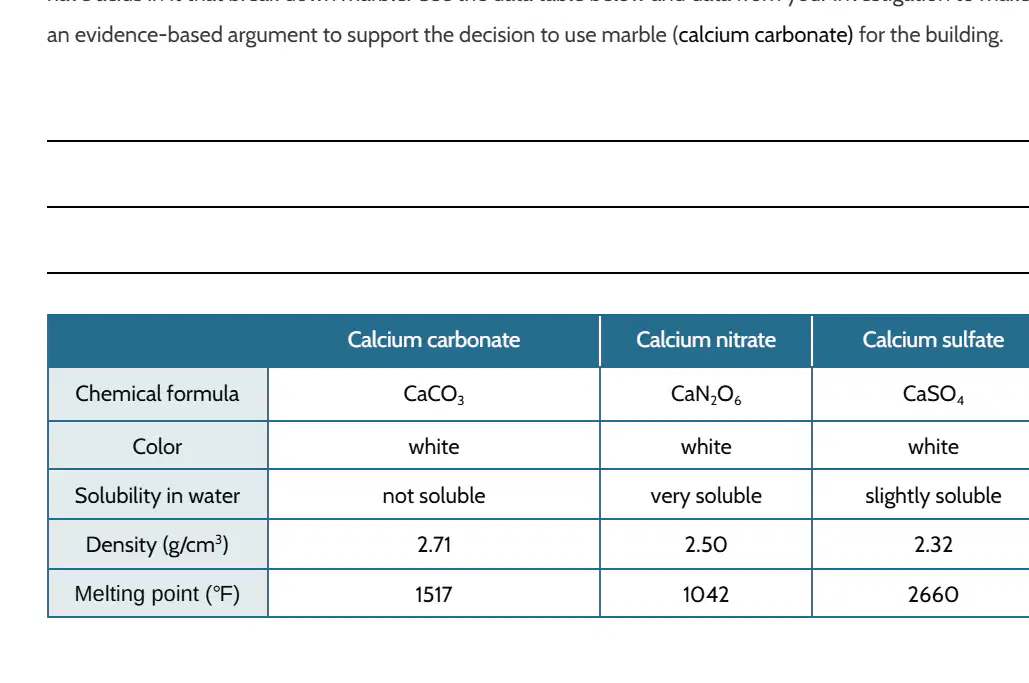
The original designer of the Taj Mahal expected the marble to last through all kinds of weather typical for the area 300 years ago, because the air was not polluted back then and the rain water back then would not have acids in it that break down marble. What was the main reason marble (calcium carbonate) was chosen for the Taj Mahal?
Because the air was not polluted and rainwater did not contain acids that break down marble
Because marble is the cheapest building material
Because marble is stronger than all other stones
Because marble changes color in the rain
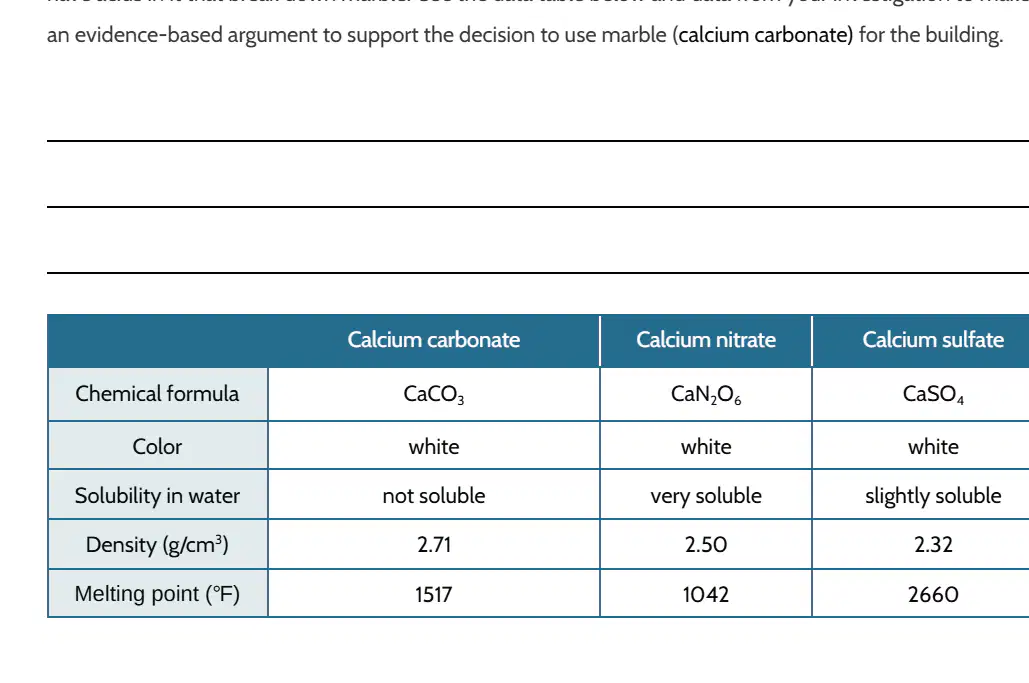
Identify the best evidence-based argument for why acid rain would cause the calcium carbonate in the marble to slowly break down and wash away over time when calcium nitrate is produced.
Acid rain reacts with calcium carbonate in marble, forming soluble calcium nitrate that washes away, causing marble to erode.
Acid rain strengthens the calcium carbonate in marble, making it more durable over time.
Calcium nitrate forms a protective layer on marble, preventing further breakdown by acid rain.
Acid rain has no effect on calcium carbonate in marble, so it remains unchanged.
Identify the best evidence-based argument for why acid rain would cause the calcium carbonate in the marble to slowly break down and wash away over time when calcium sulfate is produced.
Acid rain reacts with calcium carbonate in marble to form calcium sulfate, which is more soluble and washes away, causing the marble to break down.
Acid rain strengthens the calcium carbonate in marble, making it more durable over time.
Calcium sulfate formed by acid rain is less soluble than calcium carbonate, so the marble remains intact.
Acid rain has no effect on calcium carbonate in marble.
Which pollutant should the government of India try to limit in order to slow down the breakdown of the marble (calcium carbonate) on the Taj Mahal, and why? Limiting this pollutant would reduce the formation of acid rain that reacts with marble at the particle level, slowing its breakdown. Choose the correct pollutant to limit.
Sulfur dioxide, because it forms sulfuric acid in acid rain that reacts with marble.
Nitrogen dioxide, because it forms nitric acid in acid rain that reacts with marble.
Carbon dioxide, because it forms carbonic acid in acid rain that reacts with marble.
Ozone, because it reacts directly with marble.
What is the primary chemical process responsible for the deterioration of marble monuments like the Taj Mahal when exposed to acid rain?
The reaction of acids in rainwater with calcium carbonate in marble, leading to the formation of soluble salts that wash away.
The physical erosion caused by wind and sand particles.
The absorption of water causing marble to expand and crack.
The direct action of sunlight breaking down the marble structure.
Which of the following actions would most effectively reduce the chemical weathering of marble structures caused by acid rain?
Reducing emissions of sulfur dioxide and nitrogen oxides from factories and vehicles.
Painting the marble with water-resistant paint.
Increasing the number of tourists visiting the monument.
Washing the marble with plain water every week.
When nitric acid reacts with calcium carbonate in marble, which gas is released as a byproduct of the reaction?
Carbon dioxide (CO₂)
Oxygen (O₂)
Hydrogen (H₂)
Nitrogen (N₂)
(a) are the starting substance of a chemical reaction. (b) are the new substances formed in a chemical reaction.


Physical Change

Chemical change

Chemical Change

Physical Change

Chemical change
Construct a scientific explanation to advise the government of India.
These pollutants in the air produce the substances we find in acid rain:
- Sulfur dioxide is a pollutant that reacts with water to produce the sulfuric acid in acid rain.
- Nitrogen dioxide is a pollutant that reacts with water to produce the nitric acid in acid rain.
Which pollutant (nitrogen dioxide or sulfur dioxide) would you suggest the government try to limit in order to slow down the breakdown of the marble (calcium carbonate) on the Taj Mahal? In your explanation:
- Describe how that pollutant leads to changes in matter at a particle level.
- Explain why that results in the breakdown of the marble in the Taj Mahal.
- Explain how limiting that pollutant would slow down the breakdown of the marble.
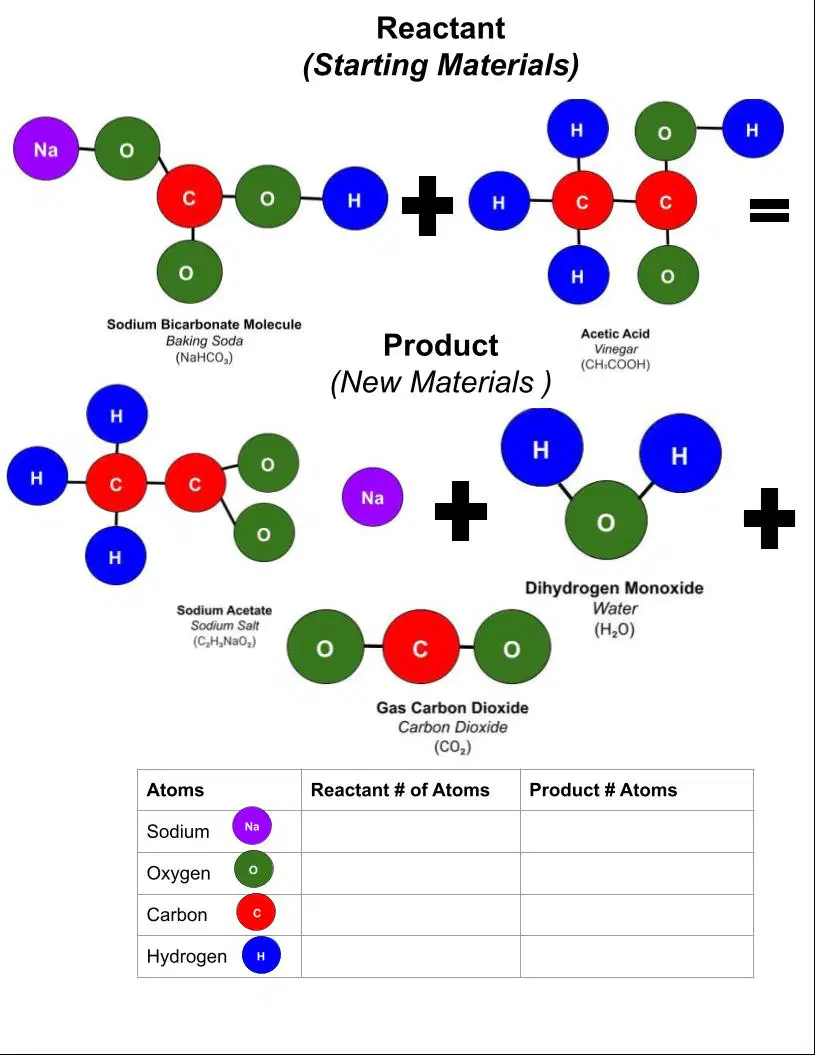
Atoms are being (a) in a chemical reaction.

Why does this model demonstrate atoms are rearranged in a chemical reaction?

