

wayground logo

Free Printable Worksheets

Font size

S
M
L
XL
Worksheets

Lesson 4 Study Guide

Total questions: 35

Worksheet time: 18mins
Name
Class
Date
1.
First, Last Name, Period
4 lines
2.
The leader of the Franks from 768 to 814 C.E.
a)
fief
b)
chivalry
c)
Charlemagne
d)
feudalism
e)
serf
3.
The medieval knight’s code of ideal behavior, including bravery, loyalty, and respect for women
a)
fief
b)
chivalry
c)
Charlemagne
d)
feudalism
e)
serf
4.
The economic and political system of medieval Europe in which people exchanged loyalty and labor for a lord's protection.
a)
fief
b)
chivalry
c)
Charlemagne
d)
feudalism
e)
serf
5.
Land granted by a lord to a vassal in exchange for loyalty and service.
a)
fief
b)
chivalry
c)
Charlemagne
d)
feudalism
e)
serf
6.
A peasant who could not leave the lord’s land on which he or she was born and worked.
a)
fief
b)
chivalry
c)
Charlemagne
d)
feudalism
e)
serf
7.
After West Rome's collapse, western Europe lacked a central government.
a)
True
b)
False
8.
The Franks grew powerful because of their new style of war that used knights on horseback.
a)
True
b)
False
9.
Pope Leo III crowned Charlemagne as the Holy Roman Emperor in return for food rations.
a)
True
b)
False
10.
Charlemagne is most remembered for reuniting much of Europe.
a)
True
b)
False
11.
Vikings were northern people who made quick, fierce raids on European villages.
a)
True
b)
False
12.
A king gave his most important lords fiefs, which were...
a)
grants of land.
b)
large celebrations.
c)
war horses.
d)
market licenses.
13.
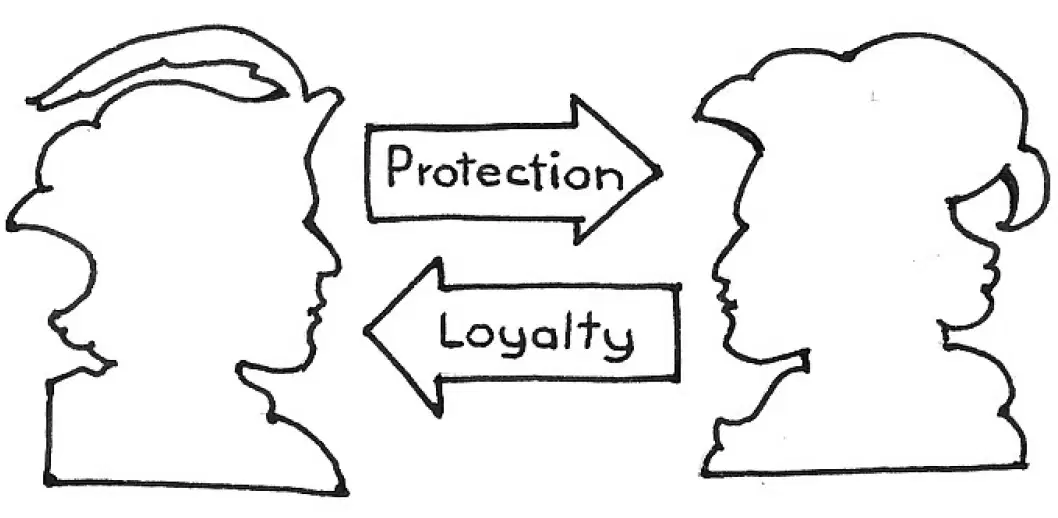
Who are the men in the picture?
a)
peasant and serf
b)
lord and vassal
c)
merchant and squire
d)
villager and priest
14.
Which of these did William the Conqueror introduce to England?
a)
the Christian religion
b)
the Saxon language
c)
a line of Norman kings
d)
an end to the feudal system
15.
Social class in the Middle Ages was determined mainly by
a)
birth
b)
wealth
c)
religion
d)
education
16.
What do these medieval items have in common? • stone wall • castle moat • knight’s armor
a)
They describe parts of a church's architecture.
b)
They describe features of a manor house.
c)
They describe forms of military technology.
d)
They describe structures of medieval towns.
17.
Which of the following was a main job of medieval ladies?
a)
managing the household
b)
selling the manor's goods
c)
negotiating with feudal lords
d)
teaching boys to be knights
18.
Pages and squires were boys in training to become
a)
kings
b)
knights
c)
lords
d)
blacksmiths
19.
Serfs were required to...
a)
grind their own grain at home.
b)
fight against the king's enemies.
c)
move to nearby cities and towns.
d)
stay on the land that they worked.
20.
Suppose a knight is known for his chivalry. What does that suggest about him?
a)
He fought with great skill.
b)
He owned a famous manor.
c)
He traveled to many countries.
d)
He followed a code of behavior.
21.
What is the best headline for this list? • head money • tallage • fee when a woman married
a)
Gifts from Kings to Vassals
b)
Taxes Paid by Peasants to Lords
c)
Why the Economy Was Weak
d)
How Peasants Earned a Living
22.
How well did Feudalism establish order in Europe? (Provide 3 explanations)
4 lines
23.

Which group was at the bottom of the feudal social hierarchy in medieval Europe?

a)

Vassals

b)

Knights

c)

Lords

d)

Serfs

24.

What was the main purpose of a castle's moat during the Middle Ages?

a)

To provide water for crops

b)

To store food supplies

c)

To defend against attackers

d)

To keep livestock

25.

True or False: Feudalism was based on the exchange of land for military service and loyalty.

a)

False

b)

True

26.

Which of the following best describes the role of a vassal in medieval Europe?

a)

A merchant who traded goods

b)

A peasant who worked the land

c)

A religious leader in a monastery

d)

A noble who pledged loyalty to a lord

27.

What was the primary duty of a knight under the feudal system?

a)

To manage trade routes

b)

To provide military service to his lord

c)

To collect taxes from peasants

d)

To oversee church ceremonies

28.

Which event marked the beginning of William the Conqueror's rule over England?

a)

The Battle of Hastings

b)

The signing of the Magna Carta

c)

The collapse of the Roman Empire

d)

The crowning of Charlemagne

29.

What was the main reason castles were built during the Middle Ages?

a)

To serve as marketplaces

b)

To host tournaments

c)

To provide protection from invaders

d)

To store crops and grains

30.

Which group was responsible for working the land and producing food in medieval Europe?

a)

Monks

b)

Serfs and peasants

c)

Lords

d)

Knights

31.

Which group was at the bottom of the feudal social hierarchy in medieval Europe?

a)

Knights

b)

Lords

c)

Serfs

d)

Monarchs

32.

What was a manor in the context of medieval Europe?

a)

A market for trading goods

b)

A type of weapon used by knights

c)

A large estate owned by a lord

d)

A religious building

33.

True or False: Knights were expected to protect both their lord and the people living on the manor.

a)

False

b)

True

34.

What was the main role of a lord in the feudal system?

a)

To work the land and produce food

b)

To lead the church

c)

To grant land to vassals and oversee their loyalty

d)

To serve as a knight in battle

35.

Which of the following best describes a manor in medieval Europe?

a)

A lord's estate including villages and farmland

b)

A large city with many merchants

c)

A fortified castle surrounded by a moat

d)

A religious building for monks
