
 Worksheets
Health and Safety Legislation in the UK
Total questions: 35
Worksheet time: 18mins
What is the primary purpose of health and safety legislation and regulations in the UK?
To increase workplace productivity
To control and reduce risks to employees, visitors, and the general public
To promote international trade
To enhance technological advancements
How often is the health and safety legislation and regulations/law revised in the UK?
Every decade
Every five years
Continually
Every year
What is the primary piece of legislation covering occupational health and safety in Great Britain?
The Health and Safety at Work etc Act 1974
The Environmental Protection Act 1990
The Employment Rights Act 1996
The Equality Act 2010
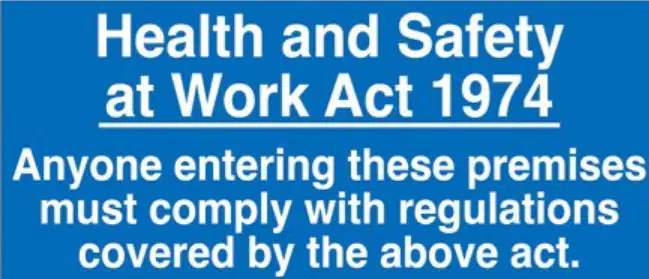
Who is responsible for enforcing the Health and Safety at Work etc Act 1974?
The Health and Safety Executive with local authorities
The Department for Education
The Ministry of Justice
The National Health Service
Which regulation focuses on the management of health and safety at work?
Provision and Use of Work Equipment Regulations 1998
Control of Substances Hazardous to Health Regulations 2002
Management of Health and Safety at Work Regulations 1999
Electricity at Work Regulations 1989
In which year were the Control of Noise at Work Regulations established?
1992
2005
1998
1989
What does PUWER stand for?
Personal Use of Work Equipment Regulations
Provision and Use of Work Equipment Regulations
Protective Use of Work Equipment Regulations
Public Use of Work Equipment Regulations
Which regulation was established in 1989?
Manual Handling Operations Regulations
Electricity at Work Regulations
Lifting Operations and Lifting Equipment Regulations
Control of Substances Hazardous to Health Regulations

What is the primary purpose of an Accident Book?
To record personal achievements
To document accidents, dangerous occurrences, or near misses
To track employee attendance
To list company policies
What does RIDDOR 2013 require employers to report and keep records of?
Work-related accidents causing minor injuries
Work-related accidents causing death
Personal grievances at work
Employee satisfaction surveys
Which of the following is NOT a requirement under RIDDOR 2013?
Reporting work-related accidents causing serious injuries
Keeping records of diagnosed cases of certain industrial diseases
Reporting certain 'dangerous occurrences'
Reporting employee attendance
Under RIDDOR 2013, what type of incidents with the potential to cause harm must be reported?
Routine maintenance activities
Certain 'dangerous occurrences'
Employee training sessions
Office meetings
What does RIDDOR 2013 require employers to report and keep records of?
Work-related accidents causing death
Employee attendance records
Customer complaints
Financial transactions
Which of the following is considered a reportable injury under RIDDOR 2013?
Minor cuts and bruises
Certain serious injuries
Common colds
Employee lateness
Under RIDDOR 2013, what type of diseases must be reported?
Diagnosed cases of certain industrial diseases
All contagious diseases
Seasonal allergies
Common flu
What are 'dangerous occurrences' as defined by RIDDOR 2013?
Incidents with the potential to cause harm
Routine maintenance activities
Scheduled meetings
Employee training sessions

What does RIDDOR stand for?
Reporting of Injuries, Diseases and Dangerous Occurrences Regulations
Reporting of Incidents, Diseases and Dangerous Occurrences Regulations
Reporting of Injuries, Diseases and Dangerous Operations Regulations
Reporting of Injuries, Disorders and Dangerous Occurrences Regulations
Why is reporting certain incidents a legal requirement?
To inform the enforcing authorities about deaths, injuries, and dangerous occurrences.
To increase paperwork for companies.
To provide entertainment for the authorities.
To delay the investigation process.
Which authorities are informed by the reports about incidents?
HSE, local authorities, and the Office for Rail Regulation (ORR).
The police and fire department.
The local community centers.
The media and press agencies.
What is one of the purposes of informing the enforcing authorities about incidents?
To identify where and how risks arise.
To create more jobs in the reporting sector.
To entertain the public.
To increase company profits.
What advice do enforcing authorities provide after being informed about incidents?
How to avoid work-related deaths, injuries, ill health, and accidental loss.
How to increase company profits.
How to improve employee satisfaction.
How to reduce working hours.
What is considered an accident under RIDDOR?
A planned event causing physical injury
A separate, identifiable, unintended incident causing physical injury
Any incident at work, regardless of injury
Only incidents involving machinery
When is a RIDDOR report required?
For all accidents, regardless of severity
Only when the accident is work-related and results in a reportable injury
Only for accidents involving more than one person
For any incident involving non-consensual violence
When deciding if an accident that led to death or injury is work-related, which of the following is a key issue to consider?
The time of day the accident occurred
The way the work was organised, carried out or supervised
The personal history of the injured person
The weather conditions at the time of the accident
Which of the following is NOT a key issue to consider when determining if an accident is work-related?
Machinery, plant, substances or equipment used for work
Condition of site or premises where the accident happened
The injured person's favorite color
The way the work was organised, carried out or supervised
What must be recorded under RIDDOR?
Any accident, occupational disease, or dangerous occurrence
Any personal injury not related to work
Any illness lasting less than three days
Any minor workplace disagreement
For how many consecutive days must a worker be incapacitated for the incident to be recorded?
More than three consecutive days
Exactly three days
Less than three days
More than seven consecutive days
When do you not have to report over-three-day injuries?
When the incapacitation period is less than seven days
When the injury occurs on a weekend
When the worker returns to work within three days
When the injury is not serious
Which of the following is a type of report that can be submitted online at www.hse.gov.uk/riddor?
Report of a case of disease
Report of a minor injury
Report of a routine check
Report of a training session
For which type of incidents should you use the telephone to report, according to the document?
Fatal and specified injuries only
Minor injuries
Routine maintenance issues
General inquiries
For which type of incident must the responsible person notify the enforcing authority without delay?
Accidents resulting in the death of any person
Accidents resulting in specified injuries to workers
Non-fatal accidents requiring hospital treatment to non-workers
Dangerous occurrences
Within how many days must a report be received following an incident?
5 days
10 days
15 days
20 days
When must you notify the enforcing authority for an accident resulting in over-seven-day incapacitation of a worker?
Within 7 days
Within 10 days
Within 15 days
Within 30 days
When should cases of occupational disease be reported to the enforcing authority?
Within 7 days of exposure
As soon as they receive a diagnosis
Within 15 days of exposure
After a month of diagnosis
Which legislation must be included when describing key features of Health and Safety regulations for the IT Design Office and Engineering Manufacturing workshop?
COSHH
R.I.D.D.O.R
PPE
HSE

