
 Worksheets
IA1 Review Questions
Total questions: 18
Worksheet time: 10mins
Your science teacher has asked the class to make a cell city model. Which building or business in the city could represent the mitochondria and why?
Power company - Produces energy
City dump - Waste storage
City hall - Control center
Roads - Transportation system
An analysis of a plant cell would show which ability that an animal cell would lack? What organelle would be involved in this process?
The plant cell can perform cell division, which occurs when the nucleus and the cell membrane divide
The plant cell can perform protein production, which occur in the nucleus
The plant cell can produce glucose (food) from light energy, which occurs in the chloroplast
The plant cell can perform cellular respiration, which occurs in the cell wall.
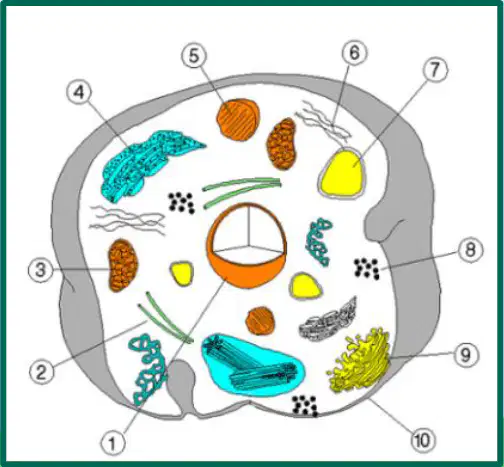
A student is shown an unlabeled, simplified model of a cell and its subcellular structures. The student is asked to adjust the model to show a cell that can meet high energy demands. Which statement BEST addresses this task?
The student should increase the amount of structure 10 to increase the size of the cell.
The student should increase the number of structure 3, because it is responsible for generating energy in the cell.
The student should decrease the size of structure 1 to decrease the genetic material.
The student should increase the amount of structure 4, because it is responsible for manufacturing proteins.
The cell membrane forms a protective barrier between the external and internal environments. It is referred to as because it allows some substances to cross more easily than others and blocks other substances from crossing into the cell.
Selectively permeable
Lockable
Sticky
Fluid
Which of the following would form first during the development of a complex multicellular organism, such as an animal?
Tissue
Cell
Organ system
Organ

Which answer correctly depicts the levels of organization needed to form a plant?
cell → tissue → organ (leaf) → plant
tissue → organ (leaf) → cell → tissue → plant
tissue → cell → organ (leaf) → plant
plant → cell → tissue → organ (leaf)
Which statement correctly describes a level of organization in the human nervous system?
A. Nerve cells group to form nerve tissue
B. The brain is a group of nervous systems
C. The nervous system has two groups of nerve tissues
D. The organs of the nervous system form a nerve cell
Most living things need oxygen to survive. These two body systems bring oxygen into your body and then move to all your body parts. What are these two body systems?
Digestive & circulatory
Respiratory & muscular
Circulatory & respiratory
Respiratory & digestive
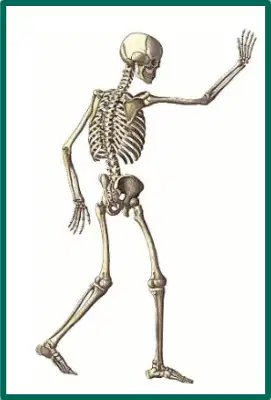
Which system would be responsible for moving bones in the body so you can wave to a friend?
Excretory
Circulatory
Digestive
Muscular
What would happen without excretory systems in humans?
Blood would not circulate through the body
Nutrients would not be absorbed
Wastes would build up in blood and damage the body
Oxygen would not enter the bloodstream
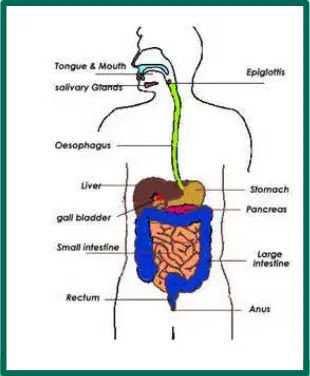
Once your food is digested, what body system works to move the nutrients from your food to all the various parts of your body?
Cardiovascular system
Respiratory system
Muscular system
Excretory system

A very easy one... check the true statement.
Cell, tissue, organ, organism
Cell, organ, system, organism
Cell, tissue, organ, system
Cell, tissue, organism, system

The picture to the left shows a corn plant.
Which level of organization is best represented by the corn plant?
tissue
organ
organism
organ system

Which sequence BEST describes the levels of organization from simplest to most complex?
Organism, Organ, Tissue, Cell
Cell, Tissue, Organ, Organ System
Cell, Organ, Tissue, Organ System
Organism, Cell, Organ System, Organ
When many organ systems work together, they can form a(n) ____
organ
cells
organ system
organism
Tissue
The basic unit of life
Group of cells that perform a job
Two or more tissues working together to perform a function
A group of organs working together to perform a function
Living things performing life processes by itself
Which two body systems work together to remove carbon dioxide from your body?
Muscular & skeletal
Digestive & muscular
Respiratory & circulatory
Excretory & nervous
What is the main function of mitochondria in a cell?
Transport materials
Control cell division
Produce energy for the cell
Store genetic information

