
 Worksheets
Cell Theory Quiz
Total questions: 87
Worksheet time: 44mins
Who is credited with the development of the cell theory?
Darwin, Mendel, and Watson
Schleiden, Schwann, and Virchow
Newton, Einstein, and Bohr
Curie, Pasteur, and Fleming
According to the cell theory, what are all living things composed of?
Atoms
Molecules
Cells
Tissues
What is the smallest unit of living organisms according to the cell theory?
Tissue
Organ
Cell
Organism
How do new cells arise according to the cell theory?
Spontaneous generation
From pre-existing cells by cell division
From non-living matter
Through chemical reactions
Who coined the word "cell" in 1663?
Anton van Leeuwenhoek
Louis Pasteur
Robert Hooke
Charles Darwin
What does the Latin word "cellula" mean?
Large structures
Small compartments
Living organisms
Microscopic entities
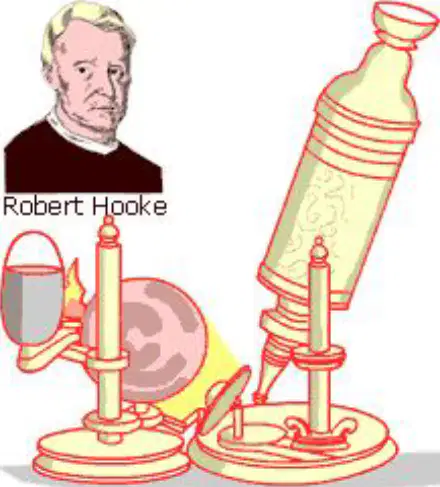
What tool did Robert Hooke use to observe cork and coin the term "cell"?
Telescope
Magnifying glass
Compound microscope
Electron microscope
How many sets of lenses does a compound microscope have?
One
Two
Three
Four
What is the definition of magnification in microscopy?
The ability to observe two adjacent objects as distinct from one another
The ratio between the size of an image produced by a microscope and its actual size
The enhancement of image contrast using dyes
The process of focusing light on a specimen
What does resolution in microscopy refer to?
The enhancement of image contrast using dyes
The ability to observe two adjacent objects as distinct from one another
The ratio between the size of an image produced by a microscope and its actual size
The process of magnifying an image
How can contrast be enhanced in microscopy?
By increasing the magnification
By using dyes
By adjusting the resolution
By changing the light source
What type of illumination does a light microscope use?
Electron beam
Light
X-ray
Infrared
What is the primary difference in the illumination source between a light microscope and an electron microscope?
Light microscope uses an electron beam, electron microscope uses light
Light microscope uses light, electron microscope uses an electron beam
Both use light
Both use an electron beam
In Transmission Electron Microscopy (TEM), what happens to the electrons?
All electrons are absorbed
All electrons pass through
Some electrons are scattered while others pass through
Electrons are converted into protons
What type of image does Scanning Electron Microscopy (SEM) produce?
2D image
3D image
Black and white image
Color image

Why do cells need high surface area to volume ratios?
To increase their size
To improve nutrient absorption
To decrease their surface area
To reduce energy consumption
How do organisms grow?
By cells growing larger
By adding more cells
By reducing cell size
By increasing cell volume
What is a characteristic of prokaryotic cells?
They have a complex cell structure.
They have a membrane-enclosed nucleus.
They lack a membrane-enclosed nucleus.
They are larger than eukaryotic cells.
Which of the following is true about bacteria?
They are less common than archaea.
Most are harmful to humans.
They are abundant and most are not harmful.
They are only found in extreme environments.
Where are archaea often found?
In common household environments.
In extreme environments.
In the human body.
In freshwater lakes.
What is the function of the plasma membrane in a typical bacterial cell?
It is involved in protein synthesis.
It acts as a barrier.
It contains the genetic material.
It stores nutrients.
Where is the genetic material found in a typical bacterial cell?
Ribosomes
Cytoplasm
Nucleoid
Plasma membrane
What is the role of ribosomes in a bacterial cell?
They act as a barrier.
They are involved in protein synthesis.
They contain genetic material.
They store nutrients.
What is contained inside the plasma membrane of a bacterial cell?
Nucleoid
Ribosomes
Cytoplasm
Cell wall
What is the primary function of the cell wall located outside the plasma membrane?
Traps water
Locomotion
Support and protection
Attachment
Which structure is responsible for trapping water and providing protection outside the plasma membrane?
Flagella
Glycocalyx
Pili
Cell wall
What is the role of flagella in structures located outside the plasma membrane?
Support and protection
Traps water
Locomotion
Attachment
Where is DNA housed in eukaryotic cells?
Cytoplasm
Nucleus
Cell membrane
Ribosome
What characteristic do eukaryotic cells exhibit?
Lack of organelles
Compartmentalization
Single-cell structure
No nucleus
What is an organelle?
A type of cell
A subcellular structure with a unique function
A type of tissue
A type of protein
How do the shape, size, and organization of eukaryotic cells vary?
They are identical in all species
They vary among different species and cell types
They are the same in all cell types of the same species
They do not vary at all
What is a machine according to the provided information?
An object with moving parts that does useful work
A stationary object that stores energy
A device that only provides light
An object that cannot perform any work
What role do molecular machines play in cells?
They provide structure and organization to cells
They store energy for later use
They transport oxygen in the bloodstream
They produce light within cells
What are the three types of protein filaments that make up the cytoskeleton?
Microtubules, Intermediate filaments, Actin filaments
Microtubules, Collagen fibers, Actin filaments
Intermediate filaments, Collagen fibers, Elastin fibers
Actin filaments, Elastin fibers, Microtubules
Which structure serves as the microtubule-organizing center in animal cells?
Nucleus
Centrosome
Ribosome
Golgi apparatus
What are microtubules made from?
Actin
Keratin
Tubulin
Collagen
Which type of filament is known for being more stable than microtubules and actin filaments?
Microtubules
Intermediate filaments
Actin filaments
Collagen fibers
What are actin filaments also known as?
Microtubules
Intermediate filaments
Microfilaments
Collagen fibers
What is the primary role of the cytoskeleton in a cell?
To store genetic information
To provide energy for the cell
To organize the cell and maintain its processes
To produce proteins
Which of the following functions is NOT associated with the cytoskeleton?
Providing mechanical strength
Directing intracellular movements
Storing nutrients
Maintaining cell shape
What is the primary source of energy used by motor proteins to promote movement?
Glucose
ATP
NADH
FADH2
Which of the following are the three domains of motor proteins?
Head, neck, and foot
Head, hinge, and tail
Arm, leg, and torso
Base, middle, and top
In the walking analogy for motor proteins, what does the ground represent?
The motor protein
The cytoskeletal filament
The head of the motor protein
The hinge
Which type of movement involves a motor protein moving cargo from one location to another?
Stationary movement
Cargo transport
Filament bending
Rotational movement
What is a key difference between flagella and cilia in terms of their length and presence?
Flagella are shorter and present in large numbers
Cilia are longer and present singly
Flagella are longer and present singly or in pairs
Cilia are longer and present in pairs
What do flagella and cilia share in terms of their internal structure?
Different internal structures
Only microtubules
The same internal structure
Only axoneme
Which components are involved in the structure of flagella and cilia?
Actin, myosin, and ribosomes
Microtubules, dynein, and axoneme
DNA, RNA, and proteins
Lipids, carbohydrates, and proteins
How does the movement of flagella and cilia occur?
By rotating in place
By sliding past each other
By the propagation of a bend from base to tip
By expanding and contracting
Which of the following is one of the four systems that work together in a cell?
Mitochondria
Interior of the nucleus
Ribosomes
Golgi apparatus
What role do the four systems play in a cell?
They only provide energy.
They only store genetic information.
They play a role in their own structure and in the structure and organization of the entire cell.
They only transport nutrients.
What is the cytosol?
The region inside the cell organelles
The region outside the plasma membrane
The region outside the cell organelles but inside the plasma membrane
The entire cell including the nucleus
What does the cytoplasm include?
Only the cytosol
Only the cell organelles
Everything inside the plasma membrane
Only the plasma membrane
What is the role of the cytosol in eukaryotic cells?
It is the site of photosynthesis.
It is the central coordinating region for many metabolic activities.
It stores genetic information.
It transports oxygen.
What is catabolism?
Synthesis of cellular molecules.
Breakdown of a molecule into smaller components.
Storage of energy.
Transport of nutrients.
What is anabolism?
Breakdown of a molecule into smaller components.
Synthesis of cellular molecules and macromolecules.
Conversion of light energy into chemical energy.
Regulation of body temperature.
What components are included in the endo-membrane system?
Nucleus, mitochondria, ribosomes, chloroplasts
Nucleus, endoplasmic reticulum, Golgi apparatus, lysosomes, vacuoles
Nucleus, cytoplasm, ribosomes, cell wall
Nucleus, chloroplasts, mitochondria, ribosomes
How can the components of the endo-membrane system be connected?
Only through direct physical connections
Only through chemical signals
Directly connected or by passing materials via vesicles
Only through electrical signals
What is the structure that encloses the nucleus called?
Nuclear envelope
Cell membrane
Cytoplasm
Mitochondria
Which membrane is continuous with the outer membrane of the nuclear envelope?
Golgi apparatus membrane
Endoplasmic reticulum membrane
Plasma membrane
Lysosome membrane
What is the function of nuclear pores?
To store genetic material
To provide passageways
To produce energy
To synthesize proteins
Are materials within the nucleus part of the endomembrane system?
Yes
No
Only during cell division
Only in plant cells
What are chromosomes composed of?
Lipids and carbohydrates
DNA and protein
RNA and lipids
Proteins and carbohydrates
What is the primary function of the nucleus?
Energy production
Photosynthesis
Protection, organization, and expression of genetic material
Digestion of nutrients
Where does ribosome assembly occur within the nucleus?
Cytoplasm
Chromatin
Nucleolus
Mitochondria
What does the genome produce that is responsible for the structure and function of the entire cell?
Proteome
Cytoplasm
Ribosome
Mitochondria
Why is gene regulation important in cells?
It helps in cell division
It creates specific cell types and enables response to environmental change
It produces energy for the cell
It transports nutrients
How does the nucleus organize itself?
With the cell membrane
With the nuclear matrix
With the cytoskeleton
With the endoplasmic reticulum
What is the primary function of acid hydrolases in lysosomes?
To synthesize proteins
To perform hydrolysis
To transport nutrients
To store energy
Which of the following substances can lysosomes break down using acid hydrolases?
Vitamins
Minerals
Proteins
Water
What process involves the recycling of worn-out organelles through endocytosis?
Photosynthesis
Autophagy
Glycolysis
Fermentation
What is the primary function of central vacuoles in plants?
Expelling excess water
Storage and support
Degradation
Photosynthesis
Which type of vacuole is responsible for expelling excess water in protists?
Central vacuole
Contractile vacuole
Phagocytic vacuole
Storage vacuole
Phagocytic vacuoles are involved in which process?
Photosynthesis
Degradation
Storage
Water expulsion
What is the primary function of the plasma membrane?
Energy production
Boundary between the cell and the extracellular environment
Protein synthesis
DNA replication
How does the plasma membrane regulate transport in and out of the cell?
By being completely impermeable
By being selectively permeable
By using active transport only
By allowing all substances to pass freely
Which of the following is a function of the plasma membrane related to communication?
DNA replication
Cell signaling using receptors
Photosynthesis
Protein degradation
What role does the plasma membrane play in cell adhesion?
It prevents cells from sticking together
It allows cells to stick together and with other surfaces
It dissolves cell connections
It only allows temporary cell contact
What is the primary function of the rough endoplasmic reticulum?
Lipid synthesis
Protein synthesis and sorting
Carbohydrate metabolism
Calcium storage
Which of the following is a characteristic of the smooth endoplasmic reticulum?
Studded with ribosomes
Involved in protein synthesis
Lacks ribosomes
Forms the ER lumen
Which of the following processes is NOT associated with the smooth endoplasmic reticulum?
Detoxification
Protein synthesis
Lipid modification
Calcium balance
What is the structure of the Golgi apparatus?
A single continuous membrane
A stack of flattened, membrane-bounded compartments
A spherical organelle
A network of tubules
What is the function of vesicles in the Golgi apparatus?
To produce energy
To transport materials between stacks
To synthesize proteins
To store genetic information
Which of the following is NOT a function of the Golgi apparatus?
Secretion
Processing
Protein sorting
Photosynthesis
What is the primary function of the secretory pathway in the endomembrane system?
To produce energy for the cell
To move substances in and out of the cell
To replicate DNA
To synthesize proteins
Which of the following pathways are involved in the endomembrane system?
Digestive and circulatory pathways
Respiratory and nervous pathways
Secretory and endocytic pathways
Muscular and skeletal pathways
How do membranes in the endomembrane system change over time?
They remain static and unchanging
They become more rigid
They are dynamic and change over time
They dissolve completely
During which cellular process does the nuclear membrane change?
Photosynthesis
Cell division
Protein synthesis
Respiration

