
 Worksheets
Liquid Receivers in Refrigeration Systems
Total questions: 20
Worksheet time: 16mins
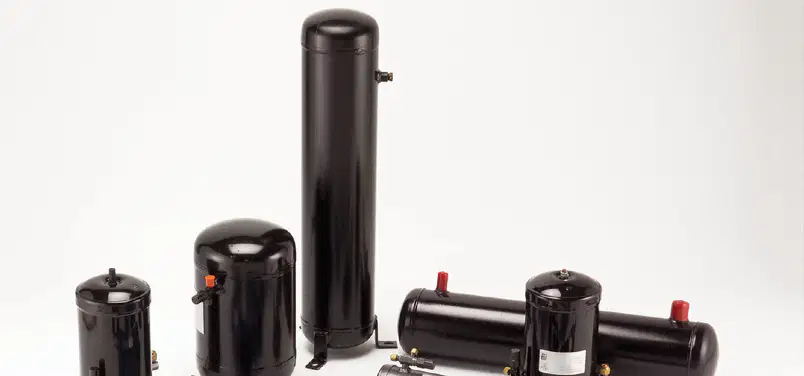
What is the primary function of liquid receivers in refrigeration systems?
To increase the temperature of the refrigerant
To allow for greater flexibility in refrigeration volume and make charge amount less critical
To decrease the pressure in the system
To filter impurities from the refrigerant
What is the function of the mesh inside both types of liquid receivers?
To allow liquid to escape
To filter out contaminants
To add contaminants
To heat the liquid
Refer to the diagrams of the Vertical Liquid Receiver and Horizontal Liquid Receiver. Which part is used to make service and maintenance tasks easier to perform?
Inlet
Mesh
Service valve
Outlet
Refer to the diagrams. The ________ Liquid Receiver is oriented upright, while the ________ Liquid Receiver is oriented sideways.
(a)
What is the function of a metering device in a refrigeration system?
(a)
Which of the following is NOT a type of metering device?
Fixed orifice
Capillary tube
Thermostatic expansion valve (TXV)
Compressor
List any three types of metering devices mentioned in the text.
(a)
A metering device is located between the (a) and the evaporator.
The metering device allows a large quantity of liquid refrigerant to pass into the evaporator.
True
False
What is the main function of an evaporator in a refrigeration system?
(a)
In a refrigeration system, what happens to the refrigerant as it passes through the evaporator?
(a)
Why are refrigerants with low boiling points preferred in evaporators?
(a)
What is the effect of the metering device's restriction on the pressure in the evaporator?
(a)
Name two types of float valves used as metering devices.
(a)
Fill in the blank: There is a (a) between the metering device.
A COMPRESSOR CANNOT COMPRESS A (a)


True or False?
Heat and temperature are different.
True
False
A reliable measure of the hotness of an object is its _____________
Heat
Cold
Temperature
Heat , cold
(a) - Branch of chemistry concerned with energy changes.

