
Font size
 Worksheets
Mesopotamia - Early Civilizations
Total questions: 32
Worksheet time: 16hrs 0mins

Which are the two rivers considered the most important physical features of Mesopotamia?
Nile and Amazon
Tigris and Euphrates
Ganges and Yangtze
Mississippi and Missouri
Mesopotamia is part of what larger area known for its fertile farmland?
The Nile Valley
The Fertile Crescent
The Indus Valley
The Great Plains
How did the abundance of food affect the first human settlements?
It led to population growth and the formation of villages.
It made people move away from the area.
It made people stop farming.
It caused the decline of civilizations.
Explain how the development of villages contributed to the rise of the first civilizations in the world.
Villages allowed people to settle in one place, which led to the growth of larger communities and, eventually, civilizations.
Villages made people more isolated and less likely to interact.
Villages caused people to abandon agriculture.
Villages led to the extinction of early humans.
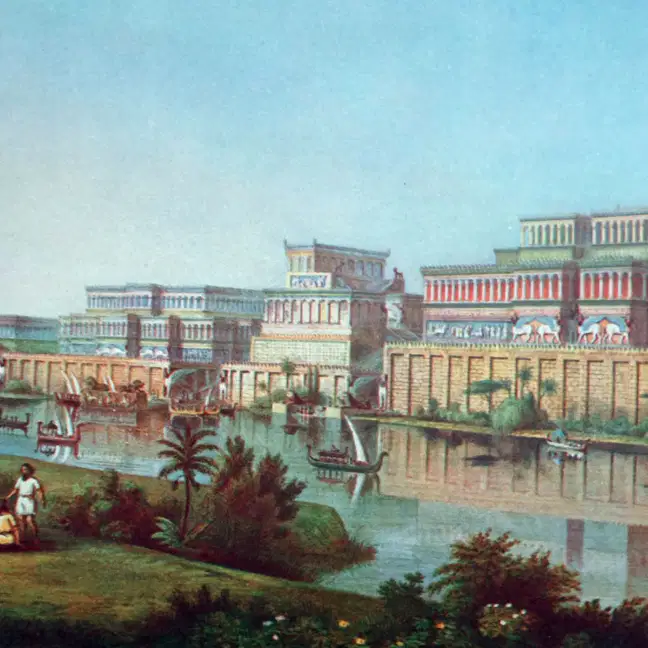
What was one of the effects of irrigation on agricultural communities?
It decreased the amount of food produced.
It created a surplus of food.
It made agriculture impossible.
It caused people to stop farming altogether.
What was the typical role of women in Sumerian society?
Making laws
Taking care of the home and children
Leading armies
Building temples
Some high-class women in Sumeria received education. What does this suggest about Sumerian society?
All women were educated
Only men could be educated
Social class affected access to education
Education was not valued
How might the use of cuneiform writing have changed Sumerian society?
It made them forget their traditions
It allowed them to record and organize information, which could have improved trade, government, and education
It prevented them from trading with others
It made them less creative
What was the importance of the Code of Hammurabi?
It was a set of 282 laws that addressed almost every aspect of daily life.
It was a collection of religious hymns.
It was a list of Babylonian kings.
It was a guide for building temples.
What was one of Hammurabi's most important achievements as a leader?
He built the Great Wall of China
He developed a set of laws that was written for everyone to see
He discovered electricity
He invented the printing press

What is silt?
the fine soil deposited by floodwaters
a type of shiny fabric
soil that destroys crops
a type of wheat used for bread

What is irrigation?
the practice of collecting nuts
the control of water for agriculture
hunting large animals
the control of mud for agriculture

As a result of irrigation in the early Mesopotamian civilizations, people ____________.
Learned to raise farm animals
Were able to supply water to crops
Developed a new religion
Were able to change the climate

What is the term used for "having more than you need to survive?"
specialization
surplus
revolution
domestication

Which of the following statements is true about a society that develops specialization?
The majority of the community members are hunter-gatherers
The community often migrates to find raw materials and resources
The houses are built with animal bones and skins
The people who work have different trades, such as potters, weavers, scribes, etc.
Which of the following statements is true about a society that develops specialization?
The majority of the community members are hunter-gatherers
The community often migrates to find raw materials and resources
The houses are built with animal bones and skins
The people who work have different trades, such as potters, weavers, scribes, etc.
What did Hammurabi do with the code of laws to ensure that everyone knew about it?
He had them inscribed on steles and placed them in the temple
He put the code in front of government buildings
He placed them at the entrance of Babylon
He ordered someone to proclaim them to everyone in the kingdom
The Code of Hammurabi consisted of ____ laws.
282
7
100
500
The Code of Hammurabi was written in?
English
Cuneiform
Babylonian
French
Which of these statements best describes the justice of "an eye for an eye"?
Crimes against someone's eyes are punished by death.
Someone convicted of a crime would be subjected to the same harm they committed.
Anyone who is a victim of a crime can keep the criminal's eyes.
Criminals have their left eye removed as a warning to others.

Which of the following is the best motto for the Code of Hammurabi?
Finders keepers
Honesty is the best policy
An eye for an eye
Easy come, easy go
______ were generally just below the kings in the social hierarchy of Sumerian society.
Priests
Kings
Artisans
Artisans
What did food surpluses in ancient Mesopotamia lead to?
To the development of specialized jobs, urbanization, and trade between cities.
To the emergence of nomadic tribes in the area.
To an increase in agricultural exports to neighboring regions.
To a decrease in population due to famine.
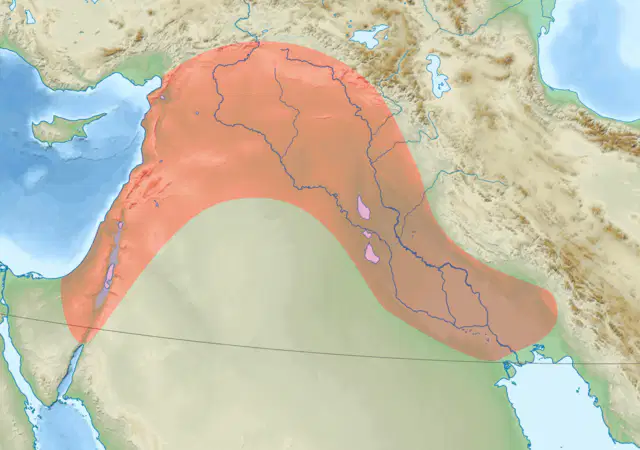
When did civilization begin in the Fertile Crescent?
Around 5,000 B.C.
Around 15,000 B.C.
Around 2,000 B.C.
Around 3,500 B.C.

What did the Mesopotamians build to help irrigate their crops?
Canals, ditches, dikes, and dams
Farms and greenhouses
Windmills and water wheels
Dams and reservoirs
Sargon established the world's first ______, that is, a land with different territories and peoples under a single government.
empire
city
irrigation system
agricultural land
The division of society by rank or class.
social hierarchy
irrigation
civilization
level
True or False - Sargon's daughter, Enheduanna, is the first known writer.
True
False
How did the Mesopotamian civilization compare socially, politically, and economically with other ancient river civilizations, and what were its key achievements?
Explain what led to the growth of the population in Mesopotamia.
In which sea did the Phoenicians mainly sail?
The Dead Sea
The Mediterranean Sea
Caribbean Sea
_______ was valuable in trade because it was used to build palaces and temples around the world.
Brick
Bronze
Cedar

