wayground logo

Free Printable Worksheets

Font size

S
M
L
XL
Worksheets

Compounds & Nomenclature Review

Total questions: 45

Worksheet time: 36mins
Name
Class
Date
1.
Mark all that are true about covalent bonds.
a)
Covalent bonds are between two (or more) non-metals
b)
Electrons are shared between atoms in covalent bonds
c)
Covalent bonds are between metals and non-metals
d)
Electrons are lost and gained by atoms in covalent bonds
e)
Electrons are "delocalized" in covalent bonds
2.
What is the correct prefix order for covalent compound nomenclature?
a)
mono, di, tri, tetra, penta, hexa, hepta, octa, nona, deca
b)
uno, dos, tres, cuatro, cinco, seis, siete, ocho, nueve, diez
c)
uni, bi, tri, quad, pent, set, siet, oct, poly, deci
d)
nano, milli, deci, centi, deca, hecta, killo
3.
Mark all that are true about ionic bonds.
a)
Ionic bonds are between a metals and non-metals
b)
Electrons are lost and gained by atoms in ionic bonds
c)
Ionic bonds are between two (or more) non-metals
d)
Electrons are shared between atoms in ionic bonds
e)
Ionic bonds are between two (or more) metal atoms
4.
When naming ionic compounds, the ___________ is named first and the ______________ is named second while adding the suffix _____________ .
a)
cation; anion; -ide
b)
cation; anion; -ite
c)
anion; cation; -ide
d)
anion; cation; -ite
5.
Mark all that are true about metallic bonds.
a)
Metallic bonds are between two (or more) metal atoms
b)
Electrons are "delocalized" in metallic bonds
c)
Metallic bonds are between a metals and non-metals
d)
Metallic bonds are between two (or more) non-metals
e)
Electrons are shared between atoms in metallic bonds
6.
Is carbon dioxide a ionic or covalent bond?
a)
Ionic
b)
Covalent
c)
Metallic
7.
Is calcium sulfide an ionic or covalent bond?
a)
Ionic
b)
Covalent
c)
Metallic
8.
The chemical formula for an ionic bond between sodium and oxygen would be:
a)
Na₂O
b)
NaO
c)
NaO₂
d)
So₂O₂
9.
How many electrons will the diatomic compound O2 share? (hint: how many times will the two Oxygen atoms bond to satisfy the octet rule?)
a)
1
b)
2
c)
3
10.
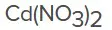
How many atoms are in the following compound?
a)
3
b)
6
c)
9
d)
13
11.
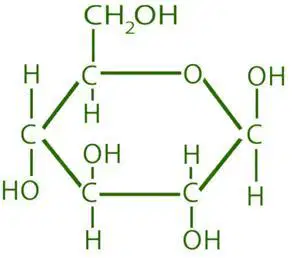
How many atoms are in the glucose (blood sugar) structural formula pictured below?
a)
3
b)
23
c)
24
12.
How would you name the following: MgCl₂
a)
magnesium chloride
b)
magnesium chlorine
c)
magnesium (II) chloride
d)
magnesium dichloride
13.
The formula for Iron (III) oxide would be:
a)
FeO
b)
PbO₃
c)

FeO₃

d)
Fe₂O₄
14.
Pentacarbon Decahydride what's my formula?
a)
C₆H₁₂
b)
H₆C₆
c)
C₅H₁₀
d)
HC
15.
I'm feeling nerdy and want to order water (H₂O) with its scientific name. May I please have a glass of ______?
a)
dihydrogen monoxide
b)
hydrogen oxide
c)
dihydrogen oxide
d)
hydrogen monoxide
16.

What is the chemical formula for this molecule?

a)

SNa3

b)

H3O

c)

NaCl

d)

H2O

17.

How would this chemical formula be written?

a)

CH3

b)

CH4

c)

HC4

d)

H4C

18.

What is the chemical formula for Lithium Nitride?

a)

Li3N

b)

LiN3

c)

NLi3

d)

N3Li

19.
Carbon tetrachloride contains how many atoms of chlorine?
a)
1
b)
2
c)
3
d)
4
20.

Ionic compounds are made of (a)   and​ ​ (b)   .. Covalent compounds are made of​ (c)  

and​ (d)   .

Choose from the below words
metal
non-metal
21.

Match the following to form true statements:

a)

When solid, ionic compounds

1.

cannot conduct electricity

b)

When melted ionic compounds

2.

can conduct electricity

c)

Ionic compounds have

3.

high melting and high boiling points

d)

There are many strong bonds

4.

between ions in an ionic compound.

e)

Elements in group 1 of the periodic table form ions

5.

with a charge of 1+

22.

Write the chemical formula for Na and S (sodium sulfide).

a)

NaS

b)

S2S2

c)

Na2S

d)

NaS2

23.

According to the Chemical Compounds table, how many atoms of hydrogen are in glucose?

(a)  

24.

What is the chemical formula for this molecule?

a)

H2O

b)

CO2

c)

CO

d)

C2O

25.

Look at the picture of the chemical formula. Which chemical formula matches what you see in the image?

a)

2H2O2H_2O

b)

H4O2H_4O_2

c)

4H2O4H2O

d)

2HO2HO

26.

Nitrogen has (a)   valence electrons, which means it has ​ (b)   bonding places to make covalent bonds with other nonmetals

Choose from the below words
5
3
1
2
4
6
8
7
27.

Oxygen has ​ (a)   valence electrons, which means it has ​ ​ (b)   bonding places to make covalent bonds with other nonmetals

Choose from the below words
1
2
4
6
8
7
3
5
28.

Match the following

a)

Ionic

1.

electrons are transfered

b)

Covalent

2.

Electrons are shared

c)

Compound

3.

Two or more chemically combined elements

29.

Metals need to ​ ​ (a)   electrons to become complete and therefore have  a ​ (b)   charge.

Choose from the below words
negative
positive
lose
gain
30.

If an atom ​ (a)   electrons, it will become negative.

If an atom ​ (b)   electrons, it will become positive.

Choose from the below words
gains
loses
destroys
creates
31.

When a nonmetal gains electrons, it becomes a(n) (a)   .

Choose from the below words

anion

cation

Isotope

element

32.

Covalent compounds occur because there is a ​ (a)   of electrons among the atoms while ionic bonds occur when there is a ​ ​ (b)   of electrons.

Choose from the below words
sharing
transfer
33.

What kind of bond forms between metals and nonmetals?

(a)  

Choose from the below words

Ionic bonds

Covalent bonds

Hydrogen bonds

Molecular bonds

34.

When a nonmetal gains electrons, it becomes a(n) (a)   .

Choose from the below words

anion

cation

35.
Is this ionic bond drawn correctly?
a)
Yes
b)
No
36.
An ionic bond forms when 
a)
Valence electrons are shared
b)
a sea of mobile electrons surround the cations
c)
valence electrons are transferred between atoms
d)
none of the above
37.

Match the following cation/anion with how many valence electrons it lost/gained.

a)

Fe3+Fe^{3+}

1.

lost three valence electrons

b)

O2O^{2-}

2.

gained 2 valence electrons

c)

II^-

3.

gained one valence electron

d)

Ca2+Ca^{2+}

4.

lost two valence electrons

e)

Cs+Cs^+

5.

lost one valence electron

38.

Match the following

a)

electrostatic attraction that binds oppositely charged ions

1.

ionic bonds

b)

attraction of free-floating valence electrons for positively charged cations

2.

metallic bonds

c)

atoms tend to react so as to acquire the stable electron configuration of a noble gas

3.

octet rule

d)

diagram that shows valence electrons as dots

4.

electron dot structure

e)

electrons in the highest occupied energy level or an element's atom

5.

valence electron

39.

In metallic bonding, the strength of the bond is primarily determined by:

a)

The size of the metal ions.

b)

The charge of the metal ions.

c)

The number of delocalized electrons.

d)

The electronegativity of the metal atoms.

40.
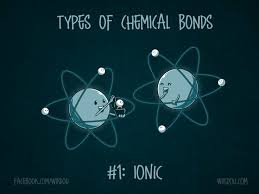
Question Image

Match the three types of chemical bonds.

a)

A

1.

Ionic

b)

B

2.

Covalent

c)

C

3.

Metallic

41.

Match the following types of bonds to the elements that are involved in them.

a)

Metallic Bond

1.

Metal Elements Only

b)

Ionic Bond

2.

Metal and Nonmetal

c)

Covalent Bond

3.

Nonmetal Elements Only

42.

​ ​ (a)   ​ compounds are usually the strongest.

Choose from the below words
Ionic
Covalent
43.

Match the following

a)

AlP

1.

Aluminum phosphide

b)

Ba(CN)2

2.

Barium cyanide

c)

Rb2O

3.

Rubidium oxide

d)

Ca3P2

4.

Calcium phosphide

e)

BaSO4

5.

Barium sulfate

44.

Match each name to a chemical formula​

a)

diphosphorous pentoxide

1.

P2O5

b)

sulfur hexachloride

2.

SCl6

c)

dinitrogen monoxide

3.

N2O

d)

bromine pentachloride

4.

BrCl5

e)

boron dioxide

5.

BO2

45.

The compound N2O3 is named...

a)

nitrogen oxide

b)

nitrogen(II) oxide

c)

nitrogen(III) oxide

d)

dinitrogen trioxide