
 Worksheets
Risk Assessment Quiz
Total questions: 67
Worksheet time: 34mins
What is a risk assessment?
A detailed financial analysis of a company
A careful examination of what, in your work, could cause harm to people
A method to increase productivity in the workplace
A strategy for improving customer satisfaction
What is the general duty of the Health & Safety At Work Etc Act 1974?
To ensure financial stability of employees
To ensure health, safety, and welfare at work of all employees as far as is reasonably practicable
To provide free healthcare to employees
To ensure employees work overtime
According to the Management of Health & Safety at Work Regulations 1999, what is the first step in ensuring a safe and healthy workplace?
Conducting financial audits
Carrying out risk assessments
Providing free meals
Offering gym memberships
What must be done if risk assessments are no longer valid according to the Management of Health & Safety at Work Regulations 1999?
Ignore them
Review assessments
Archive them
Publish them online
For how many employees must a written record of risk assessments be kept?
10 or more employees
2 or more employees
5 or more employees
20 or more employees
What must risk assessments be according to the Management of Health & Safety at Work Regulations 1999?
Quick and easy
Suitable and sufficient
Cheap and fast
Complex and detailed
What is the definition of a hazard?
Something with the potential to cause harm
A tool used for construction
A type of safety equipment
A method of risk assessment
Which of the following is considered a common hazard?
Slips and trips
Reading books
Watching TV
Eating snacks
What type of hazard involves being struck by a vehicle?
Noise
Handling and carrying
Struck by a vehicle
Stress
Which hazard is related to harmful substances?
Sharp objects
Harmful substances
Machinery
Fires
Which of the following is a hazard related to physical strain?
Stress
Noise
Machinery
Horseplay
What hazard involves the risk of falling from a height?
Sharp objects
Fall from a height
Noise
Fires
What is the definition of risk according to the provided material?
The likelihood of harm resulting from a hazard and the severity
The certainty of harm occurring
The potential for financial loss
The inevitability of an event
How is risk calculated according to the material?
Risk = Likelihood x Probability
Risk = Severity x Impact
Risk = Probability x Impact
Risk = Likelihood x Severity
What is the likelihood category for a risk that is more than 80% likely to occur?
Likely (4)
Occasional (3)
Definite (5)
Seldom (2)
Which likelihood category describes risks with a 60-80% chance of occurrence?
Unlikely (1)
Likely (4)
Seldom (2)
Definite (5)
What is the likelihood category for risks with a near 50/50 probability of occurrence?
Occasional (3)
Seldom (2)
Likely (4)
Unlikely (1)
Which category is used for risks that have a low probability of occurrence but cannot be ruled out completely?
Definite (5)
Seldom (2)
Likely (4)
Occasional (3)
What is the likelihood category for rare and exceptional risks with less than a 10% chance of occurrence?
Likely (4)
Definite (5)
Unlikely (1)
Occasional (3)
What is the definition of "severity" in the context of risk management?
The likelihood of a risk occurring
The severity of the impact or the extent of damage caused by the risk
The cost of implementing risk controls
The time taken to recover from a risk
Which category of risk is described as causing a near negligible amount of damage to the overall progress of a project?
Marginal
Moderate
Insignificant
Critical
What is the classification for risks that can make a project completely unproductive and unfruitful?
Moderate
Critical
Marginal
Catastrophic
Which risk category involves risks that do not impose a great threat but have a sizable damage?
Insignificant
Marginal
Moderate
Catastrophic
What type of risks are classified as "Critical"?
Risks with minor consequences
Risks with significantly large consequences leading to a great amount of loss
Risks that are unlikely to occur
Risks that have no impact on the project
What is a hazard?
Anything that may cause harm, such as chemicals, electricity, working from ladders, an open drawer, etc.
The chance that someone could be harmed by something.
A measure of how serious the harm could be.
A type of safety equipment.
What is a risk?
A type of safety equipment.
The chance, high or low, that somebody could be harmed by hazards.
Anything that may cause harm, such as chemicals or electricity.
A measure of how serious the harm could be.
What is the first step in the risk assessment process?
Evaluate the risks and decide on control measures
Identify the hazards
Record your findings
Review your assessment and update as required
Which step involves deciding who might be harmed and how?
Step 1
Step 2
Step 3
Step 4
What should be done after evaluating the risks and deciding on control measures?
Identify the hazards
Record your findings
Review your assessment and update as required
Decide who might be harmed and how
What is the final step in the risk assessment process?
Identify the hazards
Record your findings
Review your assessment and update as required
Evaluate the risks and decide on control measures
Which of the following is a step in identifying hazards during a risk assessment?
Ignore employee feedback
Walk around
Avoid checking accident records
Disregard manufacturers' instructions
What should you do to gather information about potential hazards according to the risk assessment steps?
Only rely on personal judgment
Visit the HSE website
Ignore trade associations
Avoid asking employees
Why is it important to check manufacturers' instructions during a risk assessment?
To ignore safety guidelines
To ensure proper use and safety
To avoid following regulations
To disregard potential hazards
Which of the following should be considered when thinking about long-term hazards to health?
Short-term benefits
Immediate profits
Long-term health impacts
Temporary solutions
In the context of risk assessment, who should you consider might be harmed?
Only full-time employees
Cleaners, visitors, contractors, maintenance workers
Only management staff
Only external clients
What is an important step to ensure no one is missed in a risk assessment?
Only assess the work environment
Ask your staff if they can think of anyone you may have missed
Only consider the most obvious risks
Focus solely on financial risks
What is the first step in evaluating risks according to the document?
Try a less risky option
Can I get rid of the hazard altogether?
Issue personal protective equipment
Provide welfare facilities
Which of the following is a method to control risks if eliminating the hazard is not possible?
Increase exposure to the hazard
Ignore the hazard
Organise work to reduce exposure to the hazard
Remove all safety equipment
What should be issued to help control risks according to the document?
More work hours
Personal protective equipment
Additional paperwork
Extra breaks
What is the purpose of writing down the results of a risk assessment?
To ensure compliance with legal requirements
To make the document look professional
To confuse employees
To avoid doing the actual assessment
If you have fewer than how many employees, you do not have to write anything down for a risk assessment?
Ten
Five
Twenty
Fifteen
What should be done when writing down risk assessment results?
Use complex language
Keep it simple
Include unnecessary details
Avoid sharing with staff
Which of the following is an example of a simple risk assessment note?
"Tripping over rubbish: bins provided, staff instructed, weekly housekeeping checks"
"Detailed analysis of all potential hazards"
"Comprehensive report on all safety measures"
"General overview of workplace environment"
What is the purpose of reviewing your risk assessment regularly?
To ensure it stays up to date
To ignore changes in the workplace
To reduce paperwork
To avoid legal requirements
How often should you formally review your risk assessment?
Every month
Every year or so
Every five years
Every decade
What should you do if your workplace changes?
Ignore the changes
Review your risk assessment
Wait for an incident to occur
Do nothing
What is one method to spot hazards in the workplace according to the risk assessment template?
Ignoring employee feedback
Walking around your workplace
Avoiding the HSE website
Disregarding manufacturers' instructions
Who should be considered when identifying who might be harmed by workplace hazards?
Only employees present at all times
Only senior management
Members of the public
Only external contractors
What should you do to ensure risks are reduced 'so far as is reasonably practicable'?
Ignore good practice comparisons
Compare what you are doing with good practice
Avoid listing what needs to be done
Focus only on low-risk hazards
What is the first step in the risk assessment process according to the template?
Implementing actions
Identifying who might be harmed
Spotting hazards
Evaluating risk levels
What is the purpose of conducting a risk assessment according to the HSE Risk Assessment Template?
To identify and control hazards in the workplace
To increase company profits
To evaluate employee performance
To improve customer satisfaction
According to the template, what is a common hazard that might require a risk assessment?
Slips and trips
Fire hazards
Electrical failures
Chemical spills
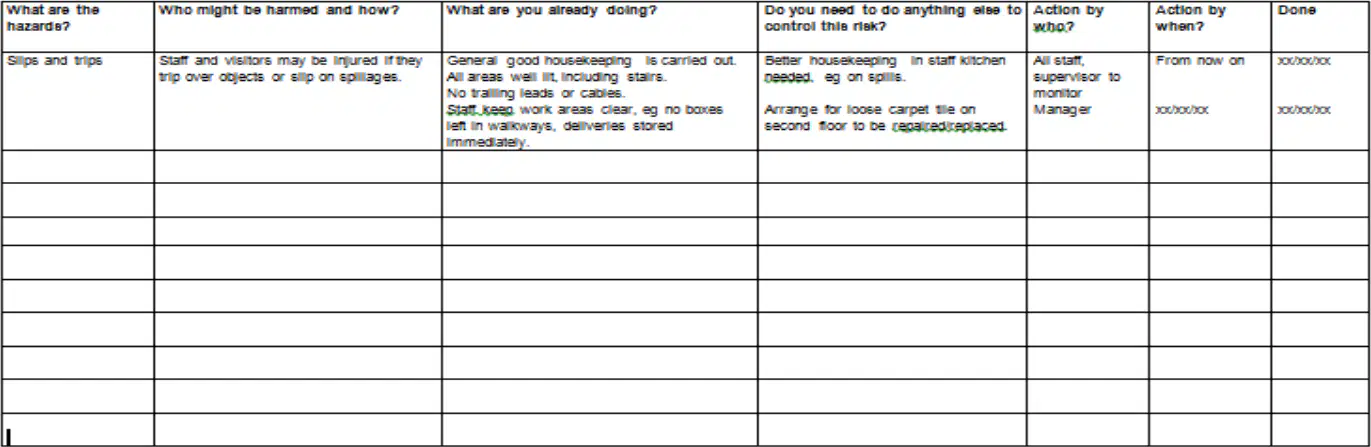
What is one of the actions suggested to control the risk of slips and trips?
Better housekeeping in staff kitchen
Installing more lighting
Hiring more staff
Increasing work hours
What is a risk assessment matrix used for in project management?
To evaluate the likelihood and severity of risks
To calculate project costs
To schedule project timelines
To assign project roles
How is a risk assessment matrix typically presented?
As a pie chart
As a simple table
As a flowchart
As a bar graph
What information is primarily extracted from risk assessment forms?
Project deadlines
Risk likelihood and consequences
Team member availability
Budget allocations
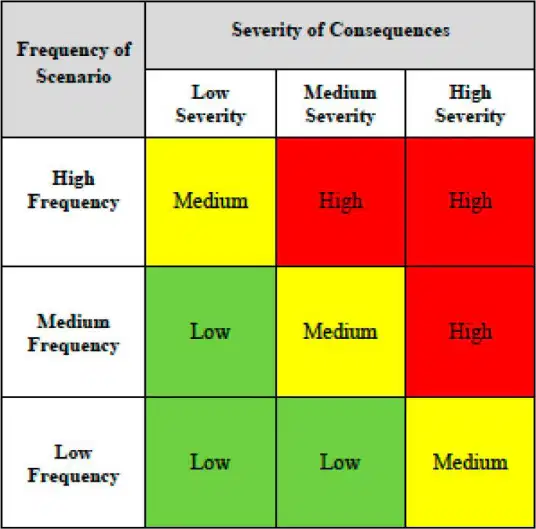
In a risk assessment matrix, what does a high frequency and high severity scenario indicate?
Low risk
Medium risk
High risk
No risk
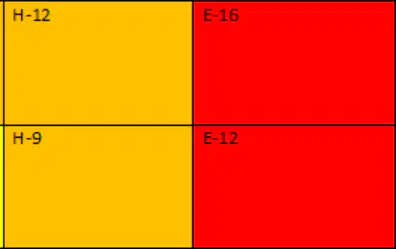
What does the 'E' in the Red Cells represent in the risk matrix?
Extreme risk
Elevated risk
Essential risk
Expected risk
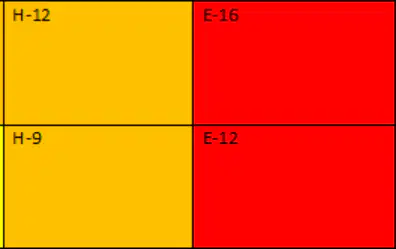
What action is required for risks marked as 'H' in the Orange Cells?
Immediate action or risk management strategies
No action needed
Annual review
Documentation only
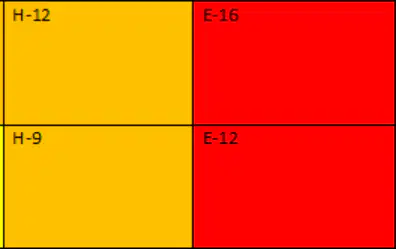
What should the project team do for risks in the Red Cells?
Gear up for immediate action
Wait for further instructions
Monitor the situation
Delegate to another team
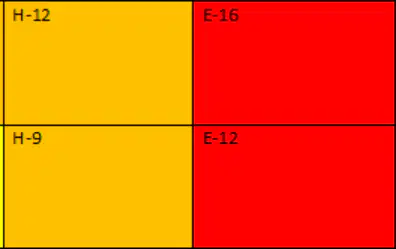
What is a possible strategy for handling high-risk issues if they cannot be resolved immediately?
Establish strict timelines
Ignore the issues
Postpone indefinitely
Delegate to a junior team

What is the recommended approach for handling risks that fall in the Yellow Cells marked as 'M'?
Ignore them completely
Develop risk management strategies in time
Use extensive resources immediately
Wait until they become severe
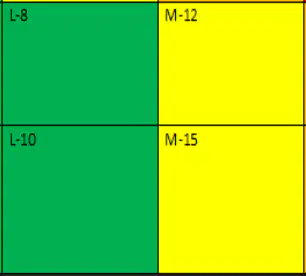
How should risks that fall in the Green Cells marked with 'L' be treated?
They should be ignored as they pose no problem
They should be addressed with extensive resources
They can be ignored but reasonable steps should be taken
They require immediate and urgent action

What is the likelihood level for an event that could happen once a year?
Definite
Likely
Occasional
Seldom

In the risk matrix, what severity level corresponds to "Death/massive financial loss"?
Insignificant
Marginal
Critical
Catastrophic

According to the risk matrix, what is the risk level for an event that is "Likely" and has "Moderate" severity?
H-12
E-16
M-8
L-4

What is the likelihood description for an event that is "Unlikely"?
Often occurs/once a week
Could easily happen/once a month
Conceivable but only on extreme circumstance/once in 100 years
Hasn't happened yet but could once every 10 years

