
 Worksheets
Body Planes
Total questions: 36
Worksheet time: 34mins
What are anatomical planes used for?
To study organs or structures from different views.
To measure body temperature.
To diagnose diseases.
To perform surgery.
The ________ plane divides the body vertically into anterior and posterior parts.
Coronal/Frontal
Sagittal
Transverse
Oblique
The ________ plane divides the body horizontally into superior and inferior portions.
Transverse/Horizontal
Sagittal
Coronal/Frontal
Oblique
The ________ plane divides the body vertically into equal left and right portions.
MidSaggital/Median
Coronal/Frontal
Transverse/Horizontal
Oblique
The term 'cranial' refers to which of the following body cavities?
The cavity that houses the brain
The cavity that contains the lungs
The cavity that contains the heart
The cavity that contains the digestive organs
The term 'pelvic' refers to which body cavity?
The cavity located in the lower part of the torso, containing the reproductive organs, bladder, and rectum.
The cavity that houses the lungs and heart.
The cavity that contains the brain.
The cavity that contains the stomach and intestines.
The term 'thoracic' refers to which body cavity?
The chest cavity that contains the heart and lungs
The abdominal cavity that contains digestive organs
The pelvic cavity that contains reproductive organs
The cranial cavity that contains the brain
The term 'abdominal' refers to which body cavity?
The cavity containing the stomach and other digestive organs.
The cavity containing the heart and lungs.
The cavity containing the brain.
The cavity containing the spinal cord.
The term 'dorsal' in relation to body cavities refers to:
The back or posterior side of the body
The front or anterior side of the body
The lower side of the body
The upper side of the body
The term 'ventral' refers to which of the following body cavities?
The front or belly side of the body
The back or dorsal side of the body
The side of the body
The uppermost part of the body
The term 'vertebral' refers to which body cavity?
The cavity that houses the spinal cord
The cavity that contains the heart and lungs
The cavity that contains the digestive organs
The cavity that contains the brain
What is the main function of epithelial tissue?
It forms the covering of all body surfaces.
It produces blood cells.
It stores fat.
It transmits nerve impulses.
Name two functions of epithelial tissue mentioned in the passage.
Protection and secretion (other correct answers: excretion, filtration, diffusion, sensory reception)
Movement and contraction
Energy storage and insulation
Transmission of nerve impulses
What is the main function of connective tissue?
It protects, supports, and binds together other body tissues.
It transmits nerve impulses.
It contracts to produce movement.
It lines body surfaces.
Which of the following is NOT an example of connective tissue?
Bone
Cartilage
Muscle
Blood
Fill in the blank: Adipose tissue is also known as ______.
fat
muscle
bone
cartilage
What are the three main types of muscle tissue?
Skeletal muscle, Cardiac muscle, Smooth muscle
Epithelial tissue, Connective tissue, Nervous tissue
Striated muscle, Voluntary muscle, Involuntary muscle
Ligament, Tendon, Cartilage
The location and function of skeletal muscle are:
Attached to bones; responsible for voluntary movements
Found in the heart; pumps blood
Located in the walls of hollow organs; controls involuntary movements
Present in the skin; regulates temperature
What is the location and function of cardiac muscle?
Found in the heart; responsible for pumping blood
Found in the lungs; responsible for gas exchange
Found in the stomach; responsible for digestion
Found in the skin; responsible for protection
Smooth muscle is located in various organs, and its function is to control involuntary movements. Which of the following best describes the location and function of smooth muscle?
It is found in the walls of internal organs and controls involuntary movements.
It is found attached to bones and controls voluntary movements.
It is found in the heart and controls rhythmic contractions.
It is found in the skin and controls sweat production.
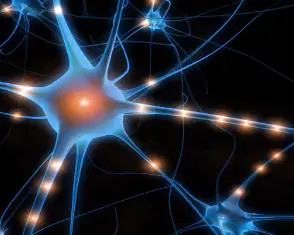
Nervous tissue is composed of specialized cells called ______, which receive and send electrical signals in the body.
neurons
myocytes
osteocytes
erythrocytes
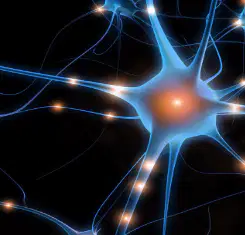
The main function of nervous tissue is:
To transmit nerve impulses
To store energy
To provide structural support
To produce hormones
What is the structure of a short bone?
Short bones are cube-shaped.
Short bones are flat and thin.
Short bones are long and cylindrical.
Short bones are irregularly shaped.
Which ones are examples of short bones.
Carpal bones of the hands that allow movement of the wrist, and the tarsal bones of the feet that allow movement of the ankle. Short bones are shaped roughly as a cube and contain mostly spongy bone.
Femur and humerus, which are long bones that support weight and movement.
Vertebrae, which are irregular bones that protect the spinal cord.
Ribs and sternum, which are flat bones that protect internal organs.
What is one function of bones?
To give structure and support to our bodies.
To help us digest food.
To produce sound for communication.
To store memories.
Bones allow us to move because they are attached to ______ and tendons.
muscles
nerves
veins
cartilage
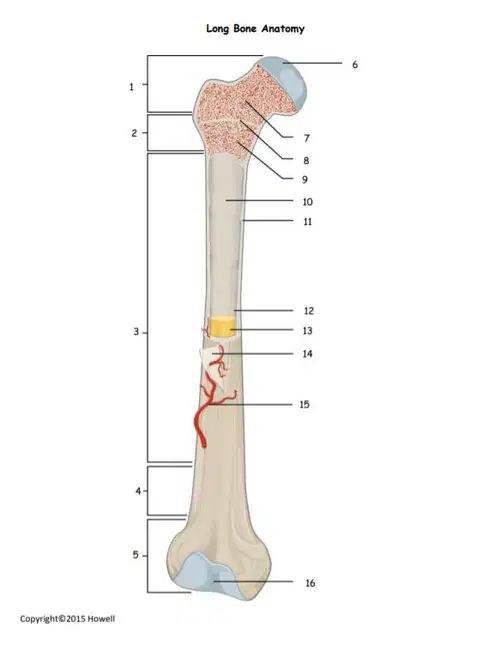
Long bones have a shaft (4) called the _______ and two ends (1,5) called the _______.
diaphysis; epiphysis
periosteum; endosteum
osteon; lamellae
trabeculae; medullary cavity
The shaft of a long bone is mostly _______ (or cortical) bone with a central _______ canal.
compact; medullary
spongy; Haversian
trabecular; nutrient
cancellous; Volkmann's
The central canal of a long bone is filled with fatty yellow bone marrow, which is important for _______ storage.
fat
protein
calcium
glycogen
The ends of long bones are covered by compact bone filled with _______ (trabecular or cancellous) bone.
spongy
cartilage
marrow
dense
Spongy bone contains ______ bone marrow that produces blood cells.
red
yellow
white
blue
An _______ plate forms when the bone stops growing.
epiphyseal (Growth Plate)
articular
medullary
periosteal
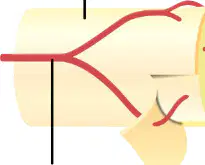
What are the vessels that carry blood through the bone called, as shown in the diagram?
Blood vessels
Nerve fibers
Lymph nodes
Cartilage cells

Which type of tissue is this? It helps send messages all throughout the body.

what type of bone is the femur (thigh bone)

What type of bone is the scapula (shoulder blades)?

