
 Worksheets
Recap Lesson 1 Element 5
Total questions: 78
Worksheet time: 39mins
The name of the current frameworks in early years is:
Early Years Foundation Stage (EYFS)
Montessori Method
Reggio Emilia Approach
HighScope Curriculum
By the end of this session, you should be able to: Discuss the expectations throughout Element 5. What are the expectations throughout Element 5?
The expectations throughout Element 5 involve understanding and discussing the key requirements and standards.
The expectations throughout Element 5 are to memorize all historical dates.
The expectations throughout Element 5 focus on physical fitness activities only.
The expectations throughout Element 5 require only individual work with no collaboration.
By the end of this session, you should be able to: Identify key words related to Element 5. Which of the following is a key word related to Element 5?
Element 5
Periodic Table
Molecule
Compound
By the end of this session, you should be able to: Recap on the current frameworks in the early years. Which of the following best describes the focus of this session?
Recap on the current frameworks in the early years
Learn advanced mathematics for early years
Discuss high school teaching methods
Explore university-level research frameworks
Group work: A mind map labelled 'Child Development' should include which of the following?
Key stages of physical, cognitive, and emotional growth
Famous historical events
Types of weather patterns
Popular sports teams
Group work: Which of the following is a topic you may cover under child development?
Physical growth and motor skills
Quantum mechanics
Photosynthesis in plants
Plate tectonics
What is one expected pattern of development in children?
Expected patterns of development include physical, cognitive, emotional, and social growth milestones.
Expected patterns of development include only academic achievements.
Expected patterns of development exclude emotional growth.
Expected patterns of development are the same for all children regardless of environment.
Name a theory of attachment and explain how it can be applied to practice.
One theory of attachment is Bowlby's Attachment Theory, which can be applied by ensuring children form secure relationships with caregivers.
One theory of attachment is Maslow's Hierarchy of Needs, which can be applied by focusing on self-actualization.
One theory of attachment is Piaget's Cognitive Development Theory, which can be applied by encouraging logical thinking.
One theory of attachment is Skinner's Operant Conditioning, which can be applied by using rewards and punishments.
How can the development of language be promoted at different ages?
Language development can be promoted through reading, conversation, and age-appropriate activities.
By avoiding all forms of communication until adulthood.
By only focusing on grammar rules and ignoring speaking.
By discouraging children from asking questions.
What is important for the development of friendships and well-being in children?
Encouraging social interaction, empathy, and emotional support is important for the development of friendships and well-being.
Focusing only on academic achievement is important for the development of friendships and well-being.
Limiting children's exposure to new experiences is important for the development of friendships and well-being.
Discouraging children from expressing their feelings is important for the development of friendships and well-being.
What are some practitioner strategies for expected and unexpected transitions in child development?
Strategies include preparing children in advance, providing emotional support, and maintaining routines.
Strategies include ignoring children's feelings and letting them adjust on their own.
Strategies include introducing abrupt changes without explanation.
Strategies include reducing communication and limiting support during transitions.
What have you missed from your mindmaps?
Key points or details
Extra images
Unrelated topics
Personal opinions
Child development entails:
the physical, cognitive, and emotional growth of children
only the physical growth of children
just the academic progress of children
the development of adults
A Milestone is a significant event in a project. Which of the following is an example of a Milestone?
Completion of the project design phase
Daily team meeting
Ordering office supplies
Sending a routine email
At 1 month, what are two developmental milestones a baby typically achieves?
Lifts head when lying on tummy; Responds to sounds
Sits without support; Says first word
Walks independently; Uses a spoon
Draws a circle; Ties shoelaces
At 2 months, which of the following is a milestone?
Smiles and laughs
Follows items with his eyes
Says 'mama'
Crawls well
At 3 months, a baby typically smiles and laughs.
True
False
At 4 months, what can a baby do in conversation?
Coos in conversation
Says full sentences
Asks questions
Recites the alphabet
At 5 months, a baby distinguishes bold colours.
True
False
At 6 months, a baby imitates sounds and turns to sounds and voices.
True
False

At 7 months, what is a common milestone related to teeth?
First tooth appears
All baby teeth are present
Permanent teeth start to erupt
Teeth begin to fall out

At 8 months, a baby is able to coordinate between hands.
True
False

At 9 months, what does a baby know about objects?
Knows object exists even if invisible to him
Can count objects accurately
Understands object colors perfectly
Can name all objects he sees

At 10 months, which of the following is NOT a typical milestone?
Crawls well with belly off the ground
Waves goodbye
Says 'mama'
Steadies himself while standing
At 11 months, a baby can stand for a few seconds.
True
False
At 12 months, how does a baby indicate wants?
Indicates wants with gestures
Says full sentences
Writes down requests
Uses sign language fluently
At 18 months, a baby strings together simple phrases.
True
False
At 24 months, what percentage of a child's speech is understandable?
Half of speech is understandable
All speech is understandable
A quarter of speech is understandable
Three-quarters of speech is understandable
Everyone working with children and young people need to know what to expect in terms of their _________
development
punishment
transportation
nutrition
Which of the following is NOT mentioned as a reason to understand child development?
A) Identify children that need additional support
B) Starting point (baseline)
C) Manage behaviour
D) Teach advanced mathematics
List one area of development that will be discussed today according to the passage.
Cognitive development (other acceptable answers: physical development, social and emotional development)
Financial development
Technological development
Environmental development
Cognitive development, physical development, and social and emotional development will be discussed today.
True
False
Cognitive development refers to which of the following?
The process of acquiring and understanding knowledge and thinking skills
Physical growth and changes in the body
Development of emotional and social skills
Improvement in athletic abilities
Fill in the blank: One of the key aspects of cognitive development is ____________ processing.
information
chemical
mechanical
thermal
Fill in the blank: Remembering things is called ____________ in cognitive development.
memory
imagination
perception
attention
Fill in the blank: Finding solutions to challenges is known as ____________ in cognitive development.
problem solving
memorization
imitation
classification
Fill in the blank: Using our senses to understand the world is called ____________ perception.
sensory
visual
auditory
tactile
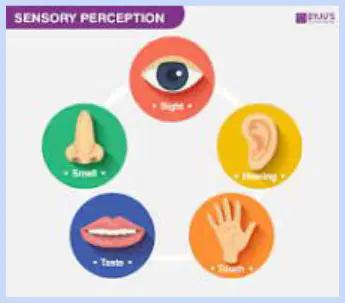
Fill in the blank: The five senses that help us with cognitive development are ____________, ____________, ____________, ____________, and ____________.
sight, smell, hearing, taste, touch
sight, smell, running, taste, touch
sight, smell, hearing, taste, jumping
sight, smell, hearing, eating, touch
Fill in the blank: Jigsaw puzzles and even simple puzzles help to stimulate the brain and improve ________, mental rotation, working memory, and reasoning.
perception
balance
nutrition
digestion
Fill in the blank: Memory games such as 'I went to the shop and I bought… a, b, c…' are examples of activities that support ________ development.
cognitive
physical
emotional
social
Fill in the blank: Reading books, singing songs, telling jokes and riddles together, inventing new words, or thinking of ________ words are activities that support cognitive development.
rhyming
difficult
boring
silent
Fill in the blank: Playing stacking and building games or playing with ________ boxes can help support cognitive development in children.
cardboard
plastic
metal
glass
Fill in the blank: Cooking together and encouraging children to help you measure and weigh the ________ supports cognitive development.
ingredients
utensils
tables
aprons
Cognitive development is defined as:
the process of acquiring knowledge and understanding through thought, experience, and the senses.
the physical growth of the body and brain.
the development of emotional regulation and social skills.
the ability to perform fine and gross motor skills.
Cognitive development, physical development, and social and emotional development are all aspects of which area of study?
Human development
Environmental science
Political science
Economics
Different activities enhance which aspects of children's development?
Cognitive, physical, social, and emotional development
Only physical development
Only cognitive development
Only social and emotional development
I went to the shop and bought…
some bread
a spaceship
a mountain
a river
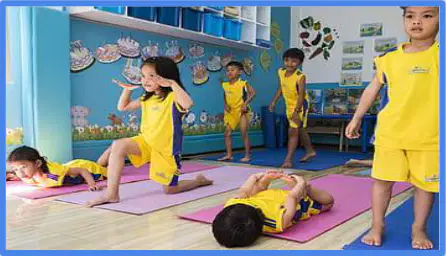
Physical development refers to:
the growth and changes in a person's body and physical abilities
the ability to solve math problems quickly
learning a new language
developing strong friendships
Fill in the blank: One way to support physical development is ________ during tummy time.
kicking and reaching
reading a book
singing a lullaby
watching TV
Fill in the blank: Playing or rolling on the floor and ________ around the environment are ways to support physical development.
crawling
singing
reading
drawing
Fill in the blank: Provide ________ as the infant learns to self-feed to support physical development.
finger foods
sweet drinks
spicy snacks
hard candies
Fill in the blank: ________ movement throughout the day helps support physical development.
Encourage
Discourage
Ignore
Limit
Fill in the blank: Use balls of different textures and sizes to practise catching, hitting, bouncing and ________.
kicking
drawing
singing
reading
Fill in the blank: Make up ________ that involve different types of movement to support physical development.
games
songs
stories
drawings
Physical development also involves physical changes as a result of puberty, for older children. Common to all genders: ________ in height and weight is known as a 'growth spurt'.
Rapid growth
Sudden decrease
Constant decline
Gradual loss
Physical development also involves physical changes as a result of puberty, for older children. Common to all genders: Development of stronger ________ and bones occurs during puberty.
muscles
lungs
nerves
arteries
Physical development also involves physical changes as a result of puberty, for older children. Common to all genders: There is an increase in body fat ________ during puberty.
distribution
temperature
color
hardness
Physical development also involves physical changes as a result of puberty, for older children. Common to all genders: Skin changes such as oiliness and acne are due to ________ gland activity.
sebaceous
sweat
thyroid
adrenal
Physical development also involves physical changes as a result of puberty, for older children. Common to all genders: Body odour changes because ________ glands become more active.
sweat
salivary
thyroid
sebaceous
Physical development also involves physical changes as a result of puberty, for older children. Common to all genders: Growth of body hair occurs in the underarms, legs, arms, and ________ hair.
pubic
facial
chest
back
Which of the following is a change that occurs during female puberty?
Growth of facial hair
Breast development
Voice deepens
Broadening of shoulders
Which of the following is a change that occurs during male puberty?
Start of menstruation
Ovulation begins
Growth of facial hair, pubic hair, underarm and chest hair
Growth of hips and redistribution of body fat
Fill in the blank: The start of ________ is a change that occurs during female puberty.
menstruation
baldness
voice cracking
beard growth
Fill in the blank: The production of ________ begins during male puberty.
sperm
eggs
milk
saliva
Which of the following is NOT a change that occurs during female puberty?
A) Breast development
B) Growth of hips and redistribution of body fat
C) Voice deepens
D) Ovulation begins
Which of the following is NOT a change that occurs during male puberty?
Growth of facial hair
Broadening of shoulders and muscle mass increase
Start of menstruation
Production of sperm begins
Fill in the blank: ________ begins during female puberty and is related to the release of eggs from the ovaries.
Ovulation
Menstruation
Fertilization
Implantation
Fill in the blank: During male puberty, the ________ grows and the vocal cords lengthen, causing the voice to deepen.
larynx
esophagus
trachea
pharynx
Which of the following is a change that occurs in both male and female puberty?
A) Growth of pubic and underarm hair
B) Start of menstruation
C) Production of sperm
D) Broadening of shoulders
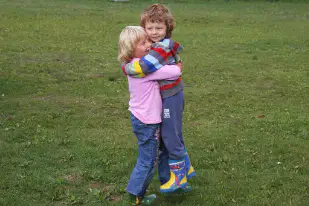
Social and emotional development refers to:
the process of learning to interact with others and manage emotions
the ability to solve mathematical problems
the development of physical strength and coordination
the acquisition of language skills
Fill in the blank: Social development involves relationships with others and _______ of behaviours to do so.
adjusting
ignoring
forgetting
avoiding
Fill in the blank: Emotional development involves our _______ and also our identity.
feelings
thoughts
actions
memories
Which of the following is an aspect of social and emotional development?
Bonding and attachments
Memorizing facts
Solving math problems
Drawing pictures
Which of the following is NOT an aspect of social and emotional development?
A) Expressing feelings
B) Following instructions
C) Co-operation
D) Learning a new language
Self-control is an aspect of social and emotional development.
True
False
Self-concept is unrelated to social and emotional development.
True
False
Which of the following best describes 'Friendships/peer groups' in the context of social and emotional development?
A) Making friends and interacting with peers
B) Learning to read
C) Practicing sports
D) Drawing pictures
Fill in the blank: _______ and attachments are important aspects of social and emotional development.
Bonding
Feeding
Walking
Drawing

