
 Worksheets
Mitosis and Meiosis Unit Study Guide Review 9-26-25
Total questions: 36
Worksheet time: 18mins
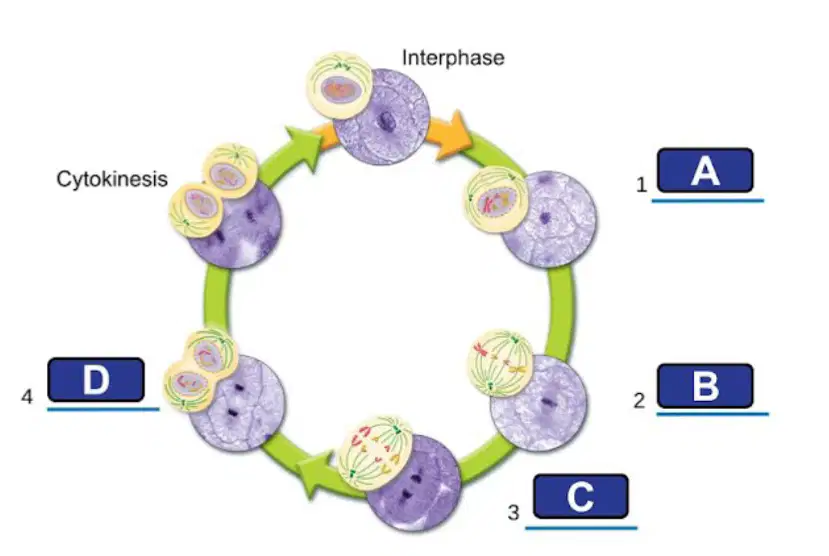
Which phase of mitosis is represented by Label A in the diagram?
Prophase
Metaphase
Anaphase
Telophase
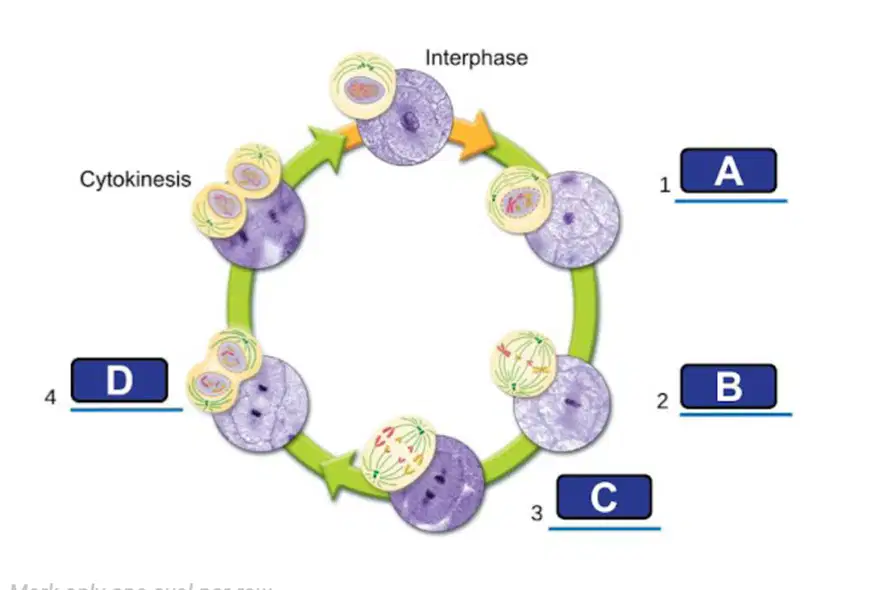
Which phase of mitosis is represented by Label B in the diagram?
Prophase
Metaphase
Anaphase
Telophase

Which phase of mitosis is represented by Label C in the diagram?
Prophase
Metaphase
Anaphase
Telophase
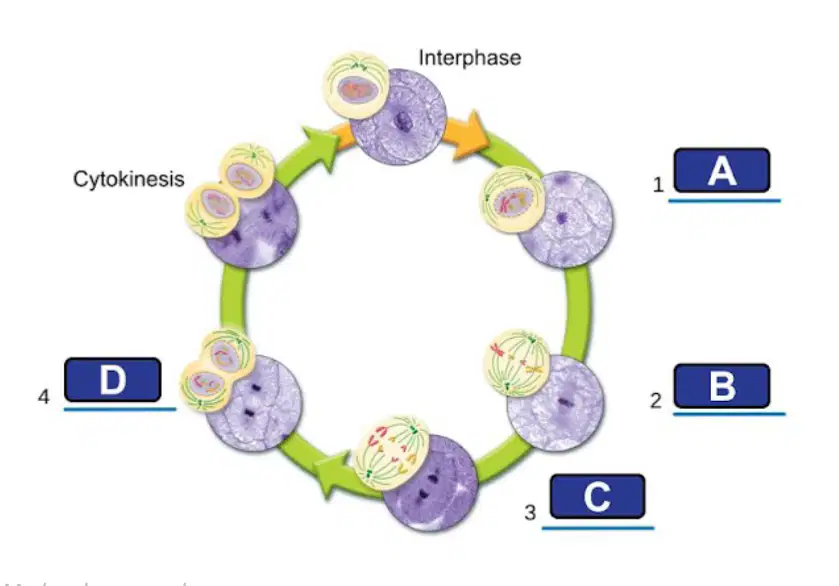
Which phase of mitosis is represented by Label D in the diagram?
Prophase
Metaphase
Anaphase
Telophase

Which phase of the cell cycle is represented by Label A in the diagram?
G1 Phase
Synthesis Phase
G2 Phase
Mitosis
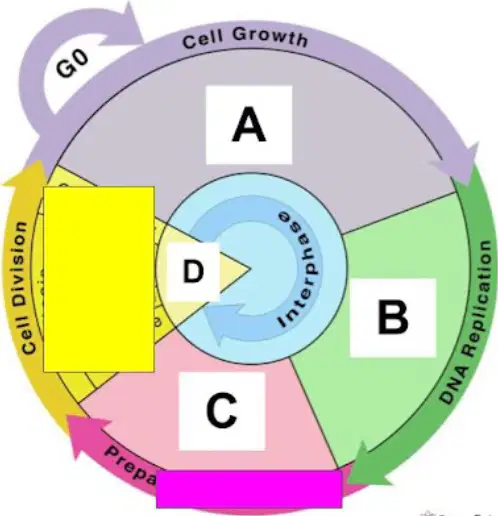
Which phase of the cell cycle is represented by Label B in the diagram?
G1 Phase
Synthesis Phase
G2 Phase
Mitosis
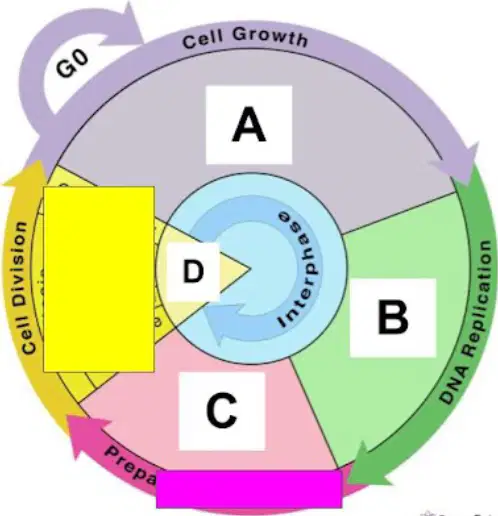
Which phase of the cell cycle is represented by Label C in the diagram?
G1 Phase
Synthesis Phase
G2 Phase
Mitosis
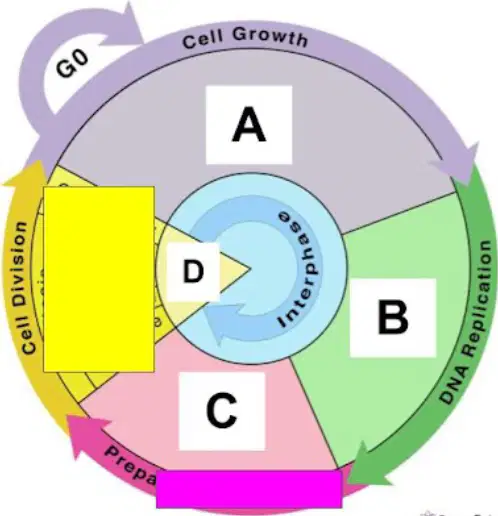
Which phase of the cell cycle is represented by Label D in the diagram?
G1 Phase
Synthesis Phase
G2 Phase
Mitosis
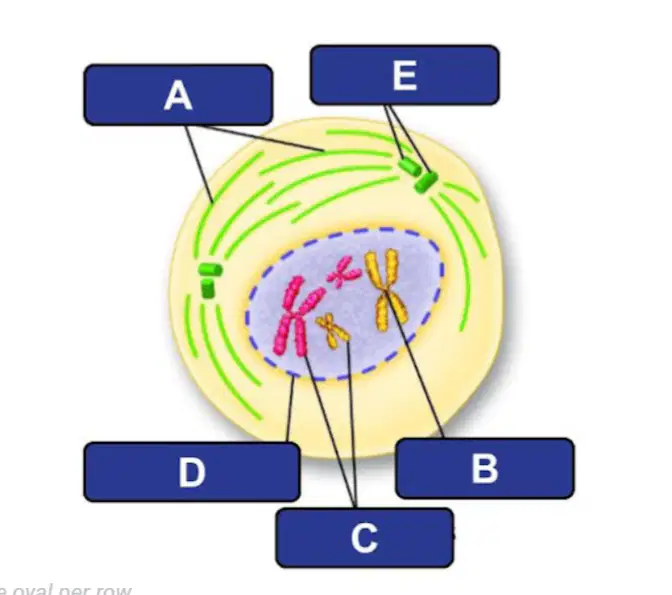
Which structure is labeled as "Nuclear Envelope" in the diagram?
Label A
Label B
Label C
Label D
Label E
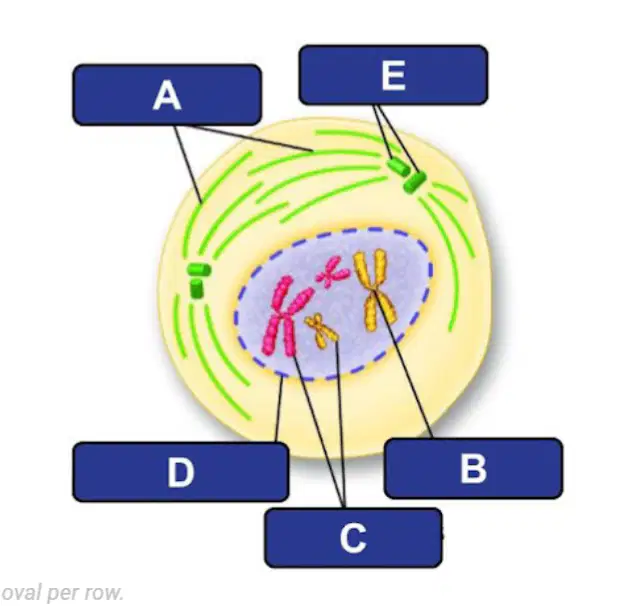
Which label corresponds to the "Centrioles" in the cell diagram?
Label A
Label B
Label C
Label D
Label E
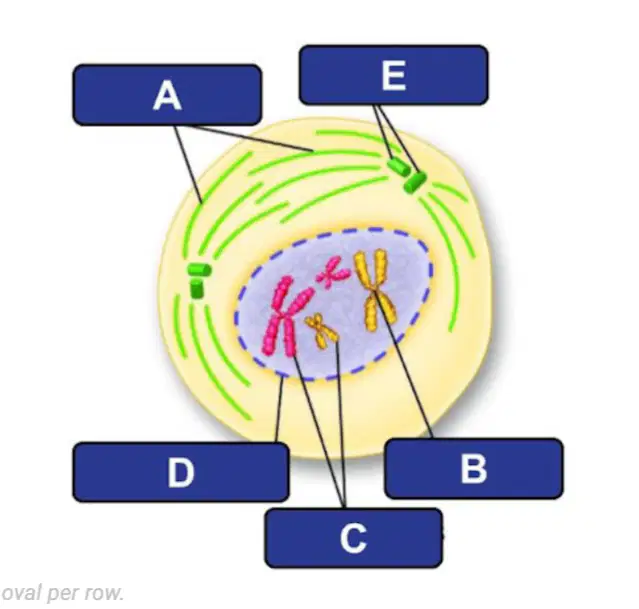
In the provided cell diagram, which label identifies the "Spindle Fibers"?
Label A
Label B
Label C
Label D
Label E
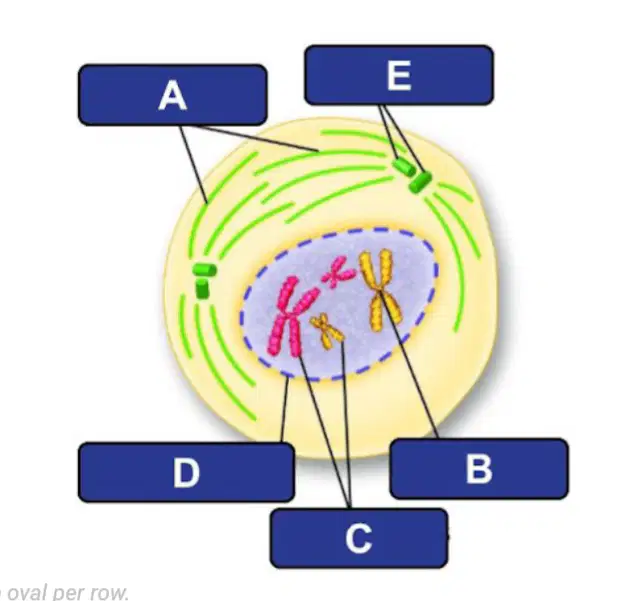
Which label in the diagram points to the "Chromosome"?
Label A
Label B
Label C
Label D
Label E

What is the correct label for the "Centromere" in the cell diagram?
Label A
Label B
Label C
Label D
Label E
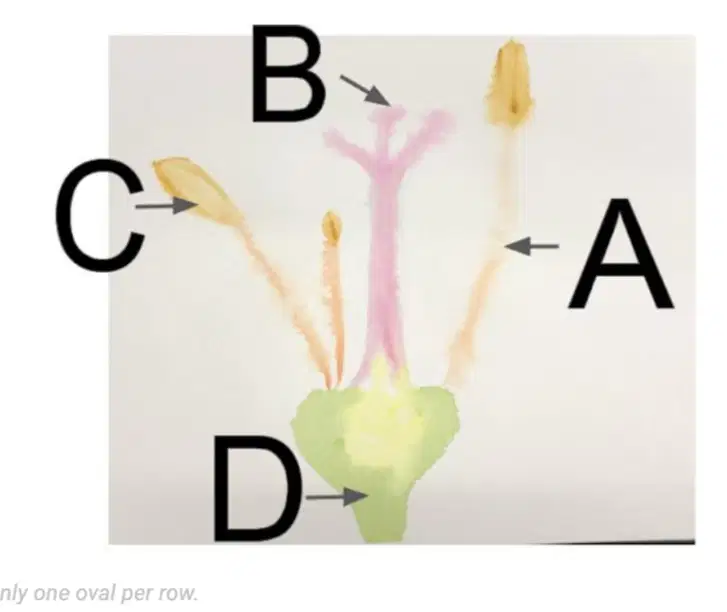
Look at the diagram of the flower structure. Which part is labeled as "Stigma"?
Label B
Label A
Label C
Label D
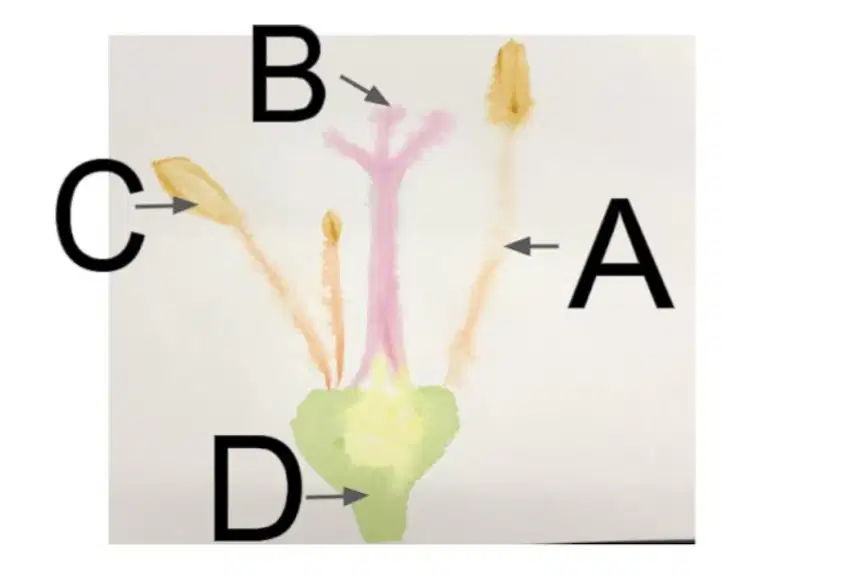
In the given flower diagram, which label corresponds to the "Anther"?
Label A
Label B
Label C
Label D

Based on the diagram, which part is identified as the "Filament"?
Label C
Label A
Label B
Label D
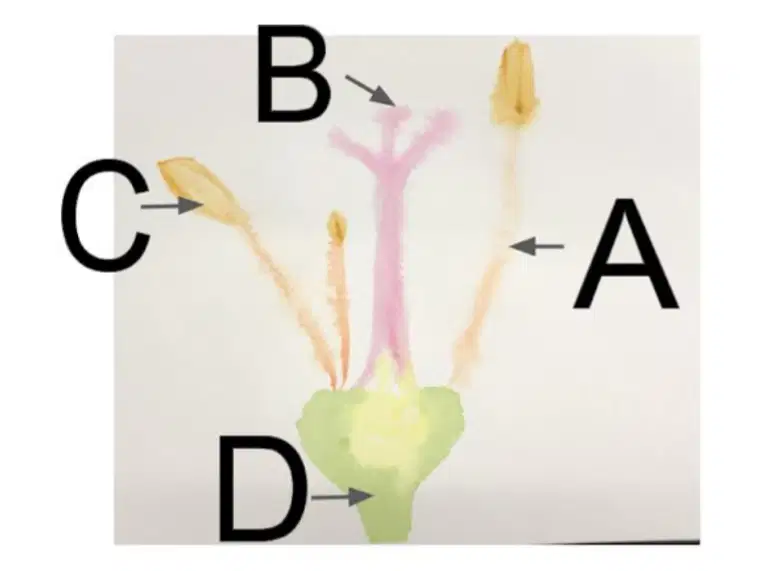
Refer to the flower diagram. Which label indicates the "Ovary"?
Label D
Label A
Label B
Label C
Level 2 Compare and Contrast: Which of the following characteristics applies to only mitosis?
Divides twice, 4 cells
Creates cells that are haploid
Used for growth and repair
Creates genetic variation
Level 2 Compare and Contrast: Which of the following characteristics applies to only meiosis?
The new cells are identical
The new cells are used for reproduction
The new cells are diploid
The new cells have the same amount of DNA as the original cell
What is the term for the exchange of genetic material between non-sister chromatids of homologous chromosomes during meiosis that contributes to genetic diversity?
Crossing Over
Checkpoints
Gamete
Somatic cells
What is the claim made about the effect of caffeine on root growth?
Caffeine increases root growth by speeding up mitosis.
Caffeine decreases root growth by damaging DNA and preventing mitosis.
Caffeine has no effect on root growth.
Caffeine helps roots absorb more nutrients.
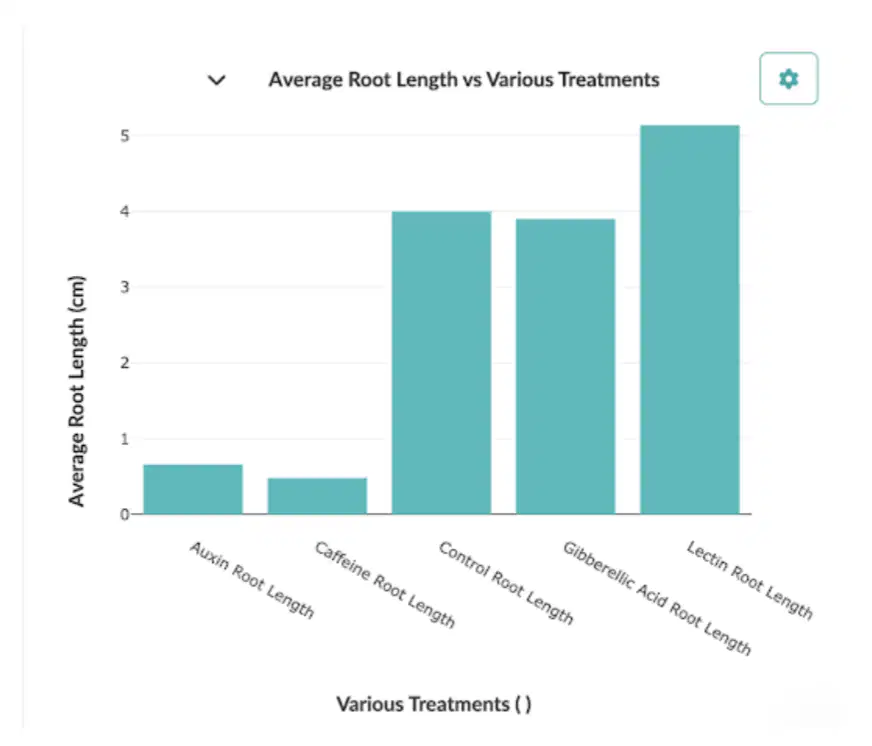
Based on the provided bar graph, which treatment resulted in the shortest average root length?
Control Root Length
Gibberellic Acid Root Length
Auxin Root Length
Lectin Root Length
Why does exposure to chemicals like caffeine reduce average root growth, according to the claim?
Because caffeine increases the rate of photosynthesis.
Because caffeine damages DNA and prevents cells from completing the cell cycle.
Because caffeine provides more nutrients to the roots.
Because caffeine causes roots to grow in different directions.
If you were to design an experiment to test the effect of a new chemical on root growth, what would be an important control to include?
Only use the new chemical on all plants.
Use a group of plants that receives no chemical treatment.
Change the amount of sunlight for each group.
Use different types of soil for each group.
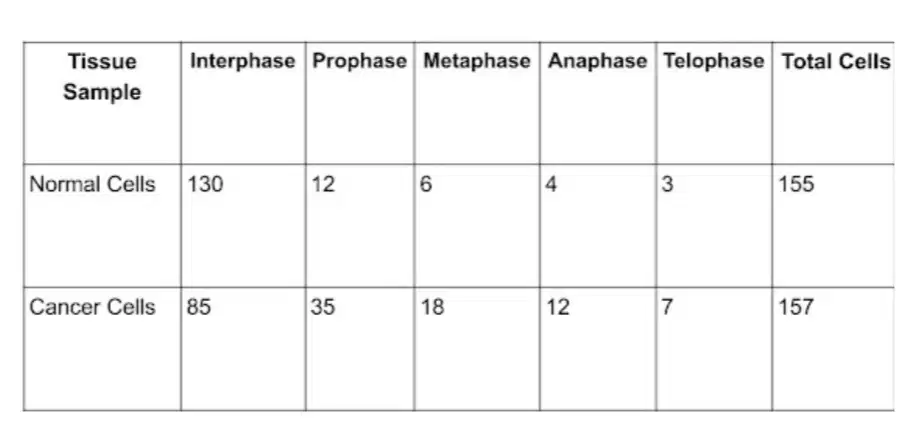
A researcher is calculating the mitotic index for normal and cancerous cells. The table shows the number of cells in different phases of the cell cycle. Which of the following is the correct first step in calculating the mitotic index for both normal and cancerous cells?
Add the number of cells in mitosis (prophase, metaphase, anaphase, and telophase) for each tissue type.
Divide the number of cells in interphase by the total number of cells observed.
Subtract the number of mitotic cells in normal tissue from the number in cancerous tissue.
Multiply the total number of cells by 100 to find the mitotic index.
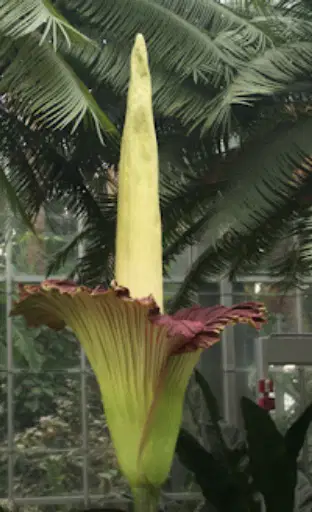
How does the corpse flower’s reproductive strategy rely on genetic variation for pollination success?
The corpse flower produces genetically identical clones to ensure that all pollinators are attracted to the same scent.
They use pollinators to obtain pollen from other plants that will fertilize their ovules with fresh genetic material.
The corpse flower uses mitosis exclusively to create pollen, leading to more consistent pollination rates.
Genetic variation in the corpse flower has no impact on pollination, as it relies solely on environmental factors for reproductive success.
True or False: Multicellular organisms use meiosis to create sex cells.
True
False
Which type of cell division produces sex cells (gametes) in multicellular organisms?
Mitosis
Meiosis
Binary fission
Budding
Which reproductive method is mainly used by single-celled organisms?
Asexual
Sexual
Both
None
Which type of reproduction creates offspring that are genetically identical to the parent?
Asexual
Sexual
Both
None
Which process is used by plants to create offspring?
Asexual reproduction
Sexual reproduction
Both asexual and sexual reproduction
Neither
Which of the following statements best describes the main difference between mitosis and meiosis?
Mitosis produces identical cells; meiosis produces genetically different cells.
Mitosis occurs only in animals; meiosis occurs only in plants.
Mitosis requires two parents; meiosis requires one parent.
Mitosis produces gametes; meiosis produces body cells.
Which process passes chromosomes from two different gametes to the offspring?
Asexual reproduction
Sexual reproduction
Both
None
If a multicellular organism needs to repair damaged tissue, which process will it use?
Mitosis
Meiosis
Fertilization
Conjugation
Process in which the number of chromosomes per cell is cut in half through the separation of homologous chromosomes
Mitosis
Meiosis
Cell Cycle
Crossing Over
Specialized proteins that facilitate the progression from one phase of the cell cycle to the next
Mitosis
Regulators
Cell Cycle
Crossing Over

