
Font size
 Worksheets
Imperialism: Quiz Review
Total questions: 35
Worksheet time: 3hrs 37mins
What does the term imperialism refer to?
A policy of giving away a country’s power to another nation as a gift
A policy of extending a country’s power and influence through diplomacy or military force
A policy of trading goods between two states or nations
A policy in which the government debates over paying someone to purchase another country
Hostility towards Spain increased as Americans were persuaded by _____________, which is a style of newspaper reporting that emphasizes sensational news.
Muckraking.
Paparazzi reporting.
Yellow Journalism.
Platt Amendment.
The _______________ was a volunteer regiment that served during the Spanish-American War and was organized by future president ______________ .
Rough Riders; Franklin D. Roosevelt
Bull Moose; Theodore Roosevelt
Progressive Party; William Taft
Rough Riders; Theodore Roosevelt
The first military action of the Spanish-American War took place in 1898 in the Philippines at the _____________________.
Battle of Havana
Battle of Manila Bay
Battle of San Juan Hill
Battle of the USS Maine
The _____________________ included fighting such as guerilla warfare by Filipino rebels and brutal tactics by the U.S. soldiers, ultimately costing the Americans around 5,000 lives.
Cuban Revolution
Philippine Insurrection
Cuban Missile Crisis
Spanish American War
The ________________ was an extension of the Monroe Doctrine and enabled the United States to intervene in Latin American countries struggling with unstable conditions.
Moral Diplomacy
Big Stick Diplomacy
Dollar Diplomacy
Roosevelt Corollary
After attempts were abandoned by the French, the United States attempted to purchase the rights to complete the building of the ______________ in order to connect the Atlantic and Pacific Oceans.
Roosevelt Corollary
Panama Canal
Platt Amendment Canal
Colombian Canal
The term ________________ refers to the idea that through financial investment in foreign nations, the United States would develop a scope of influence that would provide both stability and economic opportunity.
Roosevelt Corollary
Dollar Diplomacy
Moral Diplomacy
Big Stick Diplomacy
Which of the following presidents was considered an anti-imperialist and a non interventionist, meaning that he opposed U.S. expansion into foreign nations?
Theodore Roosevelt
William Taft
William McKinley
Woodrow Wilson
At the end of the Spanish American War USA defeats the Spanish and expands their territory by gaining the
Philippines, Guam, and Puerto Rico
Philippines, Mexico, and Puerto Rico
Japan, Germany, and Puerto Rico
Texas, New Mexico and California
Sanford B. Dole helped overthrow the _____________ monarchy and then sets this territory up to be annexed by the United States.
Cuban
Filipino
Hawaiian
Panamanian
All of the following are reasons for the use of imperialism by the USA during expansionism EXCEPT...
A belief in the idea of Manifest Destiny.
the need for new markets and more natural resources.
the need for more workers in the Gilded Age/Progressive Era.
desire to compete against other imperilaistic empires.
Why did the United States acquire Hawaii?
The US wanted volcanoes for natural resources that couldn't be located anywhere else.
To use the islands as a naval base, and for its sugar & fruits.
to create a naval base during World War II
to assist the Queen in retaking control of the islands

They prompted the end of imperialism in Latin American regions.

This image best illustrates what American policy?
Imperialism
Annexation
New Freedom
Square Deal

Why did the Spanish-American War move the United States into the position of a world power?
The United States acquired Spanish territories in the Caribbean and the Pacific.
The United States proved its nuclear capabilities against Spain in Southeast Asia.
The United States stopped the spread of communism in Spain.
The United States ended Spanish trade in the Eastern Hemisphere.
What was the war cry of those who were demanding war with Spain after the explosion of the USS Maine?
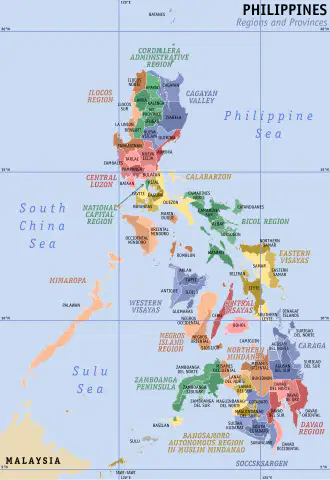
Even though the Spanish-American War started over the revolt in ______________, the first major battle was fought far from that island. In this first major battle, the US Navy won the Battle of ___________.
Cuba; San Juan Hill.
Cuba; Manila Bay.
the Philippines; Corregidor.
the Philippines; Bataan.
As president, Theodore Roosevelt spoke about use of what he called ______________________________ , a strategy used to advance US interests by ___________________.
Good Neighbor Diplomacy; convincing US adversaries to acquiesce to US demands on the basis of sheer goodwill.
Dollar Diplomacy; bribing US adversaries into falling into line with US political aims.
Big Stick Diplomacy; threatening military intervention to ensure US adversaries stood down without a fight.
Moral Diplomacy; going to war with evil nations to ensure that noble, democratic ideas spread across the globe.
"Chronic wrongdoing, . . . which results in a general loosening of the ties of civilized society, may in America, as elsewhere, ultimately require intervention by some civilized nation, and in the Western Hemisphere the adherence of the United States to the Monroe Doctrine may force the United States, however reluctantly, in flagrant cases of such
wrongdoing . . . to the exercise of an international police power."
—President Theodore Roosevelt, 1904
President Roosevelt issued this statement in response to —
the construction of a canal in Panama.
(Panama Canal).
the threat of European intervention in the Western Hemisphere. (Roosevelt Corollary)
Spanish efforts to suppress a rebellion in Cuba.
(Spanish American War).
public outcry regarding the explosion of the USS Maine.
(Yellow journalism).
Which U.S. President took on a major role in the development of the Panama Canal?
Theodore Roosevelt
William Taft
Woodrow Wilson
James A. Garfield
The _____________ refers to the diplomacy in which the US will not assert their authority over other parts of the world.
Dollar Diplomacy
Big Stick Diplomacy
Moral Diplomacy
Roosevelt Corollary
Which Progressive era president uses Big Stick Diplomacy?
Theodore Roosevelt
William Howard Taft
Woodrow Wilson
William McKinley
Which Progressive era president uses Dollar Diplomacy?
Theodore Roosevelt
William Howard Taft
Woodrow Wilson
William McKinley
Which Progressive era president uses Moral Diplomacy?
Theodore Roosevelt
William Howard Taft
Woodrow Wilson
William McKinley

Provisions in the Cuban Constitution that gave the US a huge amount of control over Cuba, though did not annex Cuba as a US territory...
Teller Amendment
Platt Amendment
20th Amendment
Roosevelt Corrolary
All of the following were requirements of the Platt Amendment EXCEPT:
All treaties made by Cuba had to receive US approval before they could happen.
The US reserved the right to intervene in Cuba at any time, for any reason.
Cuba had to give up 45 square miles of their island to the US for the building of Guantanamo Bay.
Cuba had to pay the US a certain amount every year as a form of dollar diplomacy to keep the US out of their business.
Why are Americans particularly sympathetic towards Cuba's attempts to free themselves from Spanish colonial rule?
Similar roots, we fought in the American Revolution against British colonial rule.
As a close neighbor to the US, we wanted to ensure that Cuba remained friendly towards the US incase of emergencies.
America was on a path of seeking out new alliances, and hoped to gain Cuba as a new partner on the world stage.
Many Americans outright hated Spain after years of bickering back and forth with the powerhouse.
Future President Teddy Roosevelt and the Rough Riders had an important moment at San Juan Hill, in which they...
defeated the Spanish Armada, sinking 7 of the ships with nearly 0 losses on the American side, resulting in victory for the US in the Spanish-American War.
charged at the Spanish forces on foot, managing to overwhelm them with their sheer numbers, resulting in victory for the US in the Spanish-American War.
surrendered to the Spanish, realizing they were completely outnumbered, resulting in a hostage situation between the US and Spain that lasted several months.
witnessed a mine float into the USS Maine from the top of San Juan Hill, resulting in them being able to call out Spain for attempting to destroy a US warship.

How do the categories seen in this image feed into Grandma's world famous, home-made, classic Imperialist pie?
A = Ideological
B = Economic
C = Political
A = Economic
B = Political
C = Ideological
A = Political
B = Ideological
C = Economic
A = Economic
B = Ideological
C = Political
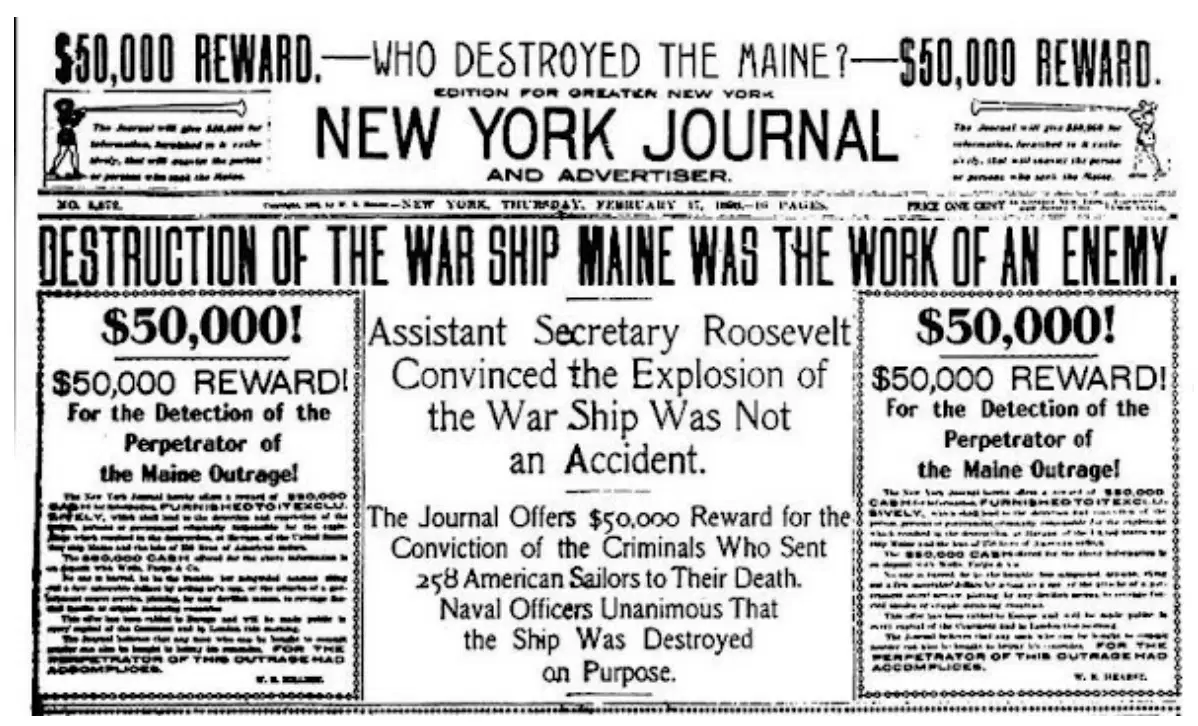
This type of article impacted popular opinion in America by...
pressuring the government to cease European trade.
convincing the public to support military intervention & imperialism overseas.
decreasing a military buildup overseas to protect the mainland.
encouraging deeper alliances with European nations.
Which of the following would not have been an argument made by expansionists regarding American imperialism?
"If we don't do it, someone else will; so it might as well be us."
"It is America's moral duty to spread civilization to those who need it."
"America's own anti-colonial heritage should prevent us from doing so."
"It would not only be economically beneficial to do it, but detrimental not to."
Getting into the Spanish-American War, the US promised to leave control of Cuba to the Cuban people afterwards. Once the war was over, the US...
annexed Cuba anyway.
made good on their promise.
kept Guantanamo Bay and the right to intervene there if necessary.
made the Cuban people US citizens so they would be subject to US laws.

