
 Worksheets
Plant Propagation Practice Test
Total questions: 40
Worksheet time: 20mins
Name
Class
Date
1.
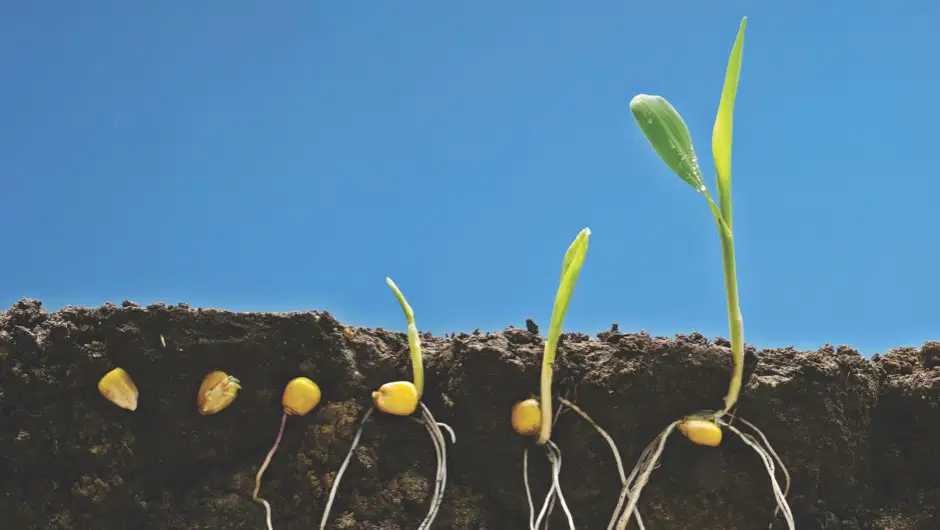
Producing plants from seed is a type of ________________ propagation.
a)
Asexual
b)
Bisexual
c)
Sexual
d)
Unsexual
2.
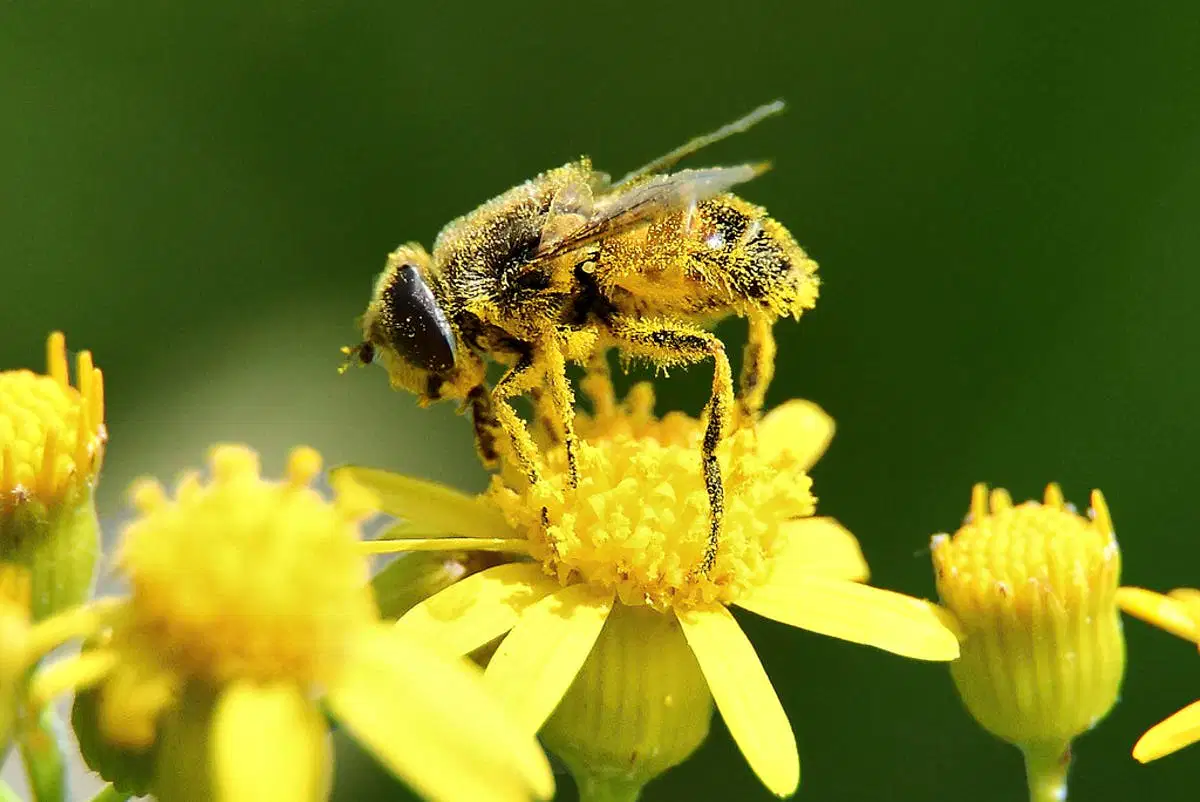
When two separate parent plants are involved in the pollination process, it is known as ________________________________.
a)
Cross - pollination
b)
Self - pollination
c)
Bisexual pollination
d)
Asexual pollination
3.
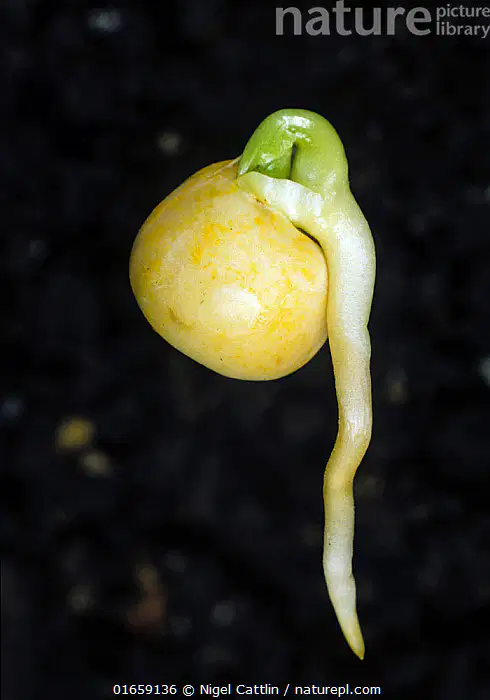
The first part of the new plant to emerge from the seed is the ______________________.
a)
Hypocotyl
b)
Radicle
c)
Epicotyl
d)
All of the above
4.
Hybrid seeds are developed because they ____________________________________________.
a)
Provide greater vigor
b)
Produce better crops
c)
Are more uniform
d)
All of the above
5.

The label in a flat of seeds should include the ________________________________.
a)
Name or type of plant, cultivar, and date seeded.
b)
Percent of germination listed on seed pack.
c)
Date seeded and the selling date.
d)
All of the above
6.
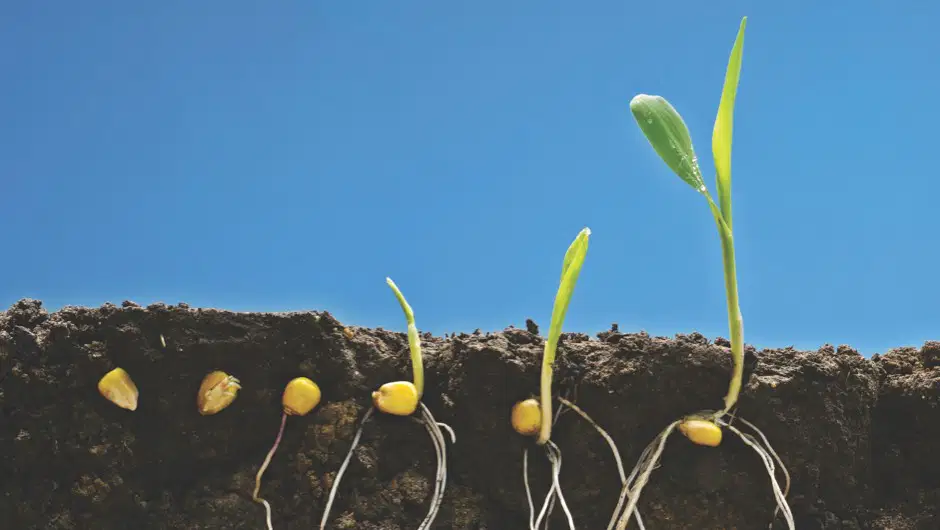
All of the following are required for germination to occur EXCEPT _____________________________.
a)
Water
b)
Light
c)
Oxygen
d)
Proper Soil Temperature
7.

Which part of the seed develops into the seedling’s stem?
a)
Radicle
b)
Epicotyl
c)
Hypocotyl
d)
All of the above
8.
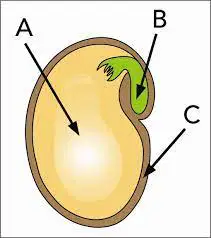
A tissue in a seed that provides stored food for the embryo is __________.
a)
Hypocotyl
b)
Radicle
c)
Endosperm
d)
Zygote
9.
_________ is the process of softening or breaking a seed coat in order to overcome seed dormancy.
a)
Scarification
b)
Ratification
c)
Stratification
d)
Augmentation
10.
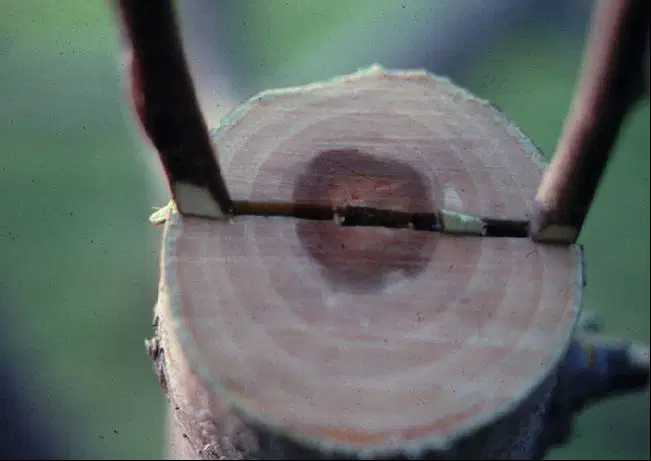
The top portion of a graft union is referred to as a _________________.
a)
Rootstock
b)
Hypocotyl
c)
Graft union
d)
Scion
11.

The main difference between grafting and budding is ________________________.
a)
Graft unions are treated with rooting hormone to stimulate rooting and bud grafts are not.
b)
Budding only occurs during the dormant season(s).
c)
Grafting uses budstock as the scion instead of a mature shoot.
d)
The scion in grafting is a mature shoot, while the scion in budding is a bud (budstock).
12.
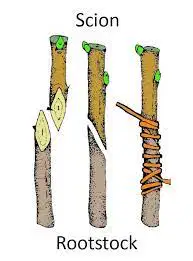
In grafting, great care must be used to match which layer of the scion and rootstock?
a)
Woody
b)
Bark
c)
Cambium
d)
Outside
13.
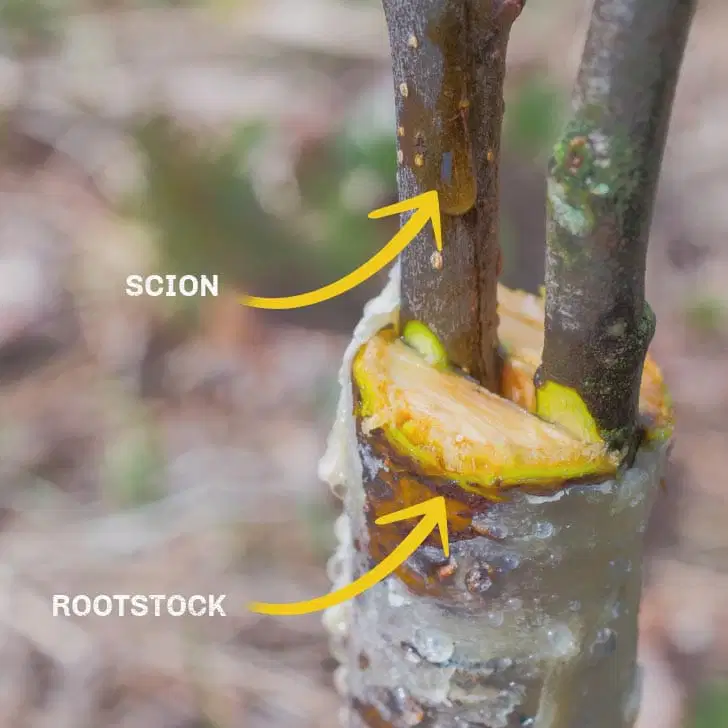
The bottom portion of the graft union is known as the _____________________________.
a)
Rootstock
b)
Scion
c)
Splice
d)
Cambium
14.
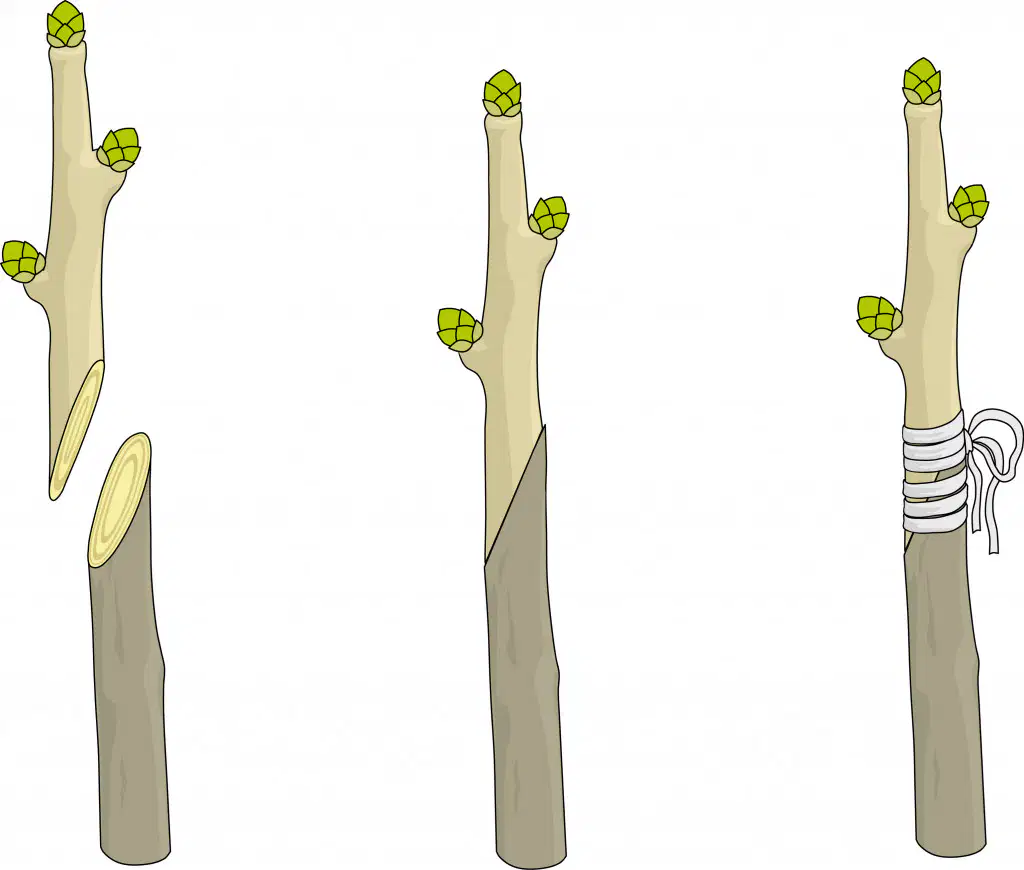
Which grafting technique is displayed in this image?
a)
Cleft
b)
Saddle
c)
Whip & Tongue
d)
Splice
15.
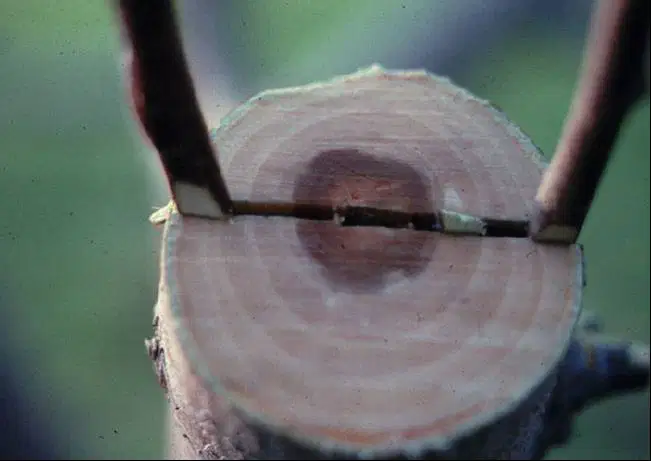
Which grafting technique is displayed in the image?
a)
Cleft
b)
Saddle
c)
Splice
d)
Whip & Tongue
16.
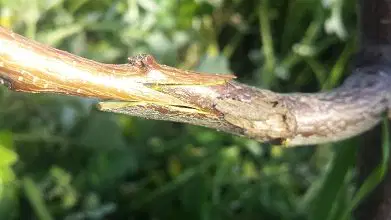
Which grafting technique is displayed in this image?
a)
Cleft
b)
Splice
c)
Saddle
d)
Whip & Tongue
17.
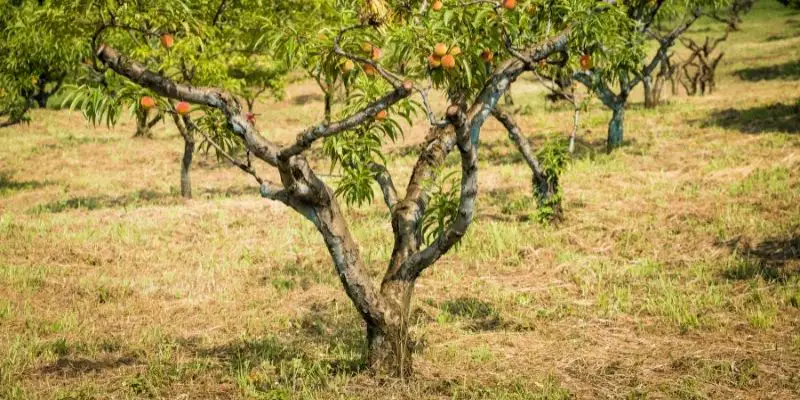
Which of the following plants can be propagated via grafting?
a)
Wandering Jew
b)
Pothos
c)
Clematis
d)
Peaches
18.
All of the following are required for successful graft unions EXCEPT _________________________________.
a)
Scion wood and rootstock must be compatible.
b)
Graft union must be wrapped and protected from drying out (desiccation).
c)
The base of graft cuts must be made at a 45 degree angle.
d)
Rootstock and scion wood must be dormant.
19.
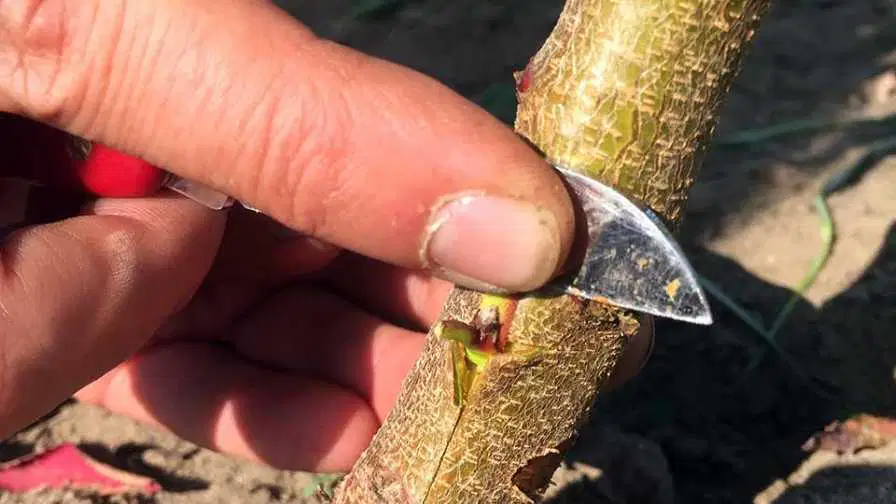
What time of year are bud grafts typically taken?
a)
Summer through early Fall
b)
Winter
c)
When scion wood and rootstock are dormant.
d)
Winter through early Spring
20.
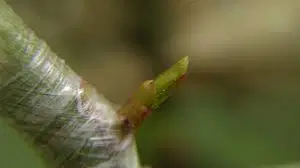
What is the advantage of budding in comparison to grafting?
a)
It allows growers to propagate plants during the dormant season.
b)
It allows the grower to propagate plants during the growing season and they take quicker than grafts.
c)
It requires less expertise to perform successfully.
d)
All of the above
21.

The development of roots on a stem while the stem is still attached to the parent plant is a propagation method known as _____________________________________________.
a)
Grafting
b)
Herbaceous Cuttings
c)
Separation
d)
Layering
22.
All of the following are examples of layering techniques EXCEPT __________________________.
a)
Serpentine (Compound)
b)
Air
c)
Simple
d)
Herbaceous
23.

Which layering technique is displayed in this image?
a)
Air
b)
Mound
c)
Trench
d)
Simple
24.

Which layering technique is displayed in this image?
a)
Mound
b)
Serpentine (Compound)
c)
Air
d)
Simple
25.
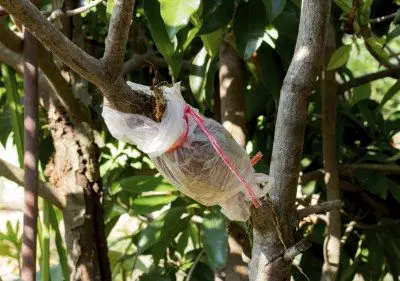
In air layering, cutting the bark off the stem, known as girdling, ____________________________.
a)
Helps in breaking off the stem when it is rooted.
b)
Gradually starves the stem.
c)
Stimulates root formation
d)
All of the above
26.
How are air layering wounds protected from drying out?
a)
They are wrapped in soaked sphagnum moss and wrapped with foil or grafting tape.
b)
They are treated with nitrogen - based fertilizers.
c)
They are treated with rooting compound and heavily drenched.
d)
All of the above
27.
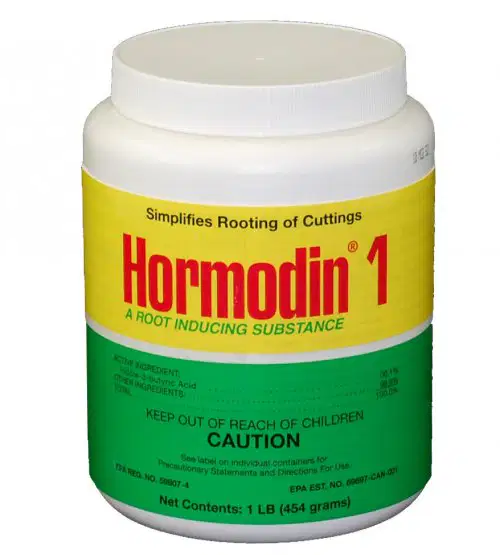
Indolebutyric acid (IBA) is commonly used to:
a)
control insects
b)
control diseases
c)
raise soil pH
d)
promote rooting of cuttings
28.
When taking stem cuttings, it is paramount to include the node. What is a node?
a)
A horizontal stem that grows underground.
b)
An underground stem specialized in storing food.
c)
The plant part that contains the above ground physical properties.
d)
A growing point
29.
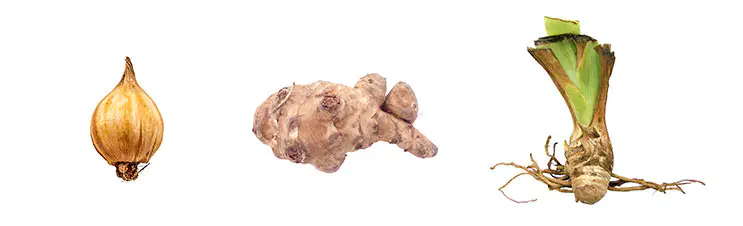
Bulbs and corms reproduce by a process known as ___________________.
a)
Separation
b)
Division
c)
Grafting
d)
Budding
30.
The main difference between separation and division is that ________________________________.
a)
Separation is a natural method of propagation; in division, plants must be cut apart.
b)
Division is a natural method of propagation; in separation, plants must be cut apart.
c)
Separation is done in the spring of the year; division is done in the fall.
d)
There is no real difference.
31.
When are herbaceous cutting typically taken?
a)
Spring
b)
Summer
c)
Fall
d)
All of the above
32.
Which of the following best describes asexual plant propagation?
a)
A form of plant reproduction that involves the fertilization of flower parts that results in the production of fruit / seed.
b)
A form of plant reproduction that bypasses the seed cycle and instead uses vegetative plant parts to produce new plants.
c)
A form of plant reproduction that forms involves seeds, high humidity, and light.
d)
All of the above
33.
What are the FOUR types of cuttings?
a)
Softwood, Oak, Pinus, and Herbaceous
b)
Adventitious, Mesophyllic, Hardwood, and Semi - Hardwood
c)
Herbaceous, Softwood, Semi - Hardwood, Hardwood
d)
Semi - Hardwood, Division, Rhizomatic, and Hardwood
34.
When are semi - hardwood cuttings taken?
a)
Spring ---- on new early growth
b)
Summer
c)
December
d)
Winter ---- on mature, dormant wood
35.
When are hardwood cuttings taken?
a)
Spring ---- on new early growth
b)
Summer
c)
December
d)
Winter ---- on mature, dormant wood
36.
Which type of cutting does NOT require a humidity dome in the beginning of propagation to reduce water loss?
a)
Herbaceous
b)
Softwood
c)
Semi - Hardwood
d)
Hardwood
37.
What types of roots form on nodes from cuttings?
a)
Horizontal
b)
Adventitous
c)
Fibrous
d)
Perennial
38.
High ___________________ is crucial to prevent water loss and promote rooting of cuttings.
a)
Light intensity
b)
Humidity
c)
Heat
d)
Ventilation
39.
Rooting compounds are typically applied to cuttings to promote rooting. Which class of hormones do most commercially available rooting compounds belong to?
a)
Auxins
b)
Gibberellins
c)
Cytokinins
d)
Abscisic Acid
40.
While auxins / rooting compounds promote rooting, in excess they can lead to ____________________________.
a)
Root initiation
b)
Formation of roots
c)
Yellowing and dropping of leaves
d)
All of the above
e)
100 %

