
 Worksheets
Unit 2
Total questions: 116
Worksheet time: 2hrs 48mins
What is the question we ask ourselves when thinking about place?
What is it near?
Who is there?
What is it like?
What are physical characteristics?
Bridges, roads, buildings, cultures, languages, beliefs
Landforms (mountains, plains, etc.), bodies of water (oceans, lakes, bays, etc.), and ecosystems (soil, plants, animals, and climate
What are human characteristics?
Landforms (mountains, plains, etc.), bodies of water (oceans, lakes, bays, etc.), and ecosystems (soil, plants, animals, and climate
Bridges, roads, buildings, culture, languages, and beliefs
Which of the following is an example of movement related to people?
Cultural exchange of foods, music, games, and religion
Building roads and houses,
Heat or air conditioning in buildings,
forced migration due to conflict, disease or natural disaster
Which of the following is an example of movement related to ideas?
The Midwest, The Cotton Belt, and Great Plains
Haiti is southeast of Cuba
Building dams on rivers
Cultural exchange of foods, music, games, and religion
What is the definition of region?
The import/export of people, ideas and goods around the world
An area of the world that has common physical or human characteristics, such as the foods they eat
People adapt to, depend on and/or modify their environment
Where a place is and how we find it
Which of the following is an example of a region?
Exact coordinates: New Orleans 30 degrees N, 90 degrees W
The Midwest, The Cotton Belt, and Great Plains
Haiti is southeast of Cuba
The Rocky Mountains are in western North America
What is the definition of human-environment interaction?
The import/export of people, ideas and goods around the world
An area of the world that has similar physical or human characteristics
People adapt to, depend on and/or modify their environment
Where a place is and how we find it
Which of the following is an example of how humans adapt to their environment?
Cultural exchange of foods,
clearing trees for construction or farmland
wear heavy clothing in winter
Immigration,
Which of the following is an example of how humans modify the environment to meet their own needs?
Living in the Midwest and Great Plains
Find their country's absolute location
Building dams and bridges on rivers
Sharing their religion when they immigrate
What is the definition of location?
The import/export of people, ideas and goods around the world
An area of the world that has similar physical or human characteristics
People adapt to, depend on and/or modify their environment
Where a place is and how we find it
Which of the following is an example of absolute location?
Cultural exchange of foods, music, games, and religion
Building roads and houses, clearing trees for construction or farmland
Exact coordinates: New Orleans 30 degrees N, 90 degrees W
Immigration, emigration, forced migration due to conflict, disease or natural disaster
What is the definition of place?
The import/export of people, ideas and goods around the world
An area of the world that has common or similar characteristics
People adapt to, depend on and/or modify their environment
Describing both the physical and human characteristics of an area.
A group of places in the same area that shares a characteristic.
region
place
space
site
The specific human physical characteristic of a location
Place
Space
Site
Region
Place name
Toponym
Sense of Place
Placelessness
Patterns
Shrinking distance between locations because of improved methods of transportation.
time-space compression
impact of distance
friction of distance
distance decay
The contact, movement, and flow of things between locations.
spatial interactions
spatial patterns
flow
compression
The patterns and movement of ideas, people, and products
flow
compression
pattern
spatial interaction
When things are farther apart, they tend to be less connected
friction of distance
distance decay
spatial interaction
accessibility
The inverse relationship between distance and connection
friction of distance
distance decay
flow
spatial interaction
The general arrangement of things being studied
pattern
site
situation
distribution
The way a phenomenon is spread out or arranged over an area helping to determine a pattern
distribution
pattern
spatial interaction
spatial association
This is the spread of cultural items such as ideas, styles, religions, technologies, and languages between individuals, whether within a single culture or from one culture to another.
Demography
Population Growth
Cultural Diffusion
Geology
This is an idea or innovation that migrates into new areas, leaving behind its origin or source of the cultural trait.
Relocation Diffusion
Hierarchical Diffusion
Contagious Diffusion
Stimulus Diffusion
This is an idea or innovation that spreads by moving from larger to smaller places, often with little regard to the distance between places, and often influence by social elites
Relocation Diffusion
Hierarchical Diffusion
Contagious Diffusion
Stimulus
This is an idea or innovation that spreads based on person to person contact within a given population
Relocation Diffusion
Hierarchical Diffusion
Contagious Diffusion
Stimulus Diffusion
This is an idea or innovation that spreads based on its attachment to another concept
Relocation Diffusion
Hierarchical Diffusion
Contagious Diffusion
Stimulus Diffusion
McDonalds changing their menu to adapt to different cultures is an example of what?
Relocation Diffusion
Hierarchical Diffusion
Contagious Diffusion
Stimulus Diffusion
Chinatown in New York City would be an example of what type of diffusion?
Relocation
Hierarchical
Contagious
Stimulus
Yoga began in India. It has been adopted all around the United States and the world. It has been changed and modified to help fit each countries or regions need. What diffusion type is this?
Relocation
Hierarchical
Contagious
Stimulus
Fashion spreading from social elites to the rest of society is an example of what type of diffusion.
Relocation
Hierarchical
Contagious
Stimulus
Mormons moving from Illinois to Utah would be an example of what type of diffusion?
Relocation
Hierarchical
Contagious
Stimulus
What are the some of the barriers of diffusion?
technology
social media
school
politicians
rivers
mountains
language
religion
youtube
tik tok

Examples of culture are
Food
Music
Language
Sports
All of the Above
Brands like McDonald's, Starbucks and Nike appearing all over the world is an example of
Cultural Separation
Cultural Power
Cultural Intensity
Cultural Diffusion

The use of fidget spinners spread rapidly among children and teens worldwide after the trend started in the U.S. in 2017. The toys were passed from one group to another as students saw their peers using them.
Relocation
Hierarchical
Contagious
Stimulus

In Japan, baseball was introduced by American missionaries in the 19th century. While the core elements of the sport remain the same, Japan has modified some aspects, like playing styles and cultural practices around the game, creating a unique version of baseball that's distinctly Japanese.
Relocation
Hierarchical
Contagious
Stimulus

K-Pop music spread around the world with the help of the internet, and teenagers around the world popularized it.
Relocation Diffusion
Contagious Diffusion
Hierarchical Diffusion
Stimulus Diffusion

What is the point from which an idea, innovation, culture, etc. originates from?
Cultural Hearth
Cultural Center
Place of Origin
Core

What's Placelessness?
Unique attributes of a specific location
No sense of place. Uniform landscape

What's Sense Of Place?
Unique attributes of a specific location
Attributes of a specific location that have no sense of place
Which of the following statements best explains why English is the most widely spoken language in North America?
The English language initially diffused to North America through the process of relocation diffusion. A number of colonies were established and settled by people from Great Britain.
The English language diffused throughout North America through the process of hierarchical diffusion. The language was initially spoken in cities and was gradually adopted by people living in rural areas.
The English language diffused to North America through the process of contagious diffusion. Christian missionaries were responsible for the spread of the language among the indigenous population.
The English language became a widely spoken language in North America in the twentieth century. This primarily occurred as a way of unifying the immigrant populations in both the United States and Canada.

What is Terrance Farming?
Practice of cutting flat areas out of mountains terrain in order to make it arable
Practice of planting corps in a row
Practice of cutting flat areas into swampy areas in order to make it arable

What is Imperialism?
The dominance of one country over another country through diplomacy or force
When a powerful country establishes settlements in a less powerful country for economic and/ or political gain
The assertion of political economic and cultural influence rather than occupation

What is Colonialism?
The dominance of one country over another country through diplomacy or force
When a powerful country establishes settlements in a less powerful country for economic and/ or political gain
The assertion of political economic and cultural influence rather than occupation

What is Neocolonialism?
The dominance of one country over another country through diplomacy or force
When a powerful country establishes settlements in a less powerful country for economic and/ or political gain
The assertion of political economic and cultural influence rather than occupation

What's a Cultural Hearth?
Largest group of related languages which are connected through a common, ancient ancestry and trace back to a common hearth
Collection of languages that share a common origin from thousands of years ago. They were separated from other languages in their family
Collection of languages that share a more recent past with similar vocabularies and some overlap
The geographic origin of a culture. Traits first diffuse from the cultural hearth
What is Time-space compression/convergence?
As a cultural trait diffuses, the people who adopt it might alter it - think of the game telephone. Things change over distance and time.
The shrinking of the world due to improvements in communication and transportation technologies.
The process of two or more cultures coming into contact with each other and adopting each other’s traits to become more alike.
Cultures become LESS alike due to both cultural and physical barriers. The process of a culture restricting contact with other cultures in an attempt to retain its originality. Separating/distinguishing from mainstream

Identify the type of region.
Formal
Functional
Perceptual

Identify the type of region.
Formal
Functional
Perceptual

Identify the type of region.
Formal
Functional
Perceptual

Identify the type of region.
Formal
Functional
Perceptual

Identify the type of region.
Formal
Functional
Perceptual

Identify the type of region.
Formal
Functional
Perceptual

Identify the type of region.
Formal
Functional
Perceptual
What is a functional region?
A region defined by physical characteristics
A region organized around a central node
A region with uniform cultural traits
A region with diverse ecosystems
What is the central point in a functional region called?
Node
Hub
Center
Core
A formal region is united by one or more specific traits. What are these traits?
Economic
Social
Political
All of the Above
What is a region
is a large continuous mass of land conventionally regarded as a collective region.
an area or division, especially part of a country or the world having definable characteristics but not always fixed boundaries.
is a distinct part of the world, such as a state, nation, or other political entity.
Regional boundaries are evolving due to:
changes in political, economic, and cultural factors
the stability of historical borders
the absence of migration and trade
unchanging government policies

What are contested boundaries?
Boundaries that are agreed upon by all parties
Boundaries that are disputed for religious, political, or cultural reasons
Boundaries that are only used for economic purposes
Boundaries that are natural features
Births per 1,000 people in a population is
Death Rate
Birth Rate
Doubling Time
Life Expectancy
Where are some of the higher Birth Rates found in the world?
Europe
Middle East
Sub-Saharan Africa
Japan
Number of deaths per 1,000 people in a population is
Death Rate
Birth Rate
Fertility Rate
Doubling Time
What common correlation is found with Infant Mortality Rate and Fertility Rate
High Fertility Rates have no correlation with Infant Mortality Rates
High Infant Mortality Rates equal lower Fertility Rates
Fertility Rates and Infant Mortality Rates stay constant
High Fertility Rates are found in countries with High Infant Mortality Rates
What is doubling time?
A command to run real fast
The number of years for a country to increase its population by 1/4
The change in immigration and emigration
The number of years for a country to double its population
If a country has a positive Natural Increase it means that the population is
Shrinking
Moving
Growing
Dying
Until the 1800s, human population grew at a _________ rate
Fast
Non-existent
Steady
Challenging
Population growth rates are influenced by human, environmental, economic and —
physiological factors
political factors
physical factors
emotional factors
All of the following are characteristics of a developed country EXCEPT...
A large urban population
A large rural population
Access to education
Advanced technology
A country with slow or negative growth is usually...
Developed
Developing

This population pyramid shows... (HINT: Think about the age of the most people in the country and what that tells us about the birth rate.)
Rapid population growth
Slow population growth
Negative population growth
The movement of people from rural areas into cities is called..
Industrialization
Urbanization
Globalization
City moving
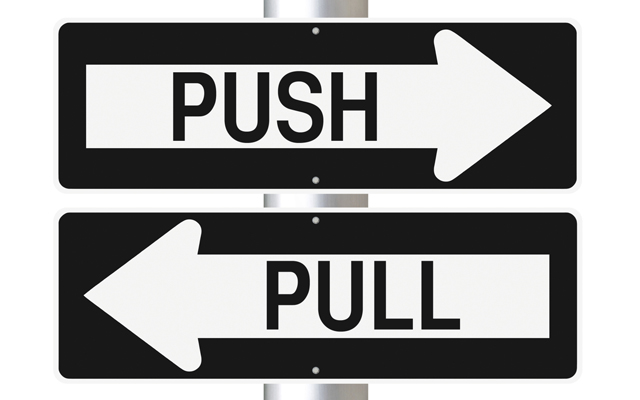
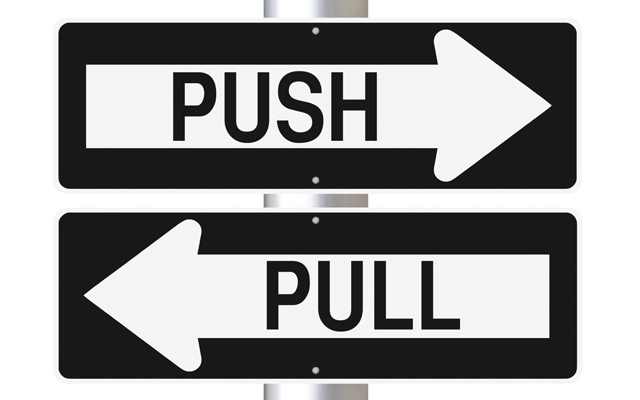
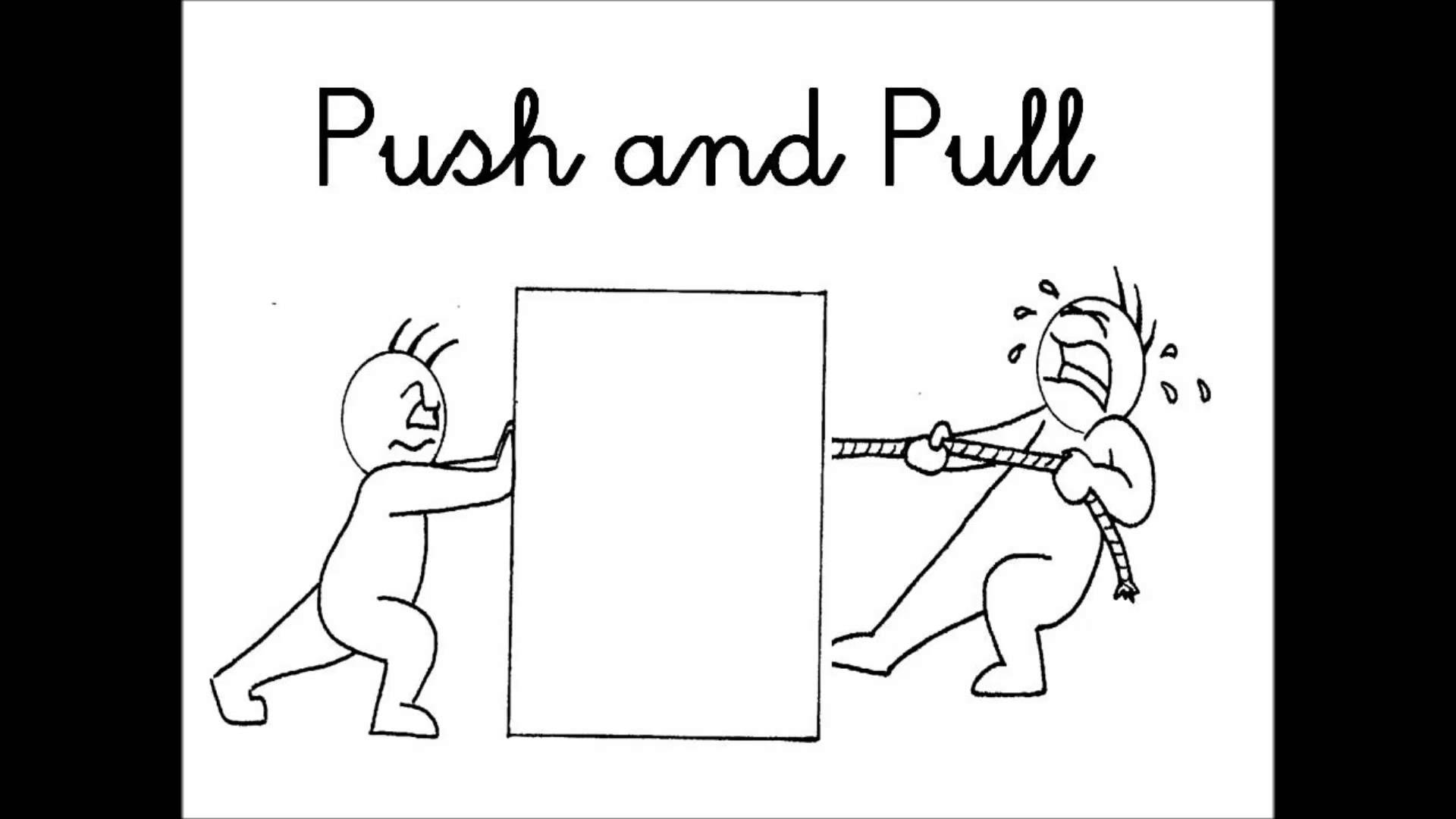
An example of a push factor is...
A new job
A better school
Natural disaster
Better health care
Something that makes people want to leave where they are is called a...
Push factor
Pull factor
Things that attract people to a new place are called
Push factors
Pull factors
One reason the world is growing so quickly is because...
The world has infinite resources for everyone
Birth rate is higher than death rate
There are more and more places for people to live
Death rate is higher than birth rate
High birthrate and high death rate means the total population is low
stage 1
stage 2
stage 3
stage 4
stage 5
Why would healthy lifestyles and advanced medical care reduce the deathrate?
lower life expectancy
birthrate increases
higher life expectancy
gni falls
Give two reasons why the death rate is high in stage 1
high GNI
Poor access to education
Poor access and quality of healthcare and sanitation
Good access and quality of sanitation
What does the term industrialisation mean?
people work on farms
people move to cities
People work in factories
the growth of factories in towns and cities for mass manufacturing

What growth rate does this population pyramid represent?
Rapid Growth
Slow Growth
Negative Growth
Zero Growth

Is this country Developed or Developing?
Developed
Developing
Which describes the birth and death rate of Stage 1 of the DTM?
The death rate is high but the birth rate is low
Both the death and birth rate are high
The death rate is low but the birth rate is high
Both the death and birth rate are low
In which stage of the DTM is the population growth the most rapid?
1
2
3
4
5

Which stage of demographic transition is India in based on this population pyramid.
Stage 1
Stage 4
Stage 3
Stage 5

Which stage of demographic transition is France in based on this population pyramid.
Stage 1
Stage 2
Stage 3
Stage 4
Which stage of demographic transition does population begin to decline?
Stage 1
Stage 5
Stage 4
Stage 2
A country with a poor agriculturally based economy where access to healthcare is limited and there is little to no sanitation.
A developing country
A developed country
A demographic country
A stage 4 country
A visual representation of the age and gender for a country's population.
Population Pyramid
Demographic Transition Model
Natural Population Growth Chart
Population Growth Chart
The number of deaths for babies before their first birthday for every 1,000 births.
Fertility Rate
Infant Mortality Rate
Death Rate
Demographic Transition
The change in population when the death rate is subtracted from the birth rate.
Natural Population Growth
Net Population Growth
Demographic Transition
Population Angle
Anything that stops or hinders a migration is known as a(n)
intervening obstacle
intervening opportunity
roadblock
government restriction
Which of the following is an example of an economic pull factor?
the availability of high paying jobs in Silicon Valley
The closing of the Ford plant in St Paul
The choice to move to a country with freedom of religion
The need to escape war and persecution
Which of the following is an example of an environmental push factor?
leaving a location due to a job loss
leaving a location to be nearer to family
leaving a location due to a hurricane
leaving a location due to high crime
Which of the following is the primary reason people migrate.
Economic opportunity
Cultural oppression
Overpopulation
pollution
Family
The act of migrants sending money to family in their home country is termed
alimony
allowance
subsidence
remittance
restitution
The Berlin Wall, the Great Wall of China, and DMZ would be considered
intervening obstacle
intervening opportunity
step migration
chain migration
expansion diffusion
You are planning to move from your hometown to Nashville. Along the way, you stop in Auburn, Alabama to visit a relative and fall in love with the city! You decide to stay and make Auburn our new home. This is an example of
intervening opportunity
distance decay
involuntary migration
push-pull factors
transhumance
Which type of diffusion is migration considered?
relocation diffusion
expansion diffusion
stimulus diffusion
hierarchical diffusion
contagious diffusion
Which of the following is true regarding emigration?
Emigration results in an influx of talented people in underdeveloped countries.
Emigration increase unemployment rates in underdeveloped countries.
Emigration can speed up development in underdeveloped areas.
Emigration reduces the pressure on land in overpopulated areas.
Emigration can increase cultural diversity.


Immigration is
returning to your home after an extended vacation
leaving your home for an extended vacation
permanently moving to another country
belief that native-born Americans are superior to others

