
 Worksheets
The Code of Hammurabi Quiz
Total questions: 54
Worksheet time: 27mins
What is the Code of Hammurabi?
A set of Babylonian laws inscribed on a stone pillar.
A collection of Egyptian religious texts.
A Roman code of military conduct.
A Greek philosophical treatise.
Where can visitors see the Code of Hammurabi today?
The Louvre Museum in Paris, France
The British Museum in London, England
The Metropolitan Museum in New York, USA
The Egyptian Museum in Cairo, Egypt
According to the Code of Hammurabi, what is the punishment if a son strikes his father?
His hands shall be hewn off.
He shall pay a fine.
He shall be exiled.
He shall be imprisoned.
What does the phrase "an eye for an eye" mean in the context of the Code of Hammurabi?
If a man puts out another man's eye, his own eye shall be put out.
If a man steals, he must return double.
If a man lies, he must apologize.
If a man is injured, he must pay a fine.
If someone breaks another man's bone according to the Code of Hammurabi, what happens?
His own bone shall be broken.
He must pay a gold mina.
He is exiled from the city.
He is given a warning.
What is the punishment if someone puts out the eye of a freed man, according to the Code of Hammurabi?
He shall pay one gold mina.
He shall lose his own eye.
He shall be put to death.
He shall be imprisoned.
What happens if someone brings a false accusation of a capital offense before the elders, according to Law 3 of the Code of Hammurabi?
He shall be put to death.
He shall pay a fine.
He shall be exiled.
He shall be imprisoned.
Why is the Code of Hammurabi considered significant in history?
It is one of the oldest and most complete collections of laws in the world.
It was the first written language.
It describes the history of Babylon.
It is a religious text.
How many laws are included in the Code of Hammurabi?
282
100
50
365
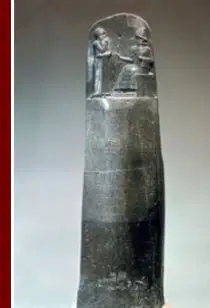
What does the stone pillar shown in the image represent?
The Code of Hammurabi
The Rosetta Stone
The Ten Commandments
The Magna Carta
What is the main topic mentioned in the image?
The Code of Hammurabi
The Rosetta Stone
The Magna Carta
The Ten Commandments
Which news organization is associated with the learning material shown in the image?
NBC News
BBC News
CNN
Al Jazeera
Based on the image, what type of resource is being referenced for learning about the Code of Hammurabi?
A video
A textbook
A podcast
A newspaper article
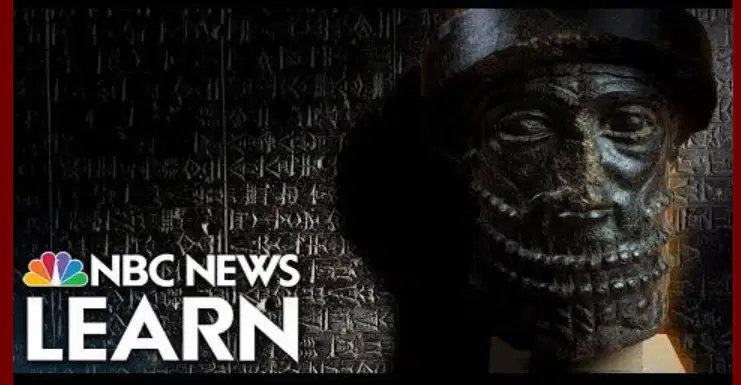
What ancient artifact is likely depicted in the image, based on the context provided?
The Code of Hammurabi
The Dead Sea Scrolls
The Rosetta Stone
The Book of the Dead
What type of information do Hammurabi’s Code and other Babylonian writings provide to historians?
Information about life in Babylonia
Instructions for building pyramids
Stories about Greek gods
Maps of the Roman Empire
Which of the following groups were NOT mentioned as part of the greater social differences in Babylonia?
Kings
Priests
Government officials
Scientists
What was a common occupation for most people in Babylonia?
Farmers
Sailors
Astronomers
Merchants
Why did irrigation canals need to be kept clear of silt in Babylonia?
To prevent flooding
To allow boats to travel
To ensure food could be grown and distributed
To catch fish
What materials did Babylonian artists use to make sculptures?
Stone and bronze
Wood and clay
Iron and glass
Paper and ink
Babylonian artists were also known for making jewelry from which materials?
Gold and precious stones
Silver and copper
Wood and shells
Iron and tin
How did goods move within the Babylonian Empire and beyond?
They were traded
They were given as gifts only
They were buried underground
They were thrown away
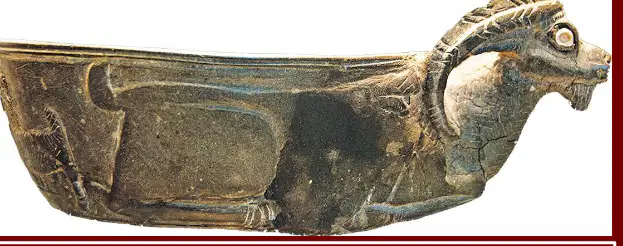
What does the decorative cup in the image represent about Babylonian art?
Artists created objects with animal forms
Artists only made plain cups
Artists did not use animals in their art
Artists only painted pictures
Which of the following best explains why wool was important in Babylonia?
It was collected and woven into textiles or cloth
It was used as money
It was eaten as food
It was used to build houses
Why did people in Babylonian cities develop new technologies?
To make tools, weapons, pottery, perfumes, and medicines
To build pyramids
To write novels
To create musical instruments
What happened to Sumerian culture after the fall of Hammurabi’s empire?
It disappeared completely and was forgotten.
It stayed alive in Babylonia and influenced other peoples.
It moved to Egypt and became part of their culture.
It was only remembered in myths and legends.
After Hammurabi’s death in 1750 BCE, what happened to his empire?
It expanded further.
It became stronger.
It collapsed.
It was taken over by Egypt.
How did Sumer’s influence continue even after its civilization faded away?
Through the adoption of Sumerian ideas and customs by other peoples.
By conquering new lands.
By building new cities.
Through trade with China.
Explain how Sumerian advances lived on after the civilization itself faded away.
Sumerian advances were forgotten after the civilization faded.
Sumerian advances were adopted by other peoples who came into contact with Sumer.
Sumerian advances were only used in Babylonia.
Sumerian advances were destroyed by Hammurabi.
Why is the legacy of Sumer considered important in world history?
Because Sumer was the only ancient civilization.
Because Sumerian ideas and customs influenced many other cultures, allowing their advances to live on.
Because Sumer conquered all of Mesopotamia.
Because Sumerian language became the world’s main language.
Which of the following private matters did Hammurabi’s Code address?
Business contracts, taxes, marriage, and divorce
Only criminal cases
Only religious ceremonies
Only military rules
According to Hammurabi’s Code, how were penalties determined for harming others?
The penalty was the same for everyone
The penalty was greater for harming someone of the same rank than for harming someone of lower rank
The penalty was only based on the crime, not the person harmed
The penalty was always less for harming someone of higher rank
What was a significant difference between Hammurabi’s Code and Ur-Nammu’s law code?
Hammurabi’s Code was less detailed
Hammurabi’s Code was more detailed
Ur-Nammu’s law code was the first to organize laws
Hammurabi’s Code only covered religious laws
Why is Hammurabi’s Code considered important for modern democratic principles?
It allowed only the king to make laws
It established the rule of law, meaning all members of society must obey the law
It focused only on military rules
It ignored private matters
Explain how Hammurabi’s Code influenced the idea of the rule of law in modern societies.
It showed that only rulers should follow laws
It introduced the concept that everyone, regardless of status, must obey the law, which is a foundation of modern democracy
It made laws only for business contracts
It ignored the rights of enslaved people
When did Hammurabi become king of Babylon?
Around 1792 BCE
Around 2000 BCE
Around 1500 BCE
Around 1200 BCE
What was the Old Babylonian empire also called?
Babylonia
Sumeria
Assyria
Akkadia
Which of the following was NOT one of Hammurabi’s actions to strengthen his empire?
Sent his own governors to rule distant cities
Built a strong navy
Spread out well-trained troops
Oversaw public building projects
How did Hammurabi encourage the growth of trade with other lands?
By building public projects
By closing city gates
By banning foreign merchants
By destroying trade routes
Why was it important for Hammurabi to create a strong government after building his empire?
To keep the empire united and maintain control over distant cities
To increase the population quickly
To avoid building new cities
To reduce the number of soldiers
What qualities made Hammurabi a successful leader according to the text?
He was an excellent military leader and a skilled ruler
He was a famous artist and musician
He was a peaceful negotiator only
He was known for his poetry
What is Hammurabi best remembered for?
Creating Hammurabi’s Code
Building the pyramids
Inventing the wheel
Writing epic poetry
What was the main purpose of Hammurabi’s Code?
To govern life in the Babylonian empire
To teach mathematics
To create new languages
To build large cities
According to the primary source, what did Hammurabi hope to achieve with his code?
To bring about the rule of righteousness and protect the weak from the strong
To increase trade with other empires
To expand the Babylonian empire’s territory
To invent new forms of writing
Why did Hammurabi want everyone in Babylonia to know the laws?
So they knew the laws they were expected to live by
So they could become soldiers
So they could travel to other countries
So they could become artists
How did Hammurabi’s Code differ from earlier laws in Sumerian times?
It made sure everyone knew the laws they were expected to live by
It focused only on religious rules
It was written in a different language
It was only for the king and his family
What was the main purpose of Hammurabi’s Code?
To create unity in the Babylonian empire
To encourage people to travel
To teach people how to farm
To build new cities
How many laws were included in Hammurabi’s Code?
100
282
50
500
Which of the following is an example of a punishment stated in Hammurabi’s Code?
If a man put out the eye of another man, his eye shall be put out.
If a man steals, he must pay a fine.
If a man lies, he must apologize.
If a man is late, he must work extra hours.
What effect did Hammurabi’s Code have on social order?
It encouraged social order by providing specific punishments for crimes.
It made people more likely to break the law.
It caused confusion about the rules.
It only applied to the king’s family.
Which of the following is NOT a type of law included in Hammurabi’s Code?
Criminal laws
Civil laws
Environmental laws
Laws about family issues
Why might the punishments in Hammurabi’s Code seem cruel by modern standards?
They often involved physical harm as punishment.
They were only written for children.
They were never enforced.
They were about farming techniques.
How did Hammurabi’s Code reinforce the power of the king?
The king claimed the laws were handed down to him by the gods.
The king allowed everyone to make their own laws.
The king ignored the laws.
The king only enforced the laws on himself.
Which of the following was a civil law topic covered by Hammurabi’s Code?
Slavery
Astronomy
Navigation
Cooking
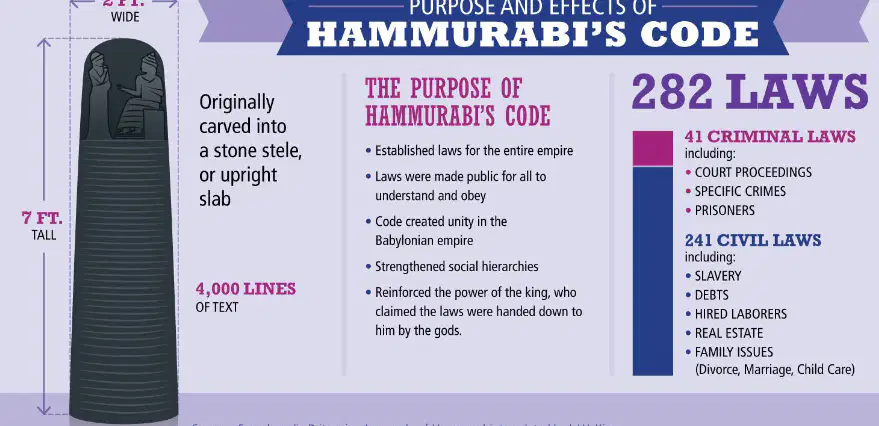
What material was Hammurabi’s Code originally carved into?
A stone stele or upright slab
A wooden board
A metal plate
A clay pot

