
 Worksheets
Unit 1 Review (Banking)
Total questions: 45
Worksheet time: 8hrs 30mins
Name
Class
Date
1.
Which of the following is an effective strategy for personal saving?
a)
Wait until the end of the month and save whatever is left in your checking account
b)
Save a certain percentage of each paycheck and deposit it directly into a savings account
c)
Cover all of your wants and needs and save whatever is left over
d)
Take out a payday loan so you can save before you receive your paycheck
2.
Joelle wants to have an emergency fund to cover 6 months of her expenses. Her monthly gross pay is $4,000 and her monthly expenses are $2,000. If she plans to save 10% of her gross pay each month, how long will it take her to build her emergency fund?
a)
3 months
b)
9 months
c)
24 months
d)
30 months
3.
All of the following are true about prepaid cards EXCEPT…
a)
Prepaid cards typically include a lot of fees
b)
Prepaid cards are a useful option for someone who is unbanked to make online purchases
c)
Prepaid cards are a great way to build credit
d)
Prepaid cards are usually accepted anywhere that debit and credit cards are accepted
4.
Fill in the blanks with the correct responses. If you follow the 50-30-20 rule of budgeting, you'll be putting 50% of your monthly income toward _______________, 30% of your monthly income toward _____________, and 20% of your monthly income toward ______________.
a)
Needs, wants, savings
b)
Savings, needs, wants
c)
Needs, savings, wants
d)
Wants, needs, savings
5.
Which of the following statements is TRUE?
a)
The majority of Americans have an adequate emergency fund
b)
The majority of Americans have sufficient amounts of money saved for retirement
c)
The majority of Americans have an adequate emergency fund, but do NOT have sufficient amounts of money saved for retirement
d)
The majority of Americans do NOT have an adequate emergency fund or sufficient amounts of money saved for retirement
6.
Experts recommend that you accumulate enough to cover 3 to 6 __________________ of expenses in your emergency fund.
a)
Days
b)
Weeks
c)
Months
d)
Years
7.
Three of these statements best describe a checking account. Which statement best describes a savings account?
a)
This account offers a convenient way to pay bills and access cash from an ATM
b)
This account pays you interest on money you have put away for later to help your money grow
c)
This account is automatically debited when you use a debit card
d)
This account typically allows an unlimited number of transactions per month
8.
You overhear your Aunt Tina tell your mom that she, her husband, and their kids are "living paycheck to paycheck." What does Aunt Tina mean by that?
a)
Aunt Tina gets a paycheck one month, and her husband gets a paycheck the next month; they alternate pay periods
b)
Aunt Tina and her family don't have any money saved, and their paychecks are just barely covering monthly expenses
c)
Aunt Tina and her family have high paying jobs and don’t worry much about money
d)
Aunt Tina only receives paper paychecks instead of direct deposit
9.
You are at the checkout counter at the local supermarket and use your debit card to pay for your groceries. Where does the money for this purchase come from?
a)
Your credit card company covers the cost
b)
It is deducted directly from your checking account
c)
Your credit card company provides you with a cash advance to cover the cost
d)
It is deducted directly from your savings account
10.
Which of the following transactions will REDUCE your checking account balance immediately?
a)
Writing your monthly rent check which you will mail tomorrow
b)
Using your debit card to pay for groceries at the supermarket
c)
Using your credit card to pay for your school books
d)
Depositing a check at a local bank branch
11.
Which of the following statements is an advantage of online banking?
a)
Once you set up online banking, your bank will waive overdraft, ATM, and monthly fees
b)
Using online banking allows you to earn a higher interest rate
c)
Using online banking, you can request transfers, pay bills and automate your savings without visiting the bank branch
d)
You can only shop online if your bank account has online banking features
12.
FDIC Insurance is...
a)
Optional coverage consumers can purchase so that their bank deposits remain safe
b)
Insurance bank branches can buy to protect their business against fraud and scams
c)
Required if you want to do online or mobile banking
d)
Protection for bank customers’ deposits up to $250,000, guaranteeing their money is still available if the bank goes out of business
13.
When signing up for a new checking account, you answer "Yes" to receive overdraft protection. On this day, you have $10 in your account and go out and use your debit card to buy lunch for $12, a movie ticket for $12 and dinner for $15. What is likely to be the outcome resulting from these transactions?
a)
Your account will be closed
b)
You will likely be charged an overdraft fee for one or more of the transactions and also will need to repay the bank for the amount overdrawn
c)
Since you requested overdraft protection, the bank will not allow you to overdraw your account so your debit card will be denied
d)
The bank will provide you five days to add funds to your account to cover the overdraft and no fees will be assessed
14.
How often do customers typically receive a bank statement for their checking account?
a)
Daily
b)
Weekly
c)
Monthly
d)
Annually
15.
Fill in the blanks: Direct deposit typically refers to your ______ sending your ______ electronically to your bank account.
a)
employer, bills
b)
employer, paycheck
c)
parents, allowance
d)
state government, taxes
16.
The highest yielding savings accounts are paying historically low interest rates, so Maria is only able to get a 1% annual interest rate for her savings account. Assuming interest rates do not change, use the Rule of 72 to approximate how many years it will take for her to DOUBLE her money in this account?
a)
1 year
b)
5 years
c)
10 years
d)
72 years
17.
You are comparing two savings accounts based on the interest you would earn and the fees they charge. Assuming you have a savings account with an average balance of $500, which combination of interest rates and fees are a better deal? (Hint: Using a one year period, determine the balance that you would have at Bank A and Bank B).
a)
Bank A offers you a savings account with a 10% annual interest rate and $5/month in fees
b)
Bank B offers you a savings account with 2% annual interest rate and no fees
c)
The two banks deals are equivalent
d)
Trick question -- it's a bad idea to open a savings account with just $500
18.
When a bank says their savings account earns 1% interest, that typically means you will earn 1% interest over what period of time?
a)
Daily
b)
Monthly
c)
Quarterly (three months)
d)
Annually (a year)
19.
Stanley deposits $1,000 into a savings account that pays 1% interest per year. At the end of the first year, he's earned $10 in interest and there is $1,010 in the account. If the account has simple interest, the 1% interest for year two would be based off ____________. If the account has compounding interest, the 1% interest for year two would be based off ________________.(NOTE: The first choice goes in the first blank, the second choice goes in the second blank).
a)
The original deposit ($1,000); The year one account balance ($1,010)
b)
The original deposit ($1,000); The year one interest ($10)
c)
The year one account balance ($1,010); The year one interest ($10)
d)
The year one account balance ($1,010); The original deposit ($1,000)
20.
You open a new bank account at Eastside Savings. You see FDIC stickers around the bank, and the teller specifically mentions that Eastside Savings is "FDIC insured". A few months later, you hear on the radio that Eastside Savings is struggling to stay in business. Your savings balance is $500. What would happen to that money if Eastside Savings failed?
a)
You would receive all the money you have deposited at Eastside Savings since FDIC insurance covers accounts up to $250,000.
b)
You could lose $250 since FDIC insurance only covers 50% of the money you have deposited.
c)
You would lose all of your money.
d)
You would receive $250,000 since FDIC insurance provides each account at the bank with $250,000 regardless of how much they have deposited.
21.
What would be a good time to spend money from your Emergency Fund?
a)
You lose your job but still have bills to pay
b)
Your friend tells you that you should buy as much Bitcoin as possible
c)
Your favorite artist releases a new album and you just have to buy it
d)
Your friends are going on an expensive trip an you would like to go with them
22.
You want to take earnings from your part-time job to pay for a new laptop. Your monthly take-home pay is $500 and the laptop costs $1,200. What percentage of your pay do you need to save in order to buy the laptop in 12 months?
a)
5%
b)
10%
c)
15%
d)
20%
23.
What interest rate would you need to double $2500 in 12 years?
a)
5%
b)
34%
c)
6%
d)
16%
24.
When interest is added to the balance each year and the new balance is used to calculate the interest for the next year, this is called...
a)
Simple Interest
b)
Rule of 72
c)
Compound Interest
d)
Inflation
25.
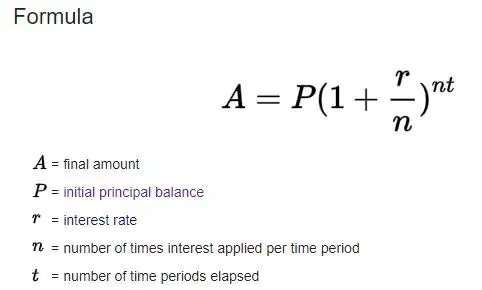
Determine the amount after 4 years if $17,500 is compounded annually at 11%. Round to the nearest cent.
a)
$2656.23
b)
$25,236.56
c)
$26,566.23
d)
$26,665.32
e)
$27,665.27
26.
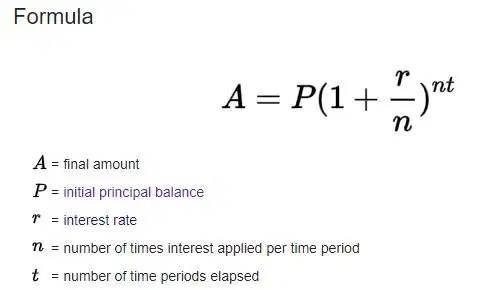
Determine the amount after 6 years if $3200 is compounded quarterly at 10.7%. Round to the nearest cent.
a)
$6,029.80
b)
$629.80
c)
$5,029.80
d)
$32,000.07
e)
$7,029.80
27.
Which of the following transactions may NOT be reflected on your account balance if you go online to check your balances?
a)
ATM cash withdrawal from yesterday
b)
Check that you mailed to your cousin for his birthday today
c)
Automatic payment for your car loan paid two days ago
d)
Debit card transaction from purchasing snacks at a local convenience store today
28.
When signing up for a new checking account you answer "No" to receive overdraft protection. On this day, you have $10 in your account. You go out and use your debit card to buy lunch for $12, a movie ticket for $12 and dinner for $15. What is likely to be the outcome resulting from these transactions?
a)
Your account will be closed
b)
You will likely be charged an overdraft fee for EACH transaction and need to repay the bank the funds overdrawn ($29)
c)
Because you turned down overdraft protection, the bank will not allow you to overdraw your account so your card will be denied in these 3 instances
d)
The bank will provide you with five days to add funds to your account to cover the overdraft but will not charge you any fees.
29.
You are developing a savings plan and using short-, medium-, and long-term goals to motivate you. Which represents possible goals from short-term to long-term? Save for…
a)
Retirement, a house down payment, college tuition
b)
A new cell phone, college tuition, a house down payment
c)
A new cell phone, dinner with friends this weekend, a new bike
d)
Retirement, college tuition, a vacation
30.
Which represents the BEST time to start saving for your retirement?
a)
As soon as you have your first full-time job
b)
Right after you pay off your student loans
c)
Once you are debt-free, including paying off all credit cards, auto loans, and your mortgage
d)
At age 45, so you have exactly 20 years until retirement
31.
Digital wallets and P2P payments have made the use of __________ less necessary.
a)
Mobile phones
b)
Driver's license
c)
Physical cash
d)
Insurance cards
32.
If you want to reach your savings goal of $30,000 in 4 years, how much do you need to save each month?
a)
$625.00
b)
$4.00
c)
$30,000.00
d)
$565.00
e)
$7,500.00
33.
When writing a check for a payment of $145.09, which of the following illustrates the correct way to write this value on the line for payment amount?
a)
ONE FOUR FIVE DOLLARS and ZERO NINE CENTS
b)
ONE HUNDRED FORTY-FIVE DOLLARS and NINE CENTS
c)
145 DOLLARS and 09 CENTS
d)
ONE HUNDRED FORTY-FIVE and 09/100--------------
34.
A summary of all transactions in your bank account over a specific period is called a:
a)
Low Balance Alert
b)
Check
c)
Debit Card
d)
Bank Statement
35.
Which of the following payment methods directly withdraws funds from your bank account at the time of purchase?
a)
Credit card
b)
Debit card
c)
Certificate of Deposit (CD)
d)
Check
36.
What is a written order instructing your bank to pay a specific amount of money to a particular person or entity?
a)
Deposit
b)
Check
c)
Bank Statement
d)
Check Register
37.
What is the term for interest calculated on the initial principal and also on the accumulated interest of prior periods?
a)
Simple Interest
b)
Low Balance Alert
c)
Maintenance Fee
d)
Compound Interest
38.
Which of the following allows you to borrow money from a financial institution, with the agreement to pay it back with interest?
a)
Credit card
b)
Debit card
c)
Mobile Deposit
d)
Direct Deposit
39.
Adding funds to your bank account is known as a:
a)
Deposit
b)
Withdrawal
c)
Transfer
d)
Balance Inquiry
40.
What is the electronic transfer of funds directly from an employer to an employee's account?
a)
Mobile Deposit
b)
Online Bill Pay
c)
ATM Withdrawal
d)
Direct Deposit
41.
Which of the following is a fund specifically set aside to cover unexpected financial emergencies?
a)
Emergency Fund
b)
Minimum Balance
c)
Certificate of Deposit (CD)
d)
Compound Interest
42.
What does FDIC insurance protect?
a)
Credit card balances
b)
Investment accounts
c)
Deposits in member banks
d)
Stock market losses
43.
What is the term for the money earned on the balance in a savings account or investment?
a)
Interest
b)
Maintenance Fee
c)
Low Balance Alert
d)
Overdraft Fee
44.
What is a notification you might receive from your bank when your account balance falls below a certain level?
a)
Low Balance Alert
b)
Maintenance Fee
c)
Bank Statement
d)
Overdraft Fee
45.
What is a fee that a bank may charge for maintaining an account?
a)
Interest
b)
Minimum Balance
c)
Maintenance Fee
d)
Overdraft Fee
100 %

