
 Worksheets
Unit 2 Tissues Quiz
Total questions: 16
Worksheet time: 12mins
Match each tissue type with its correct description.
Tissue that connects or links one part of the body to another
Connective Tissue
Tissue that is specialized to contract or shorten and is used to move different body parts
Muscle Tissue
Tissue that covers the external surfaces of body, lines internal body cavities and passageways; forms skin and lining of the digestive tract and respiratory system
Epithelial Tissue
Specialized to control different body functions with the use of specialized electrical signals throughout the body
Nervous Tissue
Define: Extracellular
Extracellular means located or occurring outside a cell or cells.
Extracellular means located inside the nucleus of a cell.
Extracellular refers to the genetic material within a cell.
Extracellular describes the process of cell division.
Define: Cartilage
Cartilage is a flexible connective tissue found in joints, ear, nose, and respiratory tract.
Cartilage is a type of bone tissue that forms the skull.
Cartilage is a fluid found in the blood vessels.
Cartilage is a muscle tissue responsible for movement.
Define: Ground substance
Ground substance is the non-cellular material in connective tissue that fills the space between cells and fibers.
Ground substance is a type of bone cell responsible for bone formation.
Ground substance is the protein found in muscle fibers that enables contraction.
Ground substance is the outermost layer of the skin that protects underlying tissues.
Define: Neuroglia
Neuroglia are supporting cells in the nervous system that protect and assist neurons.
Neuroglia are the main cells responsible for transmitting electrical impulses in the nervous system.
Neuroglia are specialized muscle cells found only in the heart.
Neuroglia are hormones that regulate the function of the endocrine system.
A ________ is a thin sheet of tissue that lines the outside of the body and internal cavities and passageways of the body. They separate one component of the body from another.
body membrane
ligament
tendon
cartilage
Click and drag the images below to correctly identify the shapes of simple epithelium cells.

Columnar

Squamous

Cuboidal
Pseudostratified epithelium cells are different from stratified epithelium cells in that:
Pseudostratified epithelium appears to have multiple layers but all cells touch the basement membrane, while stratified epithelium has multiple true layers.
Pseudostratified epithelium has multiple true layers, while stratified epithelium appears to have only one layer.
Both pseudostratified and stratified epithelium have only one layer of cells.
Stratified epithelium cells are always ciliated, while pseudostratified are not.
Flat-shaped cells arranged in multiple layers that become more squamous shaped as they become more superficial.
Skin
Urinary bladder
Trachea
Esophagus
__________ is a specialized connective tissue having firm ground substance making this tissue hard and durable.
Bone
Cartilage
Blood
Adipose tissue
Click and drag the organs below to match them to their correct muscle tissue:
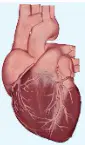
Cardiac
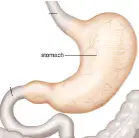
Smooth
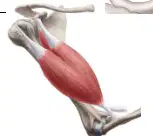
Skeletal
Select the correct statement about muscle tissue.
Skeletal muscles are voluntary; cardiac and smooth muscles are involuntary.
Cardiac muscles are voluntary; skeletal and smooth muscles are involuntary.
Smooth muscles are voluntary; skeletal and cardiac muscles are involuntary.
All muscle tissues are voluntary.
Match the following images of connective tissue to their name.

adipose

dense irregular

elastic

reticular

dense regular

