
NEW
Font size
 Worksheets
Materials - Mechanical Properties
Total questions: 15
Worksheet time: 8mins
A company is designing a product that will be exposed to constant friction. Based on your knowledge of mechanical properties, which property should be most important in their material selection, and what is the reasoning?
Wear resistance, because it ensures the material can withstand friction without degrading quickly.
Transparency, because it allows users to see through the product.
Electrical conductivity, because it allows the product to conduct electricity.
Hardness, because it only affects how easily the material can be scratched.
Given a scenario where a bridge must support heavy loads without failing, which mechanical property is most critical, and how does it influence the bridge's performance?
Strength, because it determines the maximum load the bridge can support before breaking.
Flexibility, because it allows the bridge to change shape easily.
Color, because it affects the bridge's appearance.
Transparency, because it allows light to pass through the bridge.
Given that shear occurs when directional forces cause the internal structure of a material to slide against itself at the granular level, propose a real-world example (other than bolts or beams) where understanding shear strength is essential, and justify your reasoning.
In designing earthquake-resistant buildings, understanding shear strength is essential because seismic forces can cause layers of materials to slide past each other, potentially leading to collapse.
In painting a wall, understanding shear strength is essential because paint layers might slide off.
In making ice cream, understanding shear strength is essential because the mixture needs to be stirred.
In writing with a pencil, understanding shear strength is essential because the graphite might break.
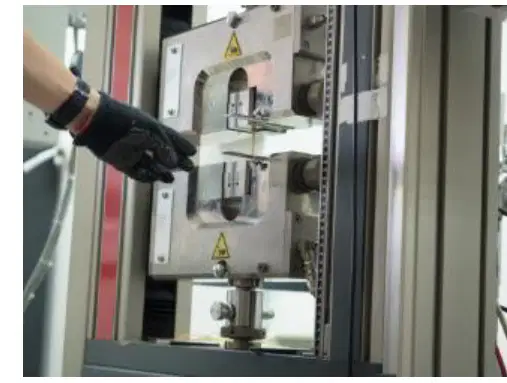
A manufacturer is selecting a material for a bridge cable. The cable must withstand a high load without breaking. Using your understanding of tensile strength, explain why it is important to consider the tensile strength of the material, and identify which units would be appropriate for measuring this property.
Tensile strength determines how much load a material can withstand before breaking; it should be measured in newtons (N) per square millimeter (megapascals or MPa), or pounds per square inch.
Tensile strength determines the flexibility of a material; it should be measured in degrees Celsius or Fahrenheit.
Tensile strength determines the color of a material; it should be measured in lumens or candelas.
Tensile strength determines the electrical conductivity of a material; it should be measured in ohms or amperes.
A civil engineer is comparing two materials for use in a high-rise building. Material A has a higher tensile strength than Material B. Using strategic reasoning, explain how this information would influence the engineer’s decision and what could happen if a material with insufficient tensile strength is chosen.
The engineer should choose Material A because it can withstand a greater load before breaking; using a material with insufficient tensile strength could lead to structural failure or fracture.
The engineer should choose Material B because it is likely to be more flexible; using a material with high tensile strength could cause the building to melt.
The engineer should choose Material B because it is less likely to conduct electricity; using a material with high tensile strength could cause electrical hazards.
The engineer should choose Material A because it is more colorful; using a material with insufficient tensile strength could cause discoloration.
A manufacturer is testing a new alloy for use in automotive parts. They measure the yield strength in megapascals (MPa). Why is it important to use this measurement, and what does it indicate about the material's performance under stress?
It indicates the temperature at which the material will melt.
It shows the point at which the material will return to its original shape after being stretched.
It measures the load per unit area at which the material transitions from elastic to plastic deformation, indicating its ability to maintain dimensional integrity under stress.
It determines the color change of the material under load.

A materials engineer is tasked with selecting a material for an offshore oil platform that will be exposed to extremely low temperatures. Using your understanding of toughness and the Charpy impact test, explain why the Charpy value is a critical parameter in this scenario and how it influences material selection.
The Charpy value indicates the material's ability to absorb impact at low temperatures, helping prevent brittle failure in harsh environments.
The Charpy value measures the material's electrical conductivity, which is important for offshore platforms.
The Charpy value determines the corrosion resistance of the material, which is the only factor in material selection.
The Charpy value is only relevant for high-temperature applications and does not affect material selection for low temperatures.
Given that impact resistance decreases at low temperatures, analyze why materials used in military aircraft or ballistic containment must be carefully selected based on their toughness properties.
Because these applications may experience instantaneous loading, requiring materials that can absorb impact without fracturing even at low temperatures.
Because military aircraft only operate in warm climates, so toughness is not a concern.
Because ballistic containment relies solely on the weight of the material, not its toughness.
Because toughness is only important for decorative parts, not structural components.
A manufacturer is choosing a material for a machine part that will experience frequent contact with abrasive surfaces. Using your understanding of hardness, explain why selecting a material with high hardness is strategically important, and identify which tests could be used to verify the material's suitability.
High hardness ensures the part resists permanent indentation and wear; Brinell, Rockwell, and Vickers tests can be used.
High hardness makes the part more flexible; only the Brinell test is suitable.
High hardness increases the part's electrical conductivity; Rockwell and Vickers tests are not relevant.
High hardness reduces the part's resistance to corrosion; no tests are needed.
A research team is comparing two materials for use in a cutting tool. Material A has a higher resistance to scratching and abrasion than Material B. Using strategic reasoning, which material should they select and why?
Material A, because higher resistance to scratching and abrasion indicates greater hardness, which is desirable for cutting tools.
Material B, because lower resistance to scratching means it is easier to shape.
Material A, because it is likely to be less expensive.
Material B, because it will deform more easily under pressure.
Suppose you are conducting a tensile test on two different metal samples. Sample A shows a large percentage of elongation before breaking, while Sample B shows very little elongation. Using reasoning, which sample would you classify as more ductile, and what evidence supports your conclusion?
Sample A, because a larger percentage of elongation indicates higher ductility.
Sample B, because less elongation means it is stronger.
Both samples are equally ductile, as elongation does not affect ductility.
Neither sample is ductile, as both eventually break.
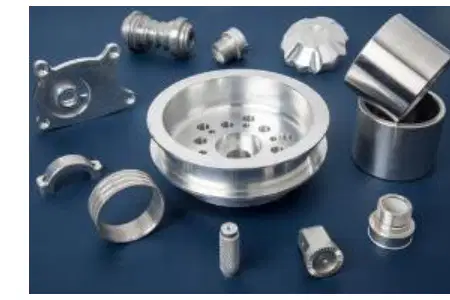
A company is designing a process to create thin sheets from a new metal alloy. What reasoning process should they use to determine if the alloy is appropriate for this process, based on the concept of malleability?
They should test the alloy’s ability to withstand compressive stress without breaking, as high malleability is required for forming thin sheets.
They should measure the alloy’s electrical conductivity to ensure it can be used in electronic devices.
They should check if the alloy is magnetic to determine if it can be used in motors.
They should assess the alloy’s color to ensure it matches the desired appearance.
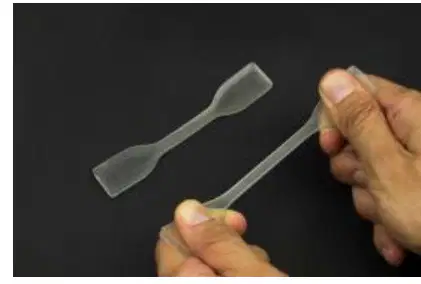
Given a material with a high Young’s modulus, what can you infer about its stiffness and its response to applied stress and strain? Use reasoning based on the relationship between stress and strain.
The material is very stiff and will deform very little under applied stress.
The material is very flexible and will deform a lot under applied stress.
The material will break easily under any amount of stress.
The material will not return to its original shape after the stress is removed.
A manufacturer is designing a metal component that must permanently retain a new shape after being bent during assembly. Using your understanding of material properties, explain why plasticity is a critical consideration in this scenario, and describe what would happen if the material only exhibited elastic behavior.
Plasticity allows the material to permanently retain the new shape, while elastic behavior would cause it to return to its original shape.
Plasticity causes the material to break easily, while elastic behavior makes it unbreakable.
Plasticity makes the material lighter, while elastic behavior makes it heavier.
Plasticity increases the material's temperature, while elastic behavior decreases it.
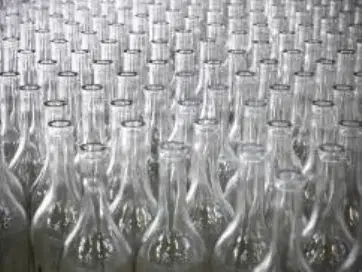
A manufacturer is designing a new type of glass bottle and wants to ensure it does not fail suddenly under stress. Using your understanding of brittleness, explain why glass is considered a brittle material and how this property could impact the design and use of the bottle.
Glass is considered brittle because it fails without deformation under stress, which means the bottle could shatter suddenly if dropped.
Glass is considered brittle because it can bend easily before breaking, making it safer for use.
Glass is considered brittle because it absorbs a lot of energy before breaking, making it ideal for impact resistance.
Glass is considered brittle because it becomes softer at low temperatures, making it more flexible.

