
 Worksheets
flight quiz 1
Total questions: 119
Worksheet time: 3hrs 2mins

Leonardo da Vinci was a famous ....
inventor and artist
artist and teacher
driver and sculptor
painter and caretaker

The Wright brothers' names were....
Orson and Welles
Orville and Wilbur
Otto and Karl
Olio and Stanlio


Aerospace engineers work on
Domestic & Commercial aviation, national defense, and space exploration
On air
Only space exploration
On space planes.
What question do engineers need to keep asking?
Who
What
When
Where
Why
What did Amelia Earhart attempt to do, but died trying?
Flying across the Atlantic Ocean
Flying across the Pacific Ocean
Flying around the world
Fly over the north and south poles

What was the purpose of the roman aqueducts?
Move people
Move air
Move water
Move animals
What if the first recorded attempt of heavier-than-air flight?
Abbas ibn Firnas
Wright Brothers
Icarus
Lu Ban
Who is referred to as the "father of aeroplanes"?
Lu Ban
Wright Brothers
Sir George Cayley
Samuel Langley
What device did the Wright brothers build to help them test their wings and gliders?
whirling arm gig
a large hill
wind tunnel
they didn't build anything
What device did the Wright brothers build to help them test their wings and gliders?
whirling arm gig
a large hill
wind tunnel
they didn't build anything
Which brother won the rights to the first attempt at powered flight in 1903?
Wilbur Wright
Orville Wright
What state did the Wright Brothers complete their flight of the Wright Flyer I in?
North Carolina
South Carolina
Ohio
Georgia
Which brother actually flew in the first sustained, controlled, powered, heavier-than-air flight?
Wilbur Wright
Orville Wright
Who were the Wright Brothers?
Orville and Wilbur Wright
Thomas and Henry Wright
Peter and David Wright
John and Michael Wright
What year did the Wright Brothers achieve the first powered flight?
1903
1910
1905
1920
What is the role of air traffic control in commercial aviation?
To manage and monitor aircraft movement, provide instructions to pilots, and prevent collisions.
To serve food and beverages to passengers
To provide in-flight entertainment for passengers
To clean the aircraft after each flight
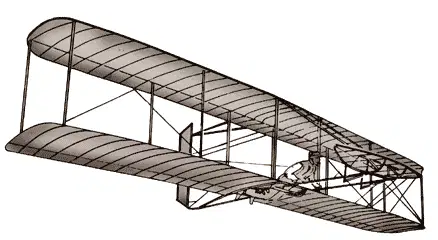
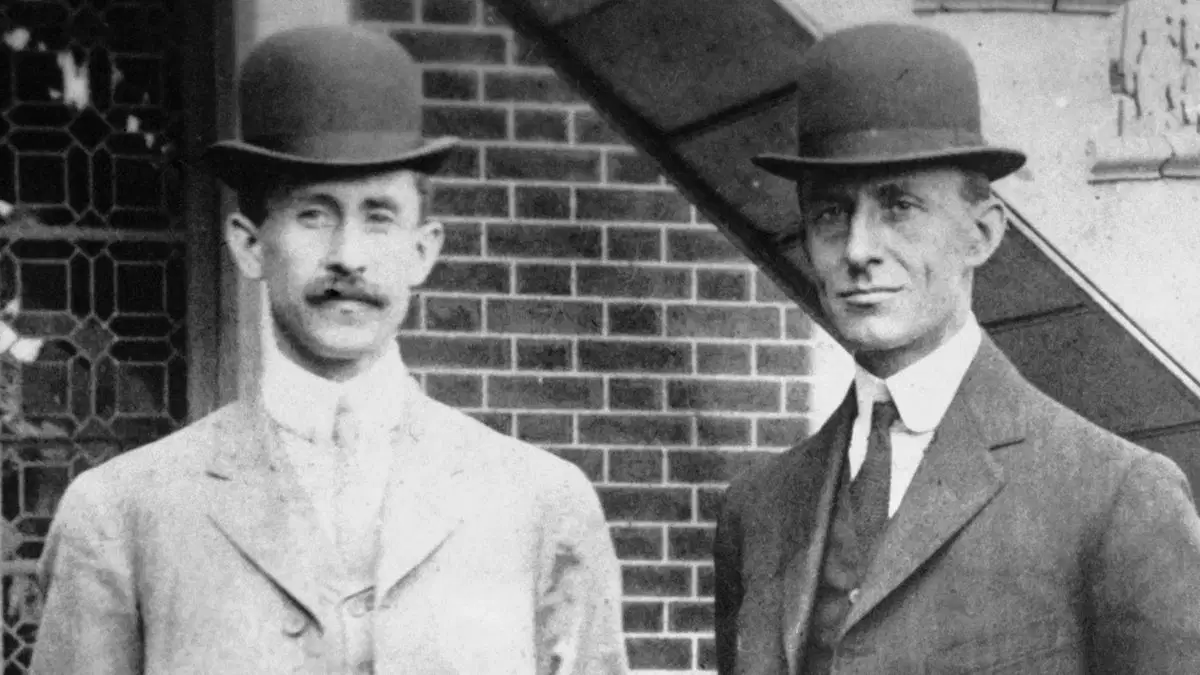
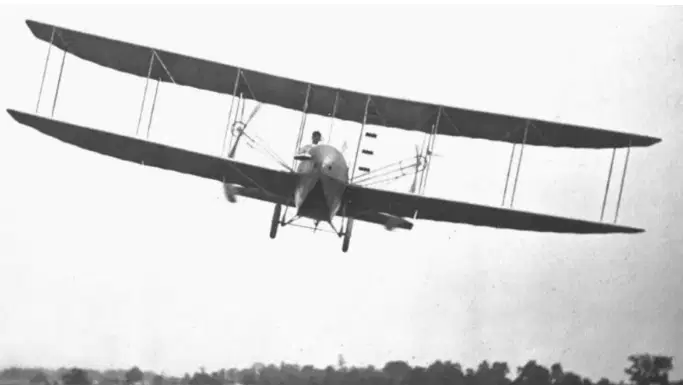
20 minutes
32 minutes
6 seconds
20 minutes
32 minutes
6 seconds
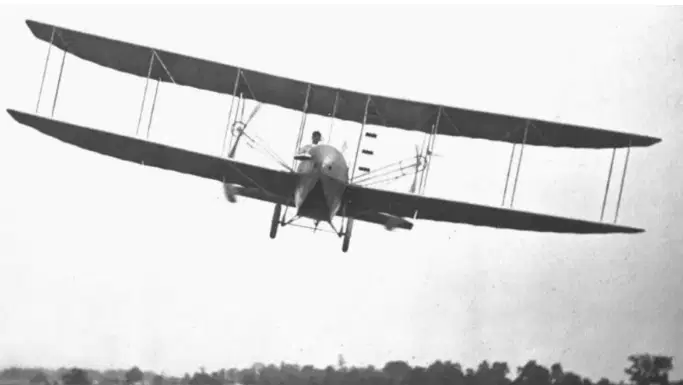
December 17, 1903
April 16, 1867
August 19, 1871
April 3, 1985
December 17, 1903
April 16, 1867
August 19, 1871
April 3, 1985
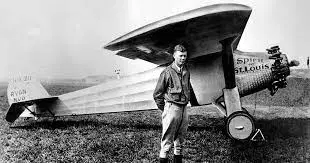
The first non-stop flight (in a monoplane) from Long Island, NY to Paris was done by _______________ flying the ________________.
Charles Augustus Lindbergh, Kitty Hawk
Wilbur Wright, American Glider
Charles Augustus Lindbergh, Spirit of St. Louis
Orville Wright, Kitty Hawk
The first non-stop flight (in a monoplane) from Long Island, NY to Paris was done by _______________ flying the ________________.
Charles Augustus Lindbergh, Kitty Hawk
Wilbur Wright, American Glider
Charles Augustus Lindbergh, Spirit of St. Louis
Orville Wright, Kitty Hawk
What did early inventors use to make wings?
Leafs
Wax
Cloth
Feathers
Which phenomenon is known as the Bernoullian lift?
For every action, there is an equal and opposite reaction
The air flow over the top of the wing causing the pressure to drop and the wings to move upward
The additional lift noticed when a pilot angles the wing of the plane up against an oncoming wind
There is no relationship between pressure and fluids in motion
The force of gravity, a downward force.
weight
lift
drag
thrust
A force at a right angle to the direction of motion.
weight
lift
thrust
drag
The force that propels a flying machine in the direction of motion.
weight
lift
thrust
drag
Which part of an airplane provides the lift?
wing
engine
wheels
Which part of an airplane provides the lift?
wing
engine
wheels

Name the force of flight shown by the arrow.
lift
thrust
drag
weight
Location where Wright Brothers flew their successful flight?
Dayton, Ohio
Pensacola, Florida
Kitty Hawk, North Carolina
Norfolk, Virginia
Who flew the first successful controlled and powered flight?
Wright brothers
Samule Langley
Otto Lillenthal
Who developed hot air balloons?
Montgolfier Brothers
Igor Sikorsky
Chuck Yeager
Charles Lindberg
Who developed hot air balloons?
Montgolfier Brothers
Igor Sikorsky
Chuck Yeager
Charles Lindberg
Who broke the sound barrier?
Army Air Service
Igor Sikorsky
Chuck Yeager
Charles Lindberg
Who broke the sound barrier?
Army Air Service
Igor Sikorsky
Chuck Yeager
Charles Lindberg
Who was responsible for the 1st trans-Atlantic flight?
Army Air Service
Igor Sikorsky
Kitty Hawk
Charles Lindberg
Who was responsible for the 1st trans-Atlantic flight?
Army Air Service
Igor Sikorsky
Kitty Hawk
Charles Lindberg
Who made the 1st drawings of flying machines?
Pachebel
Leonardo De Vinci
Kitty Hawk
Boeing 737
Who made the 1st drawings of flying machines?
Pachebel
Leonardo De Vinci
Kitty Hawk
Boeing 737
What was developed to help pilots learn to fly?
Flight simulators
Jet engines
Health checks
FAA
What was developed to help pilots learn to fly?
Flight simulators
Jet engines
Health checks
FAA
What was developed to help pilots learn to fly?
Flight simulators
Jet engines
Health checks
FAA
This was developed in between WWI and WWII.
flight simulators
jet engines
health checks
FAA
This was developed in between WWI and WWII.
flight simulators
jet engines
health checks
FAA
Which of the following milestones did Amelia Earhart achieve?
First woman to fly around the world
First woman to fly across the Atlantic
First woman to fly across the United States
First person to fly an autogiro to an altitude of 20,000 feet
Which of the following milestones did Amelia Earhart achieve?
First woman to fly around the world
First woman to fly across the Atlantic
First woman to fly across the United States
First person to fly an autogiro to an altitude of 20,000 feet
what was the first commercial jet airliner?
de havilnad comet
russian tuplove
b727
a3000
what was the first commercial jet airliner?
de havilnad comet
russian tuplove
b727
a3000
what was the first commercial jet airliner?
de havilnad comet
russian tuplove
b727
a3000
The four aerodynamic forces acting on an airplane are:
Lift, Archimedes, thrust and drag
Lift, weight, thrust and drag
Power, weight, velocity and friction
Thrust, torque, drag, drop
The four aerodynamic forces acting on an airplane are:
Lift, Archimedes, thrust and drag
Lift, weight, thrust and drag
Power, weight, velocity and friction
Thrust, torque, drag, drop
The four aerodynamic forces acting on an airplane are:
Lift, Archimedes, thrust and drag
Lift, weight, thrust and drag
Power, weight, velocity and friction
Thrust, torque, drag, drop
Who made the first nonstop flight across the Atlantic Ocean?
Charles A. Lindbergh, in 1927
Abram C. Pheil, in 1914
Otto Lilienthal, in 1896
Jacques Etienne Montgolfier, in 1873
Which of the following is NOT a characteristic of airplanes?
Heavier than air
Fixed-wing
Lighter than air
Powered flight
Which of the following is NOT a characteristic of airplanes?
Heavier than air
Fixed-wing
Lighter than air
Powered flight

Where did the Wright brothers fly their first airplane?
Charlotte, North Carolina
Kitty Hawk, North Carolina
Hilton Head, South Carolina
Charlestown, South Carolina
The first time aircraft was used in war.
World War I
Korean War
Civil War
World War II
The first time aircraft was used in war.
World War I
Korean War
Civil War
World War II

She was the first woman to fly solo across the Atlantic Ocean.
Amelia Bedelia
Bessie Coleman
Amy Johnson
Amelia Earhart

Chuck Yeager broke this barrier.
sound
speed
light
the atmosphere
Chuck Yeager broke this barrier.
sound
speed
light
the atmosphere

She was the first female Black pilot.
Bessie Smith
Bessie Burke
Beth Coleman
Bessie Coleman
She was the first female Black pilot.
Bessie Smith
Bessie Burke
Beth Coleman
Bessie Coleman
An aviator is a _______________________ .
pilot
mechanic
soldier
flight instructor
An aviator is a _______________________ .
pilot
mechanic
soldier
flight instructor

Who created the first hot air balloon?
The Wright Brothers
Amelia Earhart
The Montgolfier Brothers
What are the 4 forces of flight?
Thrust, Drag, Lift, Weights
Drag, Mass, Lift, Weight
Lift, Drag, Thrust, Gravity
Gravity, Drag, Thrust, Weight

What animal inspired the invention of hang gliders?
Bird
Fish
Flying squirrel
Bee
What animal inspired the invention of hang gliders?
Bird
Fish
Flying squirrel
Bee

This principle states that the faster a fluid moves, the less pressure the fluid exerts.
Bernoulli's Principle
Newton's Principle
Pascal's Principle
Archimedes' Principle
This principle states that the faster a fluid moves, the less pressure the fluid exerts.
Bernoulli's Principle
Newton's Principle
Pascal's Principle
Archimedes' Principle
This principle states that the faster a fluid moves, the less pressure the fluid exerts.
Bernoulli's Principle
Newton's Principle
Pascal's Principle
Archimedes' Principle
This principle states that the faster a fluid moves, the less pressure the fluid exerts.
Bernoulli's Principle
Newton's Principle
Pascal's Principle
Archimedes' Principle


If a hairdryer blows a stream of air between two soda cans hanging side by side, the soda cans will ____________________.
rise
move away from each other
move toward each other
not move

Where will air move faster - above or below an airplane wing?
above
below
Where will air move faster - above or below an airplane wing?
above
below
Where will air move faster - above or below an airplane wing?
above
below
Where will air move faster - above or below an airplane wing?
above
below

Where will the pressure be greater - above or below the wing?
above
below
Where will the pressure be greater - above or below the wing?
above
below
Where will the pressure be greater - above or below the wing?
above
below
Where will the pressure be greater - above or below the wing?
above
below
Where will the pressure be greater - above or below the wing?
above
below
Where will the pressure be greater - above or below the wing?
above
below


Whose Principle is used to describe why flight is possible?
Newton
Wright Brothers
Bernoulli
Whose Principle is used to describe why flight is possible?
Newton
Wright Brothers
Bernoulli
Whose Principle is used to describe why flight is possible?
Newton
Wright Brothers
Bernoulli
Whose Principle is used to describe why flight is possible?
Newton
Wright Brothers
Bernoulli
If the pressure is the same above the wing that it is below the wing, what will the airplane do?
lift
sink
Neither lift or sink
If the pressure is the same above the wing that it is below the wing, what will the airplane do?
lift
sink
Neither lift or sink
Which of the following is correct?
Lower pressure is caused by the speed of the air over the top of the wing. Which means there is now higher pressure on the bottom of the wing. This causes a plane to lift.
Higher pressure is caused by the speed of the air over the top of the wing. Which means there is now lower pressure on the bottom of the wing. This causes the plane to lift.
Neither of these are correct.
Both of these are correct.

