
Font size
 Worksheets
Carbohydrates Worksheet
Total questions: 22
Worksheet time: 14mins
What are the monomers of carbohydrates called?
Monosaccharides
Polysaccharides
Oligosaccharides
Disaccharides
Carbohydrates (sugars) are made up of carbonyl groups, several hydroxyl groups, and what else?
Multiple C-H bonds
Phosphate groups
Amino groups
Sulfhydryl groups
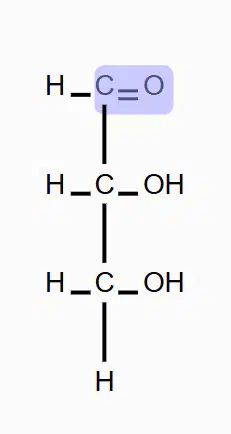
What is a monosaccharide with a carbonyl group at the end of the molecule called?
Aldose
Ketose
Triose
Hexose
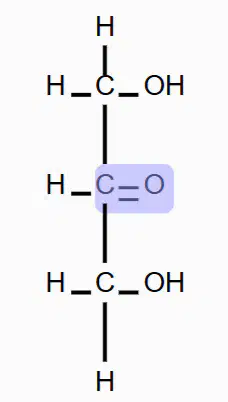
What is a monosaccharide with a carbonyl group in the middle of the molecule called?
Ketose
Aldose
Triose
Pentose
Can the number of carbon atoms present in a sugar vary?
Yes
No
Only in plants
Only in animals
What is a triose?
3 carbon monosaccharide
5 carbon monosaccharide
6 carbon monosaccharide
4 carbon monosaccharide
Which of the following is an example of a pentose?
Ribose
Glucose
Fructose
Sucrose
What is the group where carbons are numbered consecutively starting at the end nearest to it in a monosaccharide?
Carbonyl
Hydroxyl
Methyl
Amino
What is the main function of glucose in cells?
Source of carbon atoms and chemical energy
Structural support
DNA synthesis
Protein folding
What can be below or above the plane of the ring in a sugar ring structure?
Newly formed C-1 hydroxyl group
Phosphate group
Amino group
Methyl group
Which of the following is NOT a way carbohydrate monosaccharides vary?
Type of peptide bond
Location of carbonyl group
Number of carbons
Arrangement of hydroxyl group
What is a glycosidic linkage?
The covalent bond from condensation/dehydration between two hydroxyl groups that polymerizes carbohydrates
The hydrogen bond between two sugars
The ionic bond between two amino acids
The peptide bond in proteins
Which carbohydrate is a major component of plant cell walls?
Cellulose
Glycogen
Chitin
Peptidoglycan
What is the main function of glycolipids and glycoproteins in cells?
Cell recognition and cell signaling
Energy storage
Structural support
Enzyme catalysis
Carbohydrates store sunlight as what form of energy?
Chemical energy in the form of glucose and starch
Thermal energy
Mechanical energy
Electrical energy
What process uses energy from sunlight stored in bonds of carbohydrates in plants?
Photosynthesis
Respiration
Fermentation
Glycolysis
What happens to potential energy in bonds when bonds are broken?
Energy is released, new stronger bonds are formed
Energy is absorbed, weaker bonds are formed
Energy is stored, bonds are unchanged
Energy is lost, bonds are broken
Which of the following is the correct equation for the formation of ATP from glucose?
(CH2O)n + O2 + ADP + Pi → CO2 + H2O + ATP
CO2 + H2O + ATP → (CH2O)n + O2 + ADP + Pi
ATP + O2 → CO2 + H2O + ADP
Glucose + ATP → CO2 + H2O + ADP
Which of the following best describes the chemical energy stored in carbohydrates?
Energy in the form of glucose and starch
Energy in the form of ATP only
Energy in the form of DNA
Energy in the form of proteins
Which of the following is required to form ATP from ADP?
A third phosphate group
A glucose molecule
A fatty acid
A protein

Match the following functions of carbohydrates
Starch
Energy storage in plants
Glycogen
Energy storage in animals
Cellulose
Strength of cell wall in plants
Chitin
Provides structural support and protection
Correctly categorized the polymers:
Cellulose
Peptidoglycan
Chitin
Structural
Not Easily hydrolyzed
Glycogen
Starch
Easily hydrolyzed
Energy

