
 Worksheets
GENERAL KNOWLEDGE
Total questions: 52
Worksheet time: 26mins
What is an endoskeleton?
An endoskeleton is an internal skeleton that supports and protects the body of an organism.
An endoskeleton is a fluid-filled cavity that provides buoyancy.
An endoskeleton is a type of external skeleton found in insects.
An endoskeleton is a rigid outer covering that protects the organism.
Name one animal that has an endoskeleton.
Crab
Shark
Starfish
Octopus
What is an exoskeleton?
An exoskeleton is a hard outer structure that supports and protects an organism.
A soft inner structure that provides flexibility to an organism.
A fluid-filled cavity that supports an organism's body.
A type of muscle that helps in movement.
Which animal is known for having an exoskeleton?
Crustaceans (e.g., crabs, lobsters) and insects (e.g., beetles) are known for having an exoskeleton.
Amphibians (e.g., frogs, salamanders)
Fish (e.g., salmon, trout)
Mammals (e.g., dogs, cats)
What is a hydrostatic skeleton?
A hydrostatic skeleton is a type of exoskeleton found in insects.
A hydrostatic skeleton is a fluid-filled structure that provides support and shape to certain animals.
A hydrostatic skeleton is a rigid structure made of bone.
A hydrostatic skeleton is a solid structure that does not change shape.
Can you give an example of an animal with a hydrostatic skeleton?
Jellyfish
Octopus
Crab
Starfish
What is one function of a skeleton?
To produce red blood cells.
To store fat and energy.
To facilitate digestion of food.
One function of a skeleton is to provide structural support.
How do skeletons help protect organs?
Skeletons provide flexibility to organs for movement.
Skeletons help organs by producing blood cells.
Skeletons protect organs by providing a hard structure that encases and supports them.
Skeletons assist in digestion by breaking down food.
What type of skeleton do humans have?
Exoskeleton
Hydrostatic skeleton
Endoskeleton
Cartilaginous skeleton
What is the main difference between endoskeletons and exoskeletons?
Endoskeletons are found in insects; exoskeletons are found in mammals.
Endoskeletons provide external protection; exoskeletons provide internal support.
Endoskeletons are internal; exoskeletons are external.
Endoskeletons are made of chitin; exoskeletons are made of bone.
How do exoskeletons help insects?
Exoskeletons help insects by allowing them to fly faster.
Exoskeletons provide insects with a source of food.
Exoskeletons help insects by enabling them to breathe underwater.
Exoskeletons help insects by providing support, protection, and facilitating movement.
What role does a hydrostatic skeleton play in movement?
It serves as a protective shell against predators.
It allows for rapid movement through solid surfaces.
It provides a rigid structure for muscle attachment.
A hydrostatic skeleton aids in movement by using fluid pressure to support and change body shape.
Why is it important for animals to have a skeleton?
It is important for animals to have a skeleton for support, protection, movement, and other vital functions.
To store food and nutrients
To provide color to the animal's body
To help animals breathe underwater
What type of skeleton do jellyfish have?
Exoskeleton
Endoskeleton
Cartilaginous skeleton
Hydrostatic skeleton
How do skeletons support the body?
Skeletons help in digestion and nutrient absorption.
Skeletons are primarily for storing fat.
Skeletons are responsible for blood circulation.
Skeletons support the body by providing structural integrity, protecting organs, and enabling movement.
What is one disadvantage of having an exoskeleton?
Limits growth and requires molting.
Enhances mobility and flexibility.
Provides better protection against predators.
Allows for continuous growth without shedding.
Which Unit of Data Storage is Smallest?
Gigabyte
Megabit
Megabyte
Gigabit
Which Unit of Data Storage is Largest?
Bit
Byte
True or False:
God promised Rebekah that the younger son would serve his brother.
True
False
True or False:
Esau was a good hunter.
True
False
Which brother was born first?
Esau
Jacob
Name Jacob's brother?
Ishmael
Esau
Jarius
Isaac
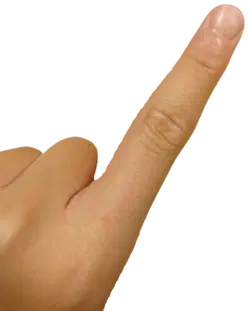
What's this?
Toe
Fingers
Finger
Hand
Knee is...
Braço
Nariz
Joelho
perna
Mouth


Ear


Open your...
(a)

That is my...
(a)

She has got long black (a)

That is my (a)

MULTIPLE CHOICE
Which parts are located in the head?
nose
eye
stomach
leg

Name this part
Hand
Ear
Foot
Eye
The way a meal is served after cooking is called
Entertainment
Hosting
Simple meal serving
Balanced meal
Read the question and choose the correct answer from the options
Exercise helps us to live longer?
True
False
What is the outer layer of the skin called?
Epidermis
Dermis
Tissues
Melanin
_____ and ____ can affect your choice of personal belonging.
Age and tradition.
car and money.
Dislike and happiness
Environment and air
The knowledge of home economics helps you to be _____
Live healthy and happy life.
Tall and strong.
Fat and happy.
sick and weak.
The branch of home economics that deals with clothing repair is ________
food and nutrition
Home management
clothing and textile
child care.
Home Economics have how many branches.
5
3
2
4
which of these is not a personal belonging.
singlet
car
tooth brush
handkerchief.
Select a sentence that uses an expanded noun phrase.
The dark, wintry wood.
The girl.
She was walking quickly to the mall.
I do not like long, thick jackets.
Is the underlined part is expanded noun phrase?
false
true
The white, beautiful swan swam round the lake.
Is the underlined part is expanded noun phrase?
true
false
What is expanded noun phrase?
a group of letters or words added at the beginning of a word and it changes the meaning.
gives more information about a noun. It can be expanded using determiner, adjectives before the noun and a comma to split more than one adjective used.
Select a sentence that uses an expanded noun phrase.
The dark, wintry wood.
The girl.
She was walking quickly to the mall.
You can't eat that!
Select the sentence that uses an expanded noun phrase.
The car was muddy.
There was a mud on the side of the car.
The blue, muddy car.
The car was blue
The white, beautiful swan swam round the lake.
Is the underlined part is expanded noun phrase?
true
false
The old, grey haired man sat down.
The old, grey haired man
Man sat down.
Grey haired
Which one is the expanded noun phrase?
The young girl sang loudly.
girl
sang loudly
the young girl

Choose the correct noun phrase.
The teacher talked loudly.
The teacher
talked loudly
teacher talked
The teacher talked

Choose the correct expanded noun phrase.
The old, grey haired man sat down.
old
grey
The old, grey haired man
sat down

Choose the correct expanded noun phrase.
The young girl sang loudly.
The young
The young girl
sanged
loudly

