
NEW
Font size
 Worksheets
Electromagnetic Theory - Waveguide
Total questions: 15
Worksheet time: 5mins
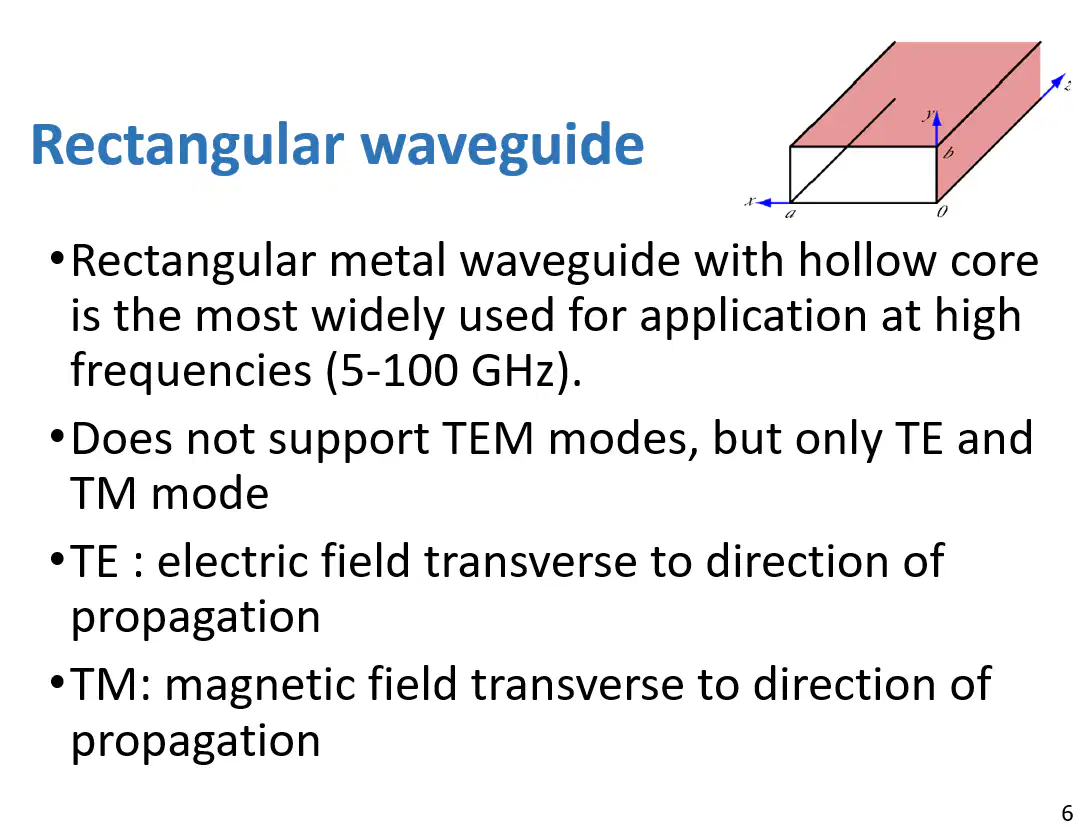
What is the primary function of a waveguide in electromagnetic applications?
To amplify electromagnetic signals
To guide electromagnetic waves with minimal loss
To generate electromagnetic waves
To convert electromagnetic waves to sound waves
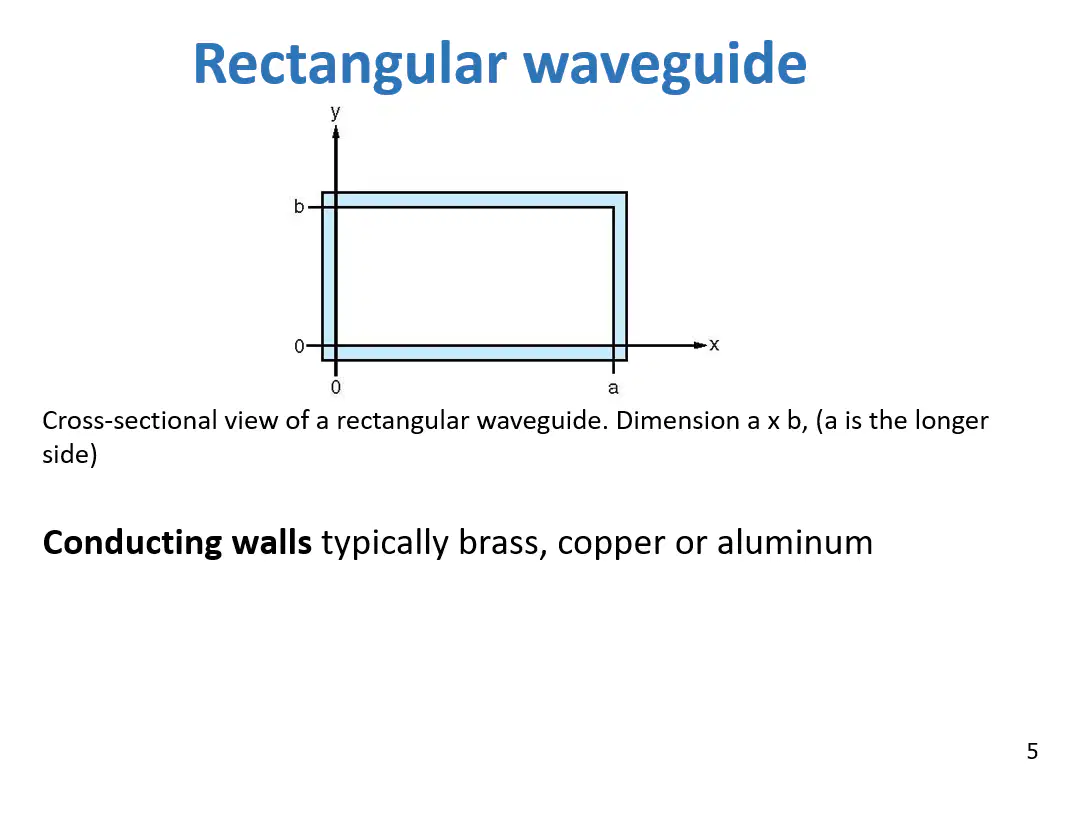
Which of the following is a characteristic of a rectangular waveguide’s cross-section?
Circular shape with a single radius
Rectangular shape with dimensions a and b, where a is the longer side
Triangular shape with equal sides
Elliptical shape with varying thickness
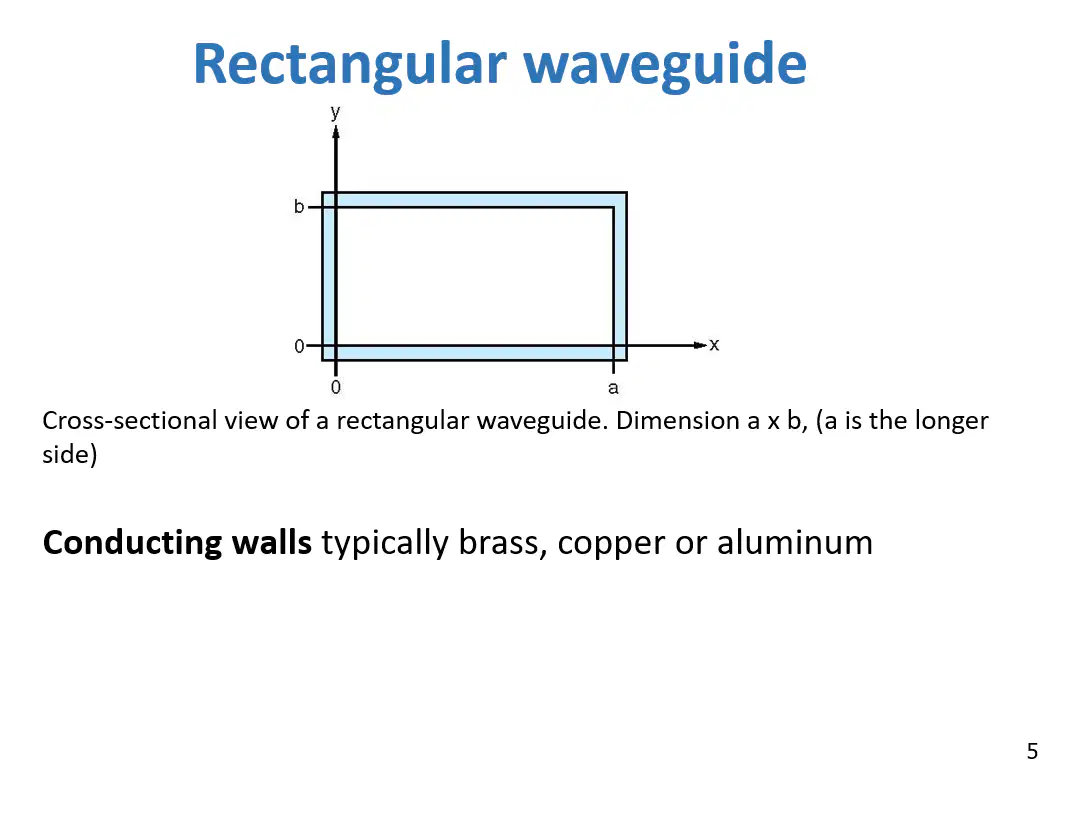
What materials are typically used for the conducting walls of rectangular waveguides?
Plastic, glass, or ceramic
Brass, copper, or aluminum
Steel, iron, or nickel
Wood, rubber, or silicon
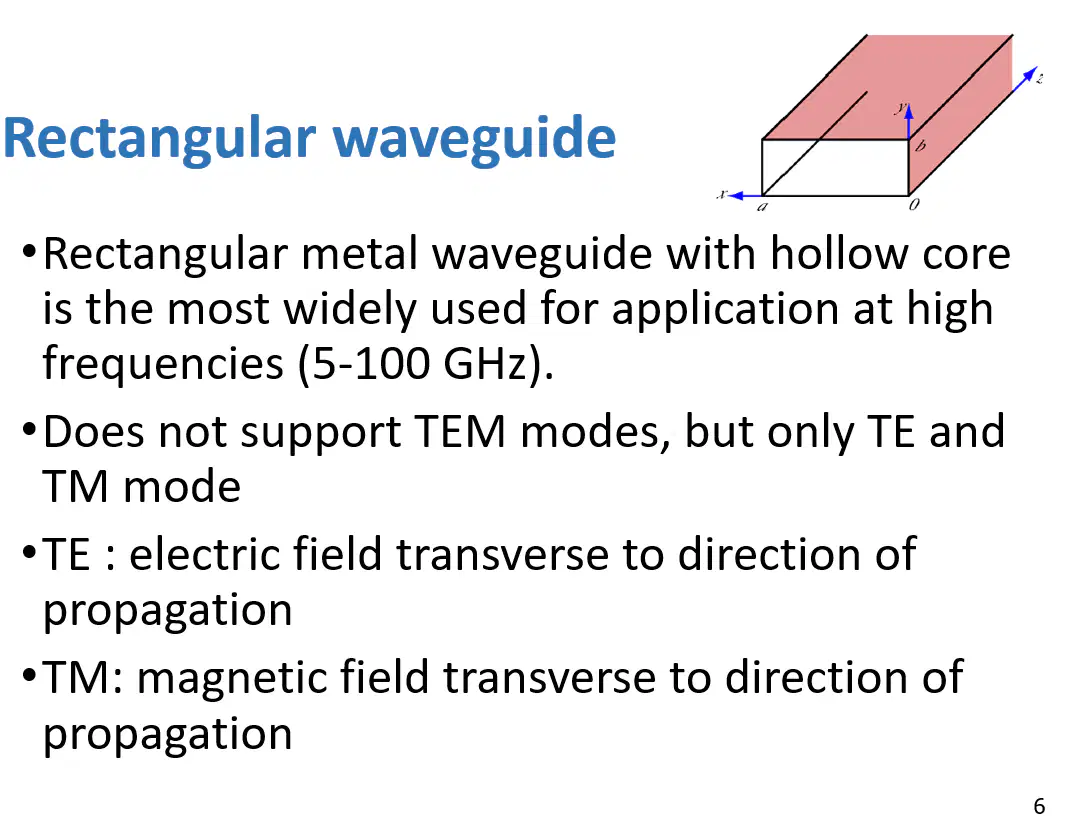
Which modes are supported by a rectangular metal waveguide with a hollow core?
TEM modes only
TE and TM modes only
TE, TM, and TEM modes
TM modes only

What defines the transverse electric (TE) mode in a waveguide?
A) Ez = 0
B) Hz = 0
C) Ez = Hz = 0
D) Ez ≠ 0

What is the cutoff frequency of a waveguide?
The highest frequency at which a mode propagates
The lowest frequency at which a mode propagates
The frequency at which the waveguide stops functioning
The frequency at which the waveguide becomes a low-pass filter

What does the order of the mode (m, n) represent in a rectangular waveguide?
The number of full-wave variations in the x and y directions
The number of half-wave variations in the x and y directions
The dimensions of the waveguide
The frequency of the wave
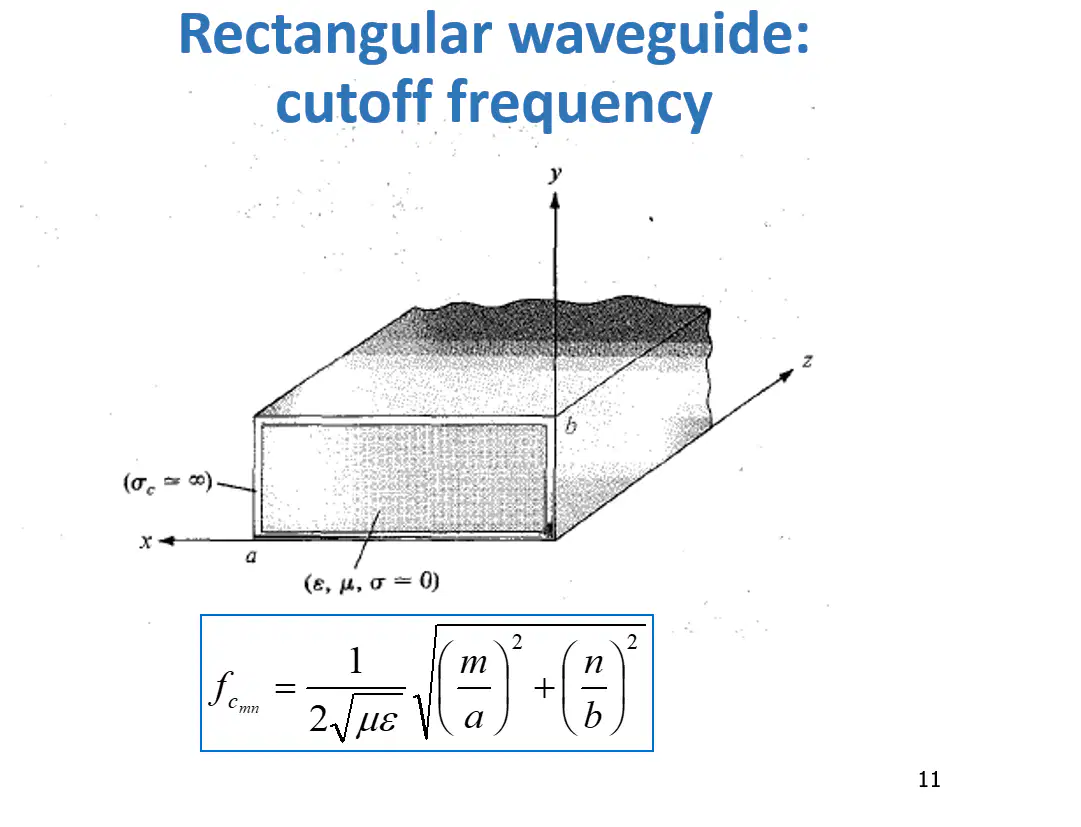
What is the formula for the cutoff frequency (fmn) of a rectangular waveguide?
fmn = (1/(2√(με))) √((m²/a²) + (n²/b²))
fmn = (1/(2√(με))) √((m²/a) + (n²/b))
fmn = (1/√(με)) √((m/a²) + (n/b²))
fmn = (1/(2με)) √((m²/a²) + (n²/b²))

What is the dominant mode in a rectangular waveguide for TE modes?
TE₀₁
TE₁₀
TE₁₁
TE₀₀

What is the relationship between group velocity (u_g) and phase velocity (u_p) in a waveguide?
ug = up
ug = u₀ √(1 − (fc/f)²)
ug = up / √(1 − (fc /f)²)
ug = u₀ / √(1 − (fc /f)²)

What is a key advantage of dielectric waveguides over metallic rectangular waveguides at high frequencies?
Lower cost of fabrication
Ability to operate at lower frequencies
Overcoming difficulties in fabrication and excessive loss
Support for TEM modes
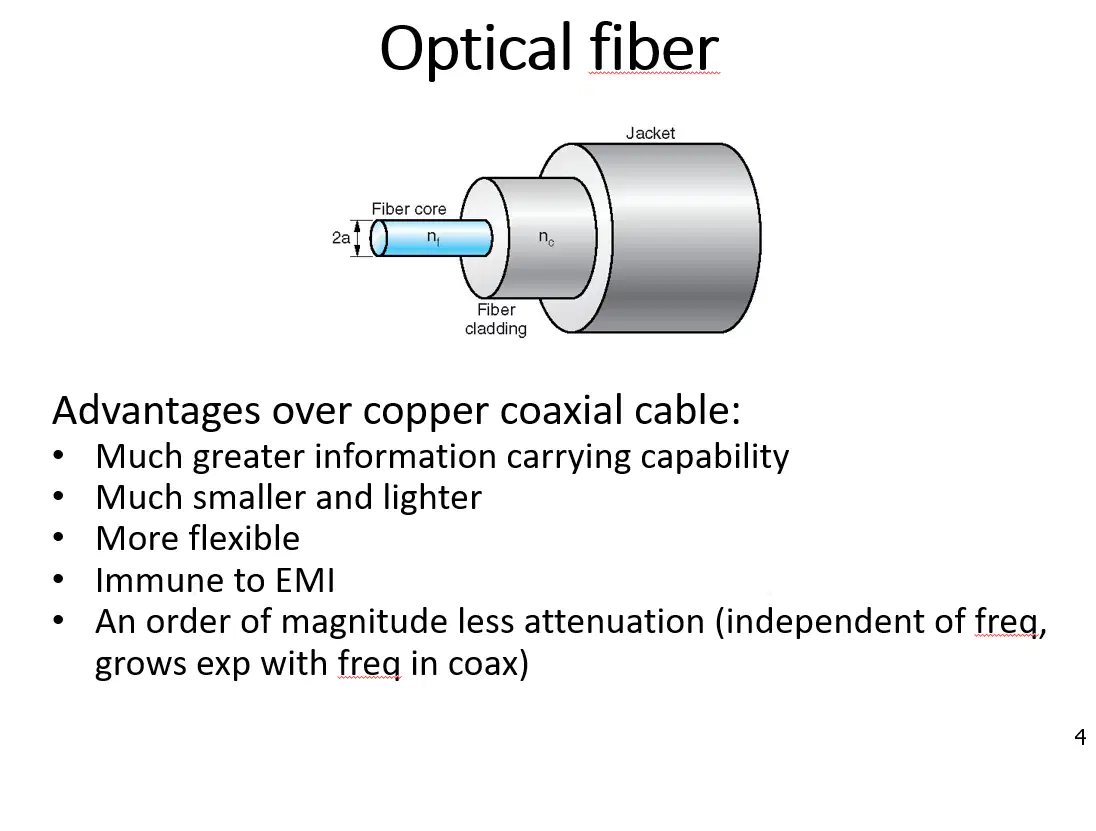
Which of the following is an advantage of optical fibers over copper coaxial cables?
Higher weight and size
Greater susceptibility to EMI
Much greater information carrying capability
Higher attenuation with frequency

What does Snell’s law of reflection state for electromagnetic waves at a dielectric boundary?
θ₁ = θ₂
n₁ sin θ₁ = n₂ sin θ₂
θ₁ = ν₁/ν₂
sin θ₁ / sin θ₂ = n₁ / n₂

What is the critical angle (θ_critical) for total internal reflection in an optical fiber?
θ_critical = sin⁻¹(n₁/n₂)
θ_critical = sin⁻¹(n₂/n₁)
θ_critical = sin⁻¹((εr/ε₁))
θ_critical = sin⁻¹(ε₁/ε₂)
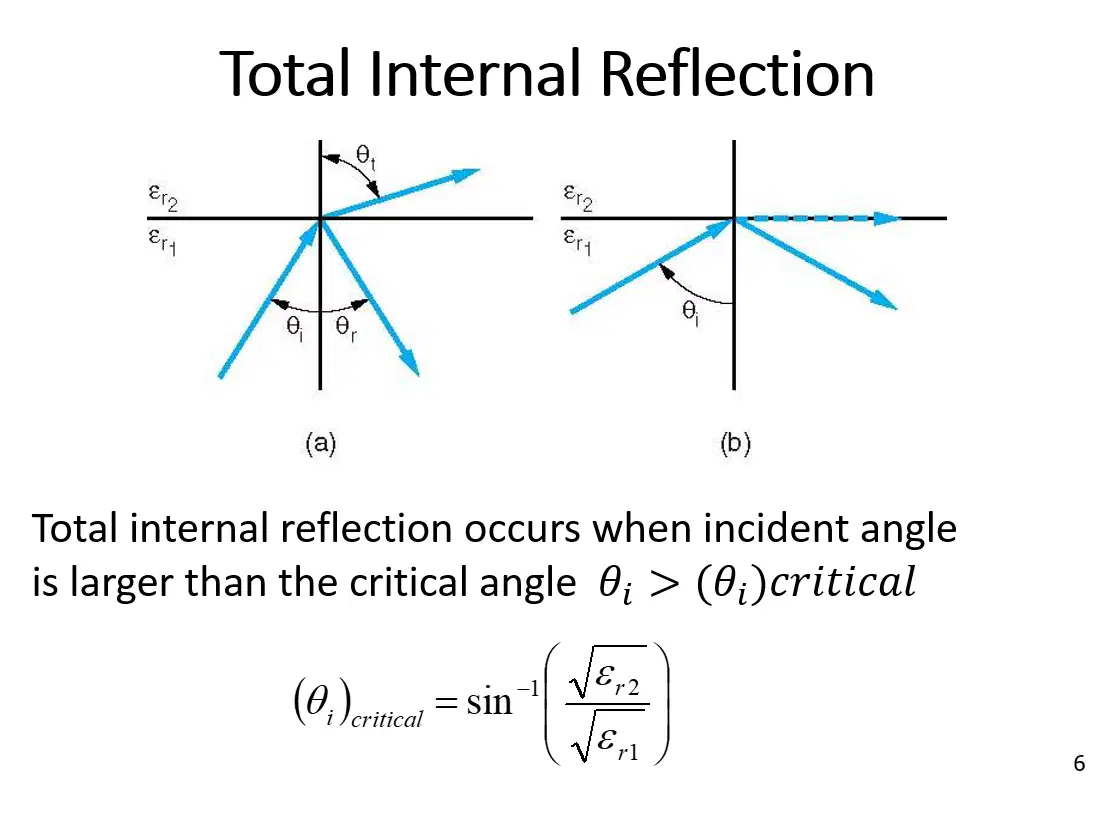
What condition must be met for total internal reflection to occur in an optical fiber?
The incident angle must be less than the critical angle
The incident angle must be equal to the refractive index
The incident angle must be greater than the critical angle
The incident angle must be zero

