
 Worksheets
Exploring Forces and Bridge Spiraling TEKS
Total questions: 18
Worksheet time: 9mins
What did you learn about in Topic 2 that helps determine if forces acting on an object are balanced or unbalanced?
The color of the object
The net force acting on the object
The temperature of the object
The object's location
Which of the following is NOT a force discussed in Topic 2?
Gravity
Friction
Magnetism
Evaporation
How does Newton’s Third Law of Motion relate to the forces acting on a bridge?
It explains how bridges change color in different weather
It describes how force pairs act simultaneously, affecting the bridge’s stability
It determines the length of the bridge
It tells how to decorate the bridge
Why is it important for engineers to consider both the physical properties of matter and forces when designing a bridge?
To make the bridge look attractive
To ensure the bridge can withstand weight and harsh weather conditions
To make the bridge lighter in color
To reduce the cost of construction
A group of engineers must design a bridge for the Davis Mountains of West Texas. What challenges must their design address?
The bridge must be invisible
The bridge must withstand strong winds, freezing temperatures, and snowfall
The bridge must float on water
The bridge must be made only of gold
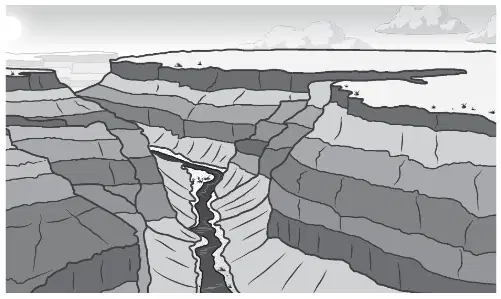
What does the diagram most likely represent in the context of the learning material?
A bridge in the Davis Mountains of West Texas facing environmental challenges
A dam holding back water
A tunnel through a mountain
A city skyline
Why should engineers have considered the hardness of the material they used to build the bridge?
To ensure the material can withstand heavy loads and resist scratching or deformation.
To make the bridge look more colorful.
To make the bridge lighter in weight.
To reduce the cost of the bridge.
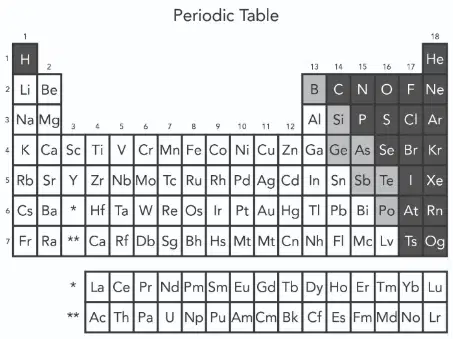
Using the periodic table, which element was most likely selected to build the base of the bridge, given that the pure substance was shiny, malleable, silver-gray in color, and had a high thermal conductivity?
Og
As
Kr
Fe
What type of force is demonstrated by drawing an arrow underneath a car driving over a bridge, pointing upward, and what role does this force play in maintaining the stability of the bridge?
Gravity; it pulls the car downward and destabilizes the bridge.
Friction; it slows the car down and keeps it from moving.
Normal force; it supports the car and helps maintain the stability of the bridge.
Air resistance; it pushes the car upward and helps it move faster.
If a car is moving over a concrete bridge, which force acts in the opposite direction of the car’s motion due to the interaction between the tires and the bridge surface?
Gravity
Friction
Normal force
Magnetic force
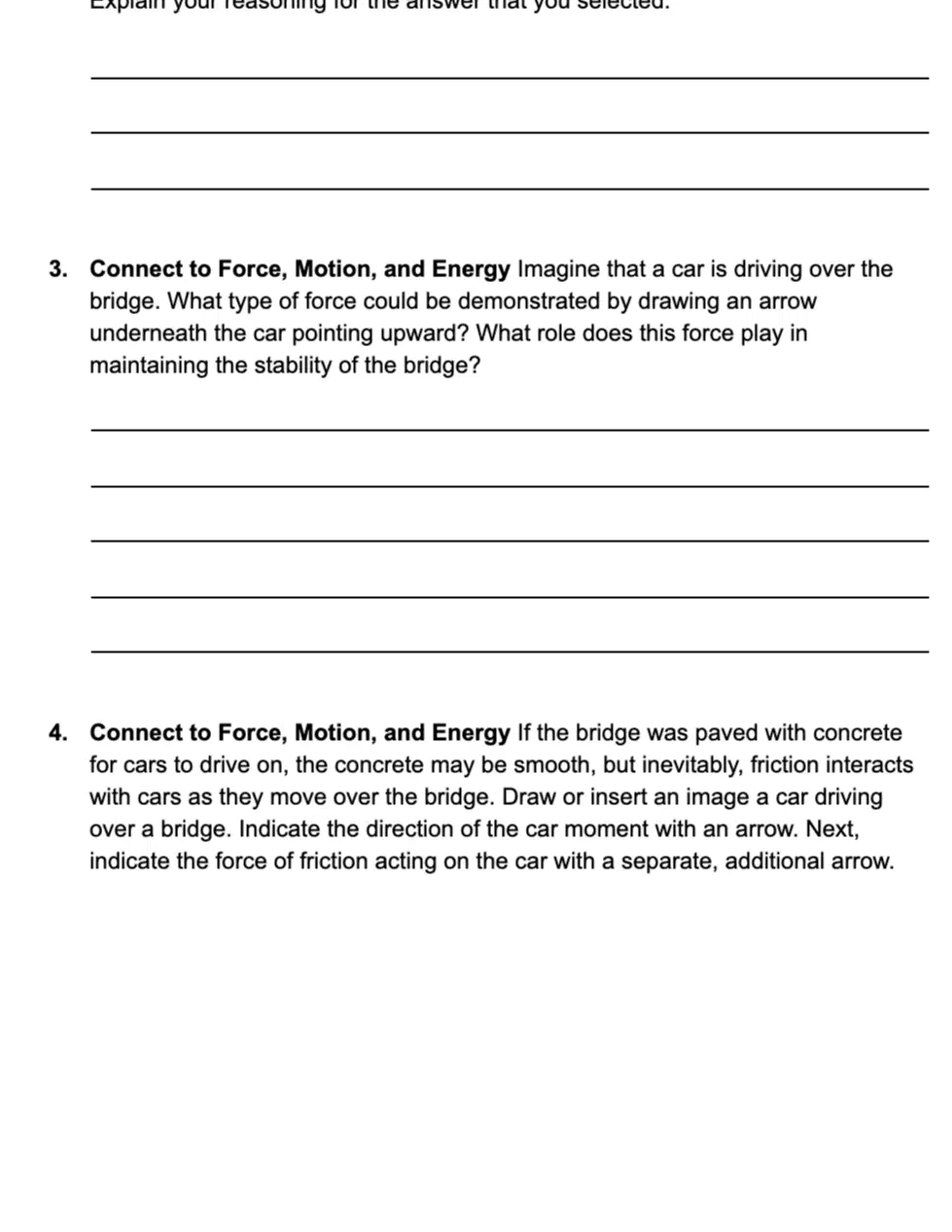
A student is asked to draw a car driving over a bridge and indicate the direction of the car’s movement and the force of friction. What is the correct way to represent these forces using arrows?
Both arrows should point in the same direction as the car’s movement.
The movement arrow points forward, and the friction arrow points backward.
Both arrows should point upward.
The movement arrow points downward, and the friction arrow points upward.
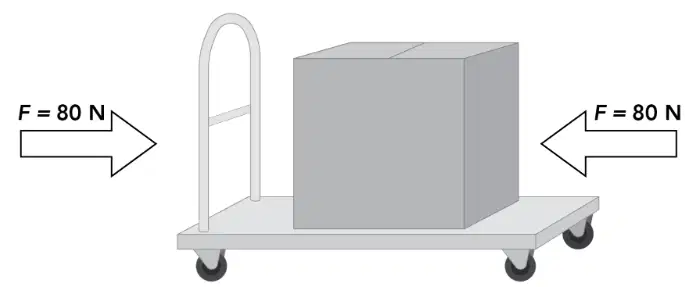
Calculate the net force being exerted on the cart in the diagram below, then explain, in terms of forces, why the cart in the diagram is moving or not moving.
The net force is 0 N because the forces are equal and opposite, so the cart is not moving.
The net force is 160 N because the forces add together, so the cart is moving.
The net force is 80 N to the right, so the cart is moving to the right.
The net force is 80 N to the left, so the cart is moving to the left.
Imagine a car driving over a bridge at a constant speed. Which statement correctly describes the net force acting on the car?
The net force is zero because the car moves at a constant speed.
The net force is unbalanced because the car is in motion.
The net force is zero because the car is on a bridge.
The net force is balanced because the car moves in a straight line.
Why is it important for engineers to understand simultaneous force pairs when designing a bridge to withstand strong winds?
Because it helps them predict how the bridge will look.
Because it allows them to balance the forces acting on the bridge and ensure its stability.
Because it makes the bridge construction faster.
Because it reduces the cost of building the bridge.
Which of the following best describes a simultaneous force pair acting on a bridge when strong winds push against it?
The wind pushes the bridge, and the bridge pushes back against the wind.
The wind pushes the bridge, and the bridge moves without resistance.
The wind pushes the bridge, and the bridge pulls the wind.
The wind pushes the bridge, and the bridge heats up.
When vehicles or snow are on top of a bridge, what is the simultaneous force pair involved?
The weight of the vehicles or snow pushes down, and the bridge pushes up with an equal force.
The vehicles or snow pull the bridge sideways.
The bridge pulls the vehicles or snow upward.
The vehicles or snow make the bridge longer.
Gravity pulls the bridge down towards the canyon. What is the simultaneous force pair in this situation?
The bridge pulls the canyon up.
The canyon pushes up on the bridge with an equal force.
The bridge pushes the air down.
The bridge pulls the vehicles down.
Imagine you are explaining the concept of simultaneous force pairs to a friend. Which of the following is the best explanation?
Forces always act alone and never in pairs.
For every force, there is an equal and opposite force acting at the same time.
Forces only act when objects are moving.
Forces only act in one direction.

