
 Worksheets
Assessment Practice: Transverse and Longitudinal Waves
Total questions: 15
Worksheet time: 8mins

The number of waves that pass a certain point in a certain amount of time.
(El número de ondas que pasan por un punto determinado en un período de tiempo determinado.)
amplitude (amplitud)
crest (cresta)
frequency (frecuencia)
trough (valle)
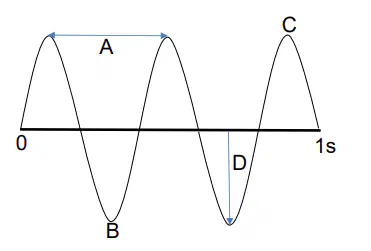
Which part of the wave does the letter "B" represent?
(¿Qué parte de la onda representa la letra "B"?)
crest (cresta)
trough (valle)
wavelength (longitud de onda)
amplitude (amplitud)
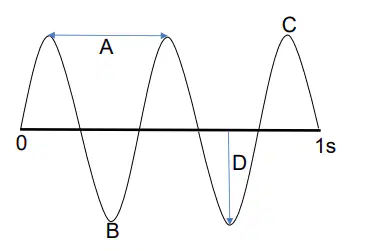
What does the letter "D" represent?
(¿Qué representa la letra “D”?)
crest (cresta)
resting point (punto de reposo)
wavelength (longitud de onda)
amplitude (amplitud)
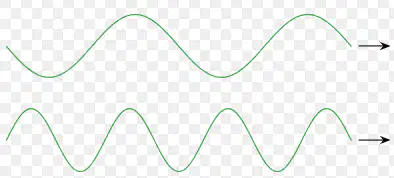
Which wave has the longest wavelength?
(¿Qué onda tiene la longitud de onda más larga?)
top wave (ola superior)
bottom wave (ola inferior)

The highest point on a wave is ___.
(El punto más alto de una ola es ___.)
the crest (la cresta)
the top (la cima)
the trough (el valle)
the coast (la costa)
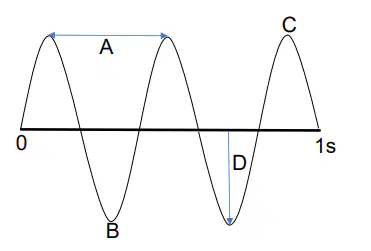
Which vocabulary term is used to identify the distance between point "A"?
(¿Qué término de vocabulario se utiliza para identificar la distancia entre los punto "A"?)
amplitude (amplitud)
frequency (frecuencia)
crest (cresta)
wavelength (longitud de onda)

The trough is the ___.
(El comedero es el ___.)
highest point in a wave (punto más alto de una ola)
lowest part of a wave (punto más bajo de una ola)
the wavelength (longitud de onda)
the distance between each crest (distancia entre cada cresta)

What does the DOTTED LINE represent?
(¿Qué representa la LÍNEA DE PUNTOS?)
rarefaction (rarefacción)
resting point (punto de reposo)
amplitude (amplitud)
compression (compresión)

True or False? As frequency DECREASES the pitch DECREASES.
(¿Verdadero o falso? A medida que la frecuencia disminuye, el tono disminuye.)
True (Verdadero)
False (Falso)
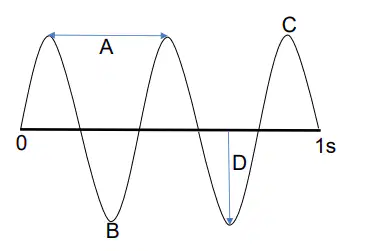
If distance A on the diagram increased, what would happen to the pitch?
(Si la distancia A en el diagrama aumentara, ¿qué pasaría con el tono?)
The pitch would be louder. (El tono sería más fuerte.)
The pitch would be higher. (El tono sería más agudo.)
There would be no sound. (No habría sonido.)
The pitch would be lower. (El tono sería más grave.)
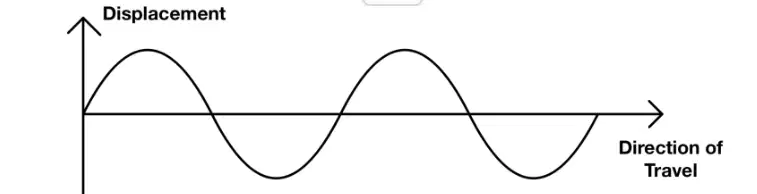
What type of wave is pictured?
(¿Qué tipo de ola se muestra en la imagen?)
transverse wave (onda transversal)
longitudinal wave (onda longitudinal)
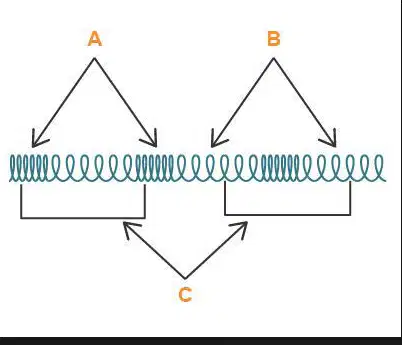
The areas on a longitudinal wave where the particles are CLOSE TOGETHER.
(Las áreas en una onda longitudinal donde las partículas están JUNTAS.)
rarefactions (rarefacción)
amplitude (amplitud)
compressions (compresiones)
trough (valle)

Sound waves are an example of which type of wave?
(¿Las ondas sonoras son un ejemplo de qué tipo de onda?)
transverse wave (onda transversal)
longitudinal wave (onda longitudinal)
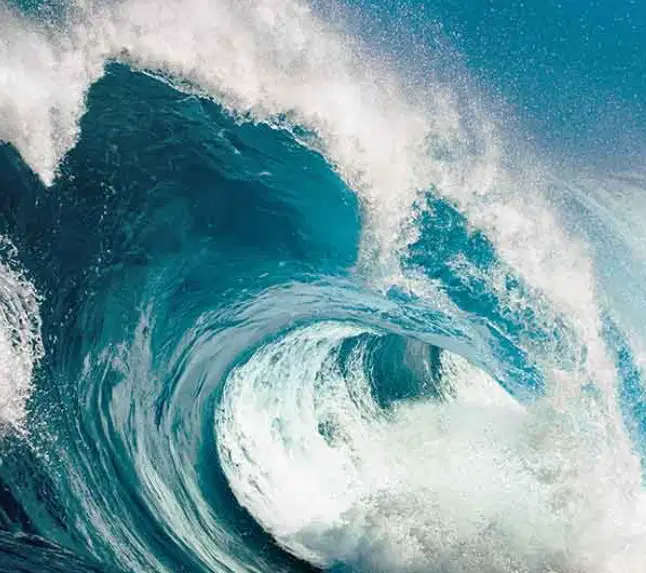
Water waves are an example of which type of wave?
(¿Las ondas de agua son un ejemplo de qué tipo de onda?)
transverse wave (onda transversal)
longitudinal wave (onda longitudinal)

True or False? As frequency INCREASES, wavelength DECREASES.
(¿Verdadero o falso? A medida que la frecuencia aumenta, la longitud de onda disminuye.)
True (Verdadero)
False (Falso)

