
 Worksheets
year term 1 biology 11 revision
Total questions: 50
Worksheet time: 1hrs 24mins
What is the size of a heart?
Closed fist
Hand
Open hand
Closed hand
Which of the following is the main circulatory fluid in our body ?
Plasma
Lymph
Blood
None of these
Why is color of blood red?
myoglobin
globulin
heamoglobin
fibrinogen
The blood vessel which carries blood to the heart
lymphatic vessel
capillaries
veins
arteries
Pulmonary artery carries what type of blood
Oxygenated
mixed
pure blood
Deoxygenated
Human heart has -----------chambers
3
2
4
1
Aorta carries oxygenated blood to all parts of the body
True
False
No, pulmonary artery
No, pulmonary vein
Which vessel mainly transport deoxygenated blood?
Artery
Aorta
Capillary
Vein
Which of the following carries blood away from heart?
Vein
Artery
Capillary
Valve
Which blood vessel carries blood from the lungs to the heart?
Aorta
Vena cava
Pulmonary vein
Pulmonary artery
Which of the following has walls that are one cell thick and is a site for diffusion?
Vein
Artery
Capillary
Aorta
Blood flows from the vena cava into which chamber of the heart?
Left atrium
Right atrium
Left ventricle
Right ventricle
Blood flows out of the left ventricle through which of the following blood vessels?
Aorta
Vena cava
Pulmonary artery
Pulmonary vein
All arteries carry oxygenated blood.
True
False

Identify the part labelled C.
Left atrium
Left ventricle
Right atrium
Right ventricle
Which type of cell is found in the greatest numbers in blood?
Red blood cell
White blood cell
Platelets
What happens to breathing and heart rate during exercise?
Breathing rate increases and heart rate decreases
They both increase
They both decrease
How do you calculate surface area to volume ratio?
Surface area / volume
Surface area - volume
Surface area + volume
Why is the left wall of the heart have a thicker layer of muscle than the right side?
To stop the blood flowing backwards
To push the blood with more force at high pressure so it goes to all body cells.
To push the blood at high pressure to the lungs.
Where would you find alveoli and what do they do?
In the arteries, they stop the artery from bursting.
In the heart, and they stop the blood flowing backwards
In the lungs and they are they site of gas exchange
Why do veins and the heart have valves?
To stop the backflow of blood
To contract to push the blood under high pressure
To cause the pulse
What type of blood vessel surround alveoli and other tissues in the body?
Capillaries
Arteries
Veins
Give the word equation for aerobic respiration.
Glucose + carbon dioxide --> oxygen + water
Glucose --> lactic acid
glucose + oxygen --> carbon dioxide + water
What are the differences between anaerobic and aerobic respiration?
Anaerobic respiration takes place in mitochondria, releases less energy and forms lactic acid that causes cramp. Aerobic respiration occurs in cytoplasm, releases more energy and forms carbon dioxide and water which do not cause cramp.
Anaerobic respiration takes place in cytoplasm, releases less energy and forms lactic acid that causes cramp. Aerobic respiration occurs in mitochondria, releases more energy and forms carbon dioxide and water which do not cause cramp.
Anaerobic respiration takes place in cytoplasm, releases less energy and does not cause cramp. Aerobic respiration occurs in mitochondria, releases more energy and causes cramp.

What component of the heart is number 9
Left Ventricle
Left Atrium
Right Ventricle
Right Atrium
What keeps blood from flowing backwards in the heart?
atrium
valves
artery
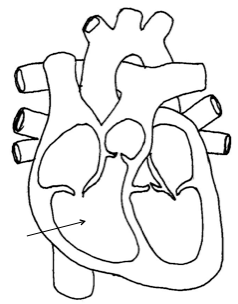
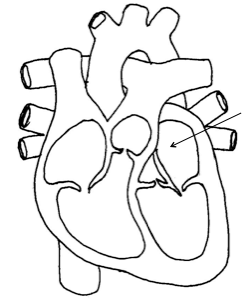

Which statement correctly describes deoxygenated blood.
Blood containing no oxygen, only carbon dioxide
Blood containing more carbon dioxide than oxygen.
Blood containing no carbon dioxide, only oxygen.
Blood containing more oxygen than carbon dioxide.
Oxygenated blood is in which side of the heart?
Right
Left
Which of the following are chambers of the heart?
Valves
Atrium and ventricle
Arteries and veins
Sinoatrial nerve
How are arteries and veins different?
One is bigger than the other.
The arteries carry more blood than the veins.
The arteries carry blood away from the heart.
Veins carry blood to the heart.
The veins carry blood away from the heart.
Arteries carry blood to the heart.


1. What is the formula for calculating the surface area of a cube?
3 * (side length)^2
4 * (side length)^2
2 * (side length)^2
6 * (side length)^2
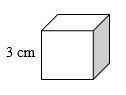
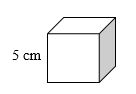


Find the volume of this cube.
18 units
36 units2
216 units3
42 units3

Which value represents the cubes volume in cubic centimeters.
52
25 x 5
53
5 x 6
What is the volume of a cube with a side length of 8.
8 cubic units
512 cubic units
54 cubic units
48 cubic units


