
 Worksheets
BHUTAN ARCHITECTURE_QUIZ NO. 03_HOA 03
Total questions: 20
Worksheet time: 15mins
_________ is the national language of Bhutan, and the Tibetan alphabet is used
for writing. Bhutan official language.
Dungka
Dzongkha
Tibetan
Burman
BHUTAN - A small _________ kingdom between China and India, is known for its unique architecture,
including dzongs, monasteries, and nail-free houses.
Tibetan
Mongolian
Himalayan
Burman

Means large post or column in Dzongkha. It was normally placed on a circular or square base
made of a single slab of stone especially when part of the external corridor.
CHEM
RAEP
THRENGWA
kachen

A bow shaped timber bracket placed as a capital on top of the Kachen. This served a structural
function to support the load from the Dhung (beam) above.
ZEN
Zhu
YANG
DHUNG

_____________ is the name commonly used for traditional balcony railings. Landing
railings, roof barrier railings and stair hand railing balusters are as well often called this name.
Semtokha Dzong
Sajang Taiji
JADHANG TAZI
Thimphu

______________which is a traditional Bhutanese window that is embedded within the facade walls of a building, is an important element of traditional Bhutanese architecture
Payab Gochu
Gochu Jang
Zu
Payab Prang

The main entrance door to a traditional Bhutanese house and is an important
aspect of a building is called ___________?
Gomam
Magno
Mango
MAGO
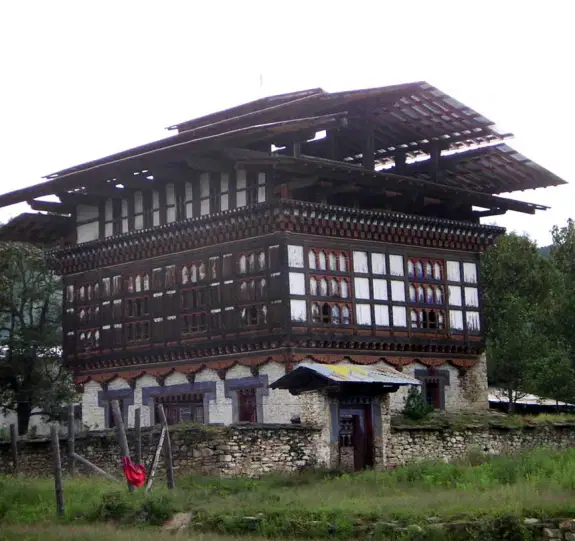
A very noticeable
design aspect of the typical Bhutanese roof is the elevation of the roof high above the building (often in
layers) to form what is often called the “_________”.
"FLYING ROOF"
"FLYING BUTTRESS"
"FLYING BEAM"
"FLYING RABSEL"
There are four main types of roof design in traditional Bhutanese architecture:
LINGU, PAYAB, THIMPHU,HIMALAYAN
GONG PO, DUOGONG, MAGO, KACHEN
TORII, PAILOU, PAIFANG, STUPA
JABZHI, JAMTHOK, DRANGIM, CHENKHEP
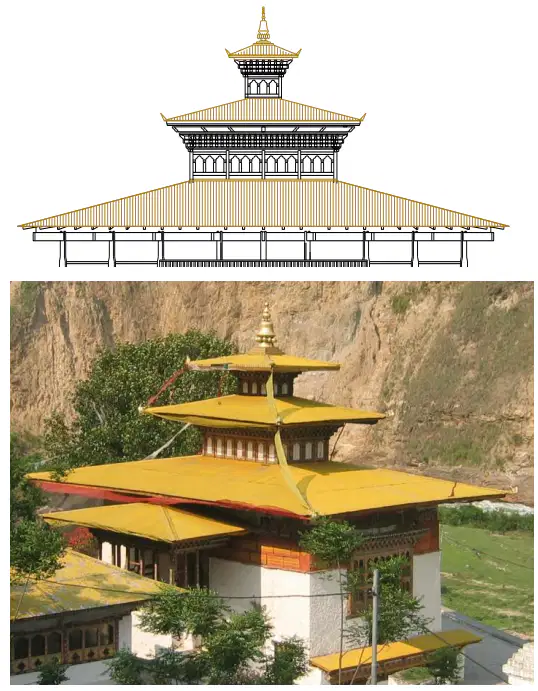
The ______ is a square hipped roof with four prominent corners. These roofs were used in buildings of high status such as the Utse of a Dzong or palace or over the building housing the main altar of a Lhakhang.
Jamthok Roof
JABZHI ROOF
Drangim Roof
Chenkep Roof
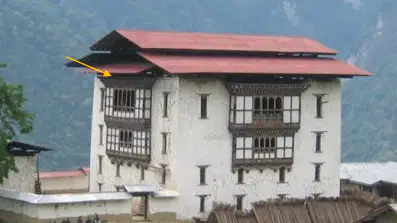
___________is a simple traditional lean-to-roof that is usually installed to provide additional protection to a cantilevering Rabsel. It is laid at a lower level under the main roof of the building.
Dungkhar
Thimphu
CHENKHAP
Rabsel
Traditionally, Bhutanese builders use architectural plans; knowledge was
passed through blueprints for generations.
TRUE
FALSE

A multicolored sacred flag which is placed on top of the roof of homes in
Bhutan and sometimes simple village temples. This is said to represent the banner of the local
Gods and is thus usually installed annually on top of the roof.
lhadar
PEM
CHOETSE
RABSEL

Famously known as the "Tiger’s Nest Monastery".
Built in 1692 around the cave where Guru Padmasambhava meditated in the 8th century.
One of Bhutan’s most iconic landmarks.
Represents spiritual strength and devotion
PART THENON
PARO TAKTSANG
ZING DZHONG
THE GOEMBA
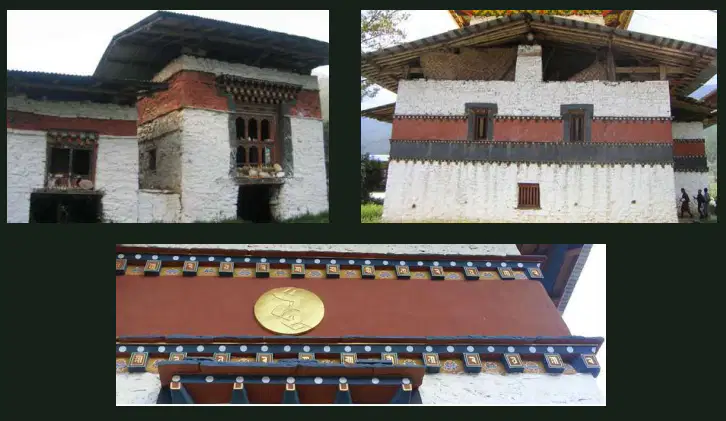
is a wide band around the external walls of a
building that marks the structure as a sacred religious place.
Keystone
KEYMAR
Khrimar
Choetens
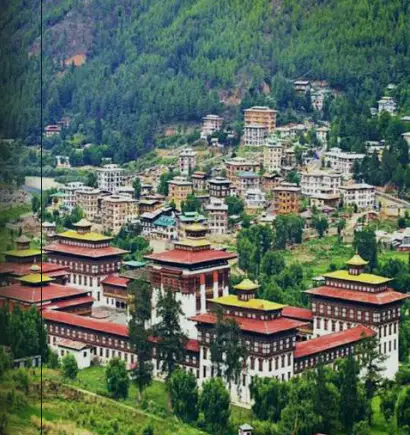
______________meaning "Fortress of the Glorious Religion," was originally
constructed in 1641 by Zhabdrung Ngawang Namgyal and later
reconstructed in 1772. It serves as the seat of the
Bhutanese government and houses the throne room, offices of the King, and
the central monastic body.
Chuza Chulo
Gyeltshen
Reldri Khorio
TASHICHHO DZONG, THIMPHU
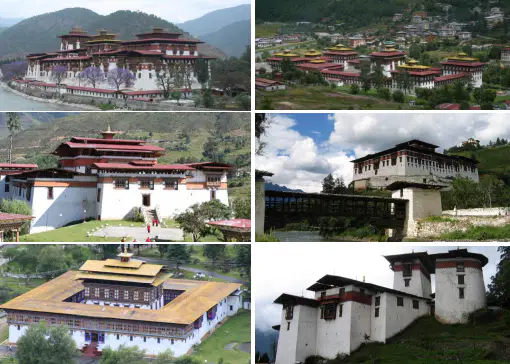
Fortresses known locally as D_____ are architectural masterpieces and are by far some of the most impressive and majestic forms of architecture in Bhutan.
Dzongs
Dozop
Dam
Lhakang
Which construction material is NOT prominently used in Bhutan Architecture?
MUD
STONE
BAMBOO
PAPER
TRUE OR FALSE: In Bhutan Architecture, buildings are constructed in harmony with the surrounding mountains,
valleys, and rivers.
TRUE
FALSE
_________ is one of Bhutan’s oldest and most significant Buddhist monasteries.
Located near Mount Cheri, it sits about 14 kilometers north of Thimphu City.
Dzong Fottress
MEMORIAL CHORTEN
CHERI GOEMBA
Norbu Bagum

